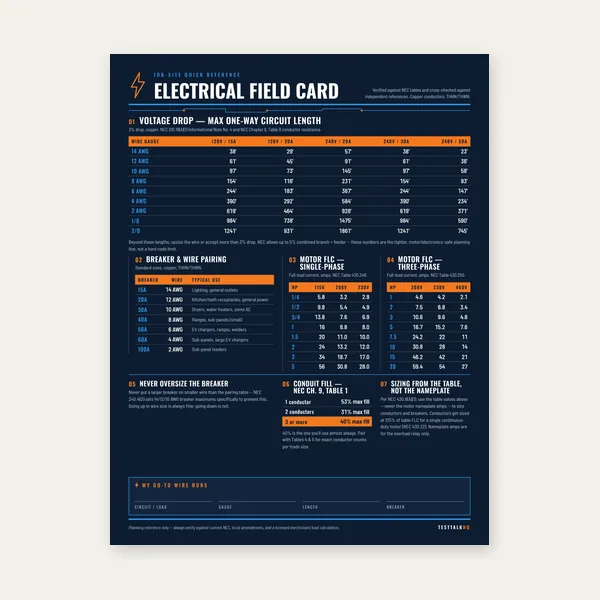
Electrical Reference Card
One page. Voltage drop lengths, breaker and wire pairing, motor FLC.
$3.99
BuyNEC 210.20, 240.4 & 240.6 — load amps, multipliers, standard breaker, 75°C copper wire
Enter watts or amps, voltage, phase, and load type. Continuous loads apply 125%; motor selection uses the live 250% inverse-time factor; results round up to standard NEC 240.6(A) sizes.

Per NEC 240.6(A), overcurrent devices must be selected from standard ratings. Round up to the next standard size equal to or greater than the calculated minimum.
| Standard breaker (A) | Common application | Typical wire (75°C Cu) |
|---|---|---|
| 15A | Lighting, general receptacles | 14 AWG |
| 20A | Kitchen, bath, garage circuits | 12 AWG |
| 25A | Extended 20A runs, some appliances | 10 AWG |
| 30A | Dryers, water heaters, EV charging | 10 AWG |
| 35A | Large appliances, some HVAC | 8 AWG |
| 40A | Ranges, large HVAC, workshops | 8 AWG |
| 50A | Large ranges, hot tubs, EV fast charge | 6 AWG |
| 60A | Subpanels, large equipment | 6 AWG |
| 70A | Subpanels, large feeders | 4 AWG |
| 80A | Large feeders | 4 AWG |
| 90A | Large feeders | 3 AWG |
| 100A | Small subpanels, large equipment | 3 AWG |
| 125A | Subpanels | 1 AWG |
| 150A | Subpanels, service entrance | 1/0 AWG |
| 175A | Large subpanels | 2/0 AWG |
| 200A | Main service, large subpanels | 3/0 AWG |
One page. Voltage drop lengths, breaker and wire pairing, motor FLC.
$3.99
Buy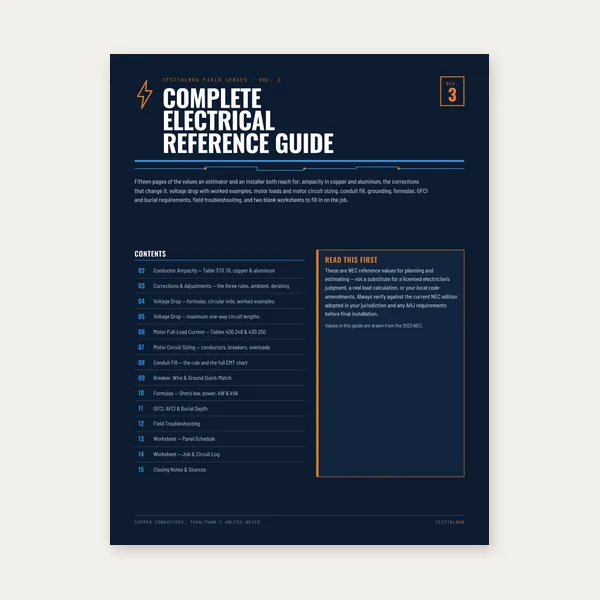
15 pages. Ampacity, corrections, voltage drop, motor circuits, conduit fill.
$12.99
Buy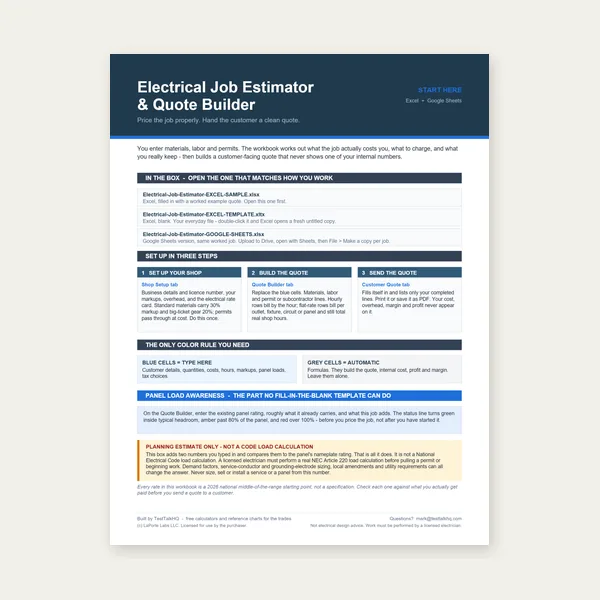
Quote electrical work and flag panel headroom before you price it.
Excel or Google Sheets. Best on a computer.
$29.00
Buy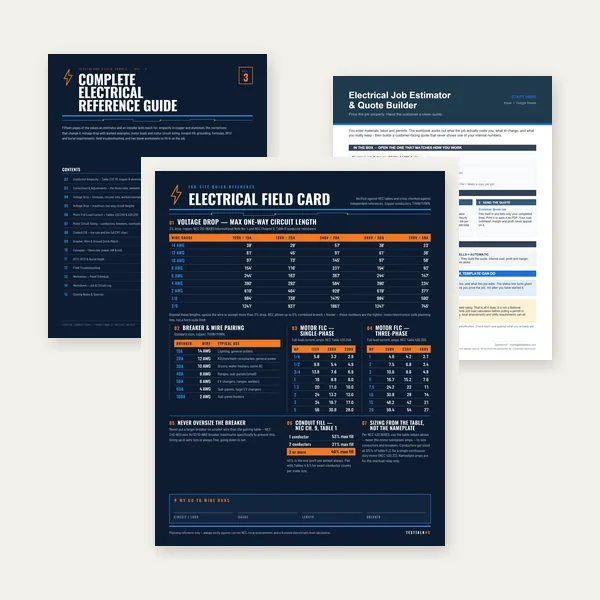
Card, 15-page guide and the estimator workbook. All six files.
Excel or Google Sheets. Best on a computer.
$34.99
$45.98 if bought separately — save $10.99
BuyCheckout opens in a new tab.
Square D branch devices, a main panel option, and meters for dead checks before you swap breakers.

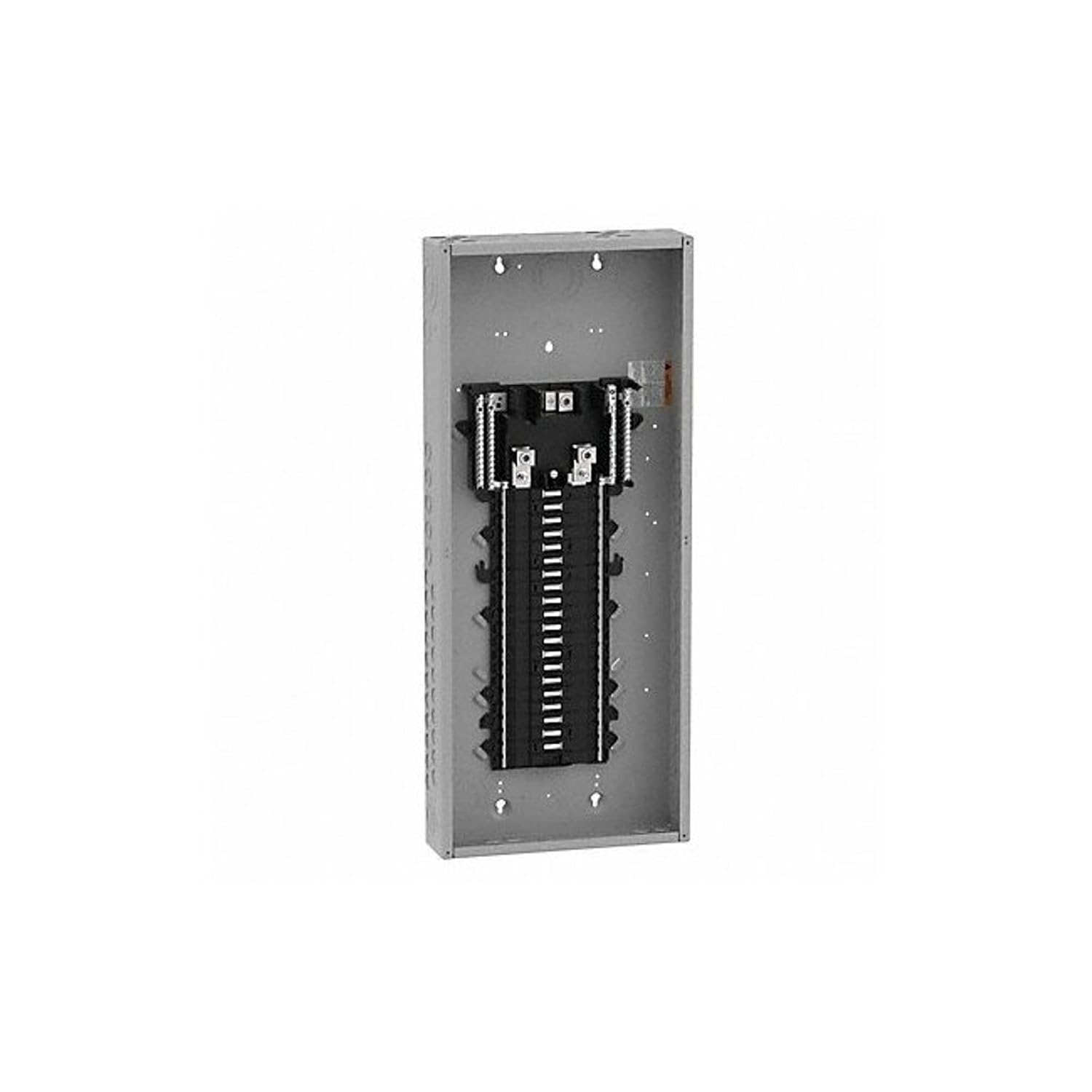


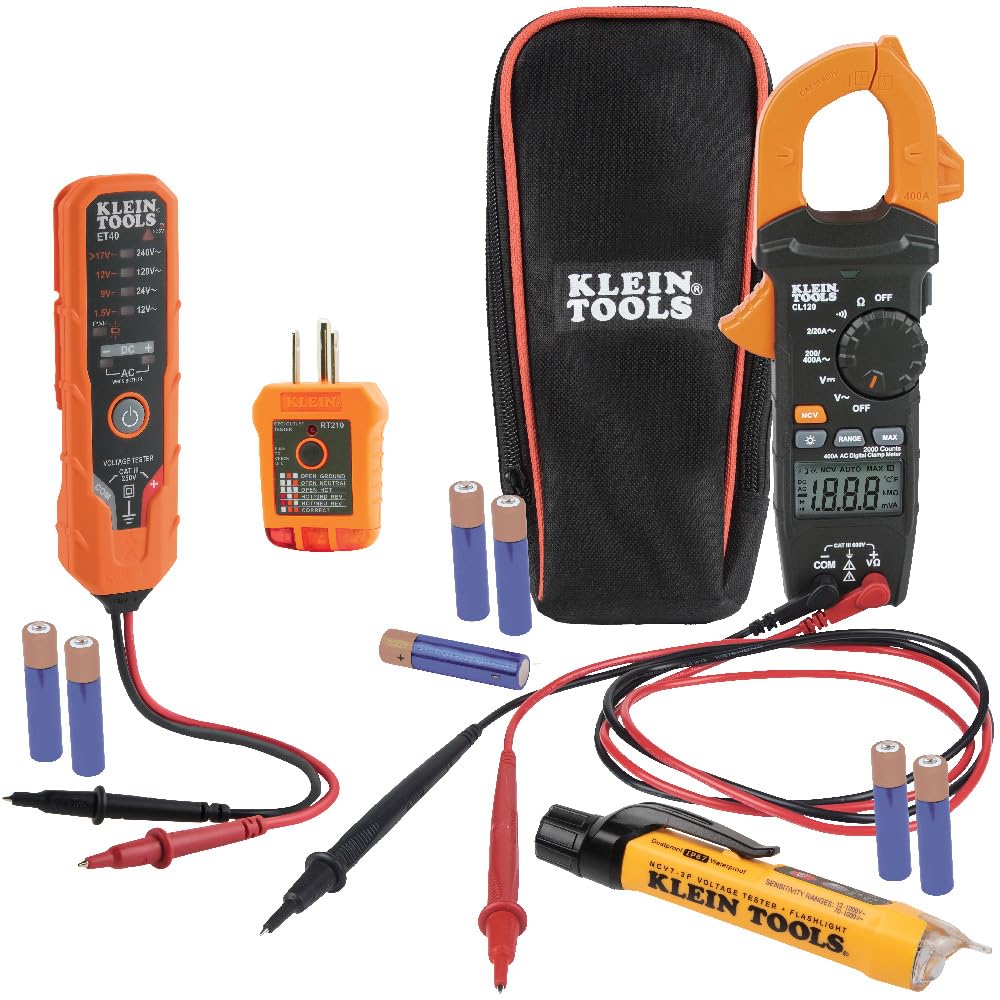
As an Amazon Associate, TestTalkHQ earns from qualifying purchases.
Circuit breaker sizing is not only matching breaker to wire gauge. You need the load current, whether it is continuous, and the correct NEC multipliers before you use a standard size chart.
The governing sections are NEC 210.20 for branch overcurrent, NEC 240.4 for conductor protection, and NEC 240.6 for standard ratings. Motor branch circuits add NEC Article 430 — especially 430.52 for short-circuit / ground-fault protection.
Per NEC 210.20(A), branch overcurrent devices must be at least 125% of continuous load plus 100% of non-continuous load on the same circuit. Continuous means expected to run three hours or more.
Step 1 — Load current. Single-phase: I = W / V. Three-phase: I = W / (V × 1.732). Or use nameplate amps.
Step 2 — Multiplier. Continuous ×1.25; non-continuous ×1.0; mixed: (continuous ×1.25) + (non-continuous ×1.0).
Step 3 — Standard size. Round up to the next NEC 240.6(A) rating.
Step 4 — Wire ampacity. Per NEC 240.4, the conductor must be protected per its ampacity table (this calculator uses the embedded 75°C copper ladder from the live tool).
Motors draw high inrush. NEC 430.52 allows inverse-time breakers up to 250% of motor FLA for branch short-circuit / ground-fault protection. Running overload is separate (430.32). This calculator’s “motor” option applies that live 250% factor to your entered current — verify FLA on the nameplate.
12.5A; continuous → 15.6A minimum → 20A next standard. Wire: 12 AWG copper.
22.5A; non-continuous → 30A breaker typical. Wire: 10 AWG per common installs (neutral for controls per assembly).
Use nameplate MCA and MOP when provided (NEC 440). For motor FLA work, see the motor FLA calculator.
Generally no for branch circuits (NEC 240.4). Motors and taps have specific exceptions.
Amp rating from load: Circuit Breaker Sizing Calculator and the Circuit Breaker Sizing Chart (125% continuous lookup). Protection type (standard / GFCI / AFCI / dual-function): Circuit Breaker Types Explained. Trips after the size looks correct: Why Does My Breaker Keep Tripping?.
The breaker protects the conductor — not the load directly. You size the overcurrent device to the load current (with continuous and motor multipliers), then verify the conductor ampacity is equal to or greater than the breaker rating per NEC 240.4. Wire sizing for voltage drop is a separate performance check on long runs. All three — load, breaker, and wire — must agree before you pull cable.
A common and dangerous mistake is upsizing the breaker to stop nuisance trips without upsizing the wire. That defeats overcurrent protection and is a fire hazard. If the breaker keeps tripping, find the cause: overloaded circuit, weak connection, motor issue, or undersized conductor — do not simply swap in a larger breaker. Pair this calculator with our voltage drop calculator and breaker sizing guide for a complete branch circuit plan.