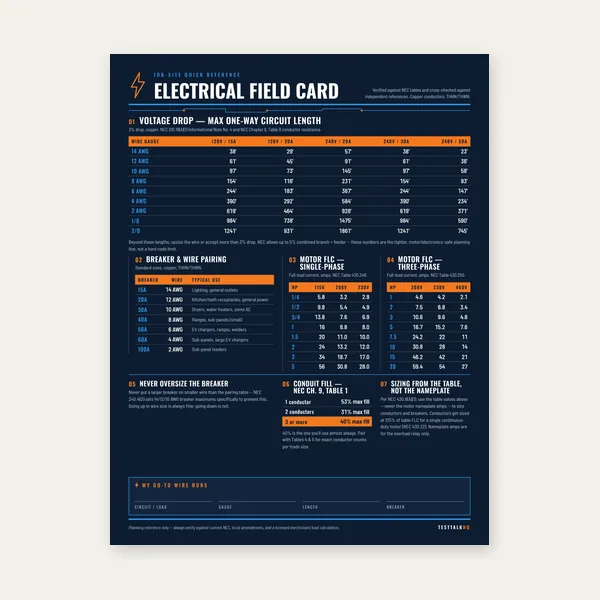
Electrical Reference Card
One page. Voltage drop lengths, breaker and wire pairing, motor FLC.
$3.99
BuyMinimum AWG for accessory circuits from amp draw, one-way length, and an allowable voltage-drop percent
One page. Voltage drop lengths, breaker and wire pairing, motor FLC.
$3.99
Buy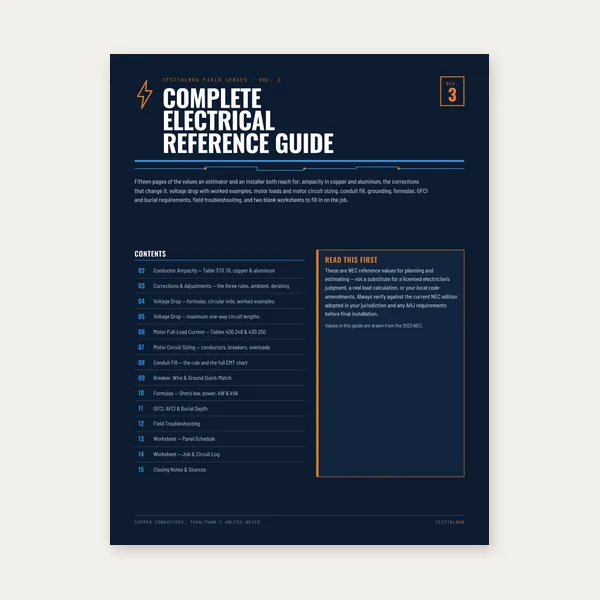
15 pages. Ampacity, corrections, voltage drop, motor circuits, conduit fill.
$12.99
Buy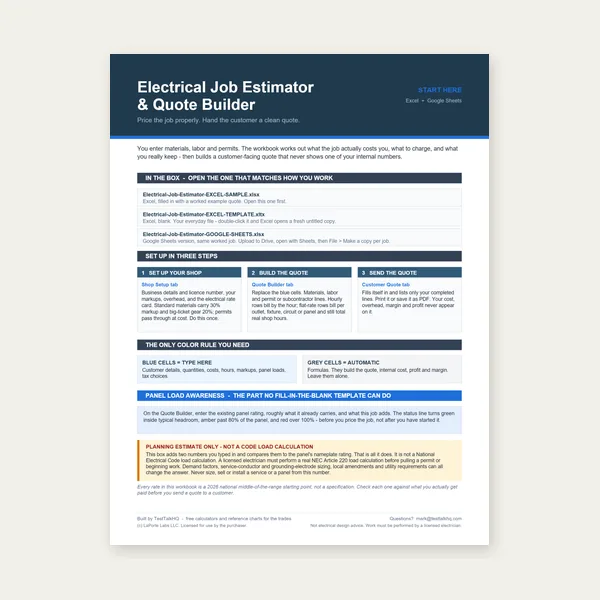
Quote electrical work and flag panel headroom before you price it.
Excel or Google Sheets. Best on a computer.
$29.00
Buy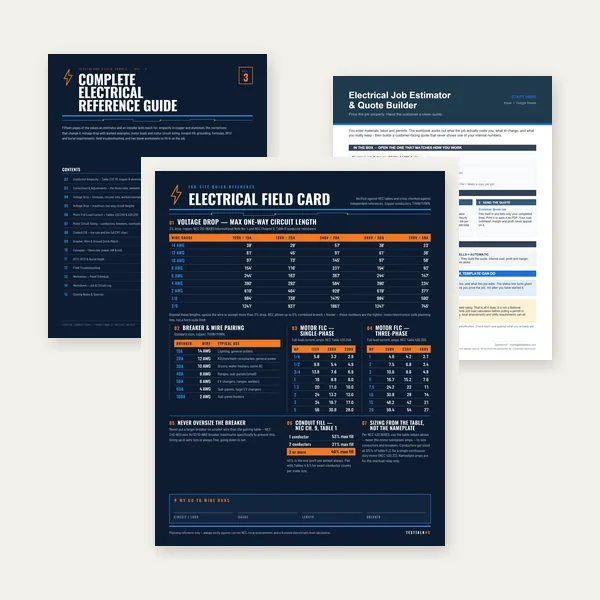
Card, 15-page guide and the estimator workbook. All six files.
Excel or Google Sheets. Best on a computer.
$34.99
$45.98 if bought separately — save $10.99
BuyCheckout opens in a new tab.
Voltage-drop math assumes copper and a real termination. Stranded primary wire and a stripper that does not nick 10–18 AWG strands are the parts that make the number true.

Nicked strands raise resistance the calculator never sees. Strip 10–18 AWG without chewing the copper.
View on Amazon →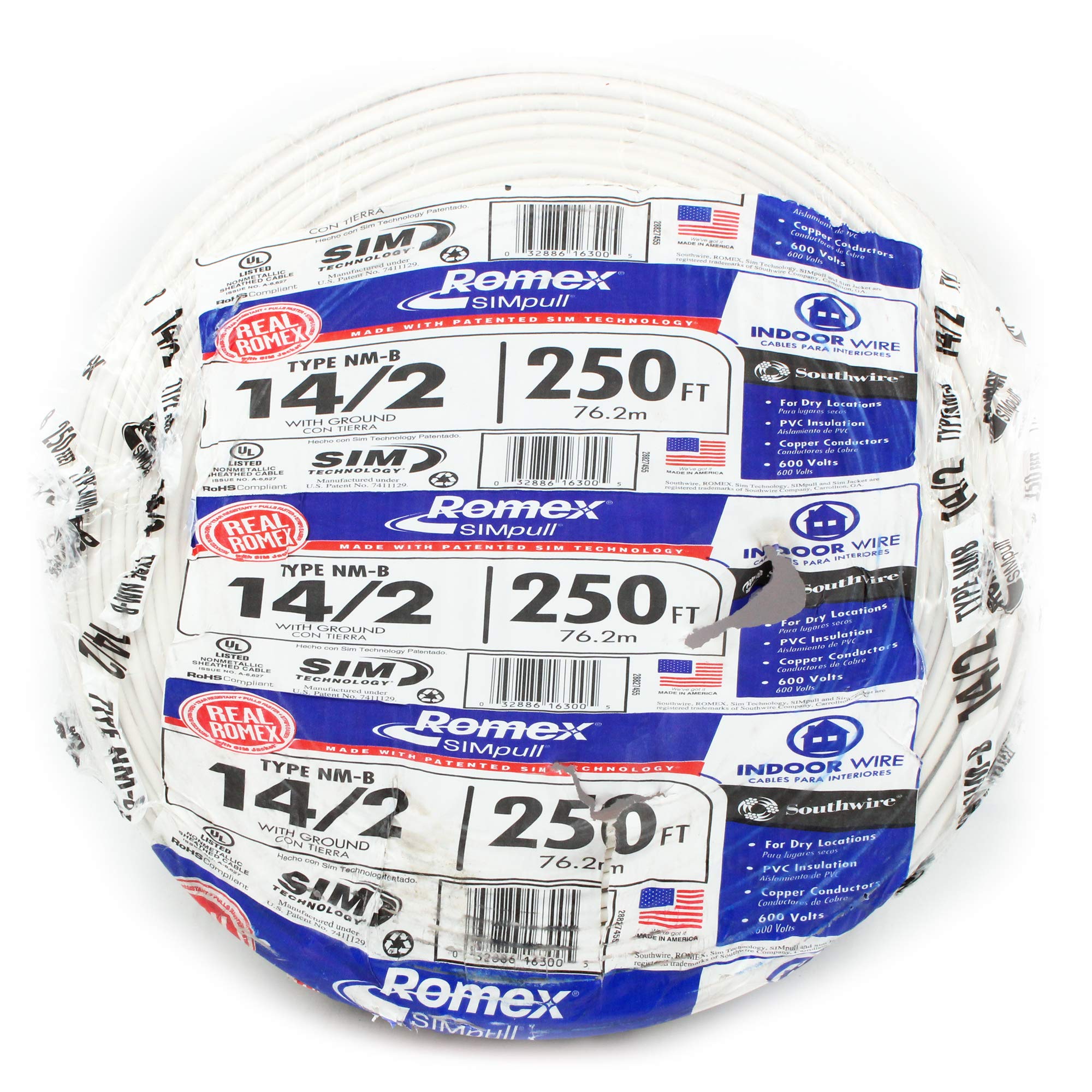
10 AWG copper is the common upsize when 12 AWG fails a 15–20 ft accessory run at 3%. Confirm the calculator before you buy a spool.
View on Amazon →
Amps, one-way feet, 12/24V, drop %. Minimum AWG, actual volts, pass/fail.
Open 12V Wire Gauge Calculator →As an Amazon Associate, TestTalkHQ earns from qualifying purchases.
Read the accessory’s continuous current (or measure it). Measure the one-way path you will actually route — around inner fenders, not a tape-line through the firewall. Leave voltage at 12V unless the bank is a 24V RV/house setup. Leave drop at 3% unless the device specifies a wider window. Calculate, then fuse the chosen wire and crimp like you mean it.
Worked installs (winch, lights, amp): guide. Symptoms of thin wire: troubleshooting. Overcurrent device choice: fuse vs breaker.
The fuse is protection, often 125–150% of continuous current. Sizing wire to the fuse overbuilds the copper and still does not tell you voltage at the lamp. Use measured or nameplate continuous current; fuse the wire afterward. Device choice: fuse vs circuit breaker.
No. That tool is 120/240 V premises wiring (and optional 12 V as a source voltage on a building-wire table). This tool is automotive/RV accessory copper with a 12/24V toggle and AWG as the answer. House circuits: voltage drop calculator.
Shorten the run, raise system voltage to 24V if the accessory allows it, or split the load. A 50 ft one-way 80 A 12V feed at 3% is a cable, not a primary-wire problem.