How to Use the Load Calculation Calculator
This calculator implements NEC Section 220.82 — the Optional Method for calculating service loads in single-family dwellings. It applies to any dwelling served by a single 120/240V or 120/208V 3-wire service rated 100A or larger.
- Step 1 — Square footage: Enter the habitable area of the dwelling. Exclude open porches, garages, and unfinished spaces not adaptable for future use. Multiply by 3 VA per square foot per NEC 220.82(B)(1).
- Step 2 — Appliances: Check each electric appliance and enter its nameplate VA rating. Check the box to include it. If you don't have a nameplate, the defaults shown are common nameplate values for residential equipment.
- Step 3 — HVAC: Select your heating and cooling system type. The calculator applies the correct NEC 220.82(C) demand factor for each type and automatically selects the largest HVAC load per code requirements.
- Step 4 — Options: If you're evaluating a service upgrade, enter your existing panel size. The calculator will flag whether an upgrade is required and how much headroom you have.
💡 Field Tip: When you don't have appliance nameplates, use nameplate data from the manufacturer's spec sheet, the installer manual, or the circuit breaker that feeds the appliance. For ranges and dryers, actual nameplate VA is typically lower than the default values shown here — a more accurate number gives a smaller, more realistic calculated load.
NEC 220.82 Optional Method — How It Works
The Optional Method gets its name because it is an alternative to the Standard Method found in NEC Article 220 Part III. The Optional Method is simpler, faster, and typically produces a lower calculated load — which often means a smaller, less expensive service can be used while still being fully code-compliant.
The Core Demand Factor
The key to the Optional Method is a two-tier demand factor applied to all general and appliance loads combined:
- First 10,000 VA — 100% demand. Everything up to 10,000 VA counts at full value.
- Remainder over 10,000 VA — 40% demand. Everything beyond 10,000 VA is reduced to 40%. This reflects the statistical reality that not all appliances run simultaneously at full load.
For example, a 2,000 sq ft home with an electric range, dryer, water heater, and dishwasher might have 29,500 VA in total general loads. After the demand factor: first 10,000 at 100% = 10,000 VA, remaining 19,500 at 40% = 7,800 VA. General demand = 17,800 VA. Add the HVAC load on top of that.
Why Heating vs. Cooling — Not Both
NEC 220.82(C) requires you to add only the largest heating or cooling load — not both. This is because a home doesn't heat and cool simultaneously. In practice, you calculate both, compare them, and add only the larger number to your general demand load. Most jurisdictions accept this method and the resulting service size is appropriate for actual usage patterns.
When You Cannot Use the Optional Method
NEC 220.82(A) limits the Optional Method to dwellings served by a single 120/240V or 120/208V 3-wire service with ampacity of 100A or greater. You cannot use the Optional Method for services under 100A, three-phase services, or for calculating loads in multifamily building services (use NEC 220.84 for those).
What Size Service Panel Do I Need?
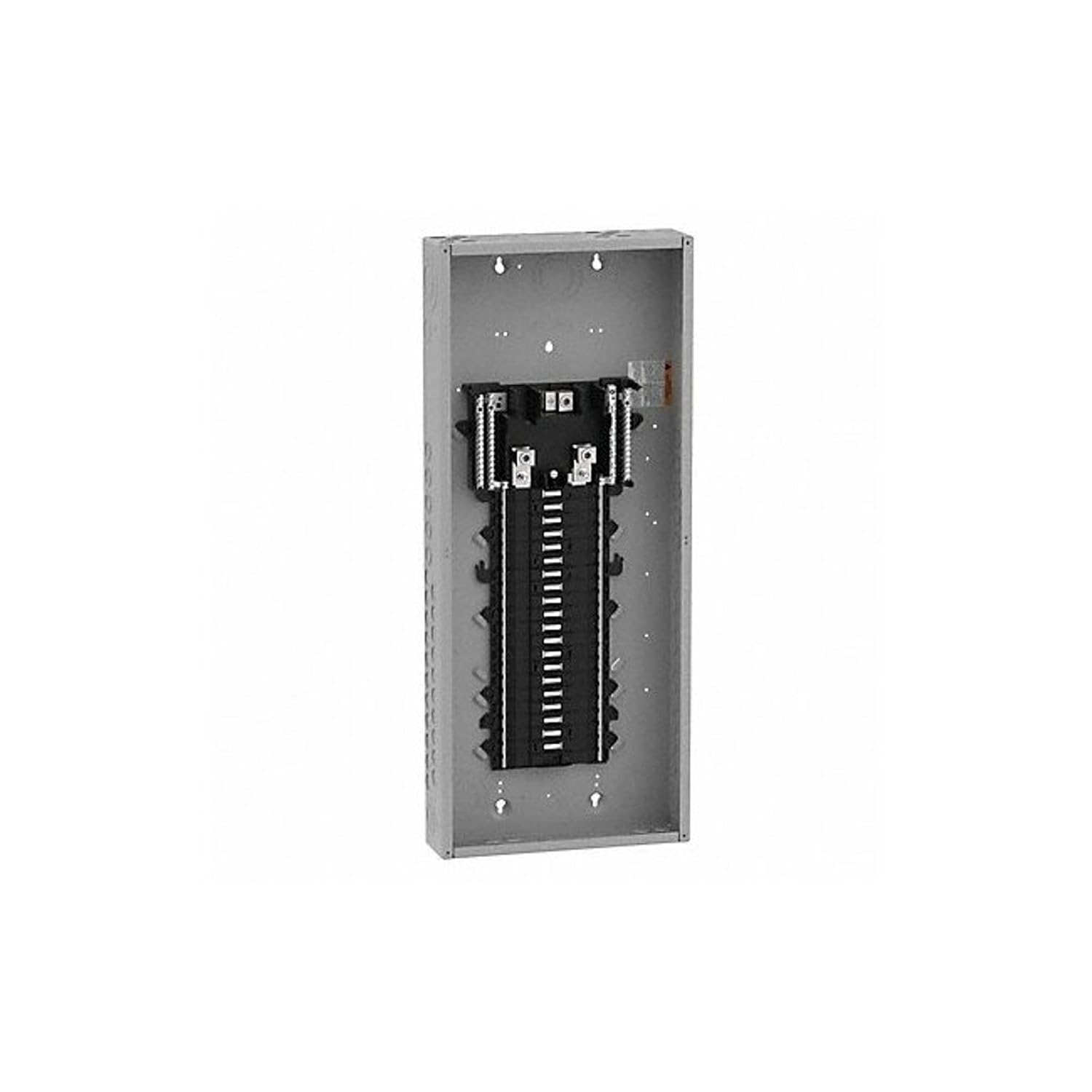
Once you have your calculated service amps from the NEC 220.82 load calculation, the next standard panel size at or above that number is your minimum service. NEC 230.79(C) requires a minimum 100A service disconnect for single-family dwellings regardless of calculated load.
Standard Panel Sizes and Their Applications
- 100A: Minimum code requirement for single-family dwellings. Appropriate for smaller older homes with gas heat and appliances. Limited capacity for additions or electrification.
- 150A: Medium-size homes with gas heat, electric range, electric dryer, and water heater. Getting tight for all-electric modern homes.
- 200A: The current industry standard for new construction. Handles full electric appliances plus one EV charger with headroom. Most homes built since the 1990s have 200A service.
- 225A: Larger homes with full electric appliances, heat pump HVAC, and EV charging. Popular upgrade for older 200A services being pushed to capacity.
- 400A: Large all-electric homes, multiple EV chargers, or homes designed for future full electrification. Requires parallel conductor sets. Becoming more common in new construction designed for grid-interactive loads.
💡 Future-Proofing: If your calculated load is between 150A and 175A, install 200A service anyway. Panel upgrades are expensive and disruptive. The difference between a 150A and 200A service installation is minor at initial install time but significant when you want to add an EV charger or heat pump later.
The 83% Rule for Service Conductors
Per NEC 310.12, service entrance conductors for single-phase dwelling services rated 100–400A can be sized at 83% of the service rating — not 100%. This is why a 200A service uses 2/0 AWG copper (rated 175A) rather than 3/0 AWG (rated 200A). The statistical demand load of a residence rarely reaches 100% of the service rating, and this allowance is built into the NEC based on utility demand studies.
Frequently Asked Questions
What is the NEC 220.82 optional method?
NEC 220.82 is the Optional Method for calculating electrical service loads in single-family dwellings. It groups all general lighting, appliance, and fixed load VA together, then applies a demand factor of 100% to the first 10,000 VA and 40% to the remainder. After that, the largest heating or cooling load is added at 100% to get the total demand. The result is divided by 240V (or 208V) to find the required service amps. It's called "optional" because it's an alternative to the more detailed Standard Method in NEC Part III — but it's the most commonly used method for residential service sizing.
How do I calculate the square footage for a load calculation?
Use the outside dimensions of the dwelling to calculate gross floor area, then subtract any excluded spaces: open porches, attached garages, unfinished basements or attics not adaptable for future use. Per NEC 220.82(B)(1), multiply the remaining habitable square footage by 3 VA per square foot. A 2,000 sq ft finished home produces 6,000 VA in general lighting load. A 2,000 sq ft home with an attached 500 sq ft garage excludes the garage — only the 2,000 sq ft counts.
Does a gas stove or gas dryer count in the load calculation?
No. Gas appliances do not appear in an electrical load calculation under NEC 220.82. Only electrically-powered appliances with a nameplate VA rating are included. A gas range may have a 120V ignition circuit, but that load is negligible and covered by the general lighting allowance. If you have a gas dryer, no dryer VA appears in the calculation. If you later replace it with an electric dryer, the service may need to be re-evaluated.
Do I include both the A/C and the electric heat in the load calculation?
No. Per NEC 220.82(C), you calculate both heating and cooling loads and then add only the largest to your general demand load. NEC 220.60 (noncoincident loads) recognizes that a home doesn't heat and cool simultaneously. Calculate your A/C load at 100%, calculate your heating load at the applicable demand factor (65% for 1–3 units, 100% for a heat pump), then compare the two numbers and use only the larger one in the final calculation.
How do I size an electric service for a heat pump with backup electric heat strips?
Per NEC 220.82(C)(3), when a heat pump operates with supplemental electric heat, count 100% of the heat pump compressor nameplate VA plus 65% of the supplemental heat strip VA. Add these together and compare to your A/C-only load. Use whichever is larger. If the heat pump and supplemental heat are designed so they cannot run simultaneously (interlocked), you may be able to treat the heat pump as A/C at 100% — but verify this with your equipment documentation and your AHJ.
Is 200 amp service enough for a modern home?
For most modern single-family homes, 200A service is adequate and is the current standard for new construction. A 200A service provides 48,000 VA (200A × 240V). After applying the NEC 220.82 demand factor, most homes with full electric appliances, a heat pump, and one EV charger will calculate in the 140–190A range — fitting comfortably under 200A. However, homes with multiple EV chargers, a pool, hot tub, and all-electric appliances may need 225A or 400A. Run the calculation with your specific loads to know for sure.
What is the minimum service size for a single-family dwelling?
NEC 230.79(C) requires a minimum service disconnecting means of 100 amperes for single-family dwellings. Even if your load calculation produces a number below 100A — which would happen in a very small, mostly gas-fired home — the service must still be sized at 100A minimum. The Optional Method (NEC 220.82) is also only applicable to services rated 100A or larger, so the minimum is effectively set by both requirements.
What wire size do I need for a 200 amp service?
Per NEC Table 310.12 (the 83% rule), a 200A single-phase residential service requires 2/0 AWG copper or 4/0 AWG aluminum service entrance conductors, assuming no ambient temperature correction factors apply. The 83% rule allows these conductors — rated at 175A and 180A respectively — to serve a 200A service because residential demand studies show actual peak loads are well below the service rating. For the neutral conductor, sizing follows NEC 220.61 and is typically one size smaller than the ungrounded conductors.
HVAC on this page is a service load (VA). Airflow restriction is a different measurement: use the External Static Pressure (ESP) Calculator for cabinet static vs the blower nameplate.
Related calculators