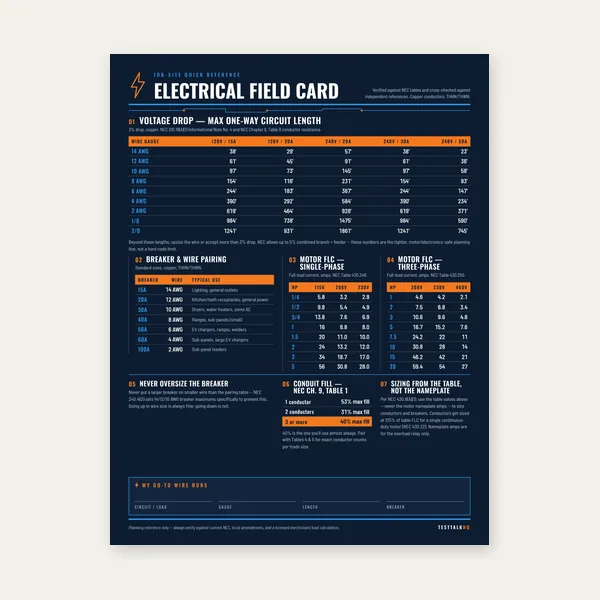
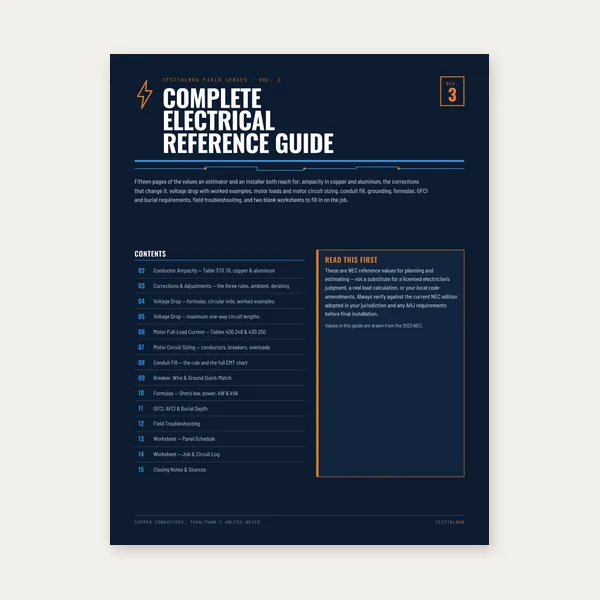
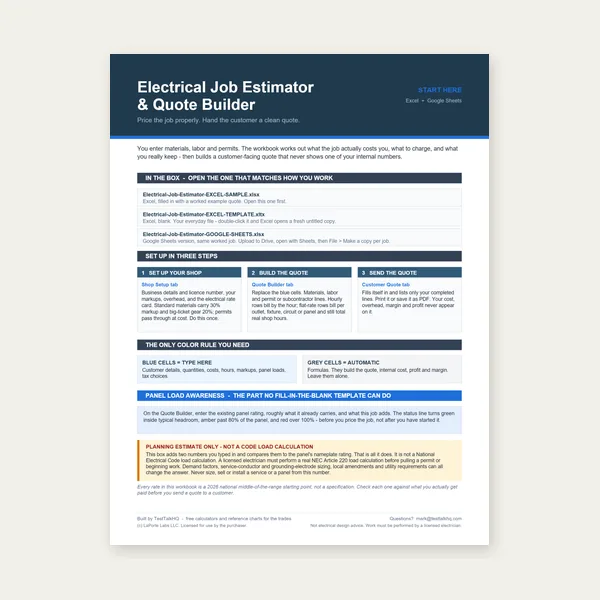
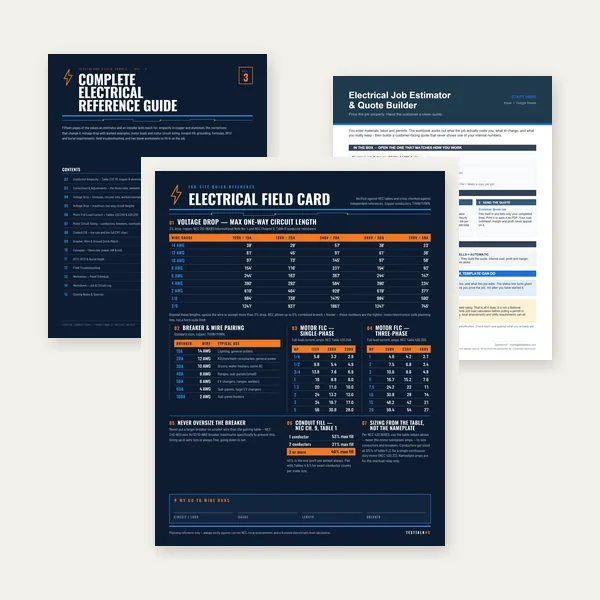
Boxes, devices & rough-in tools
Deep old-work boxes, TR receptacles, strippers, wire for homeruns, and breaker finders for safe remodel work.
Stock up
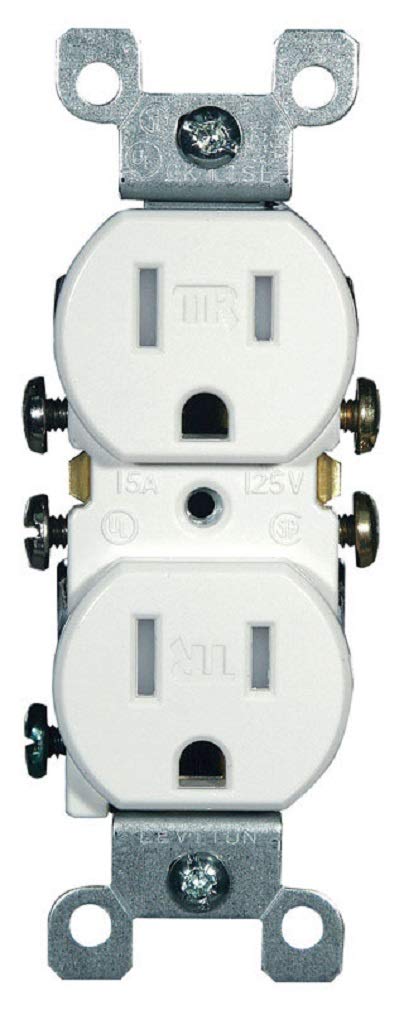
Leviton 15A Tamper-Resistant Duplex Outlet — 10 Pack
- NEC-friendly TR outlets for 15A residential circuits
- Each yoke = 2 units in box fill
- 10-pack for whole-room rough-in
View on Amazon →
Top pick
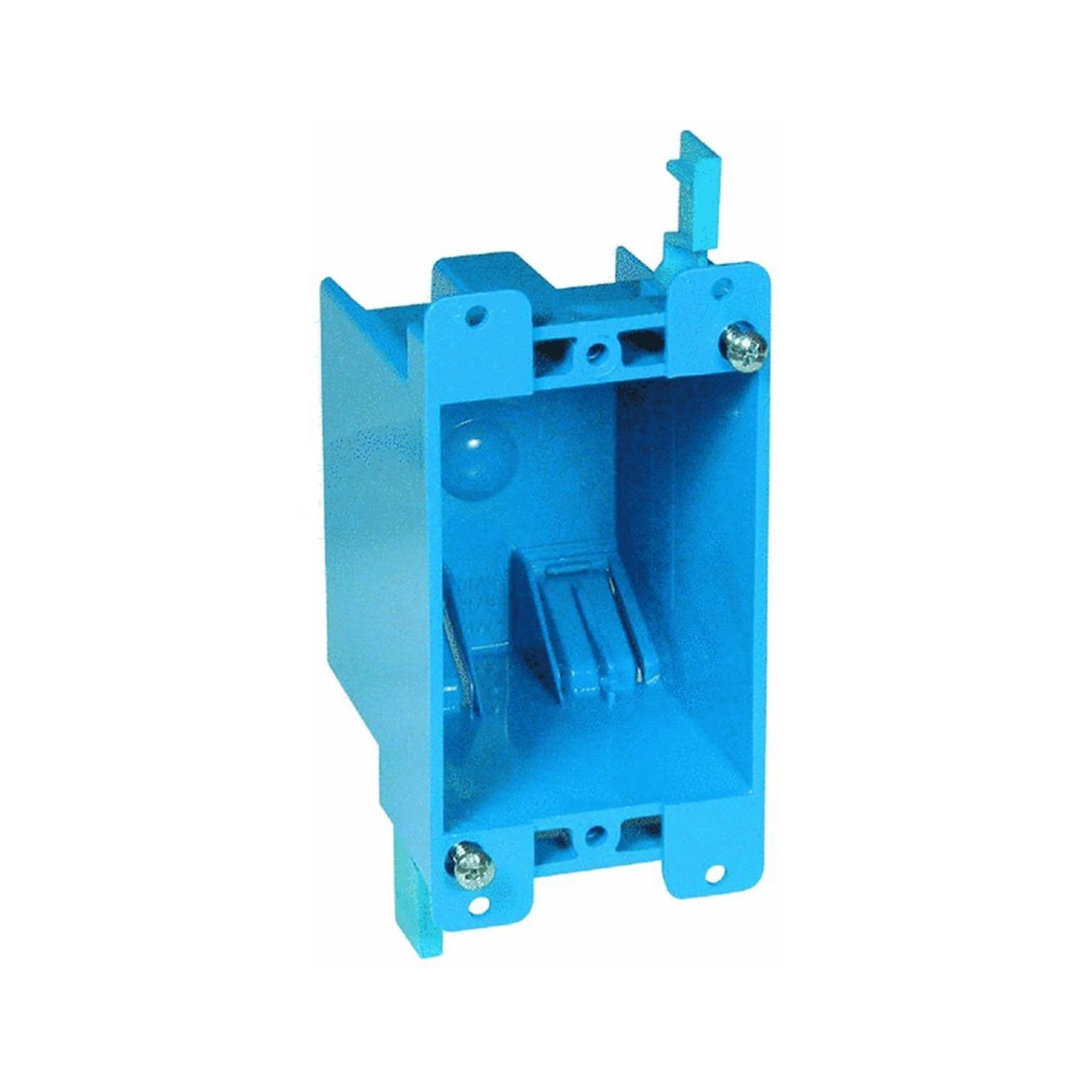
Carlon B114R Single-Gang Old Work Box — 25 Pack
- 22.5 cu in — extra room when fill is tight
- Wing anchors for remodel cuts
- Natural upgrade when a small box fails fill
View on Amazon →
Essential
Klein Tools 11063W Wire Stripper / Cutter
- Strips 10–18 AWG for common branch circuits
- Clean strips before counting conductors
- Bolt shear and loop bender built in
View on Amazon →
Copper
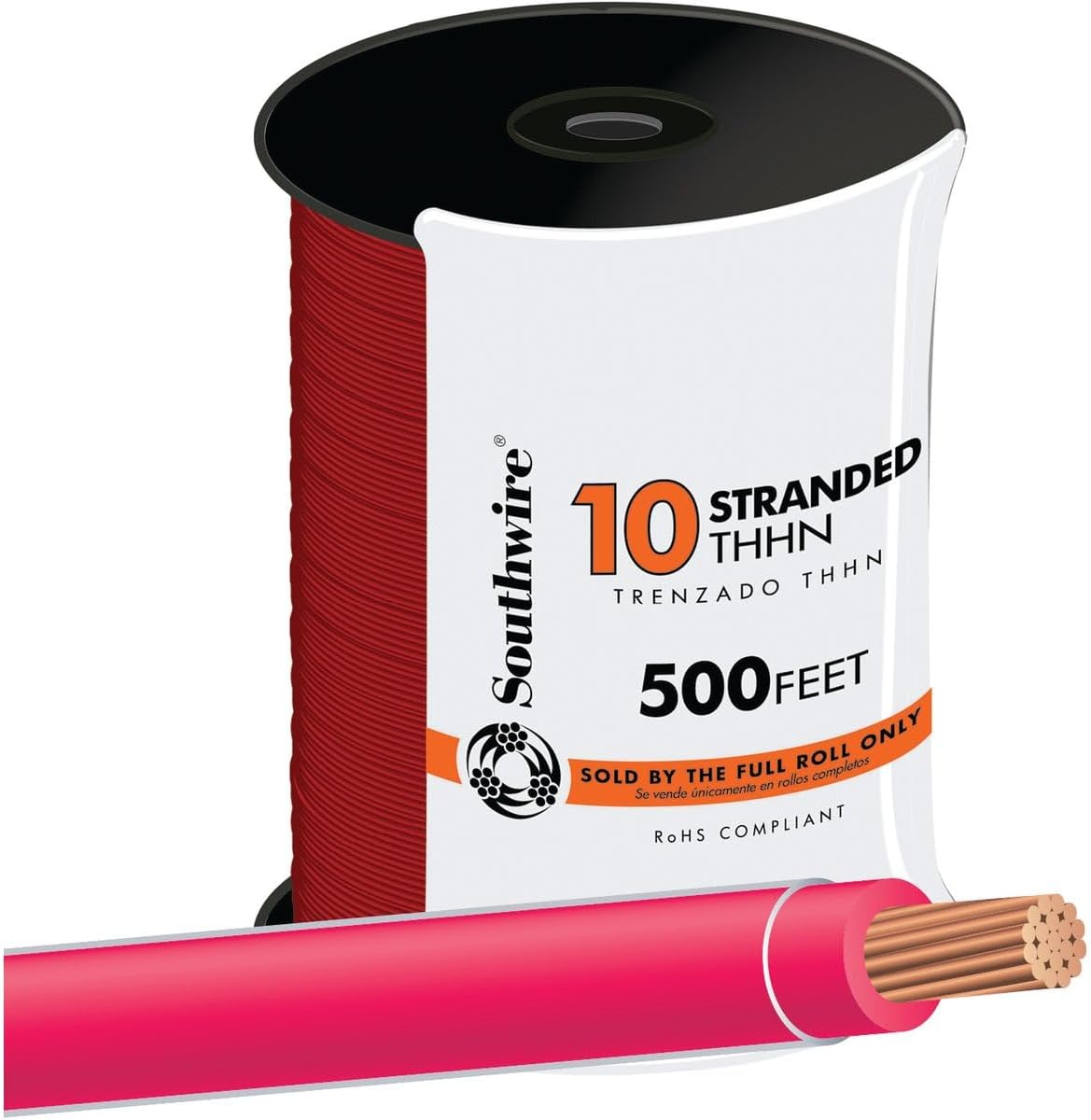
Southwire 10 AWG Stranded THHN
- THHN for conduit or open runs when upsizing homeruns
- Pairs with deeper boxes on heavy 20A/30A circuits
- Same Southwire pick used on other electrical calcs
View on Amazon →
Locate
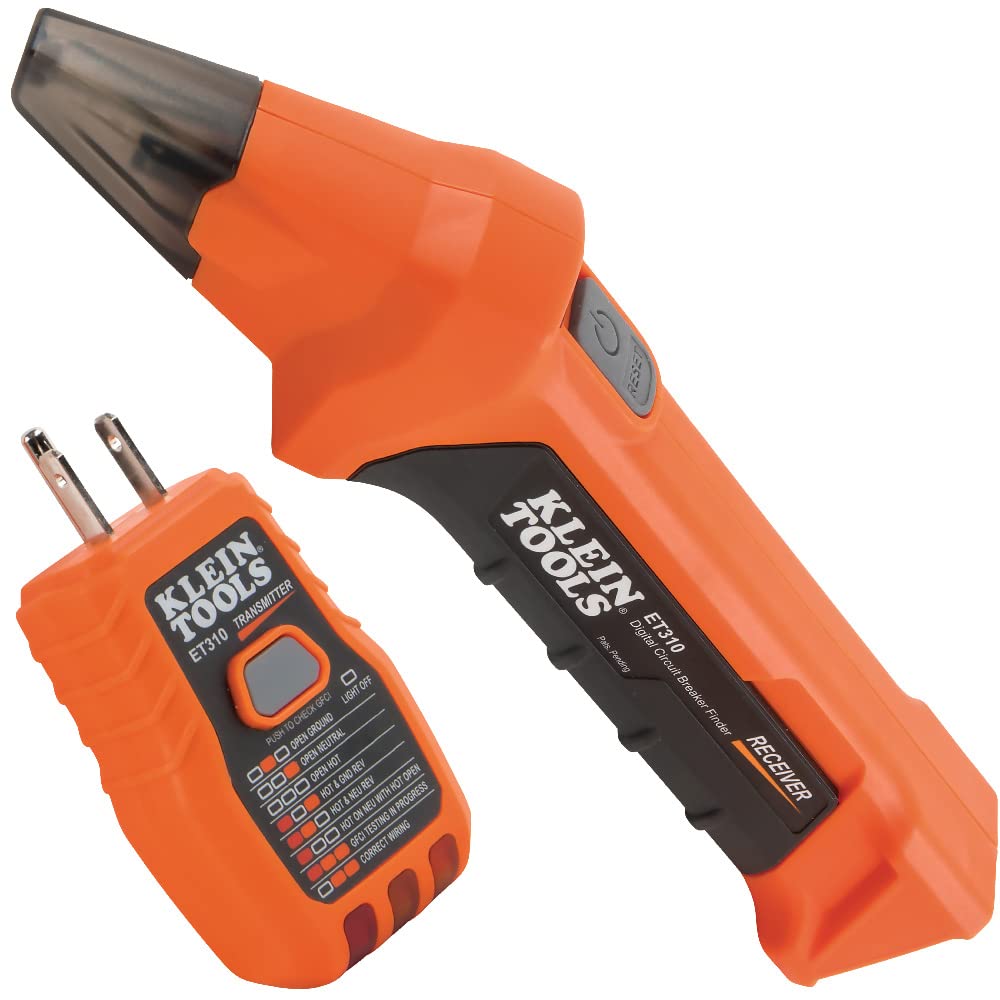
Klein Tools ET310 Circuit Breaker Finder
- Identify the correct breaker before opening a box
- Transmitter + receiver kit
- Saves time on remodels and troubleshooting
View on Amazon →
As an Amazon Associate, TestTalkHQ earns from qualifying purchases.
How to use this calculator
Box fill is one of those code calculations that catches people off guard on remodels. This calculator follows NEC 314.16(B). Use it like this:
- Select the largest conductor size in the box. Volume per unit is based on the largest wire — not an average. Mixed 14 and 12 AWG means use 12 AWG for the whole calculation.
- Count insulated conductors entering or passing through. Each conductor from outside that terminates or passes through is one unit. Pigtails entirely inside the box = zero.
- Grounds — one unit total. All EGCs together count as one unit based on the largest ground in the box.
- Devices — two units per single-gang yoke. Duplex on one strap = 2 units.
- Internal clamps — one unit total when integral to the box.
- Enter stamped box volume from the manufacturer marking.
Field tip: When in doubt on a remodel, read the volume molded in the box, then count everything. A 20.3 cu in box with two 12-2s and one device is often tighter than people expect.
Understanding NEC 314.16
Why box fill exists
Packed boxes risk insulation damage and heat buildup. NEC 314.16 sets minimum cubic inches per conductor equivalent. For how conduit space differs from box space, see Conduit fill explained the right way.
Volume allowance system
Each category gets conductor equivalents; each unit uses the volume for the largest wire size present (14 AWG = 2.00 cu in per unit through 6 AWG = 5.00 cu in per unit in this calculator’s table).
What counts
- One unit each: Insulated conductors from outside; each luminaire stud or hickey.
- One unit total: All EGCs combined; all integral internal clamps combined.
- Two units each: Each single-gang yoke.
- Does not count: Pigtails fully contained in the box; listed luminaire leads per assembly instructions.
Mixed wire sizes
Use the allowance for the largest conductor for every unit in the same box — no averaging.
Common scenarios
Standard outlet — one 12-2
One 12-2 with ground, one duplex in 20.3 cu in: 2 conductors + 1 ground + 1 device (2 units) = 5 units × 2.25 = 11.25 cu in — passes with margin.
Two 12-2 cables
Four conductors + 1 ground + 1 device = 7 units × 2.25 = 15.75 cu in — still usually fine in 20.3 cu in. A third cable pushes you toward the limit.
Junction box
Five 12-2 cables, splice only, 29.5 cu in: 10 + 1 ground = 11 units × 2.25 = 24.75 cu in — passes until you add clamps, devices, or more cables.
Pro tip: Use the deepest box the trim allows; replacing an undersized box later is expensive.
Frequently asked questions
Do pigtails count in box fill?
No, for conductors that do not leave the box (both ends inside). Pigtails that are part of an entering conductor still count as that conductor’s entry.
How many grounds count?
All equipment grounding conductors in the box together are one conductor equivalent, sized per the largest EGC present.
Does a GFCI count as one device or two?
A single-gang GFCI yoke is still two units — same as any single-gang device.
What if wire sizes are mixed?
Use the volume allowance for the largest wire for every unit in that box.
Where is box volume marked?
Manufacturers stamp or mold it inside the box per NEC 314.16(A). If missing, use the manufacturer’s cut sheet.
Do unused internal clamps count?
If the box is listed with integral internal clamps, they count as one unit total whether you use every clamp or not. Knockout-only fittings are a different story — verify listing.
What if I fail?
You need a larger box, an extension ring, fewer conductors/devices, or a listed assembly change. Overfill is a defect and a safety issue.