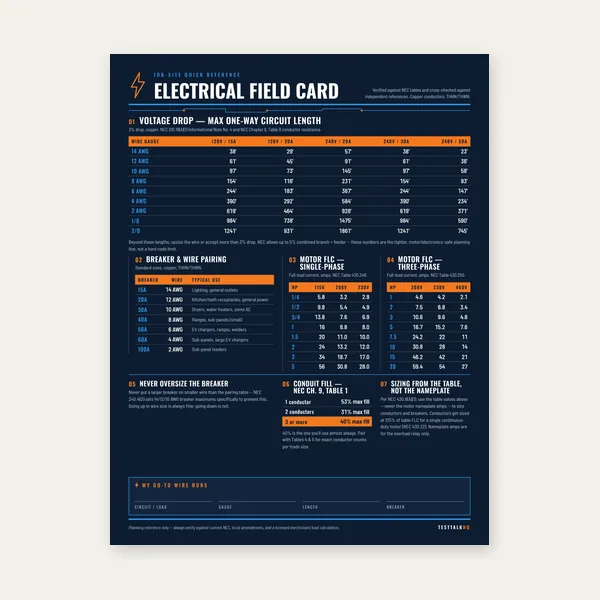
Electrical Reference Card
One page. Voltage drop lengths, breaker and wire pairing, motor FLC.
$3.99
BuyResettable vs one-shot protection after you have already sized the copper — not a substitute for the gauge calculator
Wire size is drop math. This page is the overcurrent device. Same decision shape as process-choice articles: two real tools, different failure modes.
They open when current exceeds the rating long enough to heat the element. They do not correct voltage drop. A 40 A breaker on 14 AWG is a fire path. Choose gauge first (guide), then protect that gauge at or below its chassis ampacity, close to the battery.
When it opens, the circuit stays dead until you replace the element. That is a feature on a trailer connector you will not sit and reset from the cab. Cost is low. ATC/ATO in a panel is tidy for lights and compressors. ANL/MIDI belong on amps and winch feeds. You see the melted link; you do not guess whether a breaker is “tired.” Downside: you need spares, and a hidden fuse under a battery tray is miserable at midnight.
Type I auto-reset will cycle on a short until something melts — generally the wrong choice for unattended accessories. Type III (manual reset, often a button on the stud) is the usual winch/plow choice: trip, walk up, reset after you fix the jam. Marine/RV 12 V breakers are often ignition-protected; cheap automotive “resettable” buttons are not. Trip curves are slower than a fuse; inrush that pops a fuse may hold a breaker. Mount away from exhaust heat or the rating lies.
Multiple small branches (light bar, compressor, fridge) in a fuse block. Anything you will not babysit. Circuits where a silent auto-reset would hide a short. Lowest cost at the battery positive.
Winch, plow, or welder-on-truck feeds you expect to overload mechanically and then continue the job. You want a glove-friendly reset at the bumper, not a MIDI fuse in a snowbank. Accept slower trip and inspect after every pop — a breaker that trips twice is a wiring or motor problem, same class of issue as melted insulation and slow winch.
Fuse block near the battery: fused taps for everything under ~30 A. Stud-mount Type III breaker or ANL on the one fat cable. Do not series a breaker and a fuse “for luck” unless the fuse is a failsafe at a lower rating — two devices fight and you will not know which opened. 24 V RV banks use the same logic at twice the voltage; percent drop still comes from the 12/24 V calculator.
One page. Voltage drop lengths, breaker and wire pairing, motor FLC.
$3.99
Buy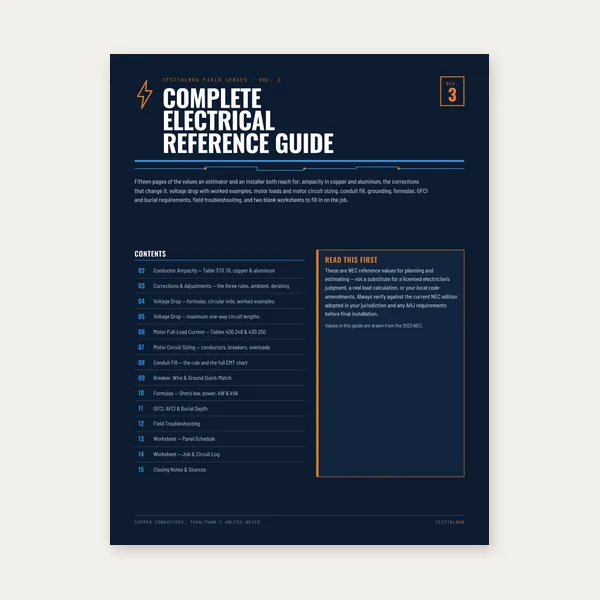
15 pages. Ampacity, corrections, voltage drop, motor circuits, conduit fill.
$12.99
Buy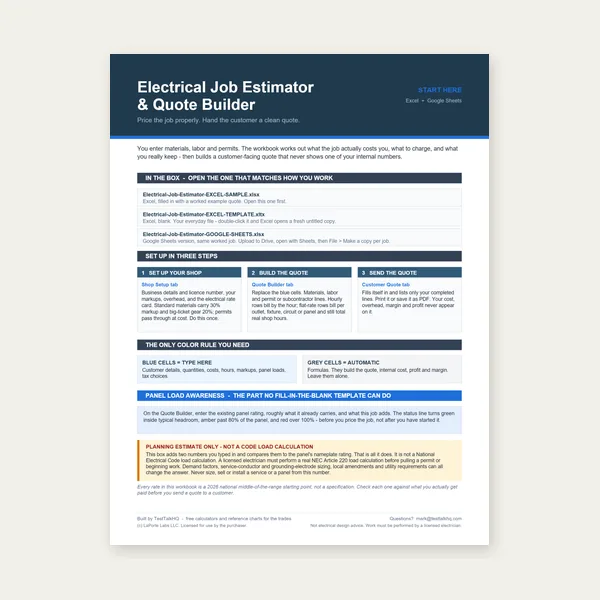
Quote electrical work and flag panel headroom before you price it.
Excel or Google Sheets. Best on a computer.
$29.00
Buy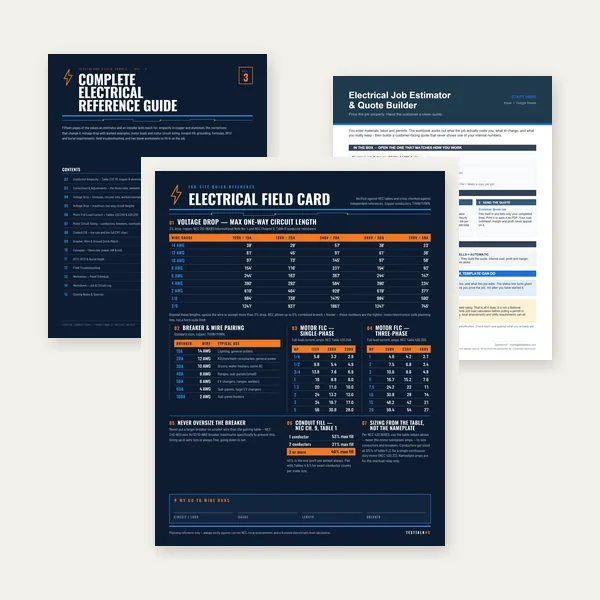
Card, 15-page guide and the estimator workbook. All six files.
Excel or Google Sheets. Best on a computer.
$34.99
$45.98 if bought separately — save $10.99
BuyCheckout opens in a new tab.