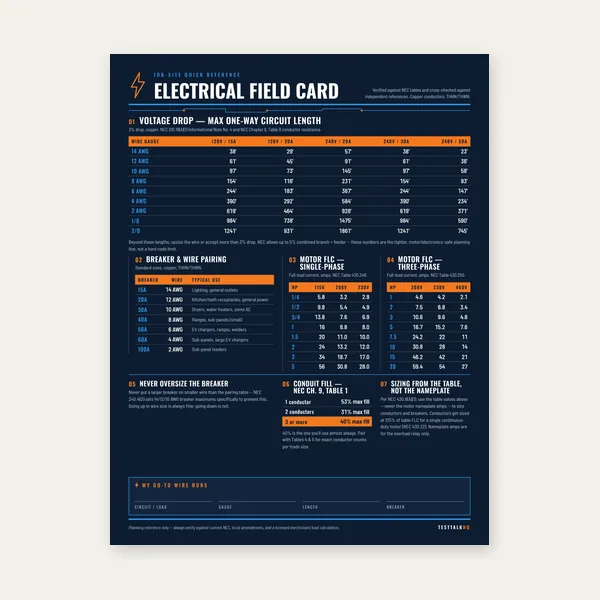
Electrical Reference Card
One page. Voltage drop lengths, breaker and wire pairing, motor FLC.
$3.99
BuyOverload, short circuit, or ground fault — how to tell them apart and fix the real cause.
A breaker that trips once might be a one-time event. A breaker that trips repeatedly is telling you something is wrong — and resetting it without finding the cause is how fires and equipment damage start. The three root causes are overload, short circuit, and ground fault. Each behaves differently, and the fix is different for each.
Start with the Circuit Breaker Sizing Calculator to confirm the breaker matches conductor ampacity — but do not upsize the breaker to stop trips without fixing the underlying problem.

An overload is too much load current for too long. The thermal element in the breaker heats up as current flows. If the load exceeds the rated ampacity continuously (or with insufficient cool-down between cycles), the bimetal trips. Space heaters on a 15-amp circuit, a window AC sharing a bedroom circuit with other loads, or a shop full of tools on one 20-amp branch are classic overload scenarios.
How it behaves: Trips after minutes or hours of running, often when multiple loads are on simultaneously. Resetting works until the load builds again. The breaker feels warm. No scorch marks, no buzzing before the trip (usually).
A short circuit is a low-impedance path between hot and neutral or hot and ground — damaged insulation, a nail through a cable, a loose strand touching the box. Current spikes to thousands of amps. The magnetic trip element fires instantly.
How it behaves: Instant trip the moment you reset — sometimes with a visible flash or loud pop. May trip even with nothing plugged in if the fault is in the wiring. Resetting repeatedly is dangerous: each attempt drives fault current through damaged conductors.
A ground fault leaks current to ground outside the intended path. On a GFCI-protected circuit, as little as 5 mA imbalance trips the device. On a standard breaker, a ground fault must be severe enough to trip the magnetic element — but lower-level ground faults can persist undetected on non-GFCI circuits until they worsen.
How it behaves: GFCI trips in milliseconds, often when using a tool outdoors or near water. Standard breaker ground faults may trip instantly (severe) or cause intermittent trips as moisture or vibration changes the leak path.
With the breaker off, unplug every device on the affected circuit. Turn the breaker on. If it holds with nothing connected, the problem is a load or cord — not the fixed wiring. If it trips immediately with nothing connected, the fault is in the wiring, a device wired in (switch, receptacle, hardwired unit), or the breaker itself.
Reset the breaker firmly to full off, then on. Listen for buzzing, crackling, or smell of hot insulation. If it trips within seconds with no load, stop resetting and call an electrician — you likely have a short or ground fault in the wiring.
Plug in or turn on one device at a time. Wait several minutes between additions on suspect circuits. The device that causes the trip is your starting point — but remember that cumulative load matters: two small loads together may trip where each alone does not.
A clamp meter on the circuit conductor under load shows actual amp draw. Compare to breaker rating. For continuous loads (3+ hours), NEC 210.20 limits loading to 80% of breaker rating on most branch circuits — a 20-amp circuit should stay at or below 16 amps continuous. The Motor FLA Calculator helps estimate motor contribution when shop equipment is on the circuit.
If the breaker is correctly sized to the wire but trips under legitimate load, the circuit may simply need more capacity — a new dedicated circuit, not a larger breaker on the same wire. Upsizing the breaker without upsizing conductors defeats overcurrent protection and is a fire hazard.
Voltage drop on long runs can also cause motors to draw excess current, tripping breakers below nameplate expectations. Check run length and wire gauge with the Voltage Drop Calculator when motor loads are involved.
Compressors with failing start capacitors, heaters with shorted elements, and power tools with damaged armatures can trip breakers intermittently. If one device consistently causes the trip, test it on a different circuit. If the problem follows the device, repair or replace the appliance — not the panel.
Loose neutrals, backstabbed receptacles, aluminum connections without proper treatment, and rodent-damaged cable all cause trips, heat, and fire risk. Intermittent trips that worsen in humid weather point toward ground faults. Immediate trips on reset point toward shorts. These require opening boxes and tracing conductors — work most homeowners should not do energized.
If breakers trip violently with a flash or the panel shows signs of arcing at the bus, available fault current may be exceeding the breaker's interrupting rating — a separate problem from overload. The Short Circuit Current Calculator estimates available fault current for AIC verification. Underrated equipment can fail catastrophically during a fault instead of clearing it safely.
DIY-safe: Unplugging loads, identifying an overloaded power strip, moving a space heater to a dedicated circuit, replacing a clearly failed appliance cord.
Call a pro: Immediate trips with no load, burning smell, scorched breakers, aluminum wiring, any work inside the panel beyond resetting, circuits that require AFCI/GFCI troubleshooting in walls, or any trip you cannot explain after systematic load isolation.
Every reset on a short circuit or severe ground fault drives high current through damaged conductors. Heat accumulates. Insulation fails further. The breaker is doing its job — tripping is the safety event. Ignoring the cause and resetting "just to see" is how panel fires start. If the breaker trips twice without a clear, corrected cause, stop and investigate or call for help.
No — not without upsizing the wire to match. Breaker ampacity must not exceed conductor ampacity per NEC 240.4. A 30-amp breaker on #14 wire is always wrong.
Water intrusion at outdoor receptacles, damaged UF cable, or moisture in a junction box creates ground-fault paths. GFCI-protected circuits trip first; standard circuits may trip if the leak is severe enough.
Slightly warm under heavy load can be normal. Hot to the touch, buzzing, or a acrid smell is not. De-energize and investigate.
One page. Voltage drop lengths, breaker and wire pairing, motor FLC.
$3.99
Buy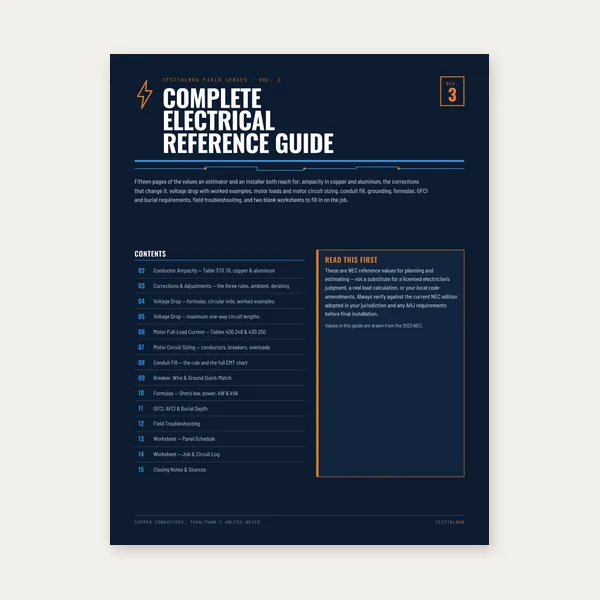
15 pages. Ampacity, corrections, voltage drop, motor circuits, conduit fill.
$12.99
Buy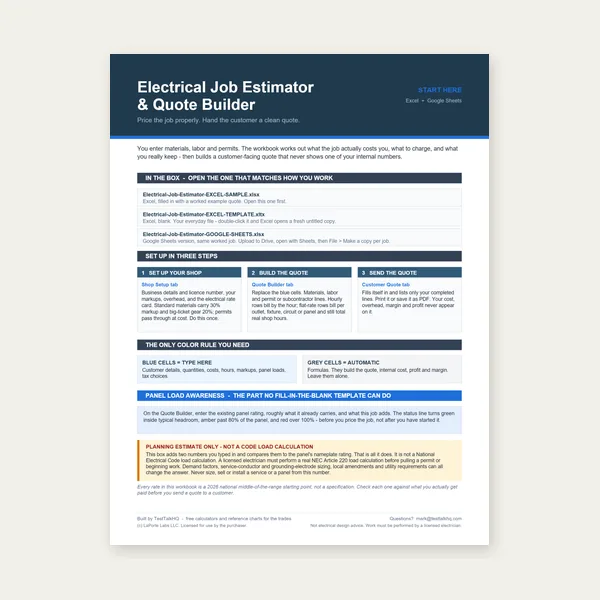
Quote electrical work and flag panel headroom before you price it.
Excel or Google Sheets. Best on a computer.
$29.00
Buy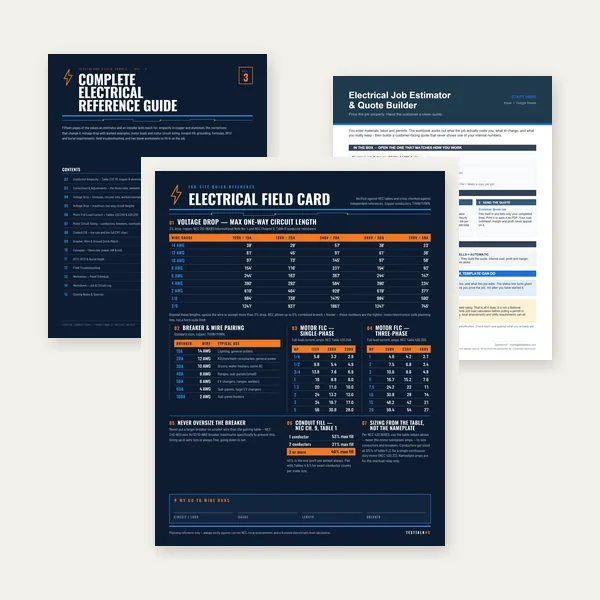
Card, 15-page guide and the estimator workbook. All six files.
Excel or Google Sheets. Best on a computer.
$34.99
$45.98 if bought separately — save $10.99
BuyCheckout opens in a new tab.
Measure load, trace circuits, and find overloads before you open the panel

Clamp around a branch conductor to see actual amp draw under load — the fastest way to confirm overload vs. a wiring fault when everything is plugged back in.
Check Price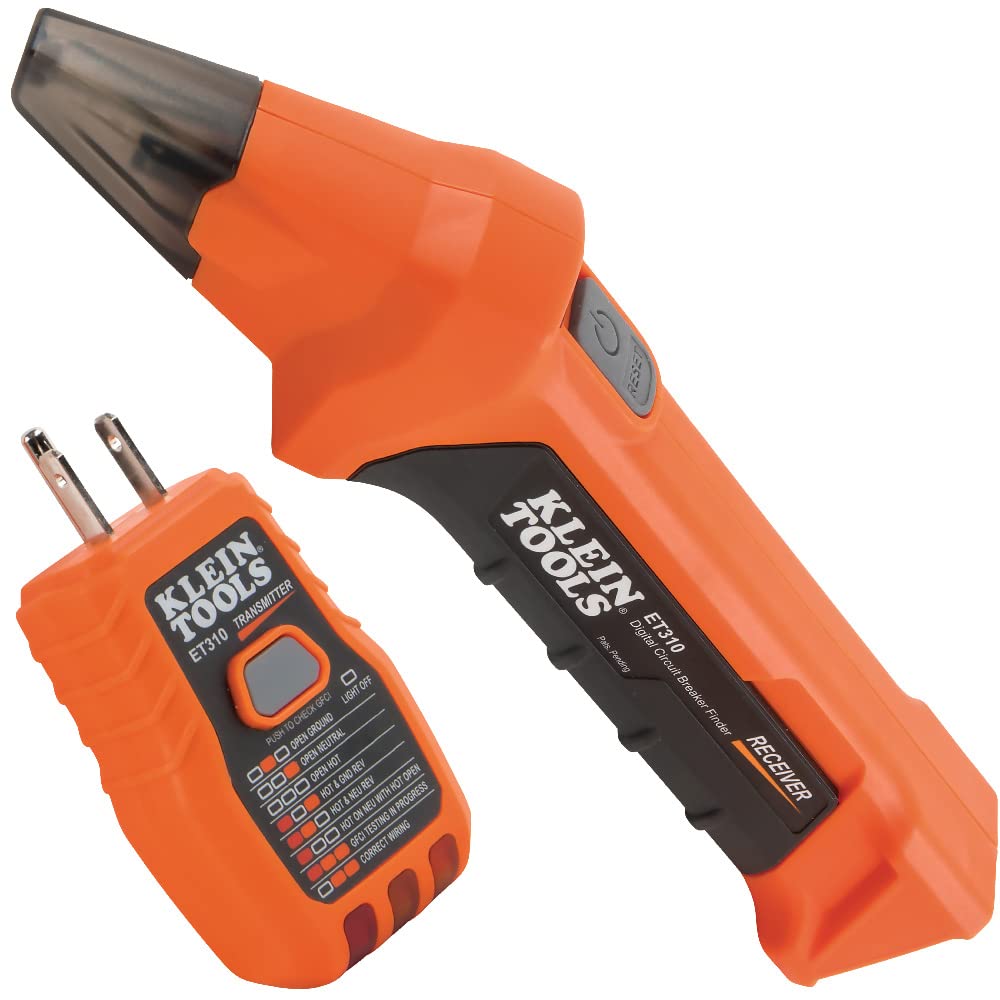
Identifies which breaker feeds the tripping circuit so you can isolate it from the rest of the panel during step-by-step load testing.
Check Price
True-RMS voltage and non-contact detection for safe checks before and after reset. Verify the circuit is actually off before unplugging loads in hard-to-reach locations.
Check Price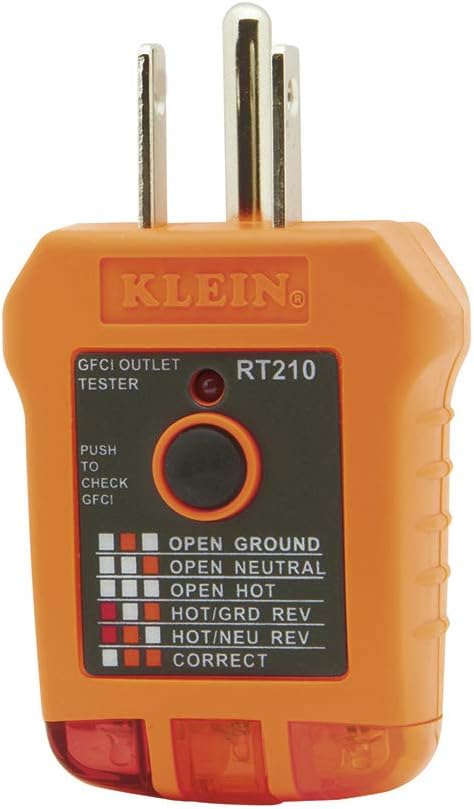
Detects reversed polarity, open ground, and GFCI trip faults that cause mysterious breaker behavior on protected branches.
Check Price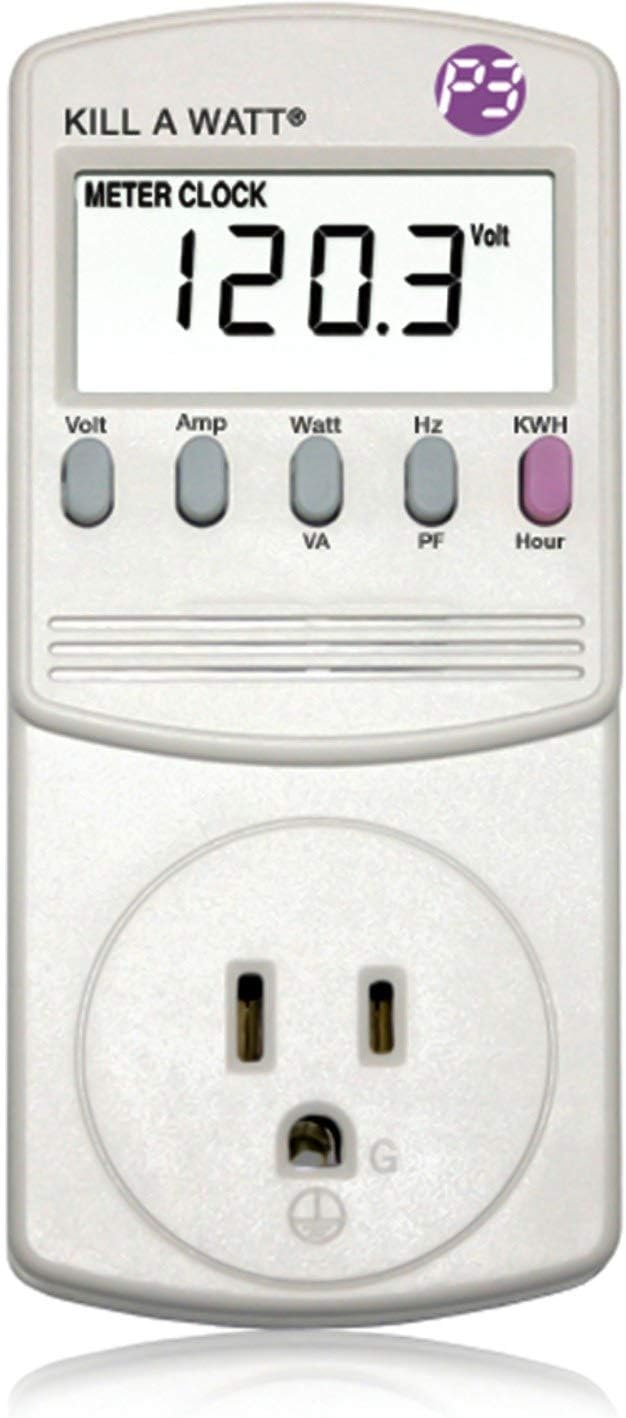
Plug individual appliances into the Kill A Watt to measure actual wattage and amp draw — isolates which device pushes a borderline circuit over the edge.
Check PriceAs an Amazon Associate, TestTalkHQ earns from qualifying purchases.
AFCI and GFCI breakers trip more readily than standard units by design. A vacuum cleaner tripping an AFCI is different from a breaker that will not hold with zero load connected. Distinguish between "this circuit does not like this one appliance" and "this circuit has a defect." The unplug-everything test separates them in under five minutes.
NEC 210.20 requires branch-circuit overcurrent devices to be sized at 125% of continuous load (loads expected to run 3+ hours). Practically, that means a 20-amp circuit should not run above 16 amps continuous. Space heaters, EV chargers, and window units often violate this on general-purpose circuits — the fix is a dedicated circuit sized for the load, not repeated resets.
If you hire an electrician, note which loads were connected, how long before the trip, and whether rain or time of day matters. That history cuts diagnostic time. For motor-heavy shops, FLA values from the Motor FLA Calculator give the pro a head start on whether the circuit was ever sized correctly for the equipment.
Amp rating from load: Circuit Breaker Sizing Calculator and the Circuit Breaker Sizing Chart (125% continuous lookup). Protection type (standard / GFCI / AFCI / dual-function): Circuit Breaker Types Explained. Trips after the size looks correct: Why Does My Breaker Keep Tripping?.