🔥 Advanced TIG Welding Calculator

Amperage, tungsten size, filler rod, shielding gas flow, and polarity starting points

Calculate precise TIG welding settings with our advanced calculator. Get instant recommendations for amperage, tungsten electrode size, filler rod diameter, and gas flow rate based on your material, thickness, and welding position. Perfect for both AC and DC TIG welding on steel, stainless, aluminum, and exotic metals.

Need other welding tools? Check out our MIG Welding Calculator for fast wire speed and voltage recommendations, and our Stick Welding Calculator for quick rod size and amperage settings.
Embed this calculator Free · no API key · keep the attribution link

Copy the snippet below to embed this calculator on your site. The attribution link must stay intact and dofollow (no rel="nofollow"). Browse all embeddable calculators

<div class="ttq-embed" style="max-width:100%;margin:0 auto;">
  <iframe src="https://testtalkhq.com/embed/tig-welding-calculator/?theme=light&utm_source=embed" width="100%" height="1100" frameborder="0" loading="lazy" scrolling="no" title="Tig Welding Calculator — TestTalkHQ" style="border:0;max-width:100%;width:100%;"></iframe>
  <p style="font:400 13px/1.4 system-ui,sans-serif;text-align:center;margin:6px 0 0;">Powered by the <a href="https://testtalkhq.com/tig-welding-calculator/?utm_source=embed&utm_medium=referral&utm_campaign=calculator_embed&utm_content=tig-welding-calculator" target="_blank" rel="noopener">TIG Welding Amperage Calculator</a> from <a href="https://testtalkhq.com/?utm_source=embed&utm_medium=referral&utm_campaign=calculator_embed&utm_content=tig-welding-calculator" target="_blank" rel="noopener">TestTalkHQ</a></p>
</div>

Welding

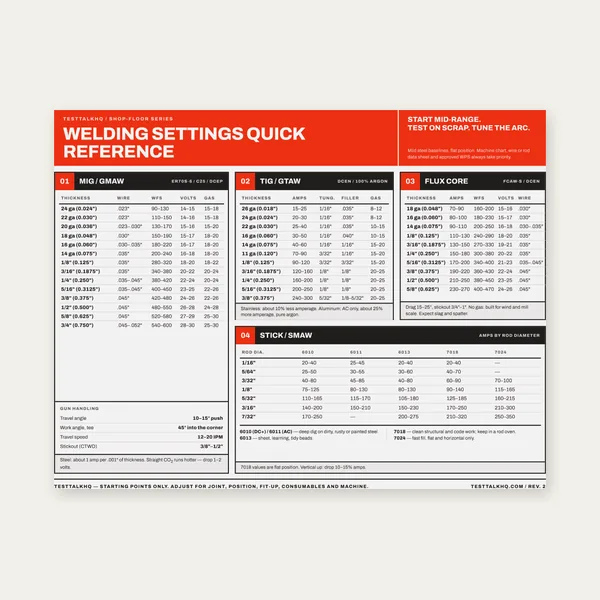
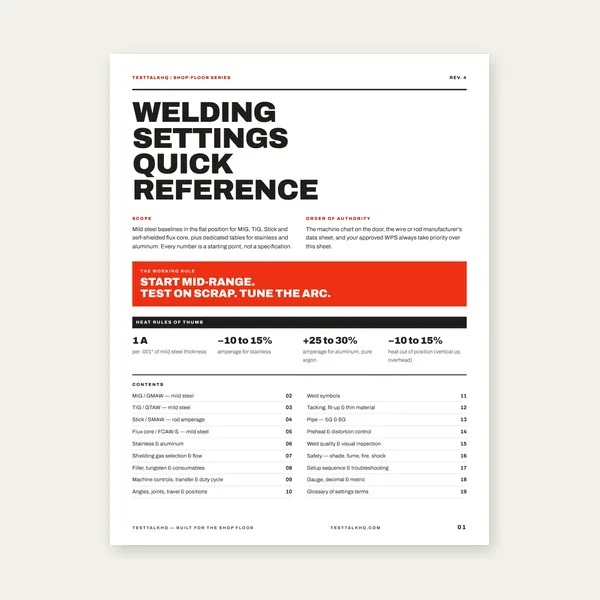
Welding Reference Card

Welding Reference Card

One page. MIG, TIG, stick and flux core settings by thickness.

$3.99

Buy
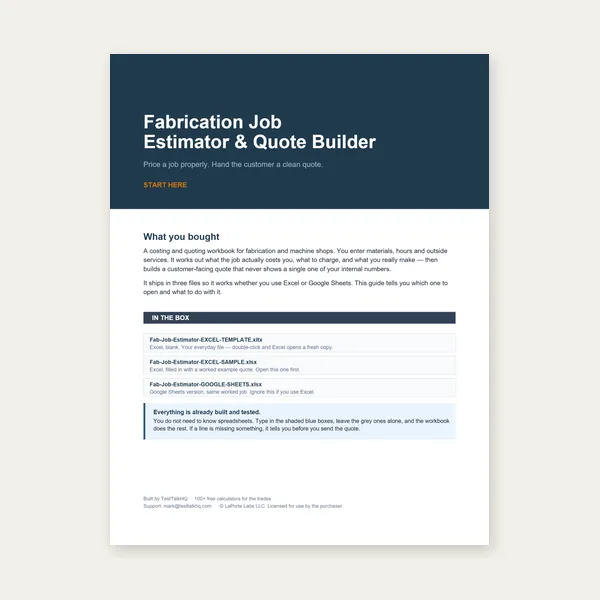
Complete Welding Settings Guide

Complete Welding Settings Guide

19 pages. Four processes, stainless and aluminum, symbols and inspection.

$12.99

Buy
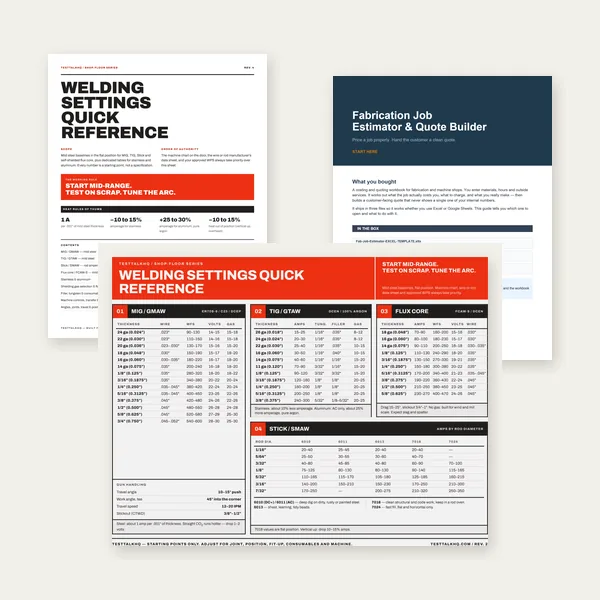
Welding Job Estimator

Welding Job Estimator

Price the job, then hand over a quote with no internal numbers.

Excel or Google Sheets. Best on a computer.

$29.00

Buy
BEST VALUE
Welding Complete Bundle

Welding Complete Bundle

Card, 19-page guide and the estimator workbook. All six files.

Excel or Google Sheets. Best on a computer.

$34.99

$45.98 if bought separately — save $10.99

Buy

See all Welding products

Checkout opens in a new tab.

🔥 Recommended TIG Welding Equipment

Five picks for machines, filler metal, shielding gas hardware, and torch consumables—matched to TIG workflow
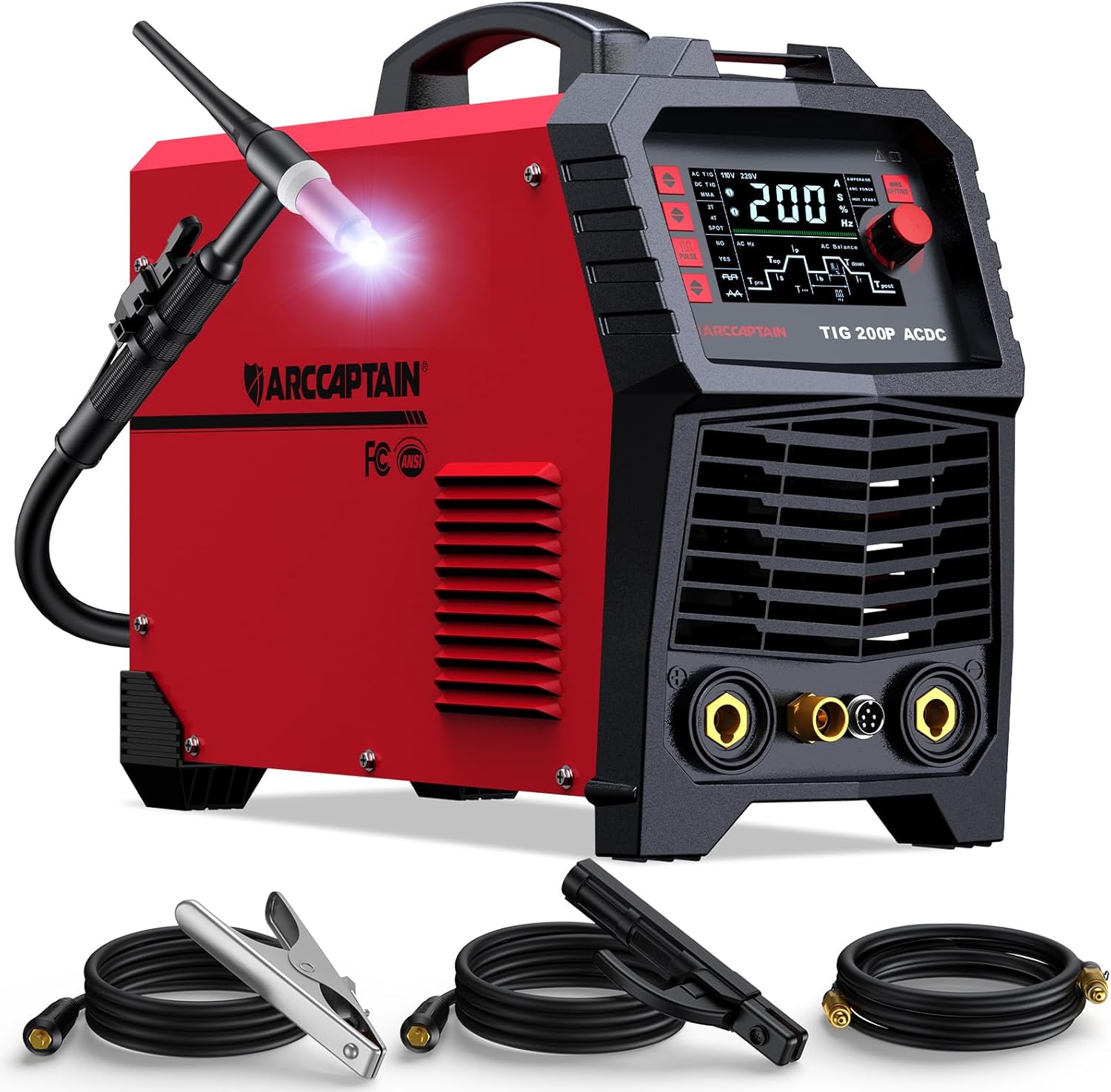
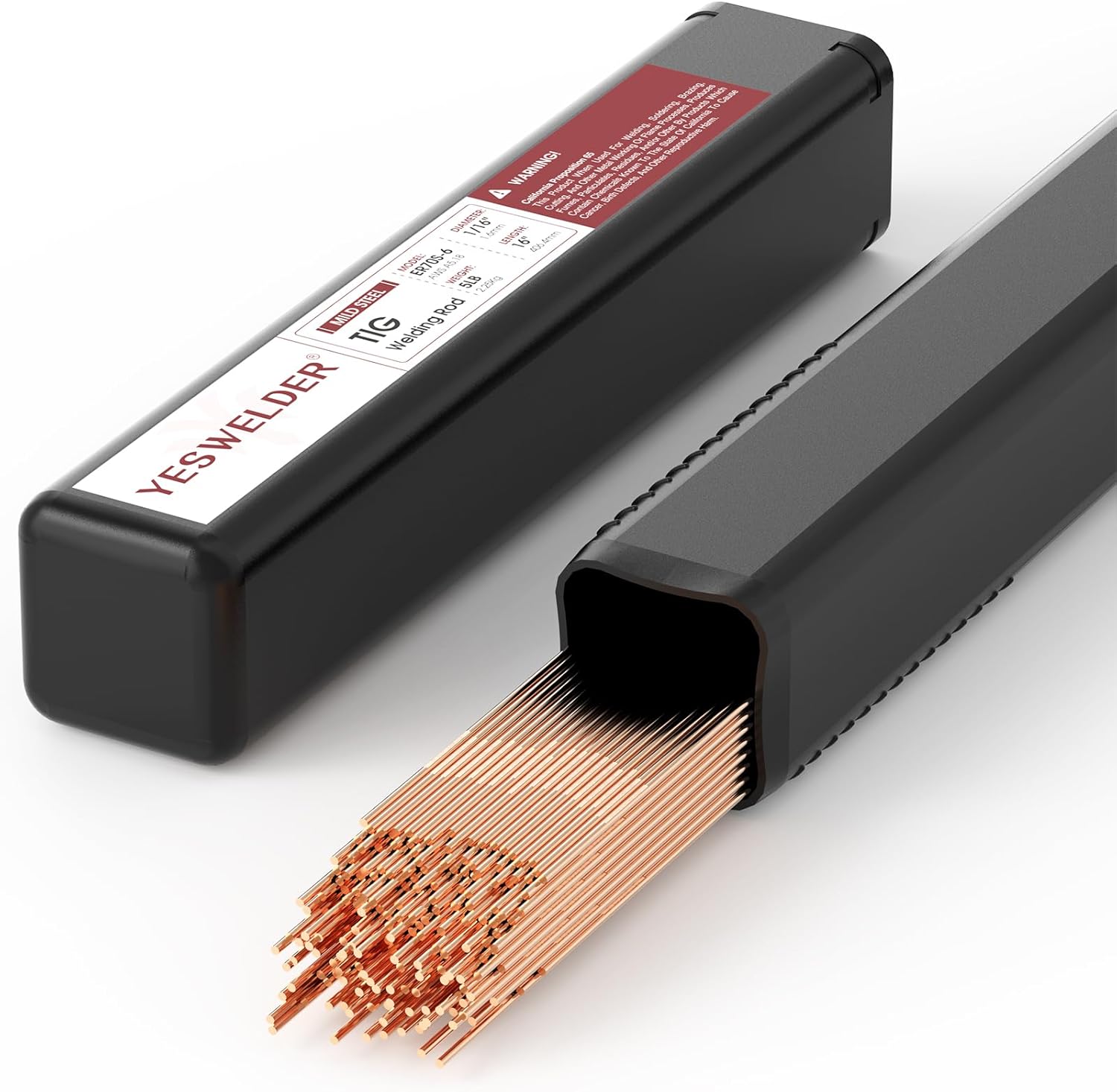
Essential Yeswelder ER70S-6 TIG filler rods

Yeswelder ER70S-6 TIG Filler Rods

  • ER70S-6 mild steel filler
  • Matches common steel TIG schedules
  • Clean copper-coated finish
  • Multiple diameters available
  • Typical shop staple
View on Amazon →
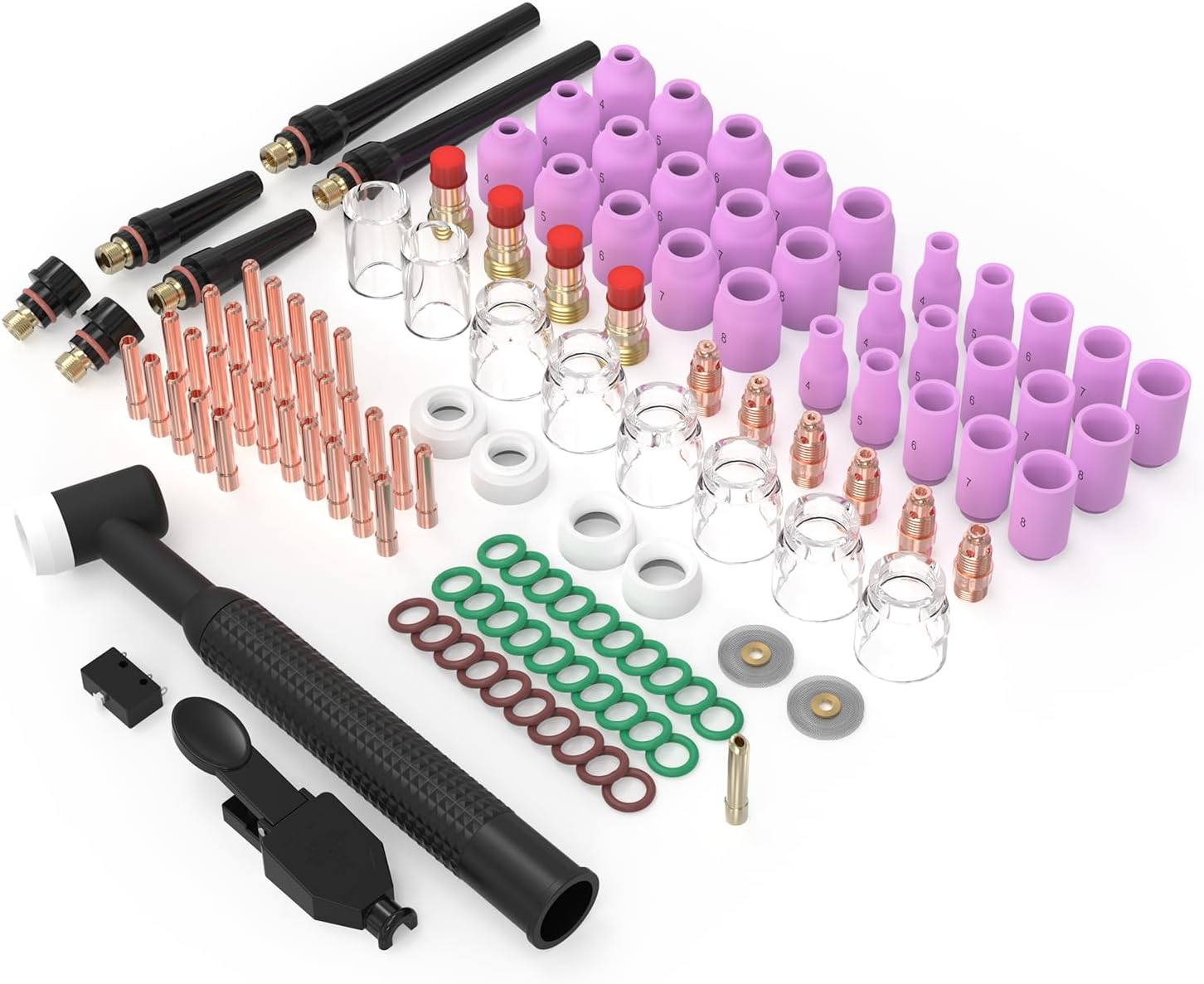
Torch kit Complete TIG welding consumables kit

Complete TIG Consumables Kit

  • Gas lens kit included
  • Collets, cups, and back caps
  • Tungsten electrodes (various)
  • Fits most TIG torches
  • Everything you need to refresh tips
View on Amazon →
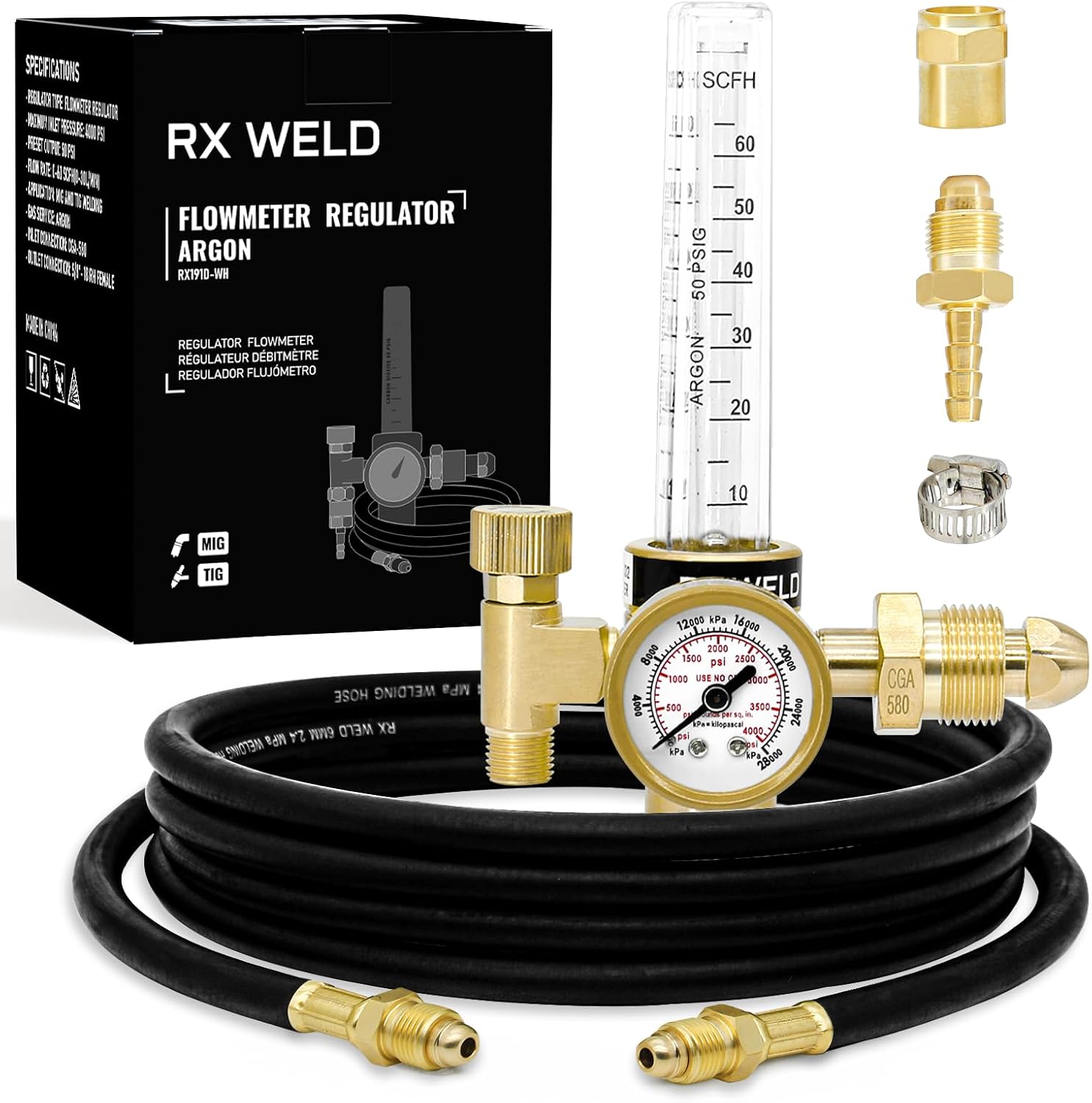
Argon regulator with flowmeter for TIG

Argon Regulator with Flowmeter

  • CGA-580 argon fitting
  • Dual gauge display
  • Precise flow control
  • Heavy-duty brass construction
  • Pairs with calculator CFH targets
View on Amazon →
Premium TIG welding gloves

Premium TIG Welding Gloves

  • Soft goatskin leather
  • Maximum dexterity for TIG
  • Heat resistant to 600°F
  • Comfortable fit for torch control
  • Essential for precision work
View on Amazon →

As an Amazon Associate, TestTalkHQ earns from qualifying purchases.

How to Use the TIG Welding Calculator

Select your base material, enter the material thickness, choose your joint type and welding position, and the calculator provides complete TIG setup recommendations. The results include amperage ranges, tungsten electrode specifications, filler rod size, gas flow rates, and polarity settings.

Understanding TIG Amperage Settings

The calculator uses the industry rule of thumb: approximately 1 amp per 0.001" of material thickness for steel. However, it adjusts based on several factors:

  • Material type: Aluminum requires 25% more amperage than steel due to its high thermal conductivity. Stainless needs about 10% less than steel.
  • Welding position: Vertical and overhead welding require 10-25% less amperage than flat position to prevent the puddle from sagging.
  • Joint type: Open root joints need slightly less amperage than closed butt joints due to the gap allowing heat dissipation.
  • Your skill level: Beginners should start at the lower end of the recommended range to compensate for slower travel speed.

Tungsten Diameter vs Amperage Range by Polarity

Tungsten diameter sets the safe current window. DCEN (electrode negative) carries more amps on a given size than AC; DCEP is rare for GTAW and ball-forms the tip at much lower current. Use Advanced options above to lock tungsten type, diameter, polarity, and pulse — the calculator checks capacity against your recommended amps.

GTAW Tungsten Diameter vs Current Typical operating windows · DCEN (steel/SS) vs AC (aluminum) 1/16" 3/32" 1/8" 5/32" 3/16" TUNGSTEN DIAMETER 0 125 250 375 500 AMPERAGE (A) DCEN AC
Fig. 1 — Approximate tungsten current capacity by diameter. DCEN windows run higher than AC on the same size; never exceed the electrode’s rating or the tip will melt and contaminate the weld.
DiameterDCEN (approx.)AC (approx.)Common use
1/16" (1.6 mm)20–80 A15–60 AThin sheet, autogenous
3/32" (2.4 mm)60–150 A50–120 AGeneral fabrication
1/8" (3.2 mm)100–250 A80–200 APlate & pipe
5/32" (4.0 mm)160–350 A130–275 AHeavy section
3/16" (4.8 mm)220–450 A180–375 AHigh amperage / AC Al

Tungsten Electrode Selection Guide

Electrode Size: The calculator recommends tungsten diameter based on your amperage. Never exceed the maximum amperage rating for your electrode size, or it will overheat and contaminate your weld.

Tungsten Types and Colors:

  • 2% Ceriated (Orange): Best all-around choice for DC welding. Works on steel, stainless, and most metals.
  • 2% Lanthanated (Gold/Blue): Excellent for DC welding with great arc stability.
  • Pure Tungsten (Green): Required for AC aluminum welding.
  • Zirconiated (White/Brown): Also good for AC aluminum. Maintains a balled tip better than pure tungsten.
  • 2% Thoriated (Red): Traditional choice for DC, but radioactive. Being phased out.

Tungsten Preparation and Maintenance

For DC welding (steel, stainless): Grind your tungsten to a sharp point using a dedicated tungsten grinder. Grind lengthwise, never across, to ensure proper electron flow.

For AC welding (aluminum): Use pure or zirconiated tungsten. The AC process will form a proper ball during welding.

Gas Flow and Coverage

Proper shielding gas flow is critical for TIG welding. Too little causes oxidation and contamination. Too much creates turbulence that draws in air. The recommended 15-20 CFH works for most applications.

Arc Length and Travel Speed

Maintain an arc length equal to your tungsten diameter. This is about 1/8" for most applications. Travel speed should create a weld bead about 2-3 times the width of your tungsten electrode.

💡 Pro Tip: Practice torch angle and filler rod feeding before worrying about perfect amperage. Good technique with okay settings beats perfect settings with poor technique every time.

Want to upgrade your TIG welder or learn more? Visit our TIG welder reviews where we break down the best machines for beginners through professionals.

Choosing Between Welding Processes

Need MIG speed, Stick outdoor portability, or TIG precision? Use the decision guide before you fight the wrong process on the job.

MIG vs TIG vs Stick — Which Process to Use · TIG Welding Troubleshooting

Related Calculators & Guides

When chart amps still burn through or lack fusion, see Welding Amperage Troubleshooting.