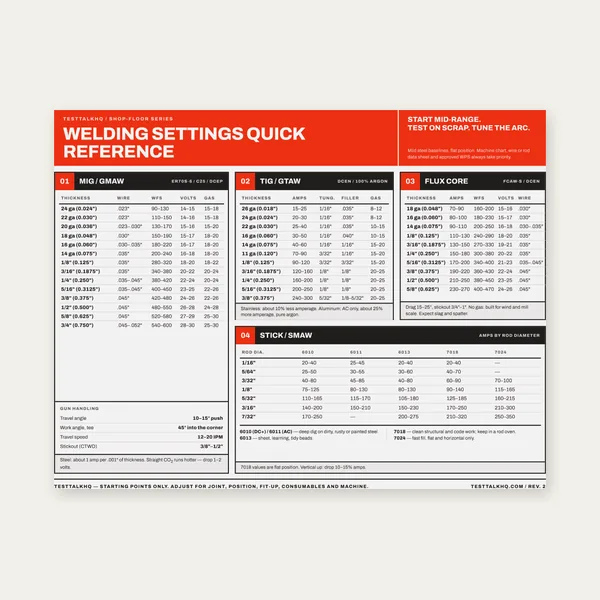
Welding Reference Card
One page. MIG, TIG, stick and flux core settings by thickness.
$3.99
BuyHome shop vs production shop — what to actually buy and stock for DCEN steel/stainless and AC aluminum
You don't need five kinds of tungsten in a drawer. Most shops run well on one or two. This page is a buying decision framework — not a spec sheet. For what each type is, see the TIG Tungsten Electrode Guide. For diameter vs your actual amperage, run the Tungsten Electrode Selector Calculator.
Three questions decide almost every tungsten purchase:
A home or hobby shop typically bounces between mild steel repairs, the occasional stainless project, and aluminum here and there — often on the same machine, sometimes the same afternoon. Optimize for versatility over peak performance in any one process.
One page. MIG, TIG, stick and flux core settings by thickness.
$3.99
Buy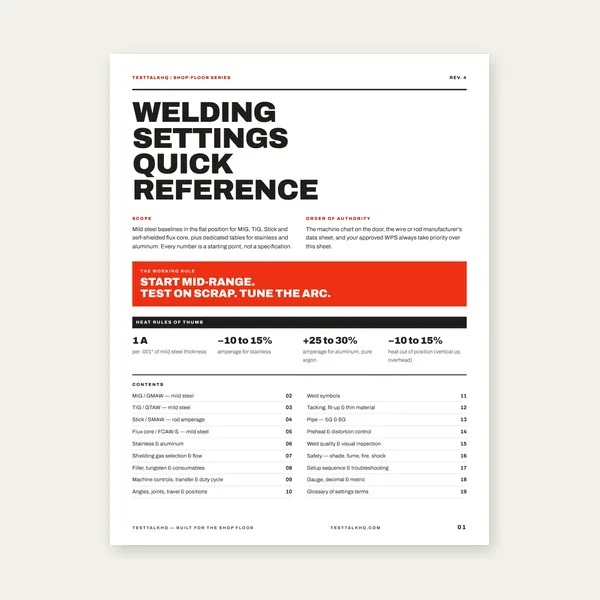
19 pages. Four processes, stainless and aluminum, symbols and inspection.
$12.99
Buy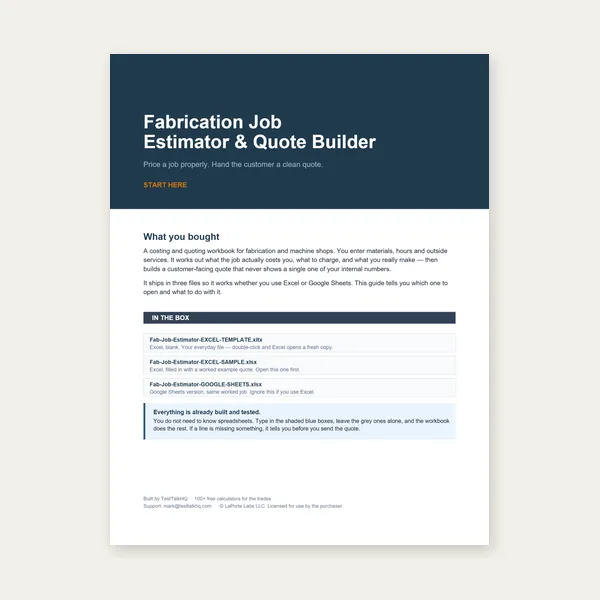
Price the job, then hand over a quote with no internal numbers.
Excel or Google Sheets. Best on a computer.
$29.00
Buy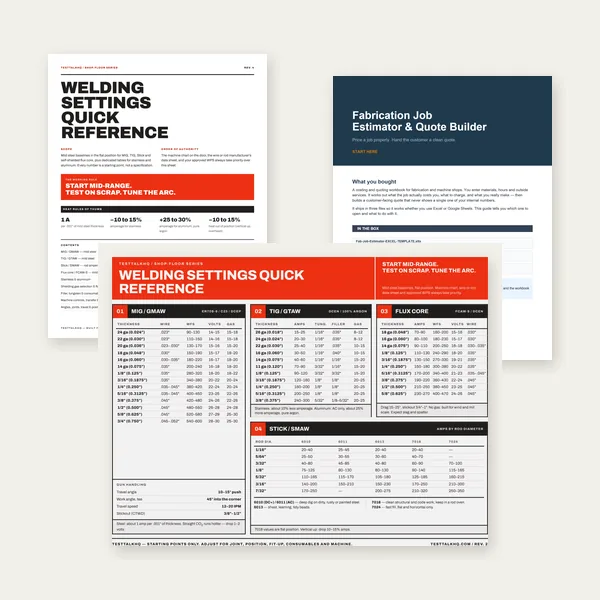
Card, 19-page guide and the estimator workbook. All six files.
Excel or Google Sheets. Best on a computer.
$34.99
$45.98 if bought separately — save $10.99
BuyCheckout opens here — you stay on this page.
What to actually put in the cart based on the recommendations above
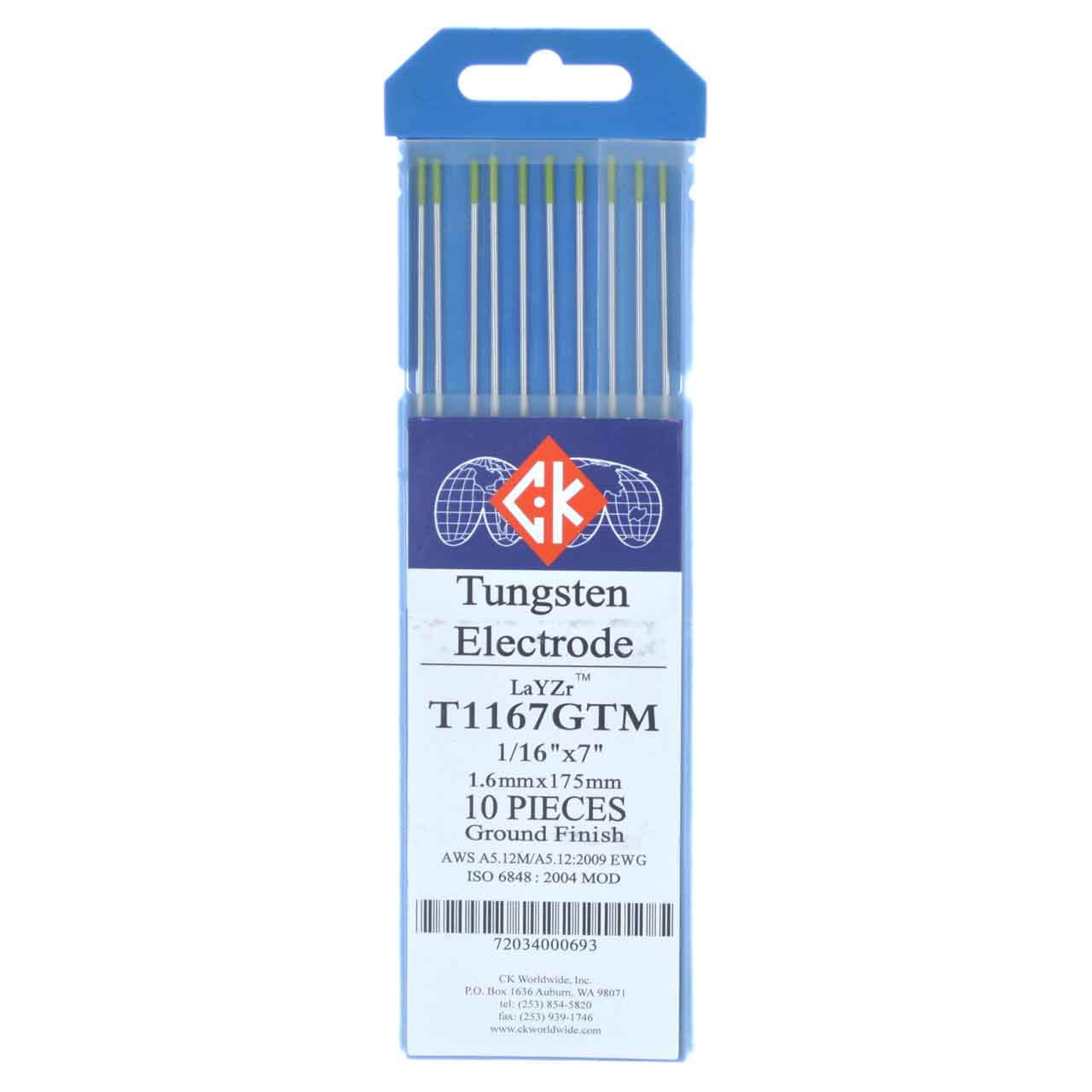
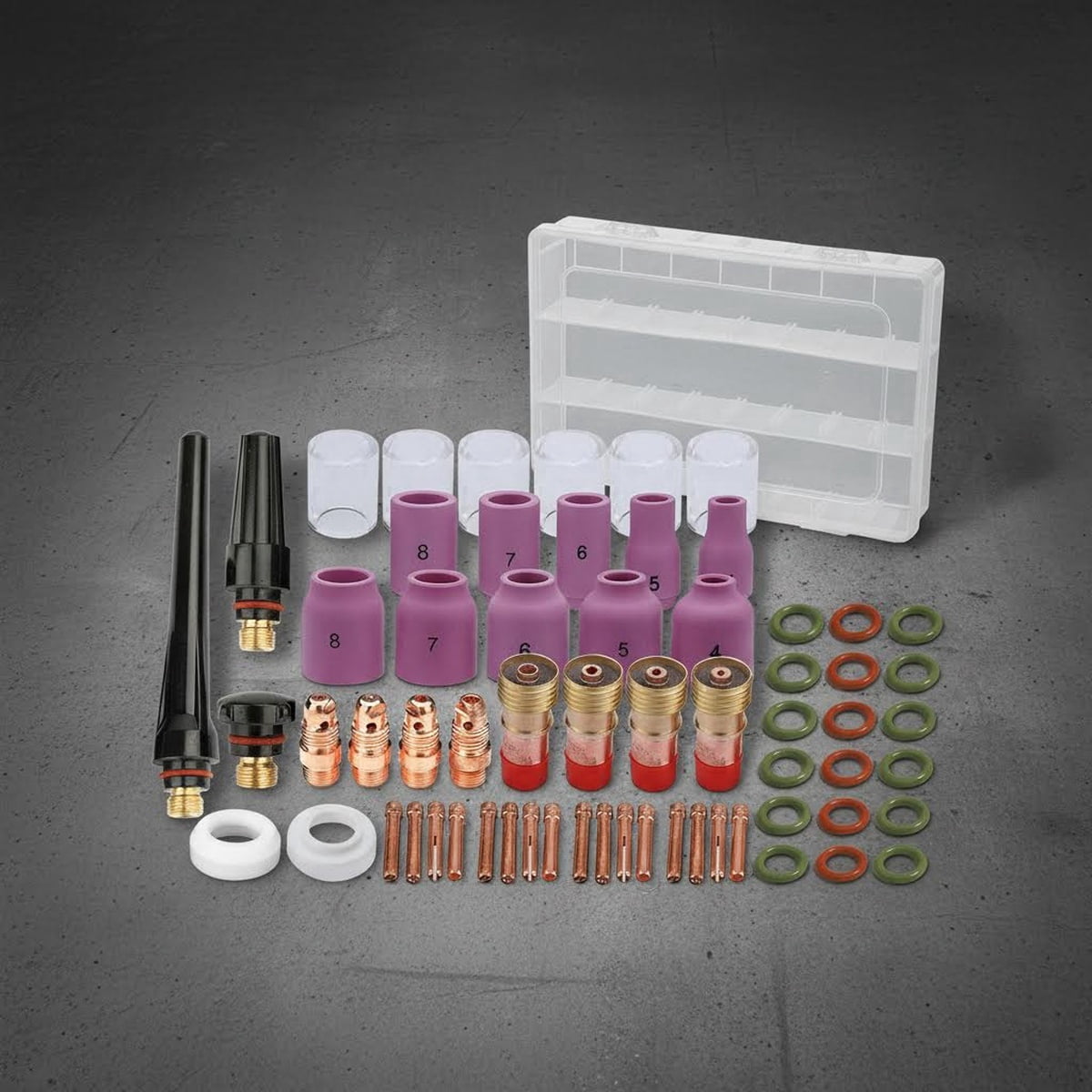
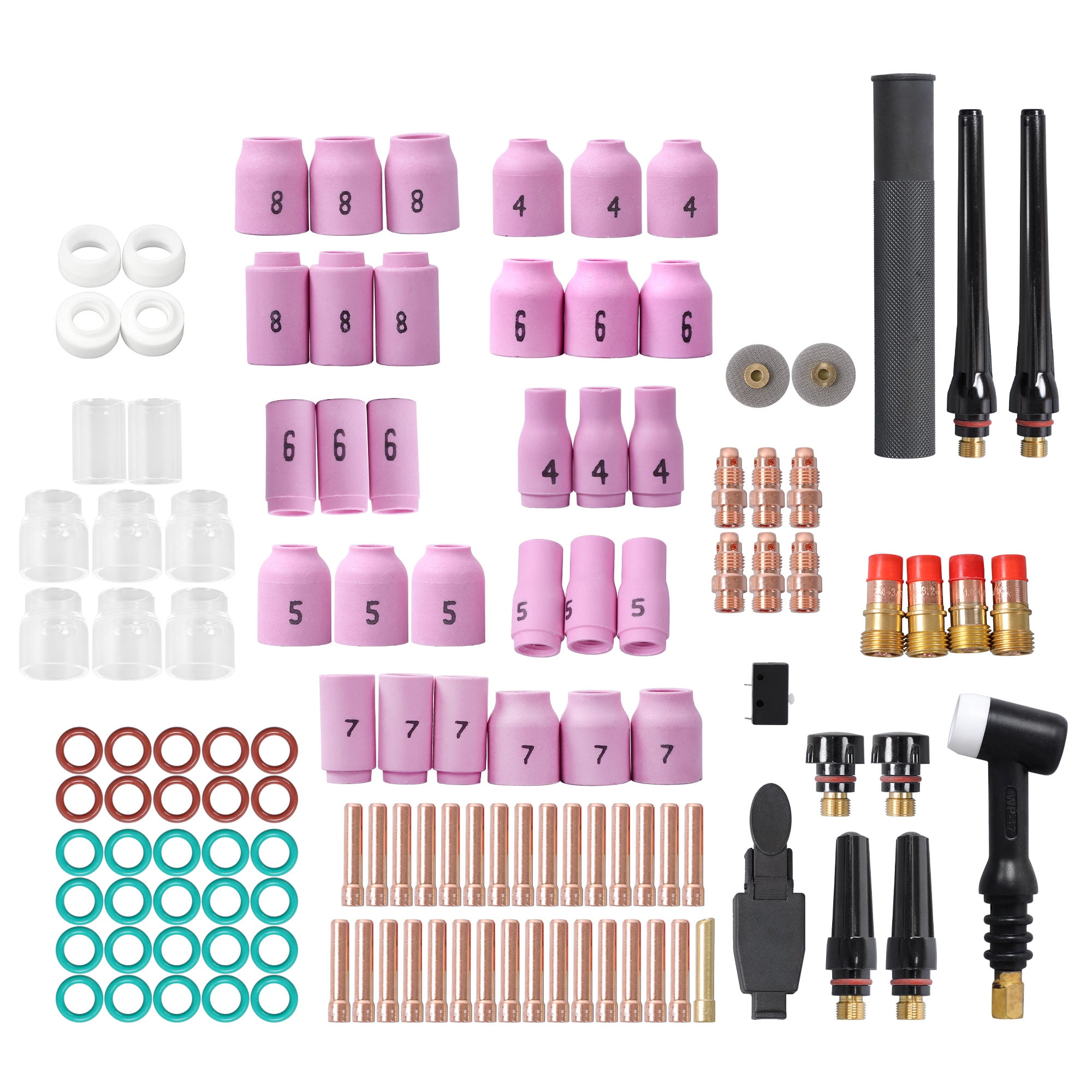
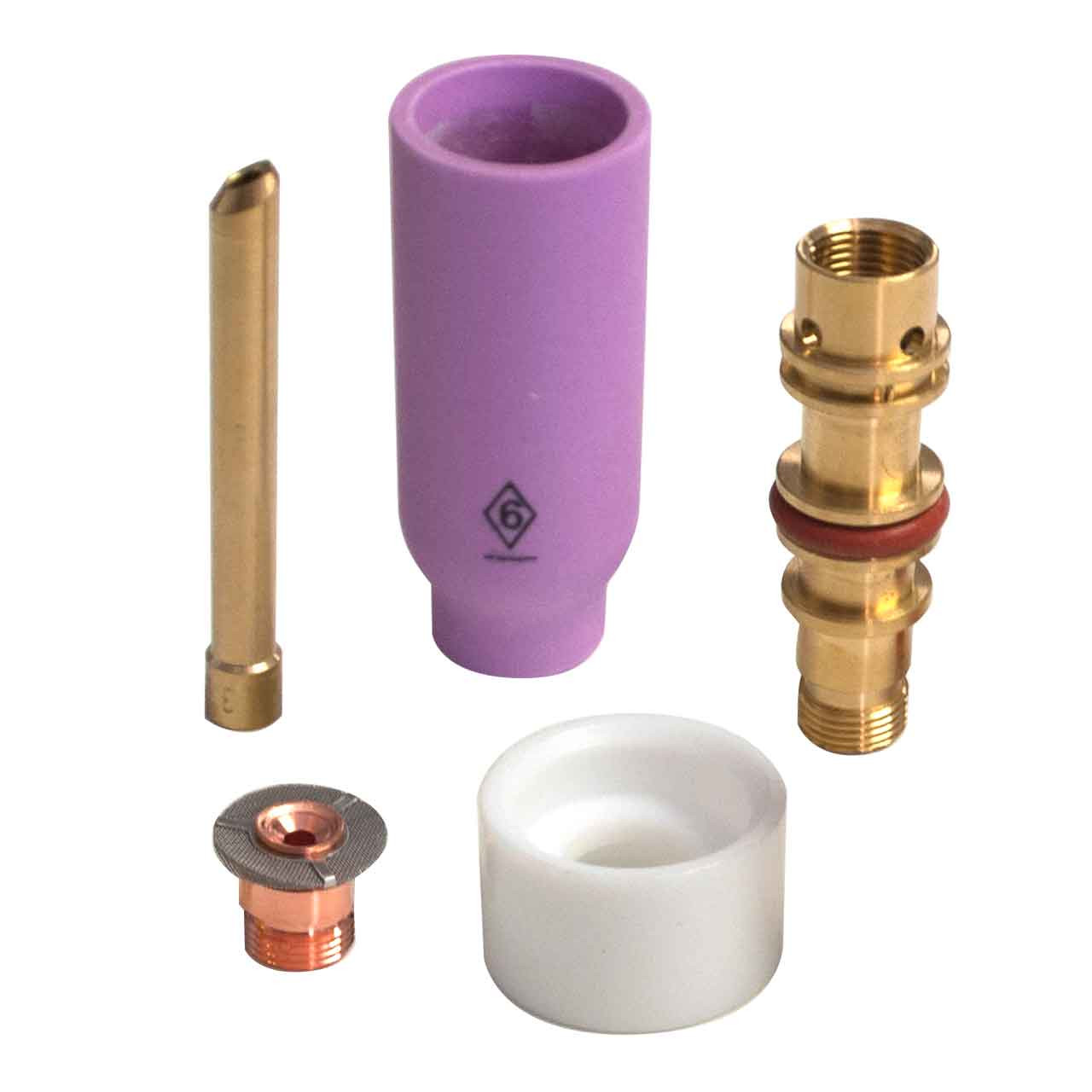
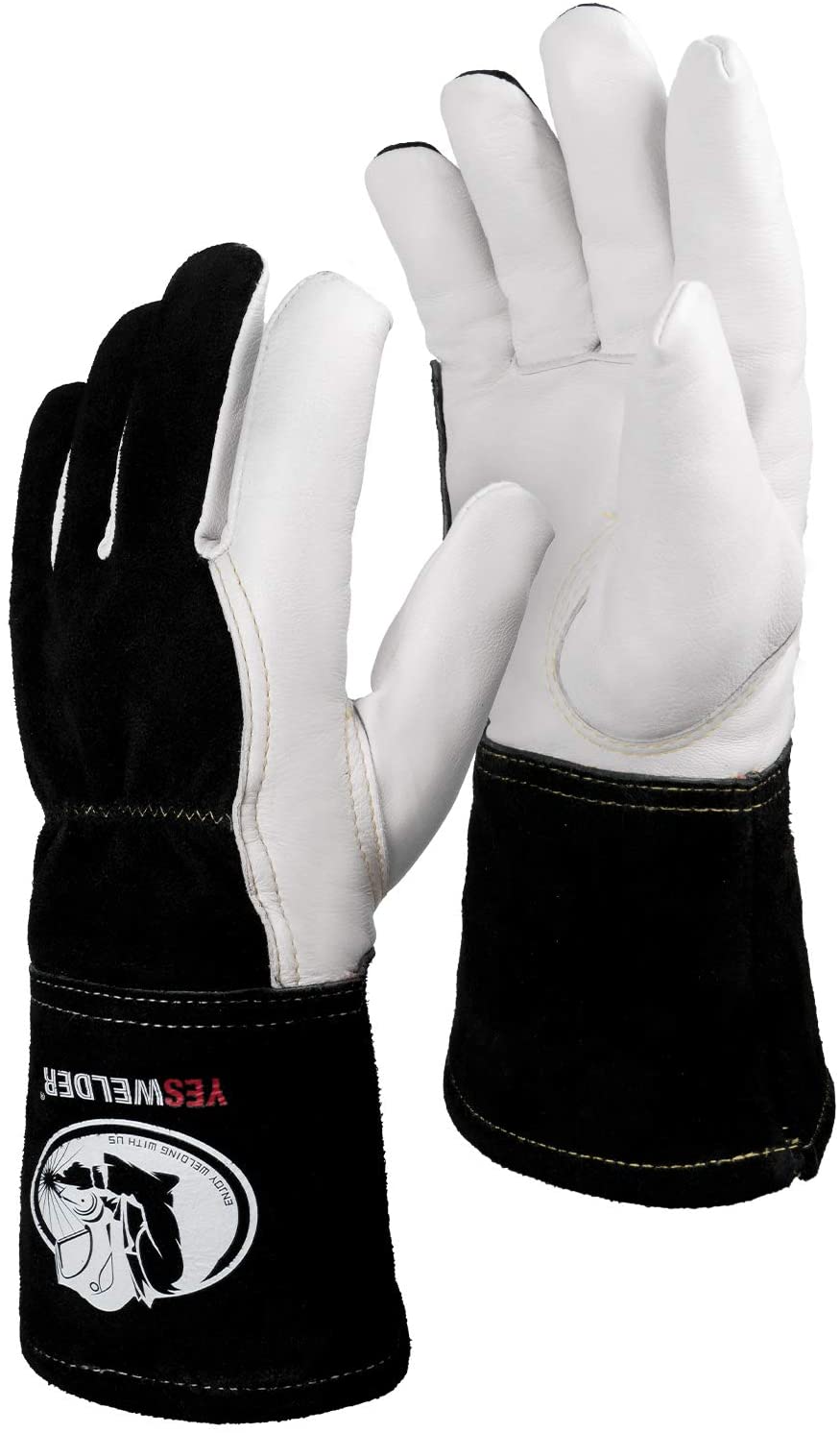
As an Amazon Associate, TestTalkHQ earns from qualifying purchases.
A production floor running the same weld hundreds of times a week can justify dedicated tungsten per process — the marginal cost of matching electrodes to jobs pays back in fewer regrinds and more consistent arc starts.
| Use Case | Polarity | Tip Shape | Recommended Type | Fallback / Legacy |
|---|---|---|---|---|
| Mild steel, general fab | DCEN | Pointed | 2% Lanthanated (blue) | Thoriated (red) — legacy stock only |
| Stainless steel, sanitary/structural | DCEN | Pointed, truncated at high amps | 2% Lanthanated (blue) | Ceriated (orange) for thin/low-amp tube |
| Aluminum, inverter AC machine | AC | Balled | 2% Lanthanated (blue) | Pure (green) on older transformer AC |
| Aluminum, transformer-style AC machine | AC | Balled | Pure (green) or Zirconiated (grey) | Lanthanated works but balls less predictably here |
| Thin sheet / small tube, low-amp DC | DCEN | Pointed, sharp | Ceriated (orange) | Lanthanated (gold, 1.5%) |
| Mixed AC/DC multi-process cell | Both | Point or ball as needed | Rare-earth blend (EWG) | Separate lanthanated stock per polarity |
Pure tungsten (EWP, green band) is the oldest formulation and has the lowest current-carrying capacity of the common types — but it's not obsolete. On older transformer-style AC/DC machines with a sine-wave (non-square-wave) output, pure and zirconiated tungsten still ball more predictably and resist contamination pickup better than lanthanated in that specific application.
On modern inverter machines with square-wave AC output and adjustable balance, 2% lanthanated balls under control just as well and lets the shop standardize on one electrode across both polarities — which is why most shops buying new equipment today skip pure tungsten entirely unless they're running legacy equipment.
Thoriated (EWTh-2, red band) is not banned and remains legal to purchase and use in most regions. It is, however, radioactive at a low level (thorium-232), and the practical concern is inhaling grinding dust from repeated dry-grinding over years, not incidental handling. Full detail: why thoriated is being phased out.
| Shop Type | Type | Diameters to Stock |
|---|---|---|
| Home / hobby | 2% Lanthanated (blue) | 1/16", 3/32" (add 1/8" if welding thicker stock or higher-amp aluminum) |
| Small fab shop | 2% Lanthanated (blue) | 1/16", 3/32", 1/8" — plus a few ceriated (orange) for thin work |
| Production floor | Lanthanated (blue) + rare-earth blend (EWG) for mixed cells | Full range 0.040"–5/32" matched per cell's amp band |
| Legacy transformer AC equipment | Pure (green) or Zirconiated (grey) | Match existing torch collet sizes already in service |
Once you know the type, confirm exact diameter against your real amperage range — undersizing is the single biggest cause of premature tip failure covered on the electrode troubleshooting page.
Once you've picked a type, the calculator confirms the right diameter for your amperage and polarity, plus filler and gas settings for the material you're running.
Tungsten Electrode Selector Calculator →2% lanthanated (blue band) for the vast majority of shops — it handles DCEN steel/stainless and AC aluminum on modern inverter machines without needing to swap types.
No need — use it up with proper grinding ventilation and a dedicated wheel. Just don't buy new thoriated going forward.
No, both run DCEN with a pointed tip and the same electrode type works for both. Amperage and gas settings differ by material, not the tungsten choice itself.
Mostly for modern inverter machines, yes — lanthanated balls just as well. It's still the better choice on older transformer-style AC equipment.
Two is usually enough — 1/16" and 3/32" cover most amperage ranges hobbyists run. Add 1/8" only if you regularly weld thicker material or higher-amp aluminum.
Consider a rare-earth blend (EWG) electrode, or just keep 2% lanthanated in — it tolerates both reasonably well without dedicated swapping for most shops.