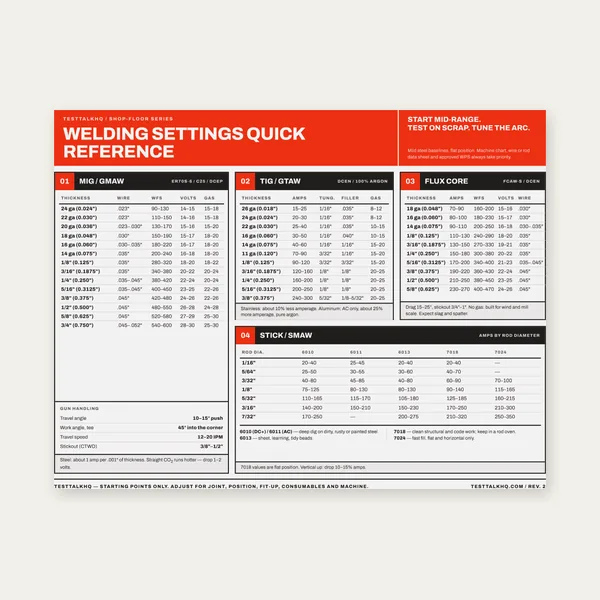
Welding Reference Card
One page. MIG, TIG, stick and flux core settings by thickness.
$3.99
BuyPure, thoriated, ceriated, lanthanated & rare-earth tungsten — color codes, why thoriated is being phased out, and how to prep the tip
Tungsten choice and tip geometry decide whether your arc starts clean, holds a point, or wanders off the joint. This guide covers electrode types and tip prep in depth. For amps, gas flow, and tungsten diameter by material and thickness, run the numbers first in the TIG Welding Calculator or the dedicated Tungsten Electrode Selector Calculator.
Every non-consumable TIG electrode is tungsten with a small percentage of oxide additive mixed in (or none, for pure tungsten). The additive changes electron emission, arc starting, current-carrying capacity, and tip life — not the base metal you're welding, which is a common misconception. Here is what each family actually is.
99.5% tungsten, no oxide additive. Forms the cleanest, most rounded ball under AC and gives the smoothest, most stable arc cone for balanced-wave aluminum on older transformer-style AC/DC machines. Lower current-carrying capacity and shorter life than doped tungstens, and it's largely legacy on modern inverter machines that clean aluminum oxide efficiently with lanthanated tungsten instead.
1–2% thorium dioxide. For decades this was the default DCEN electrode for steel and stainless — excellent electron emission, easy arc starts, and a point that holds up well under load. The catch is thorium-232, a low-level radioactive material (see the phase-out section below). Thoriated is still sold and still legal to buy in most regions, but most shops and most modern manufacturer literature now steer new buyers toward lanthanated as the drop-in replacement.
2% cerium oxide. Excellent low-amperage arc starts, including DC lift-arc starts without HF. Popular for thin-gauge sheet metal, small-diameter tube, and orbital/precision work where a stable start at low current matters more than peak amperage headroom. Runs a bit cooler at the top end than lanthanated of the same diameter.
1.5% (gold band) or 2% (blue band) lanthanum oxide. This is the modern, non-radioactive, do-everything replacement for thoriated. Comparable current capacity, comparable tip life, easy re-grinding, and it works acceptably on both DCEN (pointed) and AC (controlled ball) duty — which is exactly why most shops standardize on 2% lanthanated (blue) as their single default electrode.
Blended oxide packages (often lanthanum + cerium, or proprietary mixes) marketed as multi-process electrodes that run well on both AC and DC without swapping tungsten between jobs. Color convention is the least standardized of the group — always confirm against the box or a chart from the specific manufacturer, since "purple" from one brand may not match another.
Thoriated tungsten (EWTh-2) contains thorium-232, which is radioactive — it decays extremely slowly (a multi-billion-year half-life) and emits low-level alpha and gamma radiation. A single electrode sitting in a torch or a drawer is not a meaningful exposure risk by itself. The concern is grinding dust.
Dry-grinding a thoriated tip aerosolizes fine tungsten-thorium particulate. Inhaled repeatedly over years — the realistic exposure pattern for a welder who grinds tungsten daily without controls — that dust is a genuine occupational health concern, which is why OSHA, NIOSH, and most fabrication shop safety programs now recommend (and in unionized/industrial settings often require) minimizing thoriated use and controlling grinding dust when it is used.
Color bands are painted on the shank end so you can sort electrodes at a glance without a spark test. This follows the common AWS A5.12 convention used by most major US brands.
| Color Band | AWS Class | Additive | Typical Duty |
|---|---|---|---|
| Green | EWP | Pure tungsten, no additive | Legacy AC aluminum ball on transformer machines |
| Red | EWTh-2 | 1–2% thorium dioxide | Legacy DCEN steel/stainless — being phased out, see above |
| Orange | EWCe-2 | 2% cerium oxide | Low-amp DC starts, thin sheet, orbital/precision tube |
| Gold | EWLa-1.5 | 1.5% lanthanum oxide | General-purpose DC/AC, lighter duty than 2% |
| Blue | EWLa-2 | 2% lanthanum oxide | Modern shop default — DCEN point or AC ball |
| Purple / Teal | EWG | Proprietary rare-earth blend | Multi-process shops running both AC and DC |
| Grey | EWZr-1 | Zirconiated (1% zirconium oxide) | AC-only aluminum where weld-metal purity matters |
Diameter selection depends on amperage and polarity, not just material — undersized tungsten for the amperage is one of the leading causes of excessive tip consumption. Use the Tungsten Electrode Selector Calculator to match diameter to your actual amp range before you buy or re-grind.
One page. MIG, TIG, stick and flux core settings by thickness.
$3.99
Buy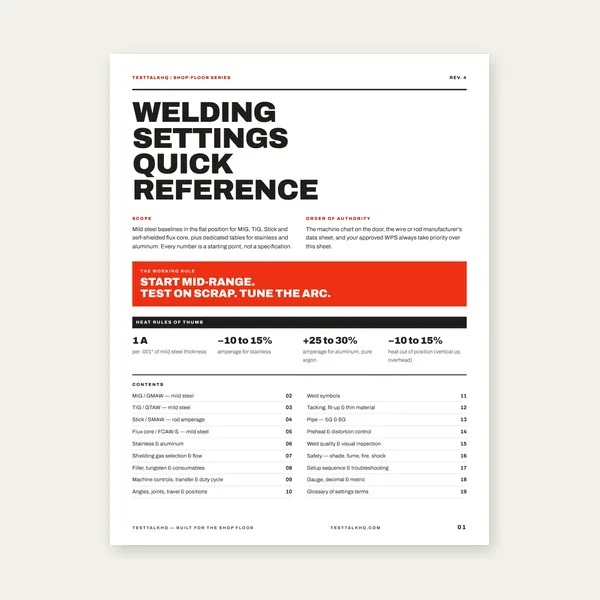
19 pages. Four processes, stainless and aluminum, symbols and inspection.
$12.99
Buy
Price the job, then hand over a quote with no internal numbers.
Excel or Google Sheets. Best on a computer.
$29.00
Buy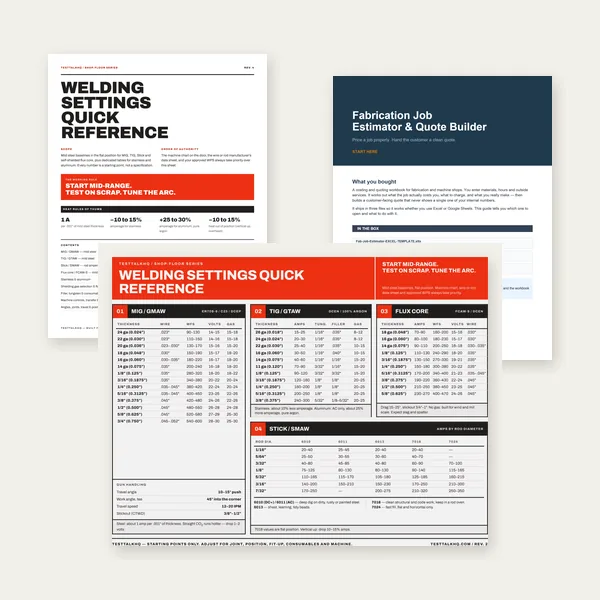
Card, 19-page guide and the estimator workbook. All six files.
Excel or Google Sheets. Best on a computer.
$34.99
$45.98 if bought separately — save $10.99
BuyCheckout opens here — you stay on this page.
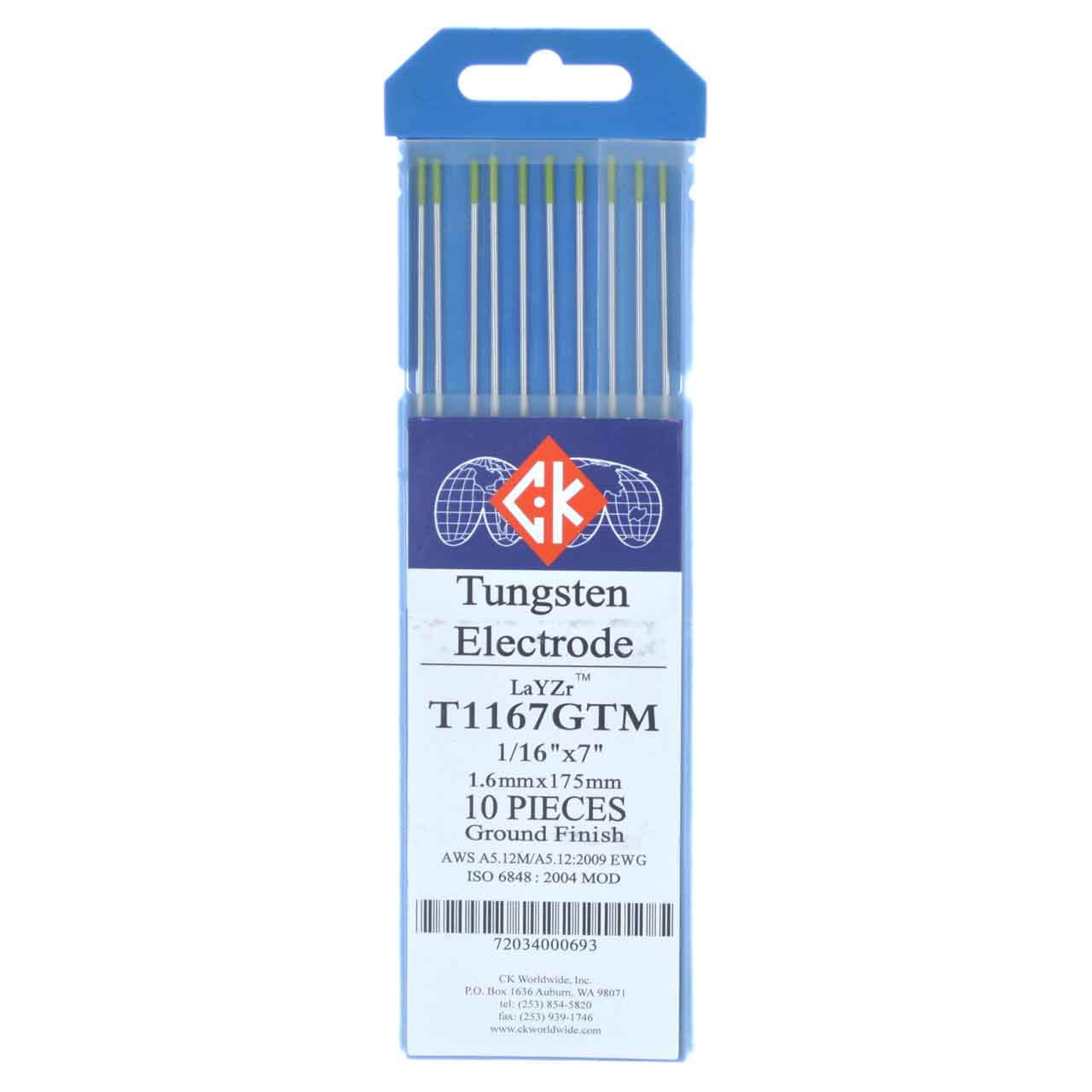
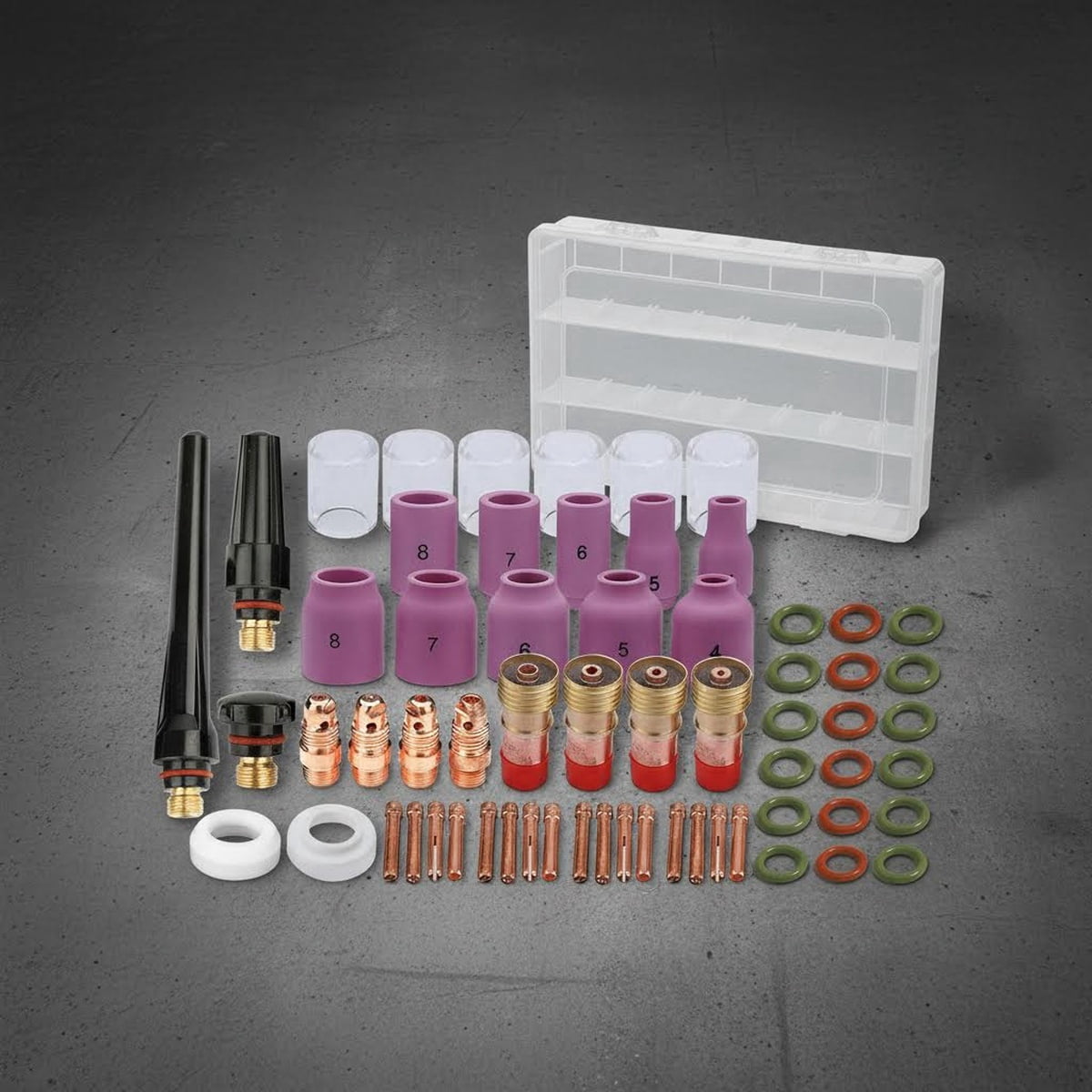
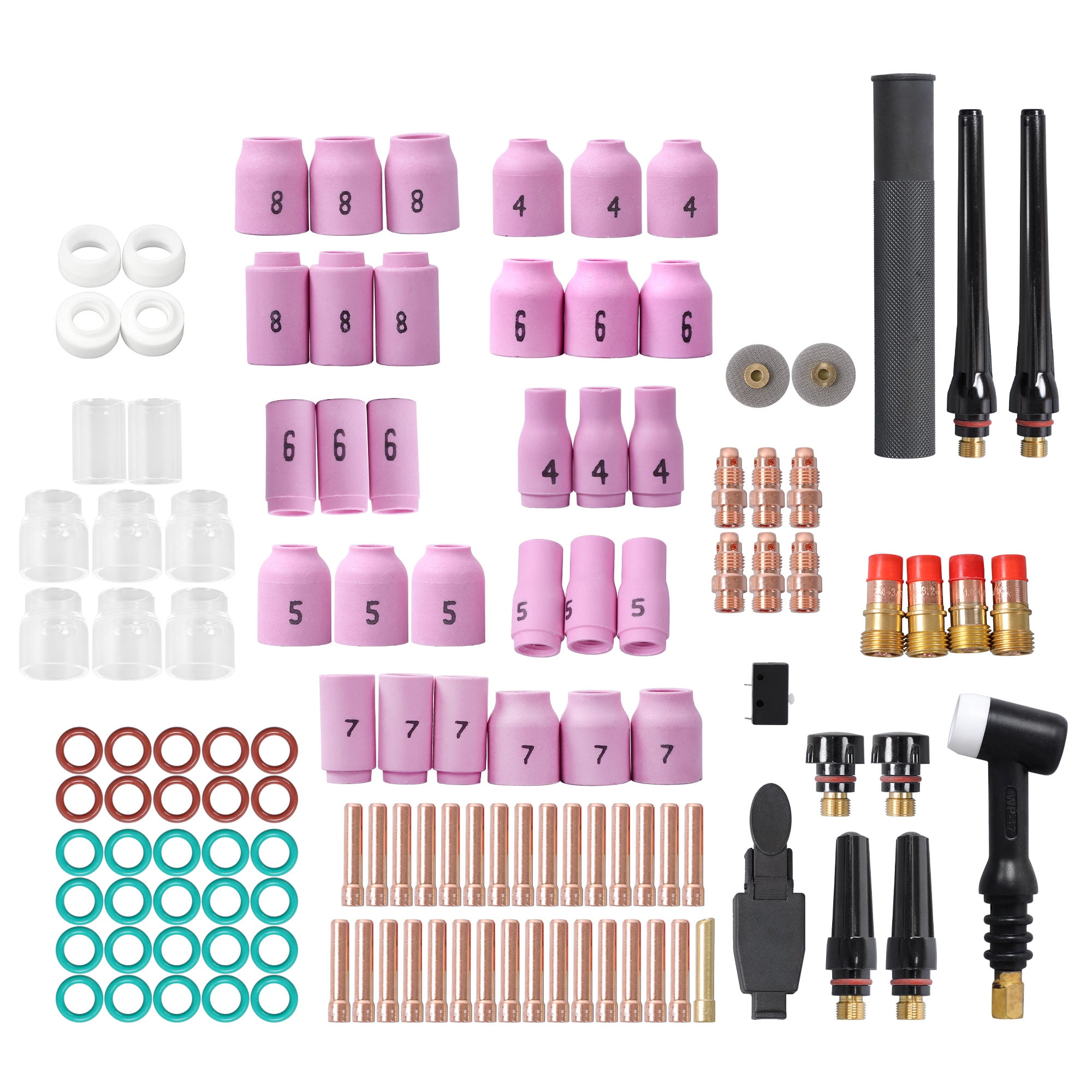
Electrodes, torch kits, and gas-saver hardware that pair with the prep techniques below
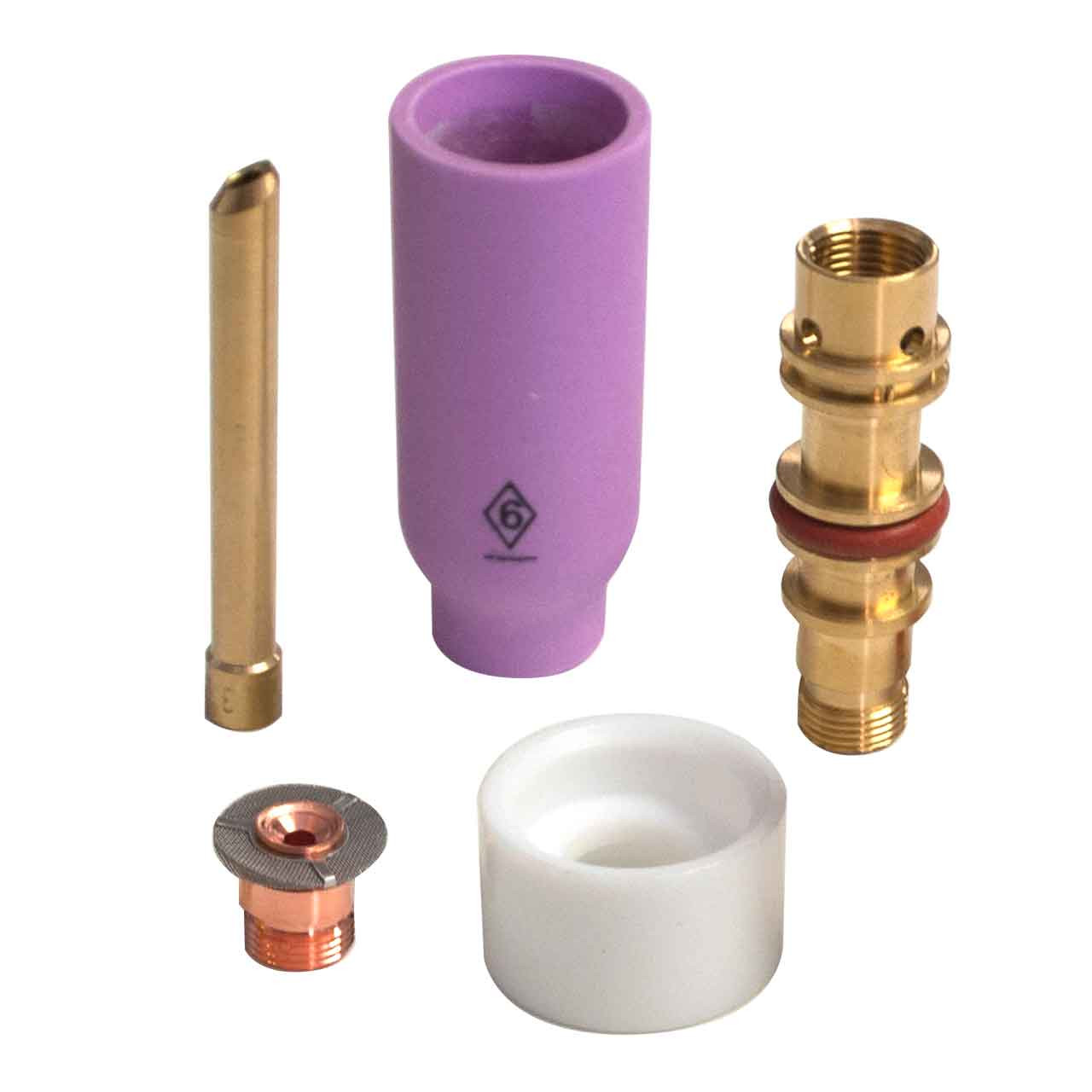
As an Amazon Associate, TestTalkHQ earns from qualifying purchases.
Tip geometry matters as much as tungsten type. A perfect lanthanated electrode with a bad grind will still wander and contaminate.
DCEN (electrode negative) focuses the arc through a sharp point for a narrow, penetrating arc cone. Prep it correctly:
AC reverses polarity every half-cycle, and the electrode-positive half heats the tip enough to round it naturally. Fighting that with a sharp point on AC just means the point melts into an uneven ball anyway — so most welders start it deliberately:
Full settings context — amperage, balance, and frequency for pointed vs balled duty — lives in the TIG Settings Guide, the Stainless TIG Guide, and the Aluminum TIG Guide.
Tip prep only pays off if the electrode is positioned and shielded correctly:
This page explains what each type is. If you're trying to decide what to actually buy and keep on the shelf for a home shop or a production floor — DCEN steel/stainless vs AC aluminum, how many diameters, and whether thoriated leftovers are worth keeping — that decision framework lives on its own page.
Tungsten Type Selection — Which One to Use →No, it's still legally sold and used in most regions. The concern is airborne dust from dry grinding over repeated exposure, not the electrode itself sitting in a torch. Many shops choose to move to lanthanated anyway to eliminate the question entirely.
Yes, for the vast majority of shop work. It performs well on DCEN steel/stainless and balls acceptably on AC aluminum with a modern inverter, which is why it's the most common single-electrode choice.
Color conventions mostly follow AWS A5.12, but rare-earth blends and some imported brands vary. Check the manufacturer's datasheet for anything outside the common green/red/orange/gold/blue set.
Ceriated (orange) shines at low-amperage DC starts on thin material and precision tube. Lanthanated (gold/blue) carries more current and holds a point better under sustained higher-amp work. Many shops use lanthanated as the default and keep a few ceriated electrodes for delicate work.
Not usually — the electrode choice is driven more by polarity (DCEN vs AC) than by base material. Steel and stainless both run DCEN with a pointed tip; aluminum and magnesium run AC with a balled tip. Material-specific amperage and gas settings are in the linked settings guides.
Any time the tip shows contamination, an uneven ball, or a melted/mushroomed point. See the electrode troubleshooting page for when to regrind vs replace outright.