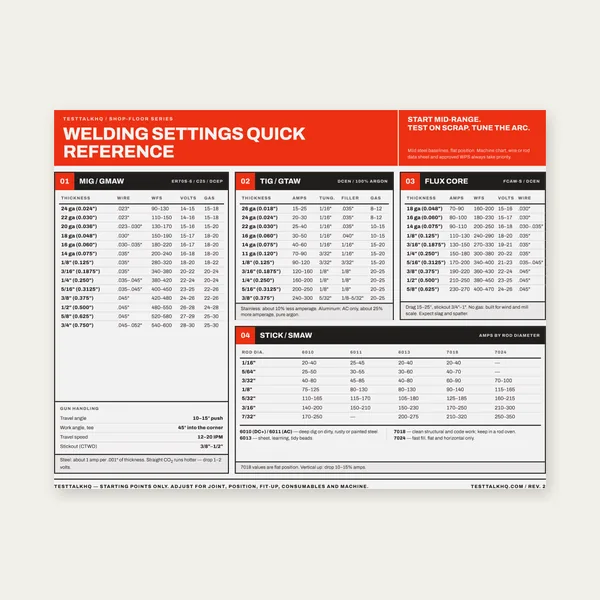
Welding Reference Card
One page. MIG, TIG, stick and flux core settings by thickness.
$3.99
BuyCO₂, C25, argon, and helium blends — what each does to the arc, bead, and wallet.
Shielding gas is not one-size-fits-all. Straight CO₂ digs deep with more spatter; 75/25 is the mild-steel workhorse; pure argon owns most TIG and aluminum MIG; helium blends add heat for thicker work. Self-shielded flux-core skips the bottle entirely — a common beginner confusion. Start with the Shielding Gas Flow Rate Calculator, MIG Welding Calculator, and TIG Welding Calculator.
Straight CO₂ is the cheapest common MIG shielding gas for mild steel. It gives deep penetration and a hotter, more dig-in arc — useful on thicker carbon steel — but it produces more spatter and a harsher arc than argon blends. Many production shops still run CO₂ where cleanup cost is acceptable and penetration matters more than bead cosmetics.
A 75% argon / 25% CO₂ mix is the all-around MIG gas for mild steel in most fab shops. Softer arc than straight CO₂, less spatter, good wetting, and solid penetration for general fabrication. If someone says “just use MIG gas,” they usually mean C25. Dial flow with the Shielding Gas Flow Rate Calculator and settings with the MIG Welding Calculator.
Pure argon is the standard for most TIG (GTAW) on steel, stainless, and aluminum, and for MIG welding aluminum (often with a spool gun). Argon gives a stable, controllable arc and clean beads when flow and cup coverage are right. Use the TIG Welding Calculator for amperage and gas-flow starting points. Do not run stainless TIG on straight CO₂ — you will oxidize the puddle and ruin corrosion performance.
Adding helium raises arc energy and heat input for a given current — useful on thicker aluminum or where you need hotter puddles without cranking amps forever. Helium mixes cost more and may need higher flow rates. They are a process choice, not a beginner default.
Penetration: CO₂ digs deeper; argon-rich mixes are softer. Spatter: CO₂ increases it; C25 and high-argon mixes reduce it. Appearance: Argon-rich beads wet out flatter. Cost: CO₂ cheapest, helium blends most expensive. Match gas to metal and quality target — not to whatever cylinder is left on the cart.
Self-shielded flux-cored wire (FCAW-S) generates its own shielding from the flux — no external shielding gas. Gas-shielded flux-core (FCAW-G) does use a bottle (often CO₂ or argon/CO₂). Beginners often mount a gas hose on a self-shielded setup or wonder why porosity appears when they “forgot the argon” on a process that never wanted argon. Check wire labeling and use the Flux Core Welding Calculator for polarity and settings — and do not confuse self-shielded FCAW with solid-wire MIG gas rules.
Straight CO₂ on stainless MIG/TIG: Wrong chemistry for corrosion-resistant alloys. Wrong flow rate: Too low = porosity; too high = turbulence that pulls air into the envelope. Drafty doors: Perfect gas choice still fails if wind strips the shield. Assuming flux-core always needs gas: Only gas-shielded grades do.
One page. MIG, TIG, stick and flux core settings by thickness.
$3.99
Buy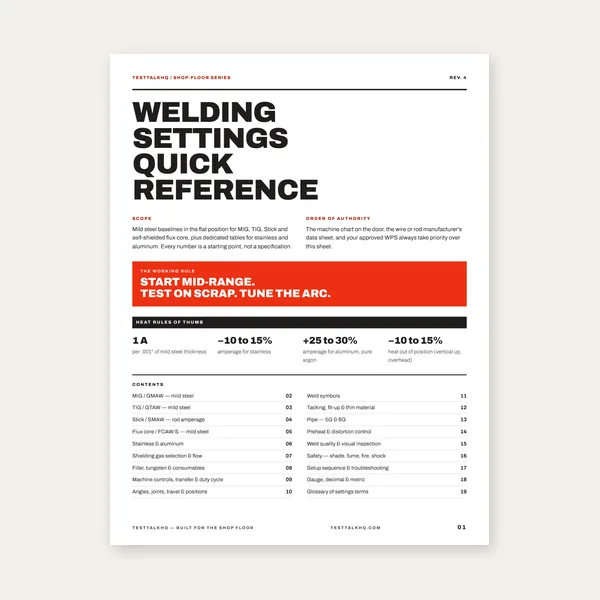
19 pages. Four processes, stainless and aluminum, symbols and inspection.
$12.99
Buy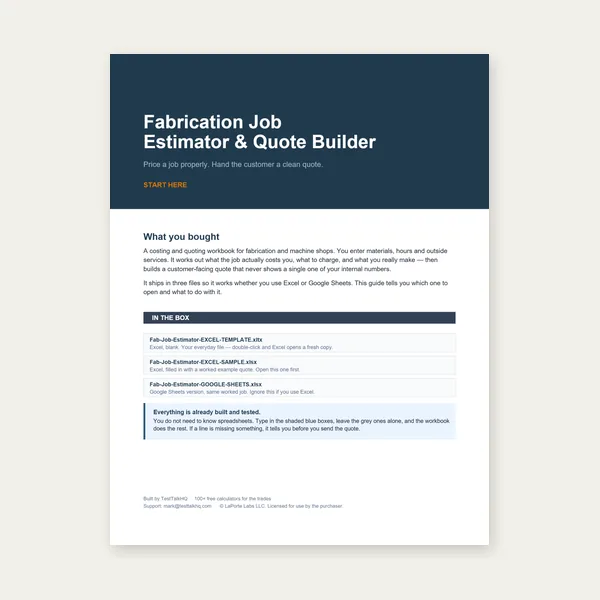
Price the job, then hand over a quote with no internal numbers.
Excel or Google Sheets. Best on a computer.
$29.00
Buy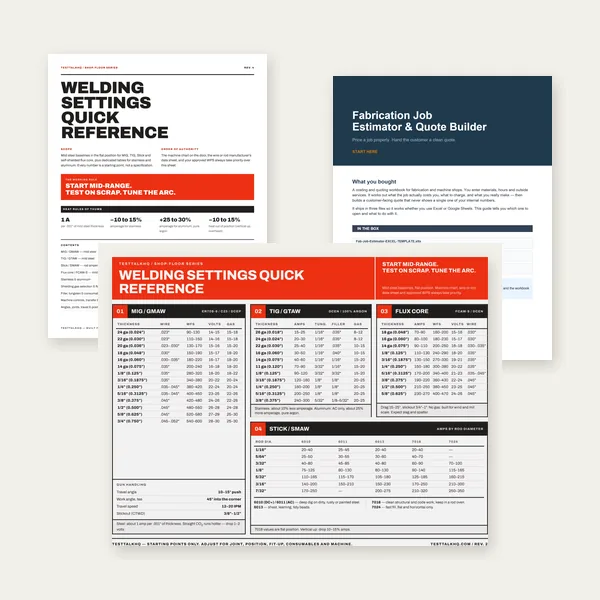
Card, 19-page guide and the estimator workbook. All six files.
Excel or Google Sheets. Best on a computer.
$34.99
$45.98 if bought separately — save $10.99
BuyCheckout opens in a new tab.
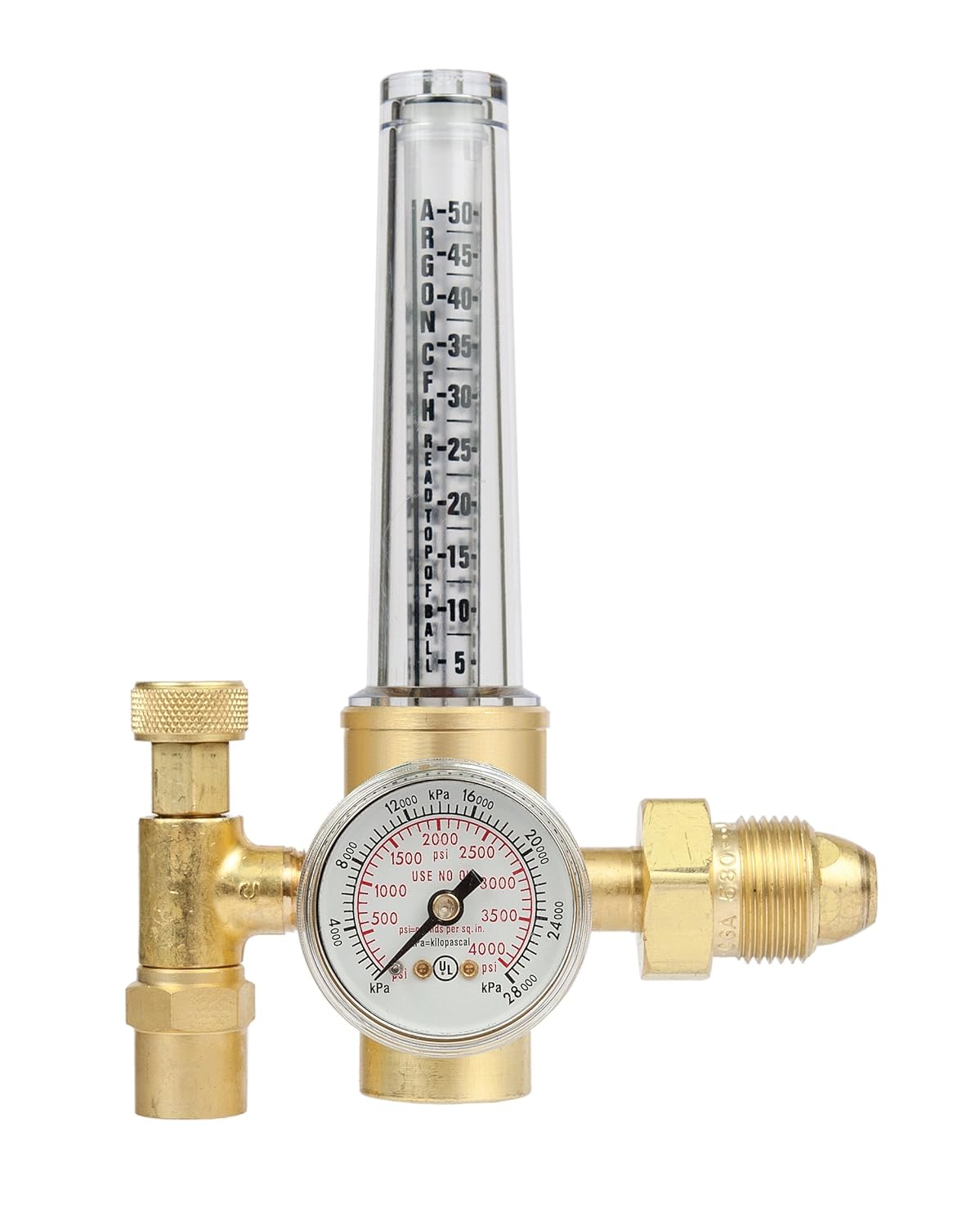
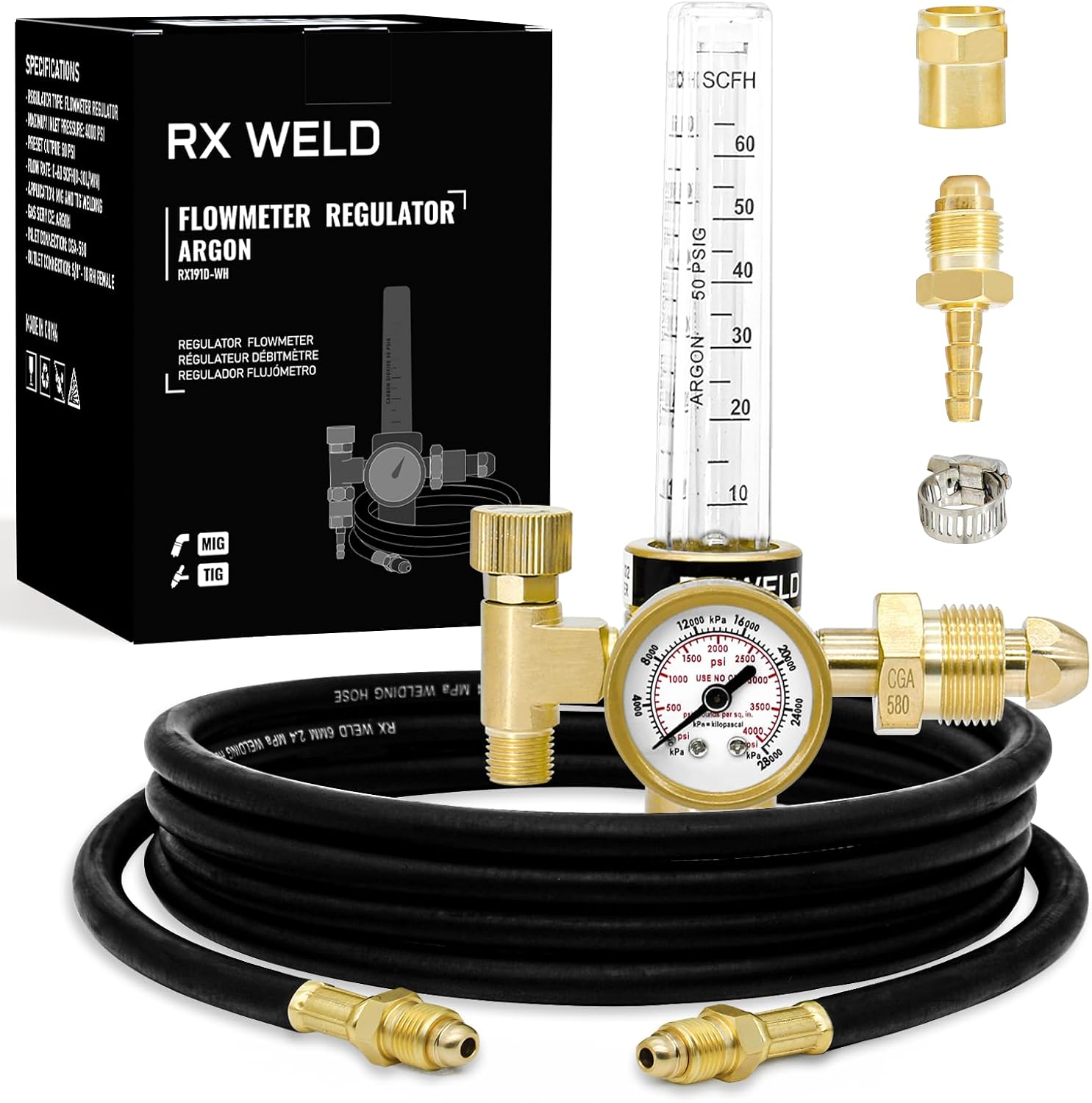
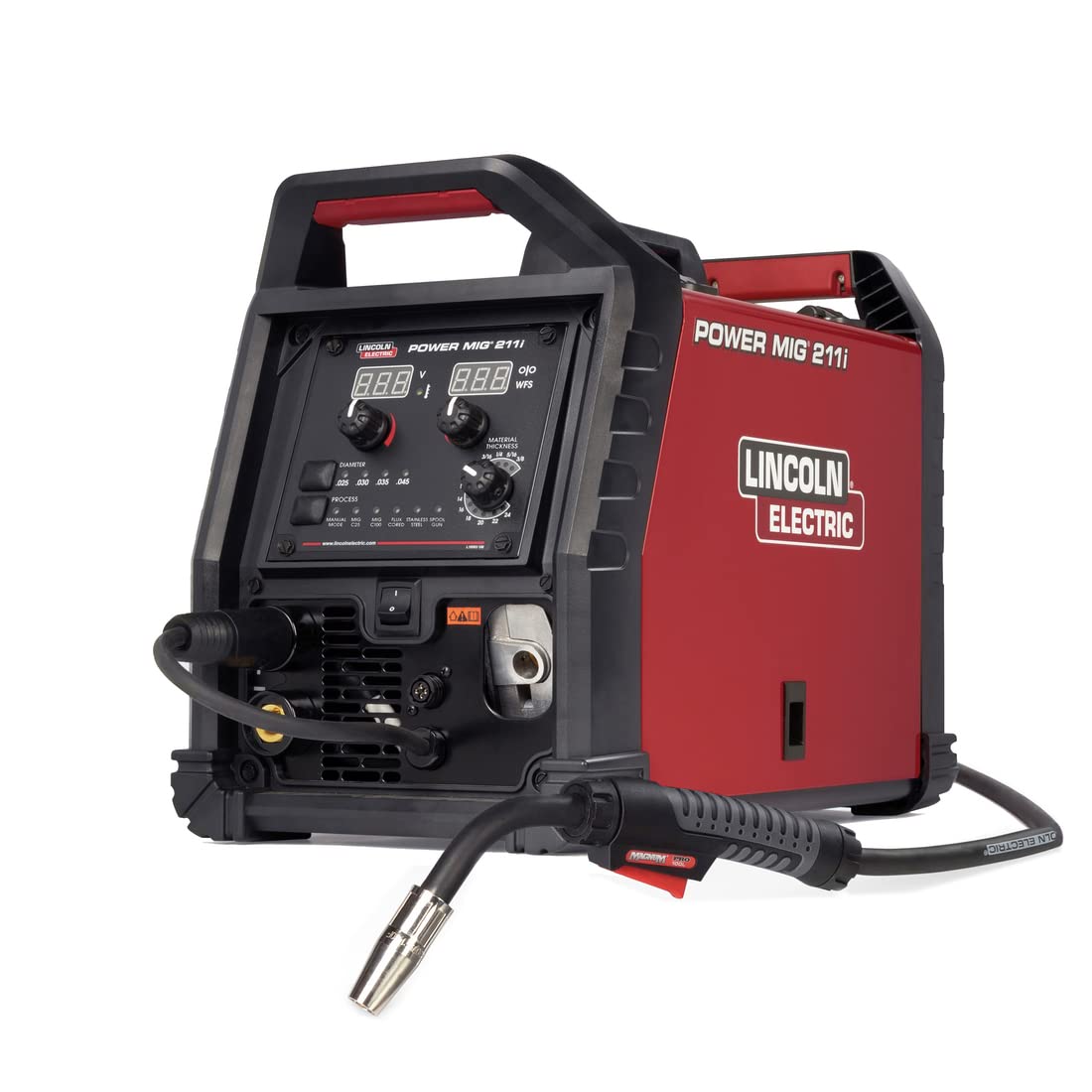
Regulators, machines, and wire matched to MIG and TIG gas selection
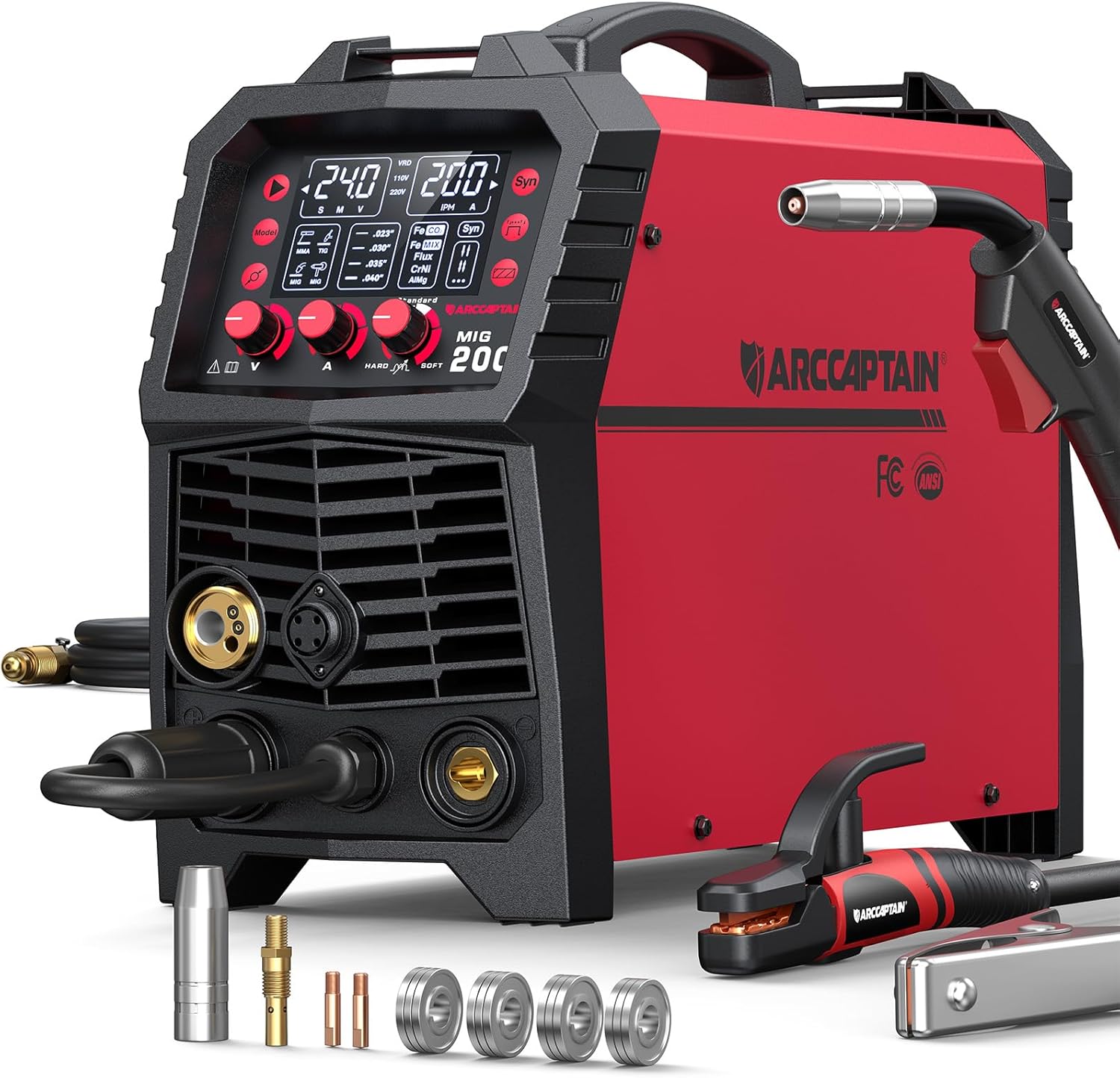
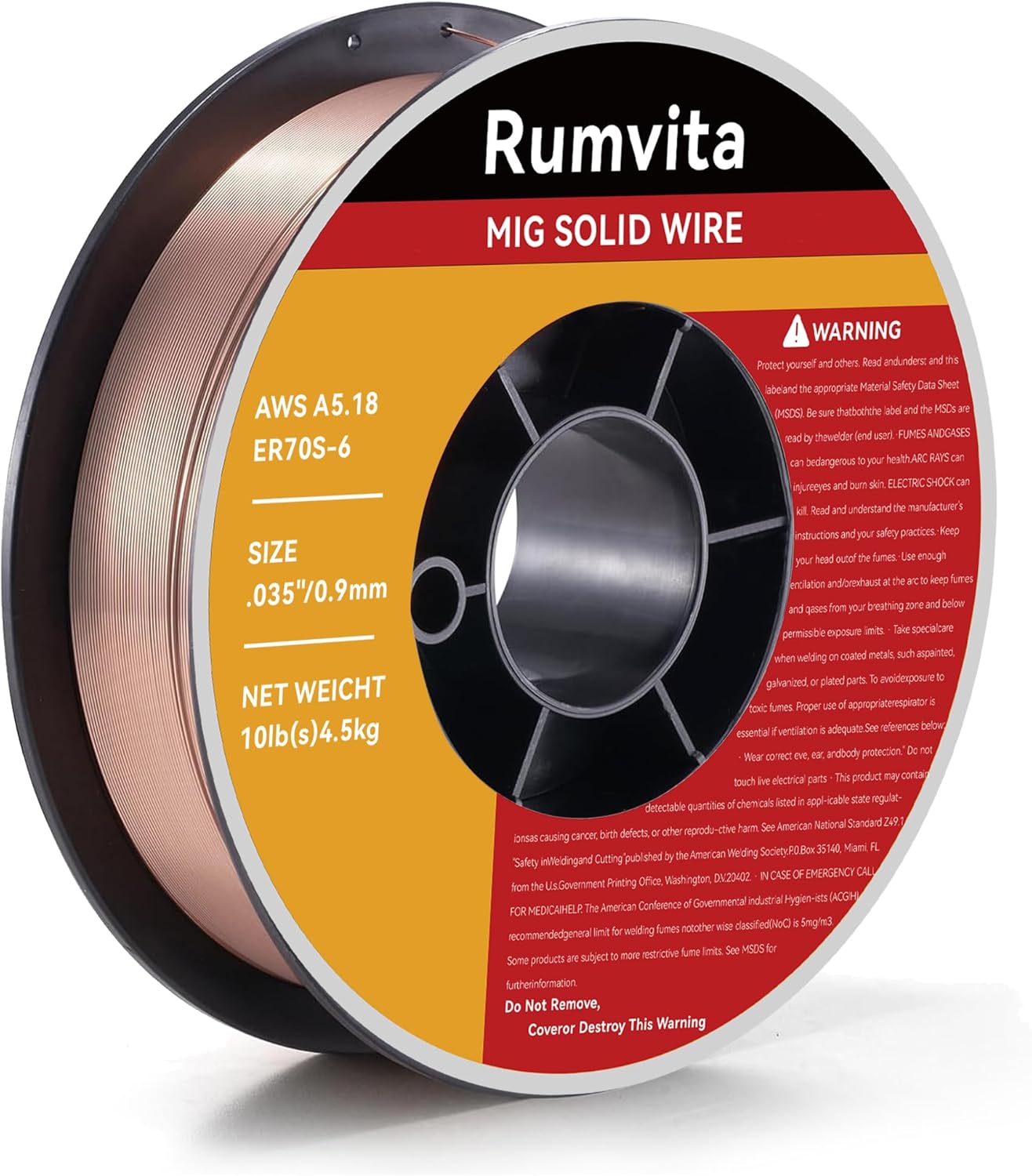
As an Amazon Associate, TestTalkHQ earns from qualifying purchases.
Argon and C25 typically use CGA-580. CO₂ cylinders may use different fittings depending on siphon vs. gas withdrawal. Using the wrong regulator or adapter is a safety and purity problem — match the regulator to the cylinder.
Some stainless MIG procedures call for helium/argon/CO₂ tri-mix. Follow the WPS or manufacturer chart — do not invent a mix from leftover bottles.
You set flow in CFH at the flowmeter, not “pressure until it hisses.” A regulator without a flowmeter is the wrong tool for shielding gas delivery on MIG/TIG.
Porosity with “correct” gas often means a hose leak, loose fitting, or cracked gun liner path. Bubble-test fittings before rewriting your entire procedure.