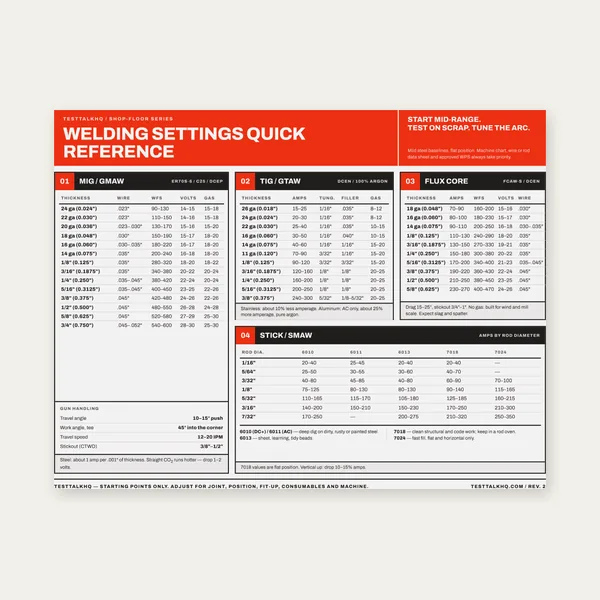
Welding Reference Card
One page. MIG, TIG, stick and flux core settings by thickness.
$3.99
BuySMAW amperage ranges, polarity, deposition rate, and optional rod estimates

One page. MIG, TIG, stick and flux core settings by thickness.
$3.99
Buy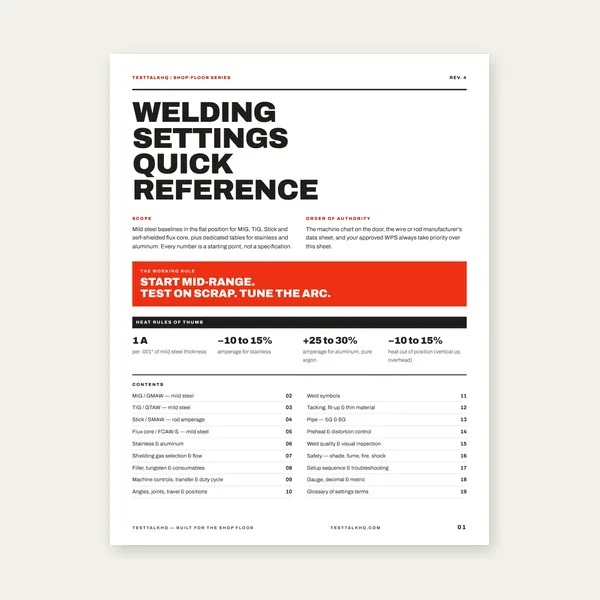
19 pages. Four processes, stainless and aluminum, symbols and inspection.
$12.99
Buy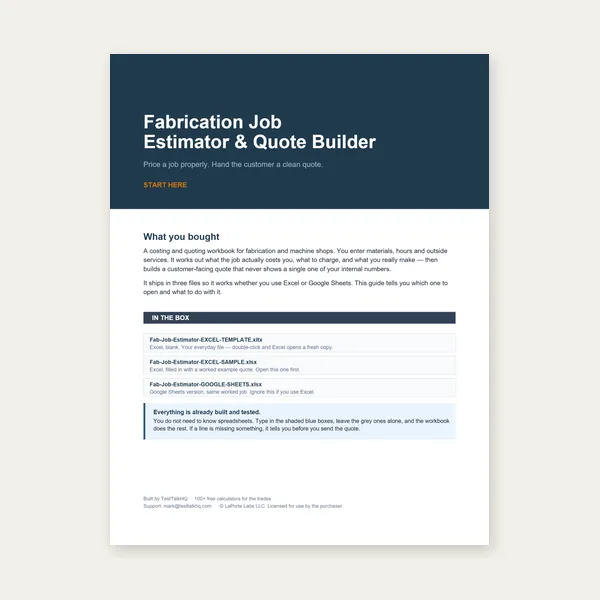
Price the job, then hand over a quote with no internal numbers.
Excel or Google Sheets. Best on a computer.
$29.00
Buy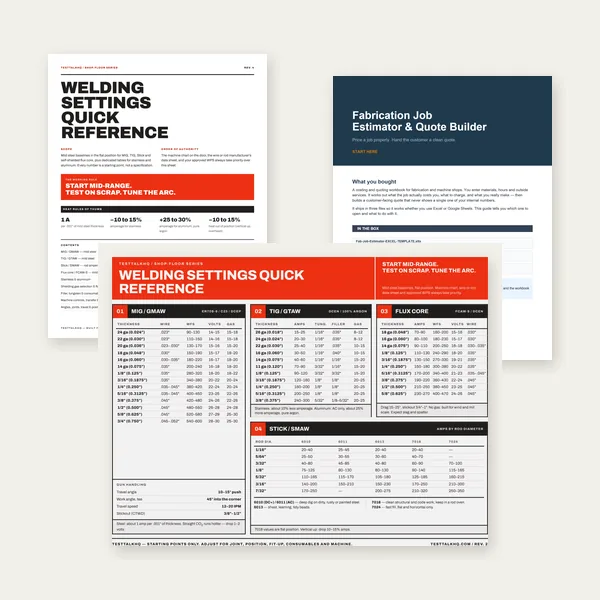
Card, 19-page guide and the estimator workbook. All six files.
Excel or Google Sheets. Best on a computer.
$34.99
$45.98 if bought separately — save $10.99
BuyCheckout opens here — you stay on this page.
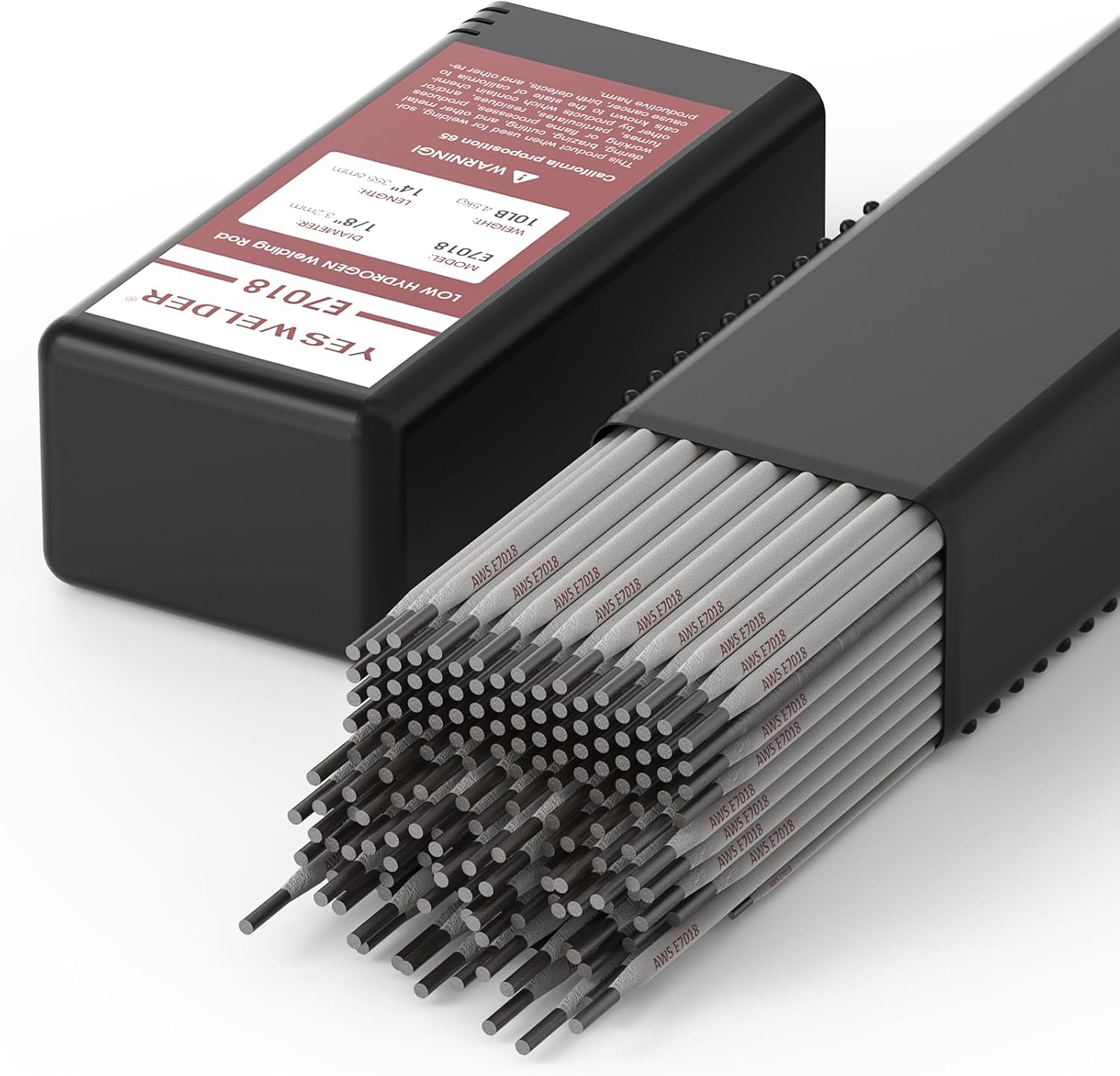
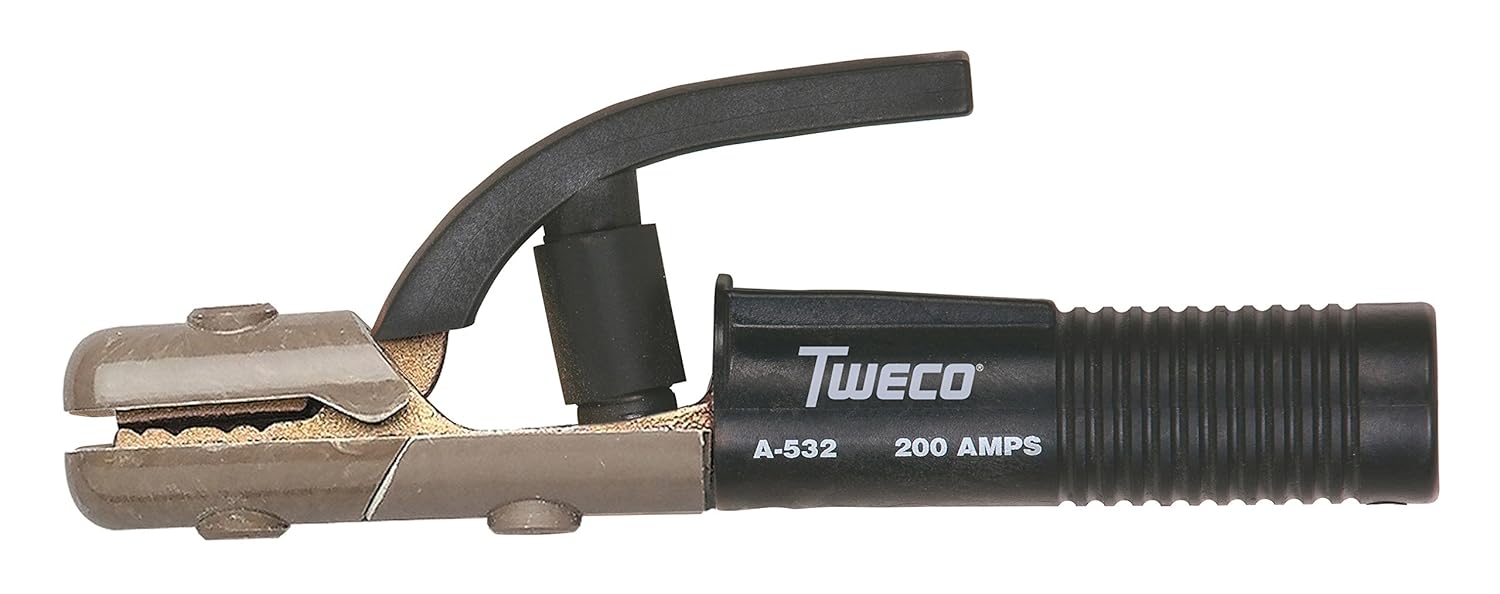
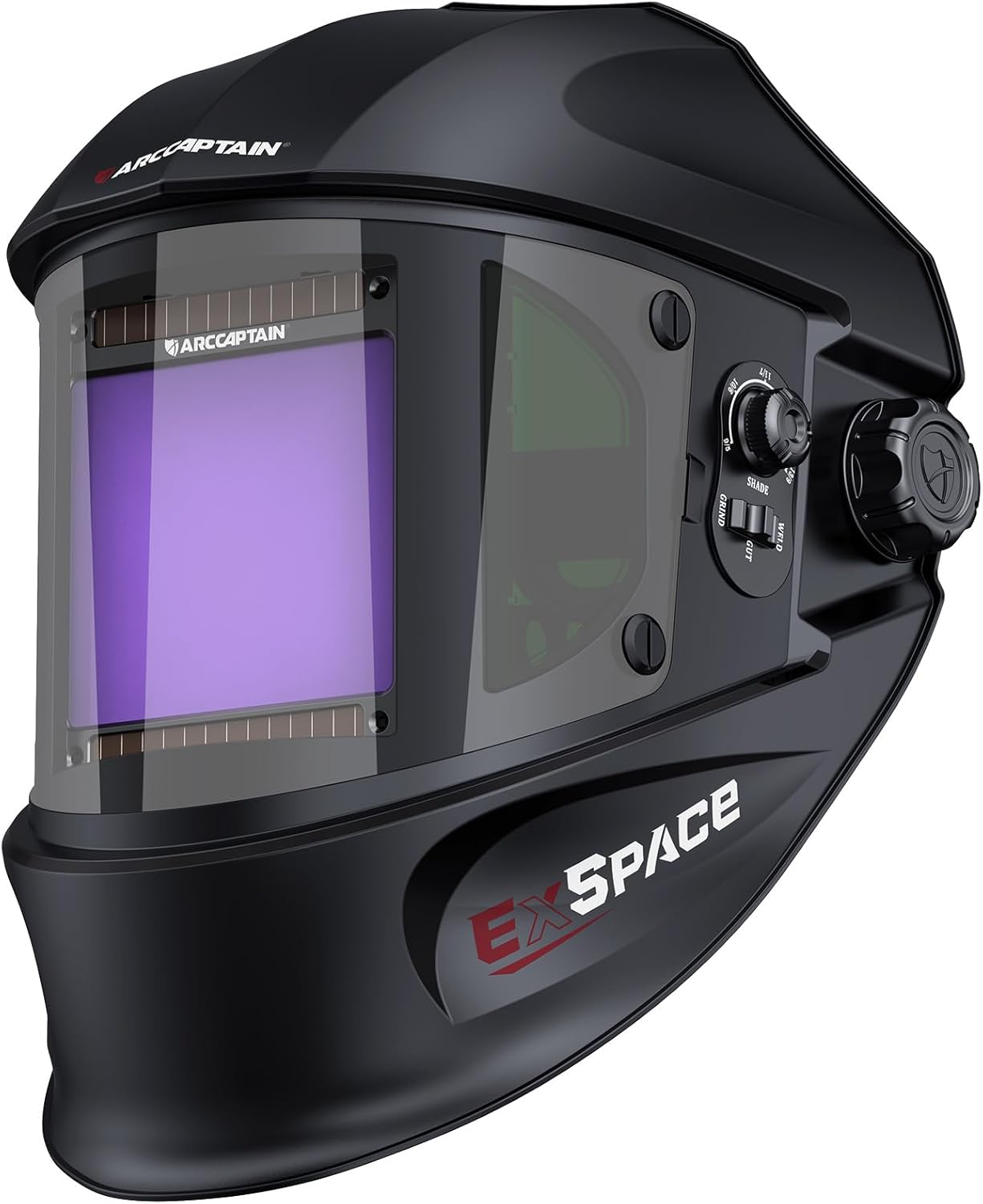
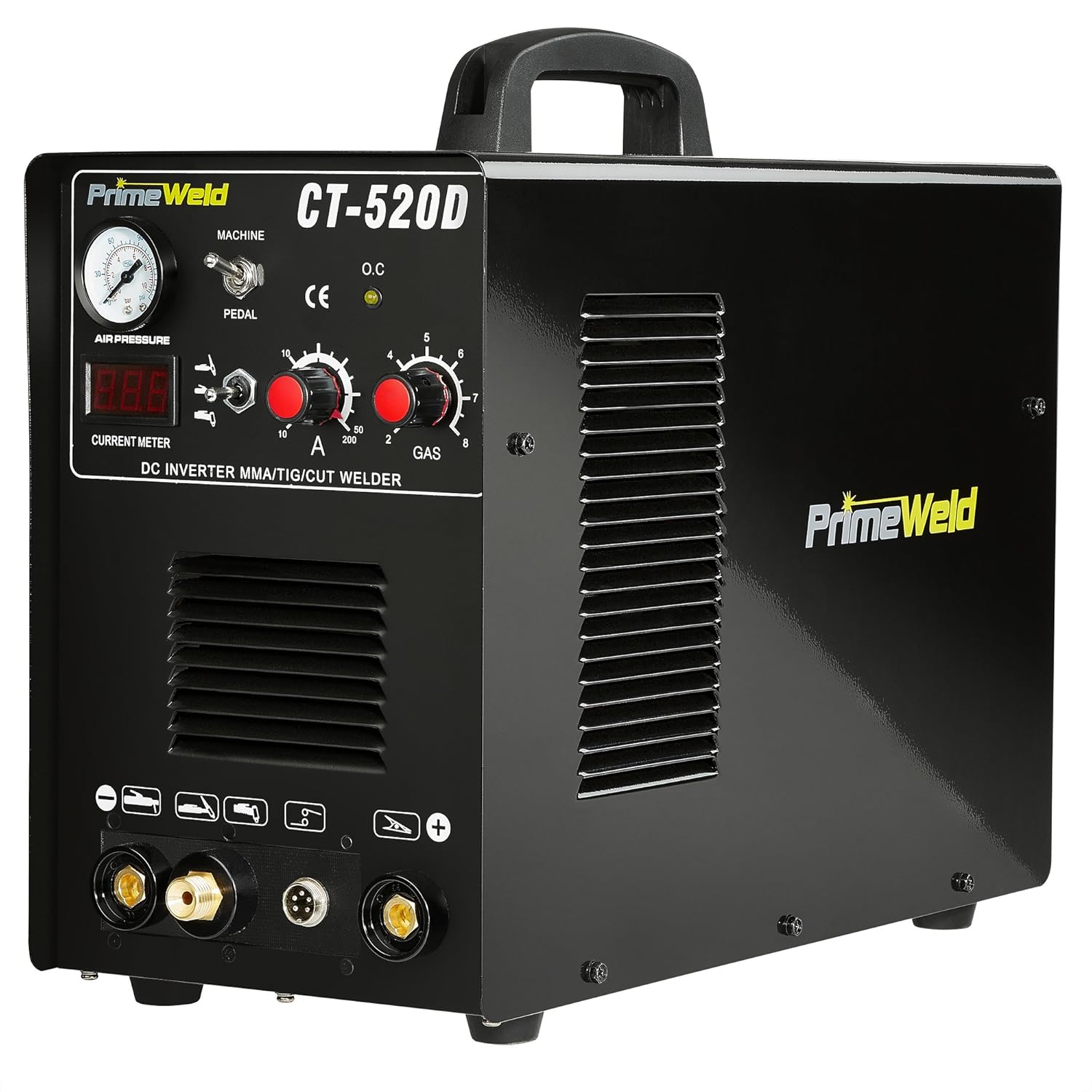
Five picks for electrodes, torch accessories, PPE, and machines matched to SMAW workflow
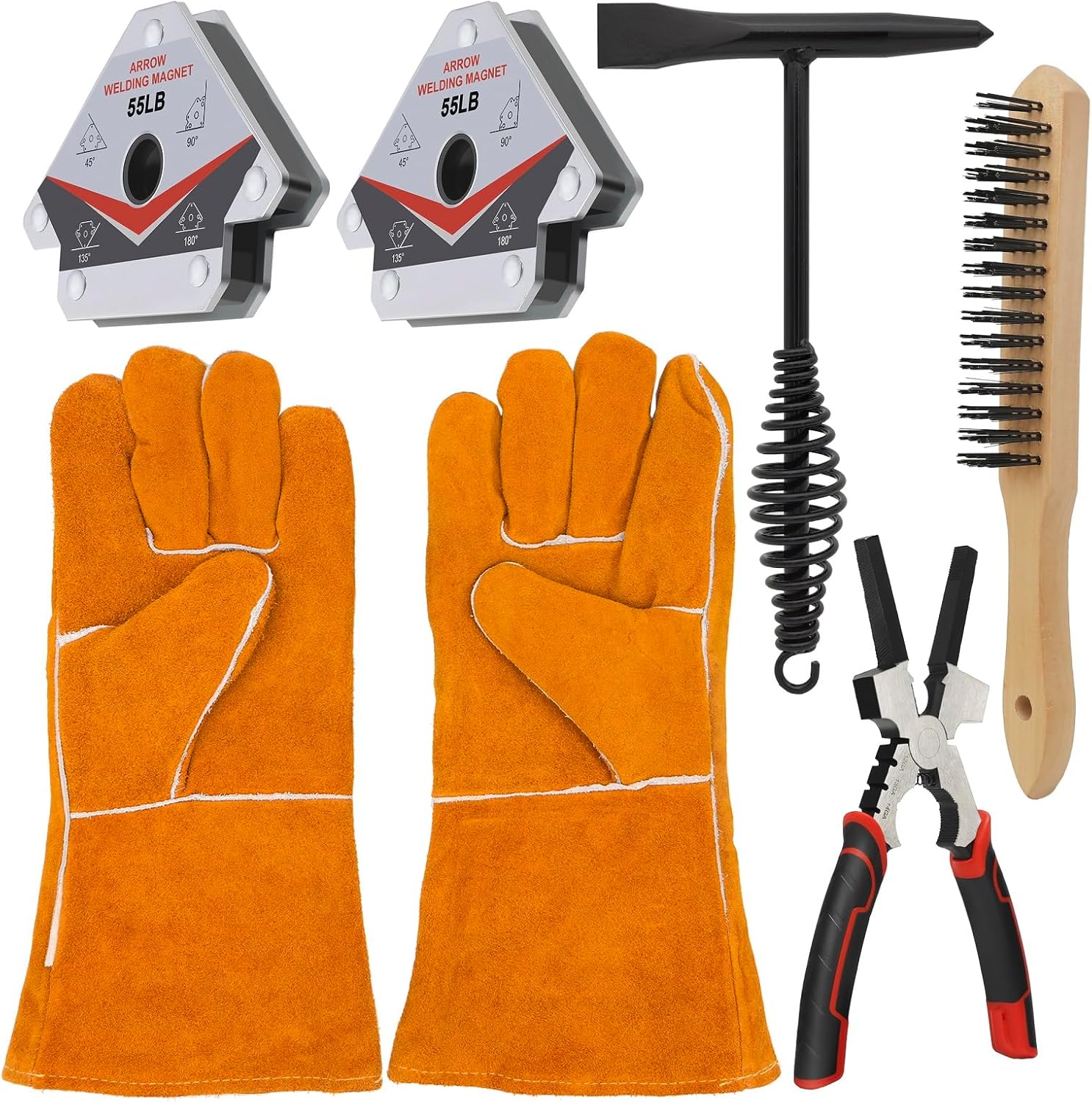
As an Amazon Associate, TestTalkHQ earns from qualifying purchases.
Select your electrode type and diameter, choose your welding position, enter your material type, and optionally add project details for rod consumption estimates. The calculator provides amperage ranges based on the proven formula of 40 amps per 1/32" of electrode diameter, adjusted for position and electrode type.
SMAW amperage scales with electrode diameter (roughly 30–40 A per 1/32" of diameter), then shifts with position and coating. The calculator already applies position factors; use Advanced options to lock polarity preference, arc force / dig, and travel speed for heat input.
| Diameter | Flat amp window | Rule of thumb |
|---|---|---|
| 1/16" (1.6 mm) | 40–70 A | ~40 A × 2/32" |
| 3/32" (2.4 mm) | 70–110 A | ~40 A × 3/32" |
| 1/8" (3.2 mm) | 90–150 A | Most common structural size |
| 5/32" (4.0 mm) | 130–200 A | Heavier plate / fill passes |
| 3/16" (4.8 mm) | 160–250 A | High deposition flat work |
The calculator gives you both a recommended range and an optimal setting. Start at the optimal setting and adjust based on your results. If the rod sticks constantly, increase amperage by 5-10 amps. If you're burning through, reduce amperage and increase travel speed. If the arc is erratic, check your ground connection first.
E7018 (Low Hydrogen): The most popular electrode for structural welding. Produces smooth, strong welds with minimal spatter. Must be stored in a rod oven at 250-300°F to prevent moisture absorption. Use a drag technique and AC or DCEP polarity.
E6010 (Deep Penetration): King of all-position welding, especially for pipe and root passes. Works on rusty, painted, or dirty metal. DCEP only. Use a whipping motion for vertical-up.
E6011 (All-Position AC): The AC version of 6010 with similar characteristics. Great for farm and maintenance welding. Also works on DCEP.
E6013 (Easy Arc): Beginner-friendly with smooth, stable arc. Medium penetration and easy slag removal. Works on AC, DCEP, or DCEN.
E7024 (High Deposition): Flat and horizontal only. Very high deposition rate. Not suitable for vertical or overhead.
Shopping for a stick welder? Check our stick welder reviews to find the right machine for your needs, from lightweight portable units to industrial powerhouses.
Rod sticking, spatter/arc blow, 7018 porosity, undercut, or burn-through vs lack of fusion: Stick Welding Rod Troubleshooting. Rod family choice (6011 vs 6013 vs 7018) stays on the Stick Rod Chart & Selection Guide. Process choice (why Stick at all): MIG vs TIG vs Stick.