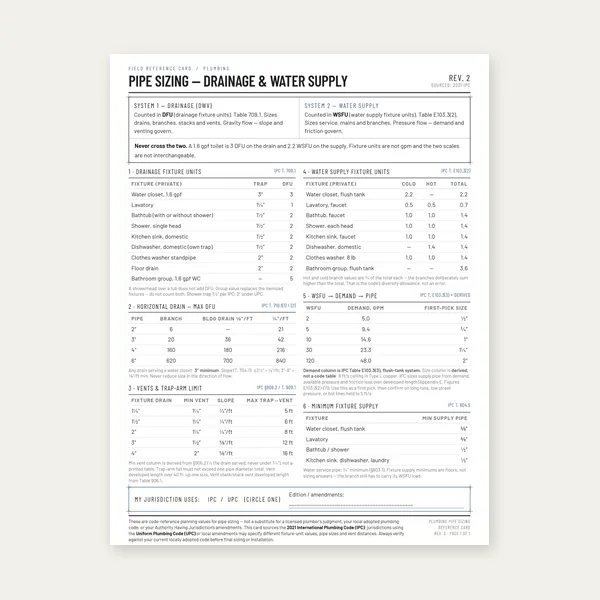
Plumbing Pipe Sizing Card
$3.99
BuyTotal dynamic head, horsepower class, and pressure tank size from well depth, fixture lift, flow rate, pipe friction, and system pressure
Size a residential well pump from the pumping (or static) water level, additional lift to the highest fixture, desired GPM (manual or bathroom-count estimate), pipe diameter and length for friction loss, and cut-in/cut-out PSI. The calculator reports TDH in feet, a typical 1/2 / 3/4 / 1 / 1.5 HP band that covers that GPM at that head, and a pressure-tank size for about one minute of drawdown between cycles. Starting point only — not a manufacturer pump curve and not a substitute for a well contractor confirming yield, wire, and local code.
How TDH becomes HP: sizing guide. Short-cycling and no pressure: troubleshooting. Submersible vs jet: comparison. Quick depth table: sizing chart. Plumbing index: plumbing calculators hub.
A basement sump is a different pump: sump pump sizing calculator. Supply pipe after the tank: water supply pipe sizing. Rural waste side: septic tank sizing.
Enter the pumping (or static) water level, the rise from grade to the highest fixture, the GPM you need (or a bathroom-count estimate), drop/supply pipe diameter and developed length, and the pressure-switch cut-in/cut-out. The tool adds vertical lift, Hazen-Williams friction (C=150 PVC), and pressure head (cut-out PSI × 2.31) into total dynamic head, then picks the smallest typical 1/2–1.5 HP residential band that still makes that GPM at that TDH and sizes a bladder tank for roughly one minute of drawdown.
Why those three terms matter: sizing guide. Short-cycling and waterlogged tanks: troubleshooting. Submersible vs jet is depth architecture, not the GPM formula: comparison. Ballpark before you measure pipe: sizing chart.
A well pump is sized at a point on a curve: gallons per minute at total dynamic head. Horsepower on the carton is shorthand. A 1 HP pump at 150 ft TDH and the same pump at 320 ft TDH are not the same machine. This tool makes you enter depth, friction, and pressure on purpose.
Already short-cycling on a “big enough” pump? Waterlogged tank and a failed check valve fake an undersize.
Troubleshooting →$3.99
Buy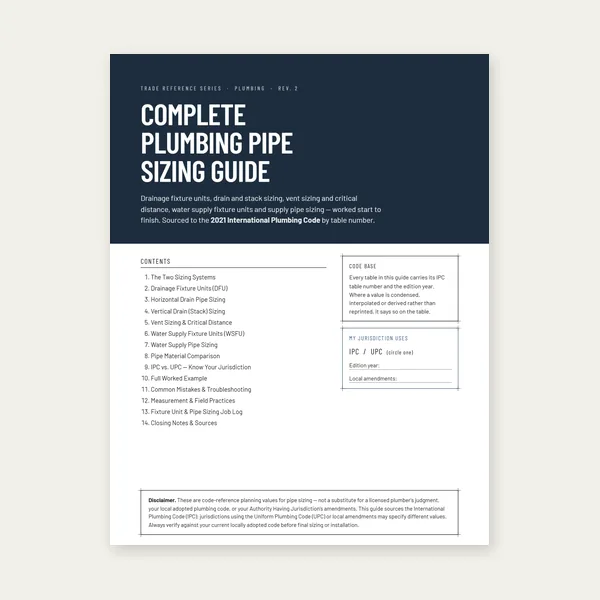
$12.99
Buy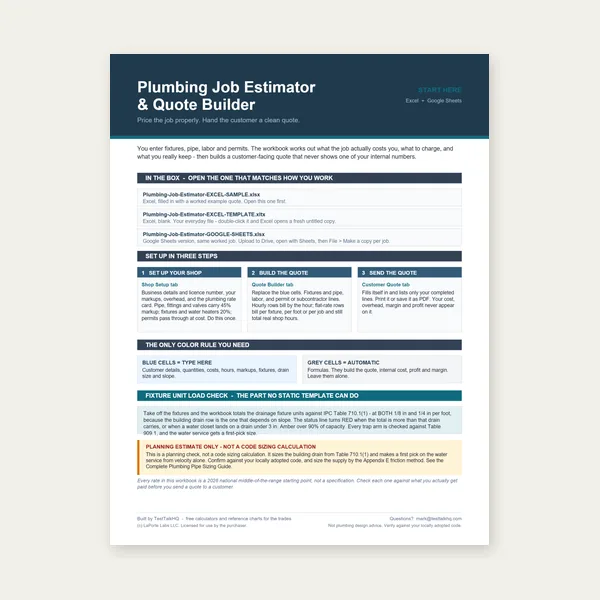
$29.00
Buy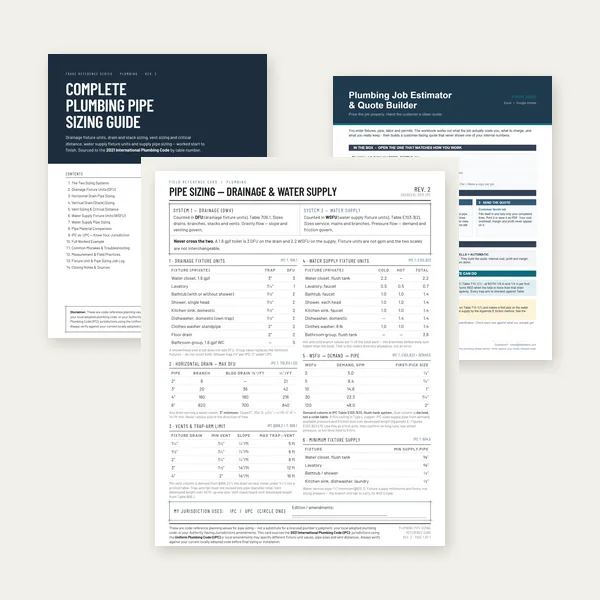
$39.00
BuyCheckout opens here — you stay on this page.
TDH and HP pick the pump. Torque arrestors, well-rated cable, and a pressure switch calibrated to the tank you actually have are why a “right-size” pump still cycles every 15 seconds or can't reach the second floor.
Typical shallow-to-moderate depth residential. Confirm the curve at your total dynamic head, not the HP alone.
View on Amazon →
Shallow or deep configuration depending on static lift. Above-ground service. Check if your depth is in jet or submersible territory.
View on Amazon →
Adequate drawdown for typical household demand. Prevents short-cycling when matched to the pressure switch range.
View on Amazon →
Standard residential band. Cut-in at 40 PSI, cut-out at 60. Must match your tank drawdown capacity and plumbing fixture minimums.
View on Amazon →
Prevents submersible pump from spinning on start-stop. Unanchored motors twist the drop pipe and stress wiring.
View on Amazon →
Submersible-rated, UV-resistant jacket. Must handle depth, voltage drop, and wet environments. Size by depth and pump load.
View on Amazon →As an Amazon Associate, TestTalkHQ earns from qualifying purchases.