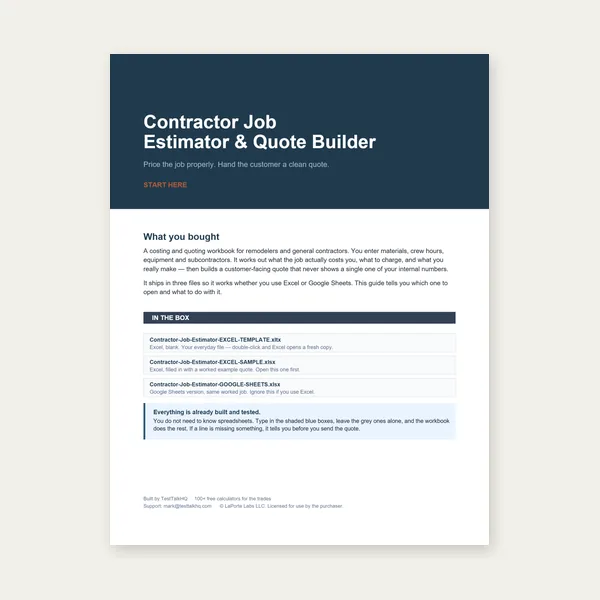
Contractor Job Estimator
$29.00
BuyCommon rafter length, pitch in degrees and X/12, plumb cut, and birdsmouth seat cut
$29.00
BuyCheckout opens here — you stay on this page.
A framing square set to 12 and the pitch number is the same math as this calculator. The saw only follows the plumb and seat lines.
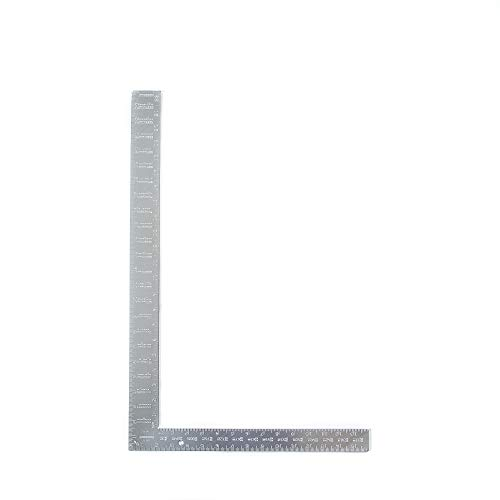
Pivot to the pitch degree for a fast plumb cut at the ridge and fascia. Confirm the number against the calculator's pitch angle before the first kerf.
View on Amazon →
12 on the body, pitch on the tongue. That is common-rafter layout. Stair gauges lock the numbers so the walk does not drift.
View on Amazon →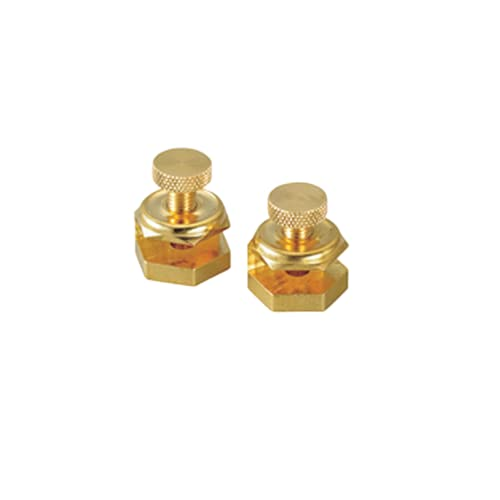
Clamp 12 and the pitch on the square. Same hardware as a stringer walk — on a rafter they keep the plumb and seat cuts honest.
View on Amazon →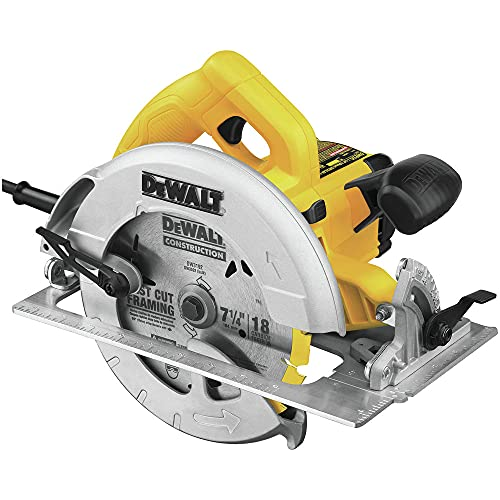
Set the bevel to the plumb-cut angle for the ridge. Cut the birdsmouth seat and heel separately so you do not overcut the remaining depth.
View on Amazon →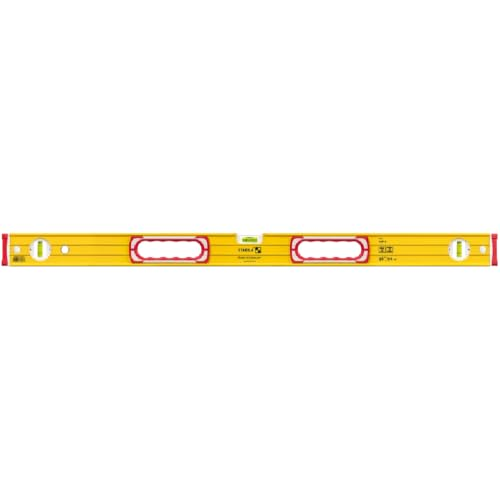
Prove the plate is level and the ridge is on layout before you hang the first pair. A long level also checks fascia for a straight eave.
View on Amazon →
How the pitch triangle becomes lines on a 2x. Use the calculator for numbers, then this guide before the first kerf.
Read the Layout Guide →As an Amazon Associate, TestTalkHQ earns from qualifying purchases.
Pick building span (the tool halves it) or enter rafter run directly. Then either type pitch as 6/12, or switch to rise+run and enter total rise in feet. Add the horizontal overhang. Read common-rafter line length, tail, total stock, pitch in degrees and X/12, plumb-cut angle, and birdsmouth seat-cut angle.
Marking plumb cuts and the birdsmouth: rafter length and pitch guide. Wrong angle or short rafter: rafter troubleshooting. When this math does not apply: common vs hip/valley rafter.
Stairs still live next door: Stair Stringer Calculator and Deck Stair Calculator.