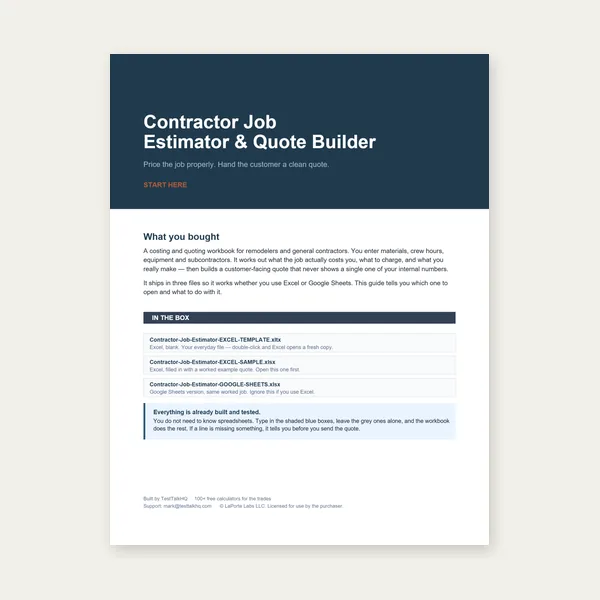
Contractor Job Estimator
Price remodels and GC work, then send a quote with no internal numbers.
Excel or Google Sheets. Best on a computer.
$29.00
BuyMatch protection to the hazard, not the job title
One pair of gloves does not cover every shop task. Welding arc flash, grinding sparks, machining chips, weld fume, and noise each demand different PPE layers. This guide walks through hazard-based selection for the three most common fab-shop processes — welding, grinding, and machining — with comparison tables and links to ventilation, respirator, and noise calculators on the Shop Safety Tools Hub.
PPE is the last line of defense after engineering controls (ventilation, enclosures, machine guards) and administrative controls (permits, training, job rotation). Before you pick gear, list what can actually hurt you on that specific task: arc radiation, molten metal, airborne particulate, rotating machinery, high sound levels, or chemical vapors.
Match each hazard to a control tier. If you can eliminate the hazard (use a plasma table with downdraft instead of open-air cutting), do that first. If you cannot, add ventilation and then PPE sized to the residual exposure. The tables below assume normal shop ventilation — when fume or noise levels are unknown, run the Welding Fume Ventilation CFM Calculator, Noise Exposure Calculator, and Respirator Cartridge Changeout Calculator before relying on comfort-level guesses. Air tools and compressor sizing: cfm calculator.
Adjust shade and respirator level to amperage, process, and confined-space conditions. Outdoor stick on structural steel may need only a filtering facepiece; indoor stainless TIG often needs supplied air.
| Process | Eye / Face | Body | Hands | Respiratory | Other |
|---|---|---|---|---|---|
| MIG (GMAW) | Auto-darkening helmet shade 10–13; clear safety glasses under hood | FR jacket or sleeves; no synthetic outer layers | MIG gloves — dexterity with heat resistance | Natural ventilation often adequate outdoors; add PAPR or half-face with P100 when indoors or on galvanized | Hearing protection above 85 dBA; leather boots; remove jewelry |
| TIG (GTAW) | Helmet shade 9–13; additional face shield for grinding prep | FR sleeves minimum; full jacket for production | TIG gloves — thin goatskin or similar for torch control | Lower fume than stick but chromium/nickel from stainless needs ventilation; respirator for confined booths | Knee pad if long runs; respirator fit-test if required by employer |
| Stick (SMAW) | Helmet shade 10–14; side shields on safety glasses under hood | FR coverall or jacket + apron for overhead | Heavy stick gloves — thick leather, long cuff | Highest fume among common processes; local exhaust or respirator mandatory in enclosed areas | Chipping hammer and wire brush — add face shield when cleaning slag |
| Flux-core (FCAW) | Same as MIG; watch for increased spatter | FR layers; self-shielded flux produces more fume — treat like stick for ventilation | MIG/stick hybrid gloves depending on heat | Self-shielded = significant fume; half-face minimum indoors | Wind affects self-shielded gas shielding outdoors — PPE does not fix bad setup |
| Plasma / oxy-fuel cutting | Shade 5–8 cutting goggles or helmet; face shield for grinding after cut | FR sleeves; spark-resistant apron for overhead plasma | Cutting gloves — heavy leather, insulated if handling hot plate | Metal fume from plasma; oxy-fuel adds combustion products — ventilate and respirator per material | Hot-work permit and fire watch where required — see Hot Work & Fire Watch Checklist |
Process-specific setup calculators: MIG Welding Calculator, TIG Welding Calculator, and Stick Welding Calculator.
Price remodels and GC work, then send a quote with no internal numbers.
Excel or Google Sheets. Best on a computer.
$29.00
BuyCheckout opens in a new tab.
Core helmet, gloves, and respiratory basics for multi-process fab work
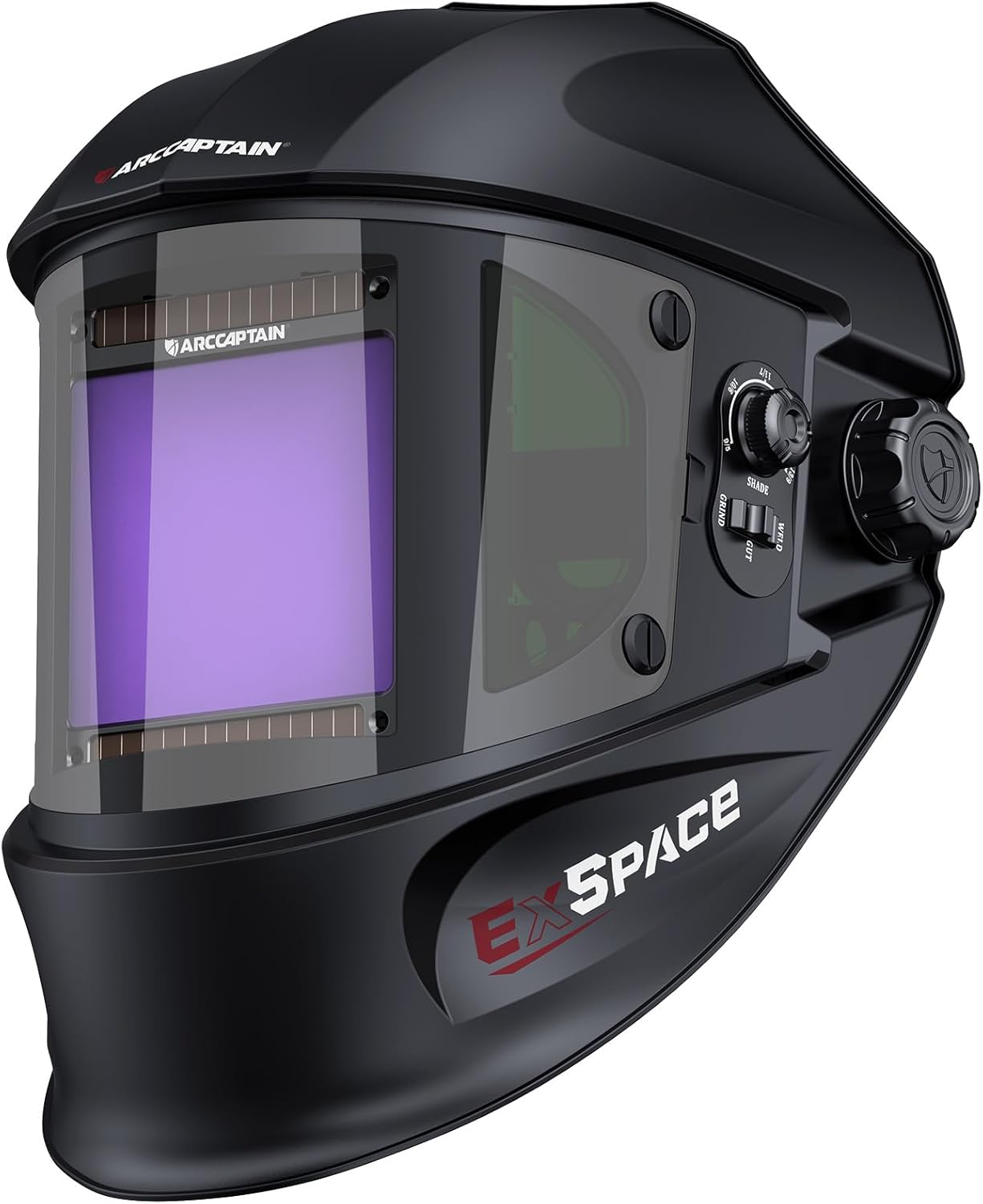
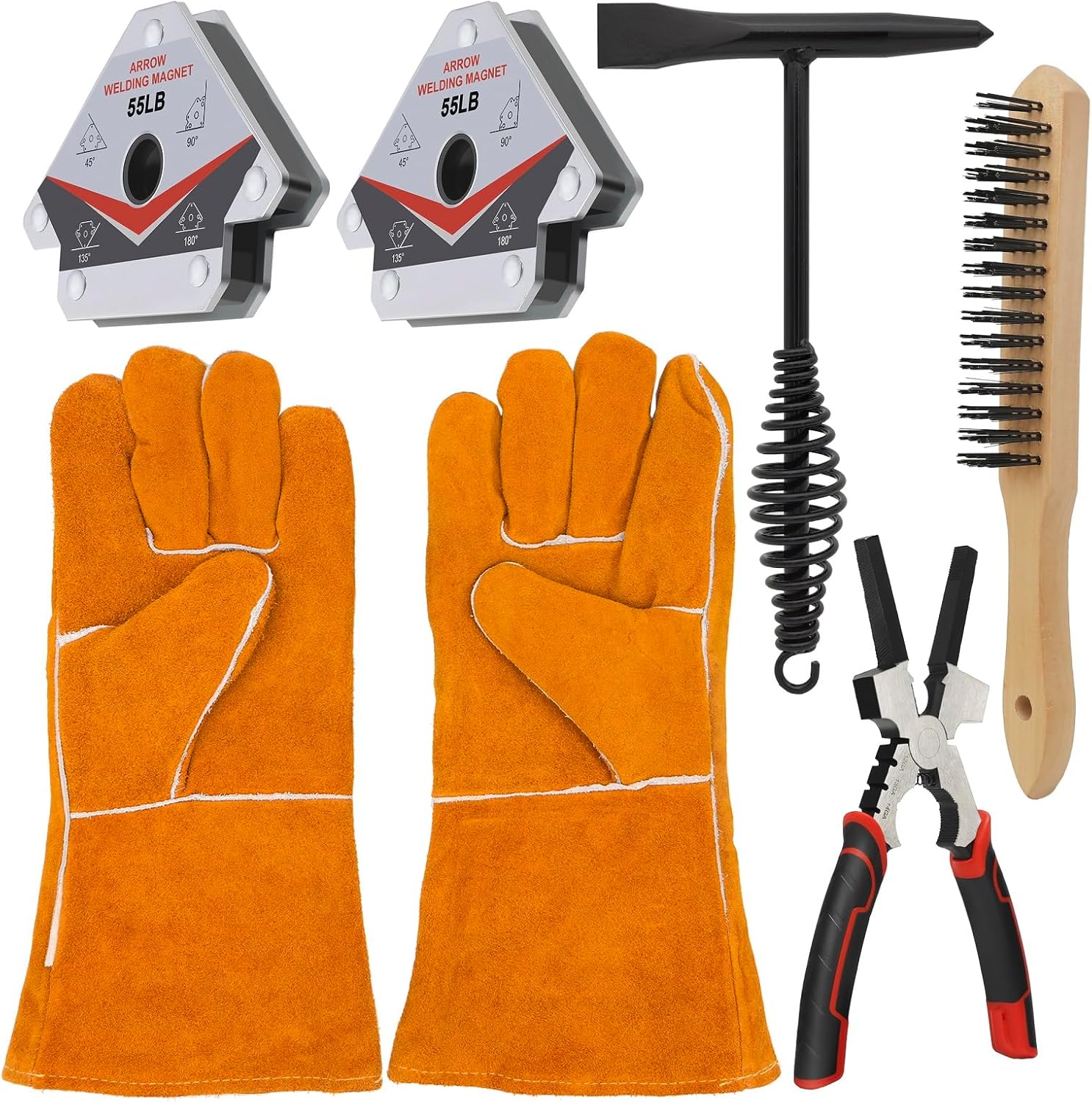

As an Amazon Associate, TestTalkHQ earns from qualifying purchases.
Angle grinders produce high-velocity fragments, not just sparks. Disc burst failures send shrapnel outward — eye protection must be impact-rated (Z87.1+), ideally a full face shield over safety glasses. Hearing protection is non-optional: most 4½″ and 7″ grinders exceed 90 dBA at the operator's ear.
Gloves for grinding need cut resistance and heat insulation without so much bulk that you lose control of the tool. Avoid loose cuffs, jewelry, and synthetic clothing — nylon and polyester melt into skin on contact with hot sparks. Before every wheel change, verify RPM against disc rating with the Angle Grinder Disc Speed Calculator — overspeed is a leading cause of disc failure and the PPE you wear is the last defense when a disc bursts.
| Task | Minimum PPE | Notes |
|---|---|---|
| Surface grinding / blending | Z87.1+ glasses + face shield, hearing protection, leather gloves, FR or cotton outerwear | Keep guard adjusted; never grind with guard removed |
| Cutoff / thin-wheel cutting | Face shield mandatory, apron, hearing protection, respirator if cutting stainless or coated metal | Thin wheels are more burst-prone — check max RPM every mount |
| Wire wheel / brush | Face shield, tight-weave gloves (wire strands embed in skin) | Direction matters — wire tips should trail, not dig in |
| Pedestal / bench grinder | Tool rests within 1/8″, eye shields in place, no gloves on small precision work if tangling risk exists | Cracked wheels ring-test before spin-up |
Lathes, mills, and drill presses throw continuous chips at high speed. Safety glasses are mandatory; face shields add protection during heavy roughing or when coolant carries chips upward. Hearing protection applies on enclosed CNC cells and air-powered tools even when the cut itself is quiet.
Additional machining notes: closed-toe shoes with oil-resistant soles; hair tied back; no lanyards or ID badges that hang into the envelope. For manual lathe work, use a chip hook or brush — never hands to clear long stringy chips while the chuck rotates. FR clothing is less critical than in welding unless you are machining dry without coolant on hot parts.
| Hazard | Welding | Grinding | Machining |
|---|---|---|---|
| Eye / face | Auto-darkening helmet + safety glasses | Impact glasses + face shield | Safety glasses; face shield for heavy cuts |
| Hearing | Often 85–95 dBA — earplugs or muffs | Typically 90–105 dBA — muffs preferred | Variable — CNC enclosures can still exceed 85 dBA |
| Respiratory | Weld fume — LEV + respirator as needed | Metal dust — respirator on stainless/coated stock | Mist from coolant — avoid oil mist buildup in enclosed cells |
| Hand protection | Process-specific weld gloves | Leather / cut-resistant gloves | No gloves at rotating contact points |
| Body | FR jacket, sleeves, apron | FR or heavy cotton; no synthetics | Close-fit sleeves; no dangling drawstrings |
| Foot | Leather boots, metatarsal guard optional | Same — hot slag and dropped stock | Oil-resistant soles; steel toe |
Use these calculators to justify respirator, ventilation, and hearing protection choices with numbers instead of habit.
Earplugs vs Earmuffs vs Dual Protection — Which hearing layer to wear — plugs, muffs, or dual — after dose math.
When CFM looks fine but the plume still hits the hood, see Welding Fume Ventilation Troubleshooting.
Also see the Sling Angle Load Calculator, Sling Angle Load Guide, Sling Angle Troubleshooting, and Choker vs Basket vs Vertical Hitch for lift planning alongside PPE and hot-work controls.