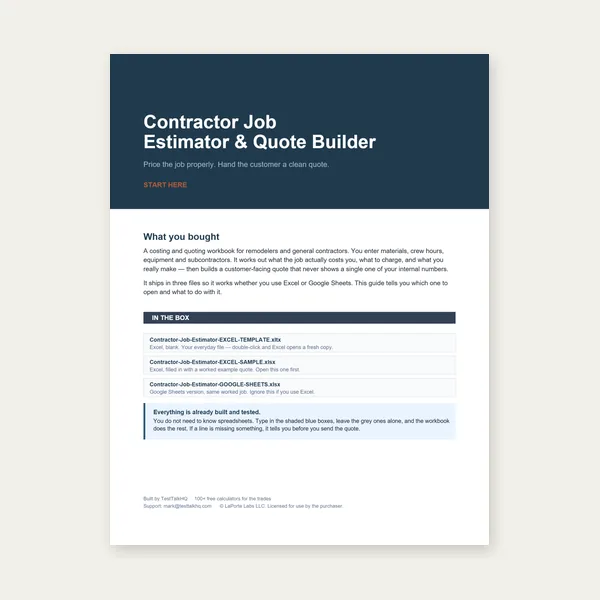
Contractor Job Estimator
Price remodels and GC work, then send a quote with no internal numbers.
Excel or Google Sheets. Best on a computer.
$29.00
BuyFree fall, deceleration, harness stretch, and safety margin — how to read SRL and shock-lanyard specs, run worked examples, and stay inside OSHA 1926.502 / ANSI Z359.1 expectations
Run the numbers in the fall clearance calculator. Field failures: troubleshooting. Connector choice: SRL vs shock-absorbing lanyard. Related shop safety: PPE by process, arc-flash boundary, noise exposure, hot work checklist. Hub: shop safety tools.
Get a pass/fail before the scaffold or mezzanine job. Free fall, deceleration, harness stretch, safety factor, available clearance.
Open Fall Clearance Calculator →Fall-arrest clearance is not a single OSHA chart cell. It is the sum of how far you fall before the system engages, how far the energy absorber pays out, how much the harness and D-ring shift under load, and a deliberate margin so the worker’s body and equipment do not strike the next lower level.
Available clearance is measured from the walking/working surface down to the strike hazard (floor, machine bed, lower roof, steel, concrete). Do not confuse that measurement with anchor height above the surface — anchor height informs free-fall geometry, but the calculator treats free fall as its own input because real free fall depends on lanyard length, D-ring position, and whether the anchor is overhead, at shoulder, or at foot level.
| Component | Typical planning values | What drives it |
|---|---|---|
| Free fall distance (FFD) | ~6 ft (many 6-ft shock lanyards); ~2 ft (many overhead personal SRLs) | Connector length, anchor location relative to D-ring, slack before engagement |
| Deceleration distance (DD) | ~3.5 ft (common shock pack); ~2 ft (many SRLs) | Energy-absorber or SRL braking distance on the product label / IFU |
| Harness stretch / D-ring shift | ~1.0 ft planning allowance | Webbing elongation and D-ring rise under arrest forces |
| Safety factor margin | ~2.0 ft planning buffer | Body position, equipment length below D-ring, measurement uncertainty |
Before you trust a preset, open the instructions for use (IFU) or the product label for the exact model on the worker’s back:
ANSI/ASSP Z359 (often cited starting from ANSI Z359.1 for general requirements) is the equipment-code family manufacturers design to. OSHA 1926.502 sets the regulatory performance and system criteria for construction fall-protection systems. Neither document replaces the IFU for your SKU.
Price remodels and GC work, then send a quote with no internal numbers.
Excel or Google Sheets. Best on a computer.
$29.00
BuyCheckout opens in a new tab.
Harness, connector, and anchor picks for clearance-limited fab shops and rooftop work. Affiliate links from the live TestTalkHQ Geniuslink set only.
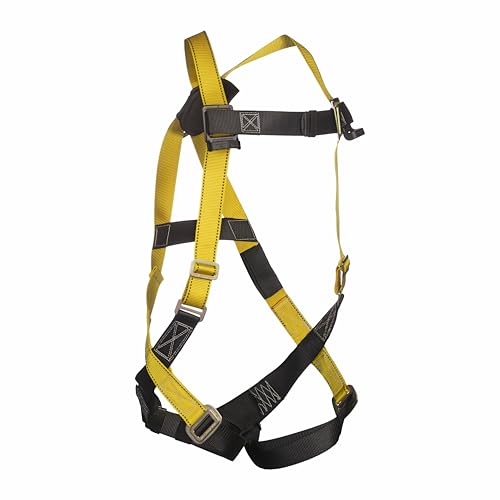
Full-body harness for construction and shop fall arrest — D-ring geometry you still add as stretch/shift in the clearance stack.
View on Amazon →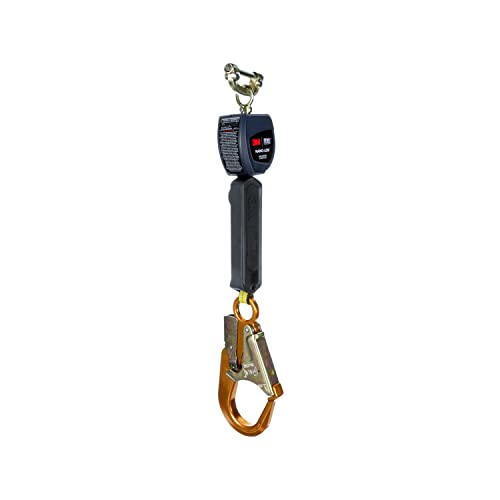
Personal SRL that keeps free fall short when the anchor and working surface allow it — use manufacturer deceleration and free-fall numbers in the calculator.
View on Amazon →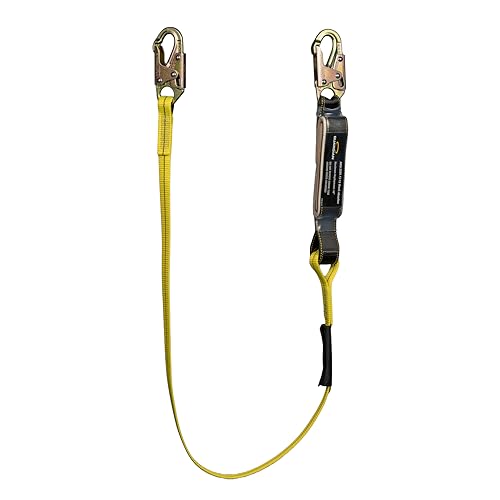
Classic 6-ft shock lanyard preset in the widget (free fall ~6 ft, pack deployment ~3.5 ft). Confirm your model’s label before you trust the stack.
View on Amazon →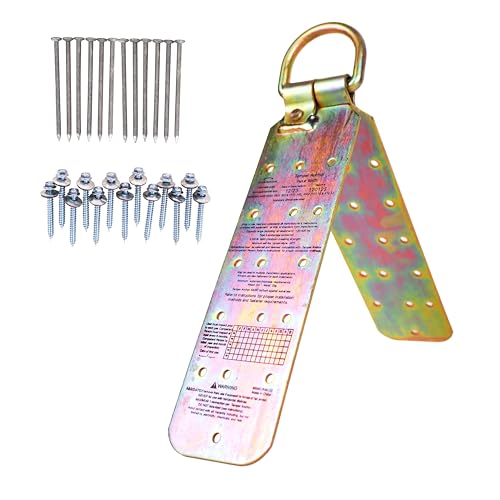
Reusable roof anchor for temporary fall-arrest tie-off. Anchor height and location drive free-fall distance — measure before you clip.
View on Amazon →As an Amazon Associate, TestTalkHQ earns from qualifying purchases. Product links are from the live TestTalkHQ affiliate CSV / Geniuslink set only.
OSHA 1926 Subpart M covers fall protection in construction. Section 1926.502 is where system criteria and practices live: guardrails, safety nets, personal fall-arrest systems, positioning, and related hardware performance. Personal fall-arrest systems must limit free fall and arresting force as specified, and anchorage must meet strength criteria. That is why this calculator asks for free fall and deceleration as inputs instead of inventing a single “OSHA clearance” number.
Training requirements for employees who use fall-protection systems sit in OSHA 1926.503 — recognizing fall hazards, procedures, and equipment use. A clearance worksheet without trained users is paperwork theater.
For broader shop PPE decisions around welding, grinding, and machining, pair this page with the PPE selection guide by process. Electrical approach distances are a different hazard class — use the arc-flash boundary calculator.
Example A — 6-ft shock lanyard on an open fab bay. FFD 6 + DD 3.5 + harness 1.0 + SF 2.0 = 12.5 ft required. Available clearance 18 ft → +5.5 ft surplus (PASS). Common when working over a clear shop floor with overhead structure tall enough.
Example B — same lanyard over an 11 ft mezzanine to floor. Required still 12.5 ft. Available 11 ft → −1.5 ft deficit (FAIL). A 6-ft shock lanyard is the wrong connector for that height unless geometry radically reduces free fall and the manufacturer chart agrees.
Example C — personal SRL overhead, same 11 ft available. Using SRL-style planning values FFD 2 + DD 2 + harness 1.0 + SF 2.0 = 7.0 ft required. Available 11 ft → +4.0 ft surplus (PASS) on paper — still confirm the SRL’s listed free-fall and clearance chart, and that the anchor is used as the manufacturer requires.
Ready to run your numbers? Presets match Examples A and C so you can change one input at a time.
Fall Clearance Calculator →Clearance math does not replace training. Workers need to know how to inspect harnesses and connectors, how to select and use anchorage, how to limit free fall, and what to do after a fall (including rescue planning). Competent persons need to evaluate site conditions when clearance is marginal. If your shop is also doing hot work on elevated structures, keep the hot work & fire watch checklist in the same pre-job packet.
No. 1.0 ft is a planning default in the calculator. Use manufacturer data when published, and never omit stretch entirely.
It can reduce free fall, but only if the work still allows reach without creating new swing or misuse. An SRL is often the cleaner fix for low clearance — see the comparison.
Common fall protection problems — low anchors, 6-ft lanyards in tight shops, ignored stretch, worn hardware.