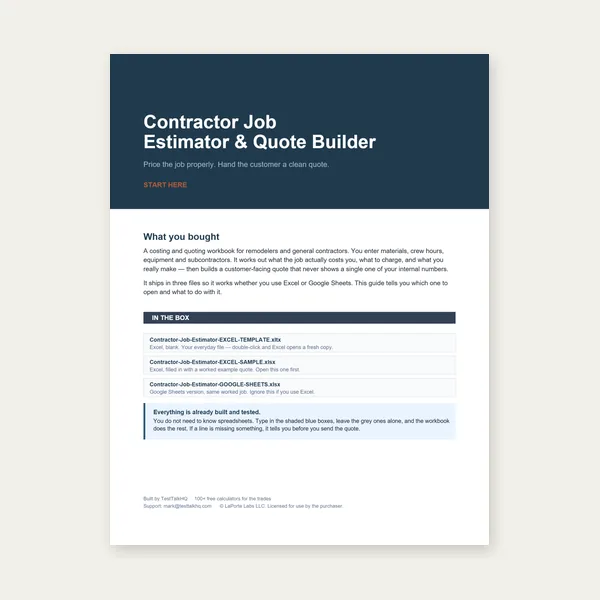
Contractor Job Estimator
Price remodels and GC work, then send a quote with no internal numbers.
Excel or Google Sheets. Best on a computer.
$29.00
BuyAnchors too low, 6-ft lanyards in low-clearance shops, ignored harness stretch, worn D-rings, and mismatched connectors — what goes wrong and how to catch it
Re-run the stack in the fall clearance calculator. Method: clearance guide. Connector choice: SRL vs shock lanyard. Related: PPE by process, shop safety hub, hot work checklist.
Suspect the clearance is fake-passing? Measure available distance, then rebuild free fall and deceleration from the label.
Open Fall Clearance Calculator →What you see: Worker clipped to a beam at foot or knee height with a 6-ft shock lanyard, or an SRL used below the D-ring when the IFU requires overhead anchorage.
Why it fails: Free-fall distance grows when the anchorage is below the dorsal D-ring. A “6-ft lanyard” can become much more than 6 ft of free fall before the pack starts paying out. Arresting forces and required clearance both climb.
How to catch it: Stand the worker in work position and measure from D-ring to anchor. Compare free-fall limits on the label. Re-enter a realistic free-fall distance in the calculator. Raise the anchor or change connectors before the job starts.
What you see: Mezzanine work, equipment pits, or bay work over stacked steel where floor-to-hazard is 10–14 ft, but everyone still grabs the same 6-ft shock lanyard from the gang box.
Why it fails: A typical planning stack (6 + 3.5 + 1 + 2) needs about 12.5 ft. Eleven feet of available clearance fails even when the harness looks correct and the worker is trained.
How to catch it: Measure available clearance with a tape — do not guess from bay height. Run the calculator. If it fails, switch to an SRL listed for the geometry or use guardrails / work platforms instead of fall arrest. Comparison: SRL vs lanyard.
What you see: Spreadsheets that only add free fall + pack deployment, then declare “we have 12 ft, we need 9.5 ft.”
Why it fails: Under arrest forces, webbing elongates and the dorsal D-ring rises relative to the feet. Skipping ~1 ft (or the manufacturer value) turns a paper pass into a real strike.
How to catch it: Always include harness stretch in the stack. Prefer manufacturer data. Keep a safety-factor margin. Re-run with stretch set to zero only to show a supervisor how fake the old pass was — then put stretch back.
Price remodels and GC work, then send a quote with no internal numbers.
Excel or Google Sheets. Best on a computer.
$29.00
BuyCheckout opens in a new tab.
Harness, connector, and anchor picks for clearance-limited fab shops and rooftop work. Affiliate links from the live TestTalkHQ Geniuslink set only.
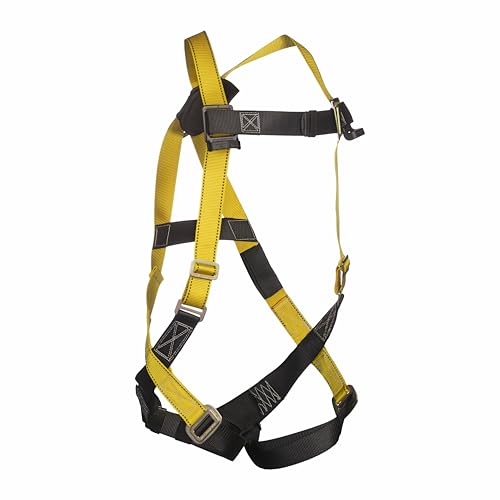
Full-body harness for construction and shop fall arrest — D-ring geometry you still add as stretch/shift in the clearance stack.
View on Amazon →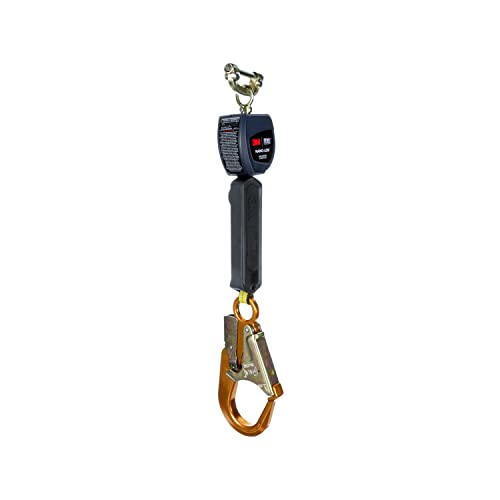
Personal SRL that keeps free fall short when the anchor and working surface allow it — use manufacturer deceleration and free-fall numbers in the calculator.
View on Amazon →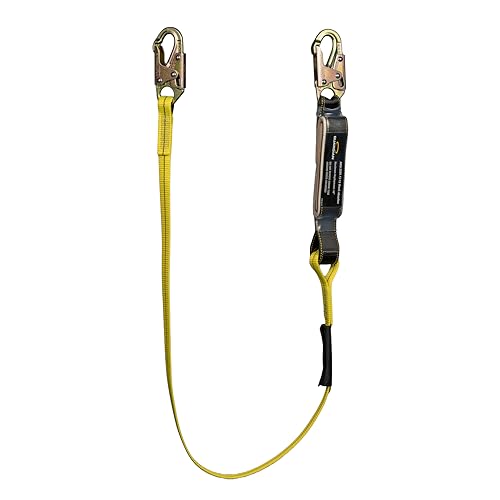
Classic 6-ft shock lanyard preset in the widget (free fall ~6 ft, pack deployment ~3.5 ft). Confirm your model’s label before you trust the stack.
View on Amazon →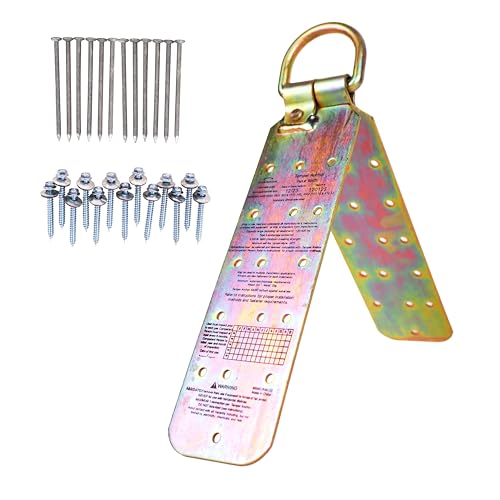
Reusable roof anchor for temporary fall-arrest tie-off. Anchor height and location drive free-fall distance — measure before you clip.
View on Amazon →As an Amazon Associate, TestTalkHQ earns from qualifying purchases. Product links are from the live TestTalkHQ affiliate CSV / Geniuslink set only.
What you see: Painted-over webbing abrasion, gouged D-rings, sticky shock packs, SRLs that do not retract smoothly, labels worn illegible.
Why it fails: Damaged connectors can increase free fall (late engagement), fail to decelerate as listed, or fail outright. Illegible labels mean nobody can confirm free-fall or deceleration for the calculator.
How to catch it: Pre-use inspection every shift. Remove from service per manufacturer criteria after a fall or when defects appear. Do not calculate clearance for gear that failed inspection — replace it first. Broader PPE discipline: PPE by process.
What you see: Non-compatible snap hooks on small D-rings (roll-out risk), rope grabs on the wrong rope, homemade beam clamps, or tying off to conduit / unistrut / handrails that are not rated anchorage.
Why it fails: OSHA 1926.502 anchorage and connector criteria are not suggestions. Improvised anchors can pull out at forces far below arrest loads. Incompatible hooks can gate-open under load.
How to catch it: Use listed anchorage connectors. Match hardware to the IFU. Have a competent person approve anchorages. If hot work is happening on the same elevated surface, do not let sparks or heat damage webbing — coordinate with the hot work checklist.
Rebuilding a failed mezzanine setup? Start with available clearance and the connector label.
Fall Clearance Calculator →No. Knots and improvised shorteners are not a substitute for listed connectors and can destroy energy-absorption performance.
Stacked product, a lower temporary deck, or a different connector can erase last year’s surplus. Re-measure every setup.
The fall clearance guide — components, specs, and worked examples.