Welding fume control is not one fan in the corner. Local exhaust (LEV) captures at the plume; dilution spreads contamination thinner. This guide explains when each approach works, how CFM thinking applies, and when respirators are still required.
LEV vs Dilution Ventilation
Local exhaust ventilation (LEV) — fume extraction arms, downdraft tables, on-gun extraction — captures contaminants at the source before they enter the breathing zone. It is the preferred engineering control for welding, grinding, and thermal cutting.
Dilution (general) ventilation mixes shop air so average concentrations fall. It can help background levels but does little for the welder’s immediate plume, especially in still air or when multiple arcs run. Dilution alone is a weak primary control for hexavalent chromium, manganese, or stainless/galvanized work.
Eliminate/substitute (process/consumable choice) → engineering (LEV) → administrative (positioning, schedules) → PPE (respirators). Do not jump straight to a disposable mask and call the shop “ventilated.”
CFM Thinking for Welding
Capture velocity and hood design matter more than a single CFM brag number, but CFM is still how shops size fans and ducts. Rough planning ideas:
- Fume arm / hood — enough volume to maintain capture velocity at the hood face with the arm positioned near the weld (typically within a foot or so; follow manufacturer guidance).
- On-torch extraction — lower total CFM but high capture efficiency when the nozzle stays close to the puddle.
- Booth / enclosure — design for face velocity across the open face; leaks and cross-drafts kill performance.
Use the welding fume ventilation CFM calculator to rough-size extraction for booth and arm-style setups — then verify with smoke tests and, when required, industrial hygiene sampling. For grinders, plasma, and other shop air tools, size compressors with the cfm calculator.
When Respirators Are Still Needed
LEV reduces exposure; it does not guarantee levels below OELs for every alloy and position. Respirators remain necessary when:
- LEV cannot be positioned effectively (tight spaces, overhead, field work).
- High-fume processes (flux-cored, SMAW on coated steels, plasma cutting) overwhelm capture.
- IH data or SDS / employer program requires respiratory protection.
- You are in the breathing zone of another welder’s plume.
Cartridge changeout schedules belong in the written program — see the respirator cartridge changeout guide and calculator. Pair both with the PPE selection guide by process.
Odor threshold for many welding fume components is a poor surrogate for OEL. “I can’t smell it” is not clearance to drop LEV or respirators.
Practical Shop Tips
Metals That Change the Conversation
Mild-steel MIG in a well-extracted booth is a different problem than stainless, galvanized, or hardfacing alloys that generate hexavalent chromium, zinc oxide, or manganese-heavy fume. Those jobs justify tighter LEV, possibly supplied-air or higher-APF respirators, and documented IH sampling — not just “we have a fan.” Read the SDS for consumables and base metals before assuming yesterday’s setup is enough.
Estimate welding fume ventilation CFM Rough-size extraction for arms, booths, and shop planning.
Frequently Asked Questions
Is a ceiling fan enough for MIG welding?
Usually not for the welder’s breathing zone. Ceiling fans dilute and stir; they do not replace source capture for production welding.
Do I need a respirator if I have a fume arm?
Maybe. Depends on process, metals, positioning, and measured exposures. Follow your respirator program and IH data.
WeldKit — Welding Tools Offline
Settings, deposition, gas, and shop calculators on Android. Free to start.
When the calculator result and the shop disagree, see Welding Fume Ventilation Troubleshooting.
Related Calculators & Guides
Welding
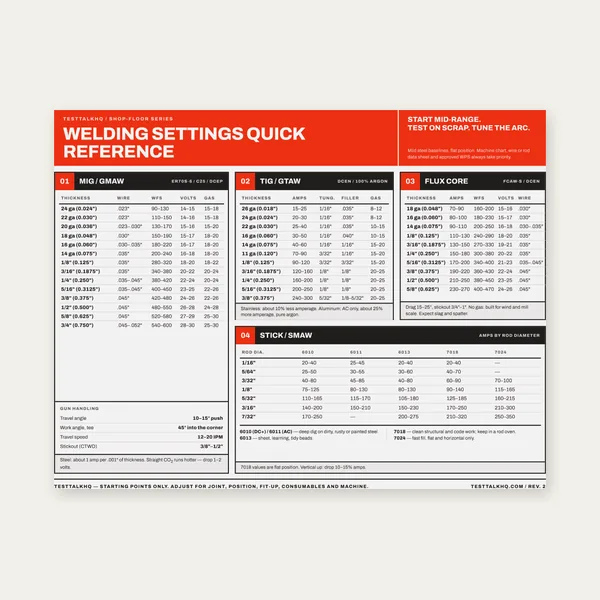
Welding Reference Card
One page. MIG, TIG, stick and flux core settings by thickness.
$3.99
Buy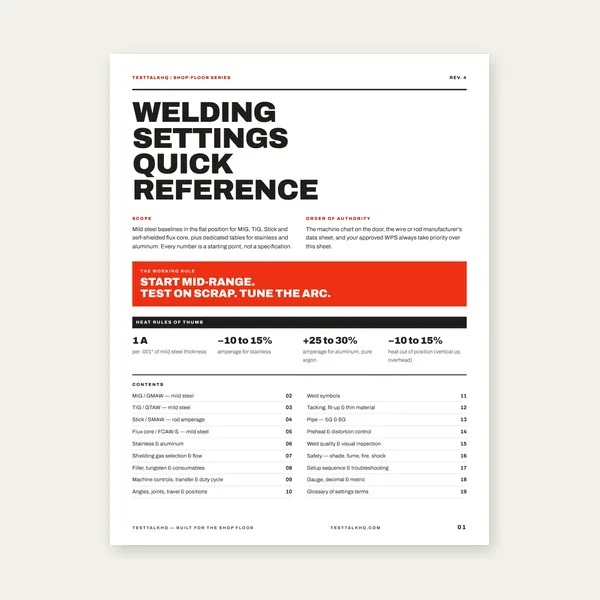
Complete Welding Settings Guide
19 pages. Four processes, stainless and aluminum, symbols and inspection.
$12.99
Buy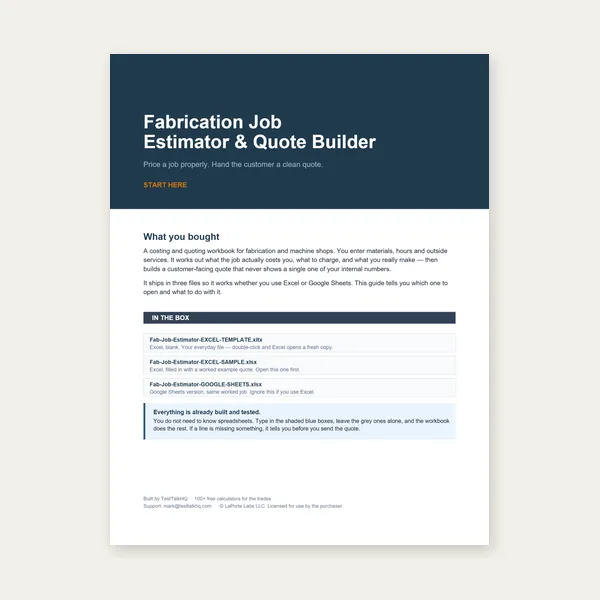
Welding Job Estimator
Price the job, then hand over a quote with no internal numbers.
Excel or Google Sheets. Best on a computer.
$29.00
Buy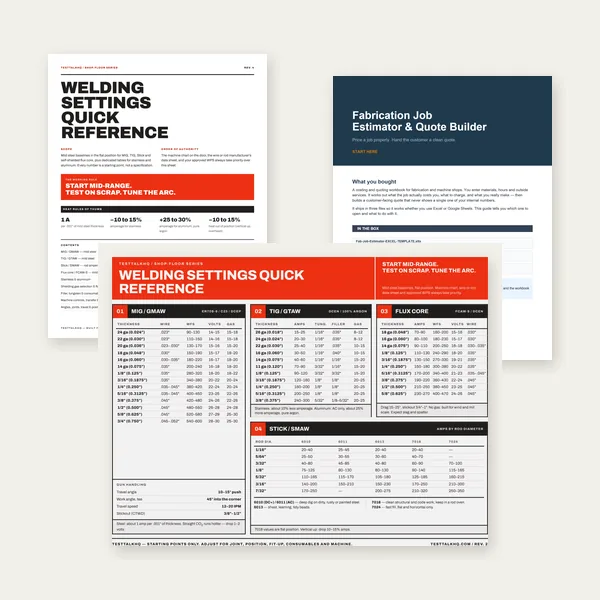
Welding Complete Bundle
Card, 19-page guide and the estimator workbook. All six files.
Excel or Google Sheets. Best on a computer.
$34.99
$45.98 if bought separately — save $10.99
BuyCheckout opens in a new tab.