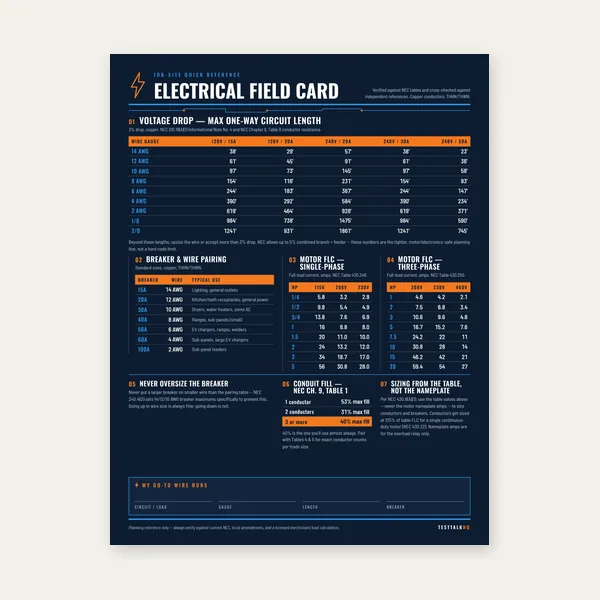
Electrical Reference Card
One page. Voltage drop lengths, breaker and wire pairing, motor FLC.
$3.99
BuyNEC Chapter 9 — Table 4 conduit areas and Table 5 conductor areas
Find the minimum trade size for your conductor count, or the maximum conductors allowed in a conduit you already have. Includes pull-difficulty advisories and jam-ratio warnings from the NEC informational note.

| Wire size | THHN/THWN | XHHW/XHHW-2 | THW/THHW | Fill rule (3+) |
|---|---|---|---|---|
| 14 AWG | 0.0097 | 0.0097 | 0.0139 | 40% |
| 12 AWG | 0.0133 | 0.0133 | 0.0181 | 40% |
| 10 AWG | 0.0211 | 0.0243 | 0.0243 | 40% |
| 8 AWG | 0.0366 | 0.0437 | 0.0437 | 40% |
| 6 AWG | 0.0507 | 0.0590 | 0.0590 | 40% |
| 4 AWG | 0.0824 | 0.0814 | 0.0814 | 40% |
| 3 AWG | 0.0973 | 0.0962 | 0.0962 | 40% |
| 2 AWG | 0.1158 | 0.1146 | 0.1146 | 40% |
| 1 AWG | 0.1562 | 0.1534 | 0.1534 | 40% |
| 1/0 AWG | 0.1855 | 0.1825 | 0.1825 | 40% |
| 2/0 AWG | 0.2223 | 0.2190 | 0.2190 | 40% |
| 3/0 AWG | 0.2660 | 0.2642 | 0.2642 | 40% |
| 4/0 AWG | 0.3237 | 0.3197 | 0.3197 | 40% |
| 250 kcmil | 0.3970 | 0.3904 | 0.3904 | 40% |
| 300 kcmil | 0.4608 | 0.4536 | 0.4536 | 40% |
| 350 kcmil | 0.5242 | 0.5166 | 0.5166 | 40% |
| 400 kcmil | 0.5863 | 0.5782 | 0.5782 | 40% |
| 500 kcmil | 0.7073 | 0.6984 | 0.6984 | 40% |
| Trade size | EMT (40%) | PVC 40 (40%) | PVC 80 (40%) | RMC (40%) | IMC (40%) |
|---|---|---|---|---|---|
| 1/2" | 0.122 in² | 0.114 in² | 0.087 in² | 0.125 in² | 0.137 in² |
| 3/4" | 0.213 in² | 0.203 in² | 0.164 in² | 0.220 in² | 0.235 in² |
| 1" | 0.346 in² | 0.333 in² | 0.275 in² | 0.355 in² | 0.384 in² |
| 1-1/4" | 0.598 in² | 0.581 in² | 0.495 in² | 0.610 in² | 0.659 in² |
| 1-1/2" | 0.814 in² | 0.794 in² | 0.684 in² | 0.829 in² | 0.890 in² |
| 2" | 1.342 in² | 1.316 in² | 1.150 in² | 1.363 in² | 1.452 in² |
| 2-1/2" | 2.343 in² | 1.878 in² | 1.648 in² | 2.181 in² | 2.054 in² |
| 3" | 3.538 in² | 2.907 in² | 2.577 in² | 3.234 in² | 3.169 in² |
| 3-1/2" | 4.618 in² | 3.895 in² | 3.475 in² | 4.232 in² | 4.137 in² |
| 4" | 5.901 in² | 5.022 in² | 4.503 in² | 5.452 in² | 5.341 in² |
Data per NEC Chapter 9 Tables 1, 4, and 5. Always verify with the current NEC edition and local amendments.
One page. Voltage drop lengths, breaker and wire pairing, motor FLC.
$3.99
Buy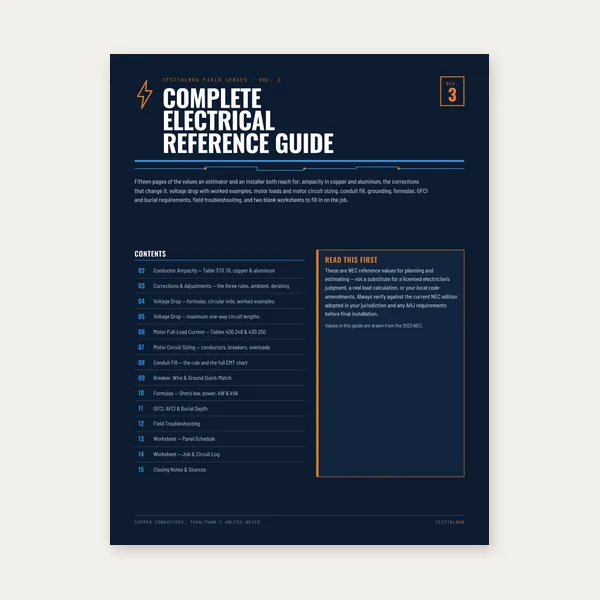
15 pages. Ampacity, corrections, voltage drop, motor circuits, conduit fill.
$12.99
Buy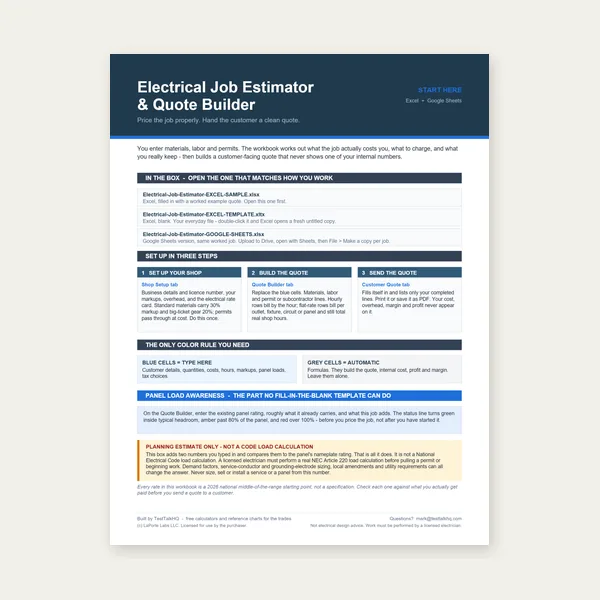
Quote electrical work and flag panel headroom before you price it.
Excel or Google Sheets. Best on a computer.
$29.00
Buy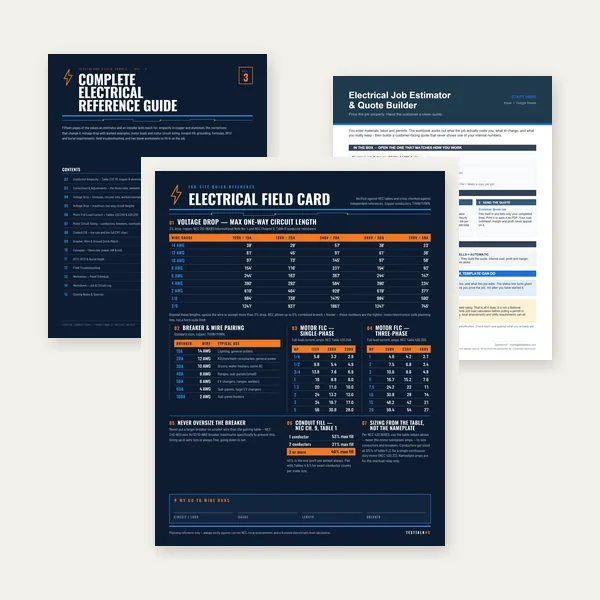
Card, 15-page guide and the estimator workbook. All six files.
Excel or Google Sheets. Best on a computer.
$34.99
$45.98 if bought separately — save $10.99
BuyCheckout opens in a new tab.
Field picks for bending EMT, pulling stranded THHN, and tracing circuits after you size the raceway.
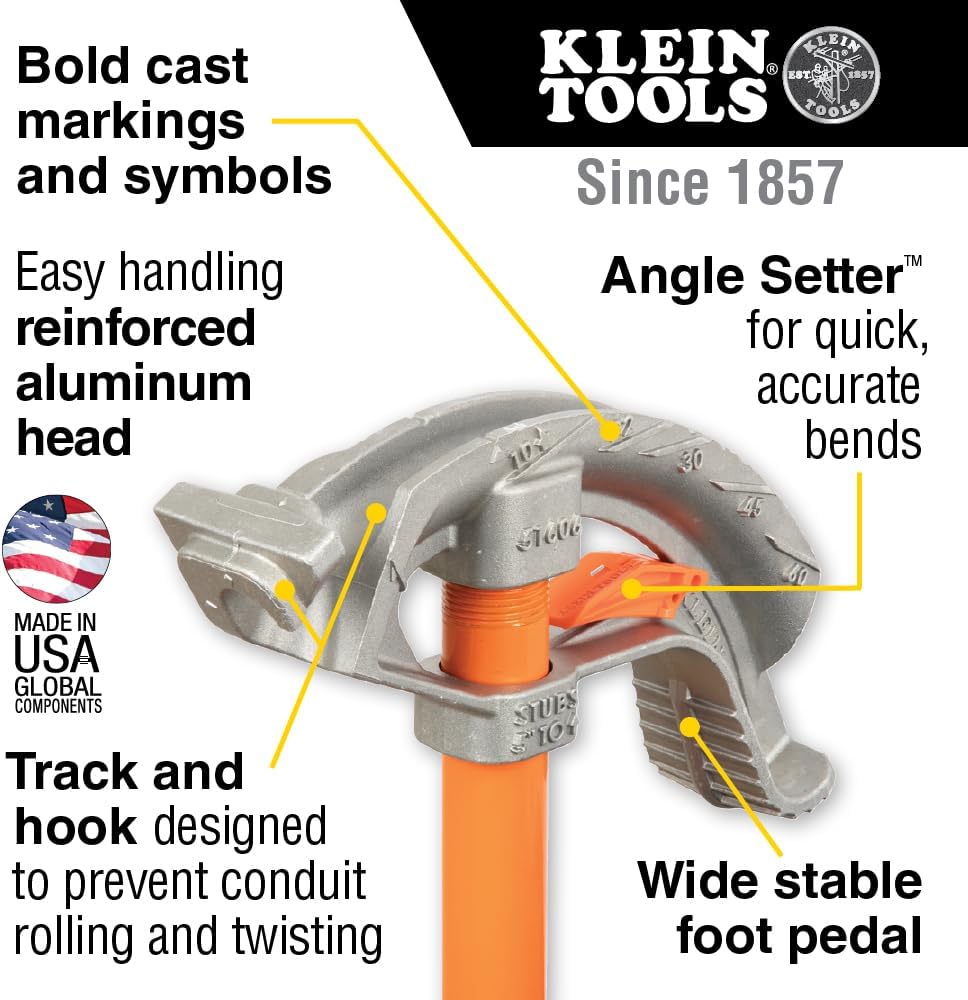
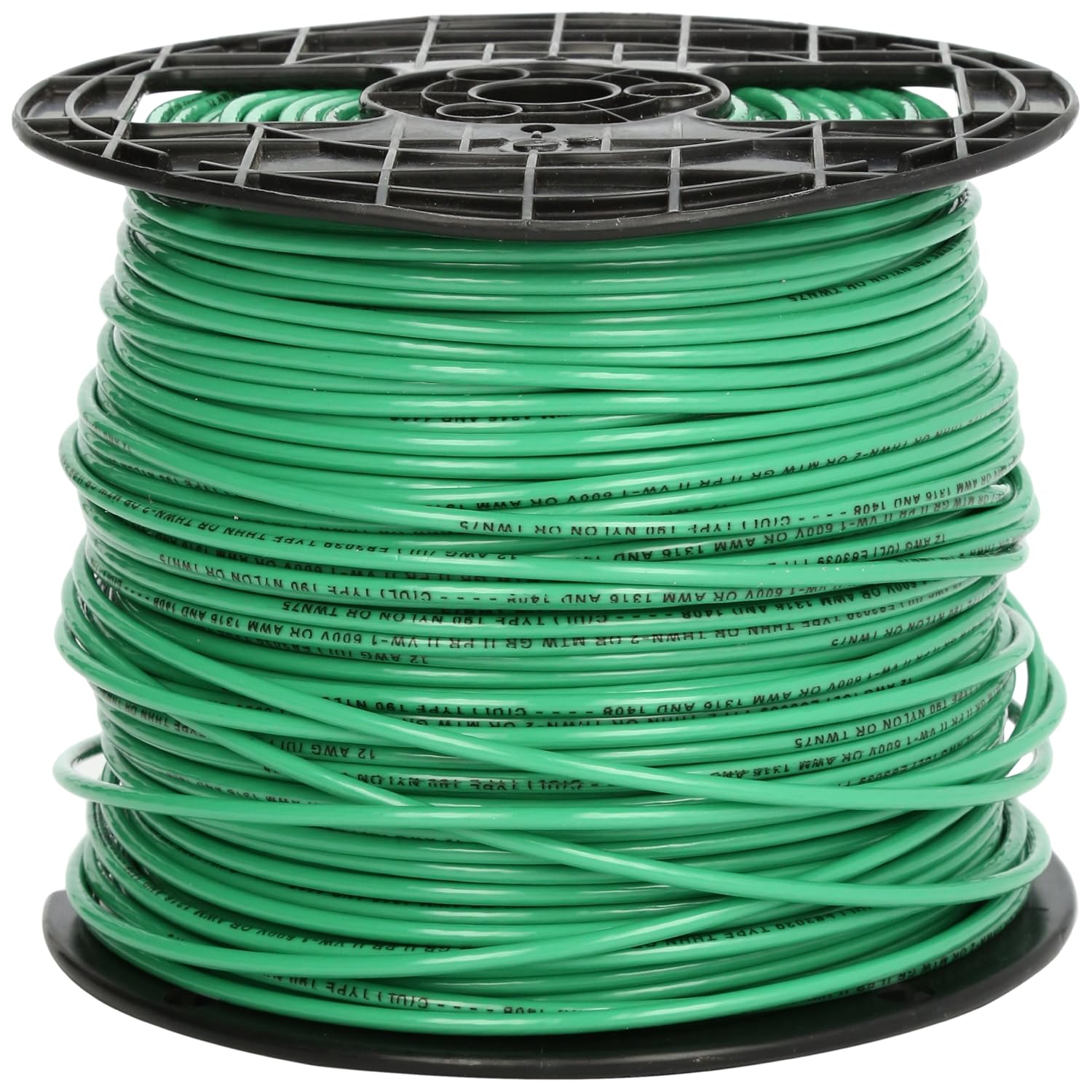
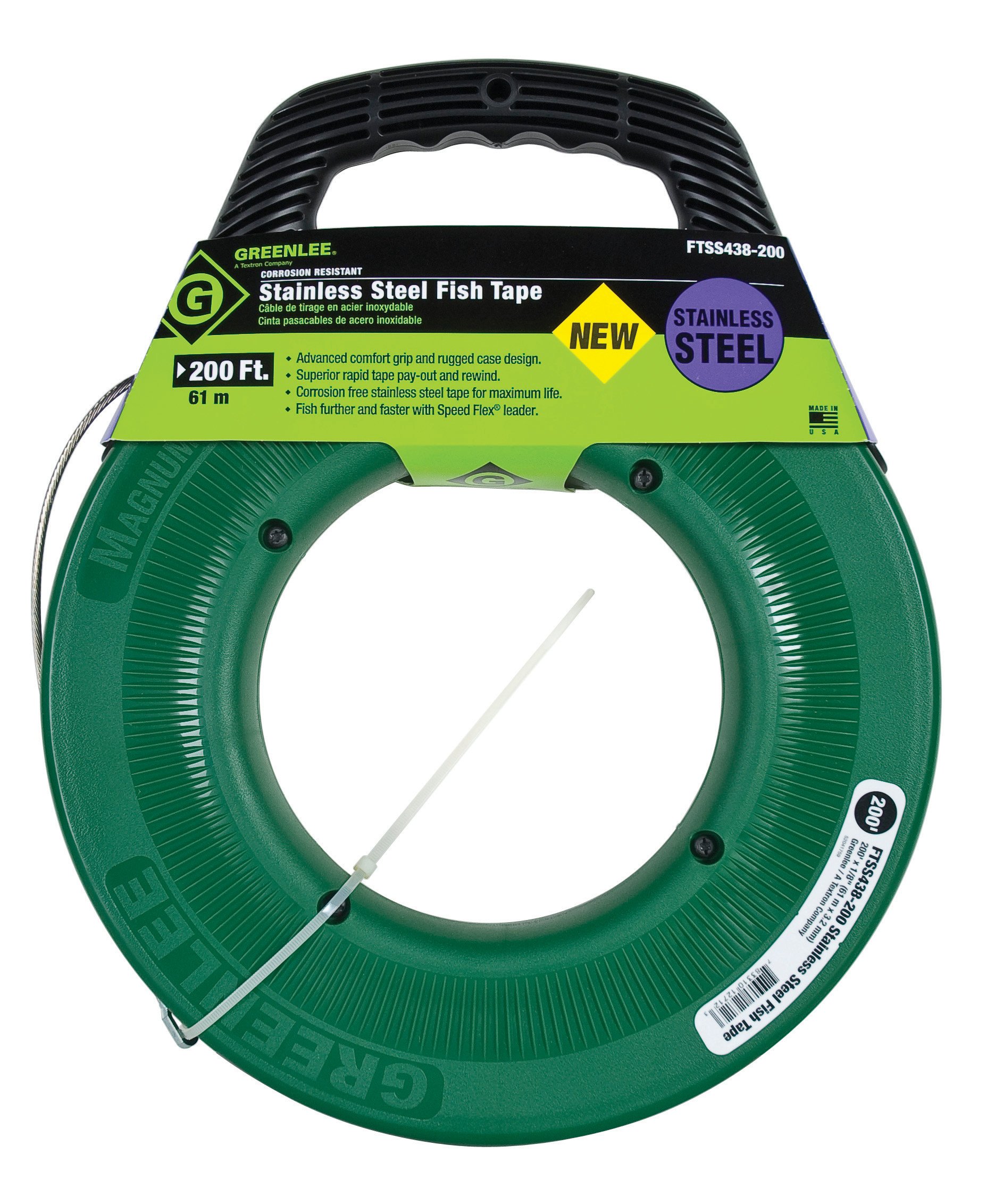
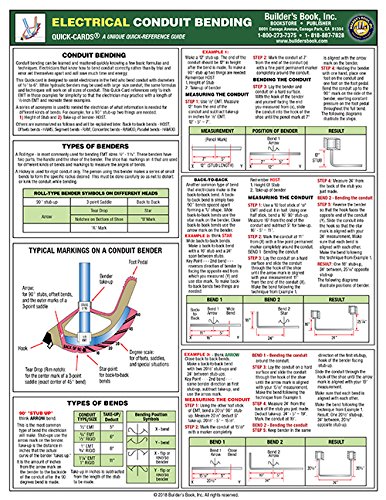
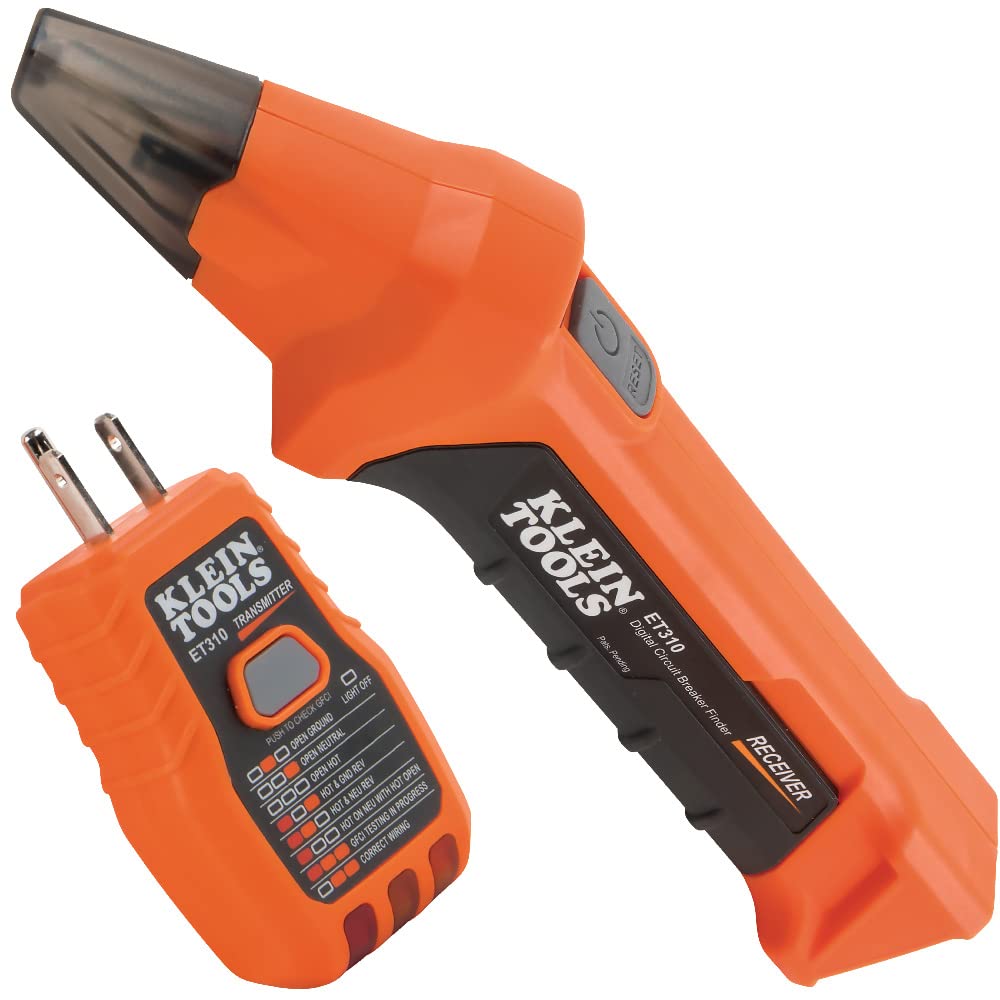
As an Amazon Associate, TestTalkHQ earns from qualifying purchases. Prices and availability subject to change.
Conduit fill is a routine NEC Chapter 9 check. This tool applies Table 5 conductor cross-sectional areas and Table 4 total internal raceway areas, then applies Table 1 fill percentages (53% / 31% / 40%, plus 60% for qualifying nipples).
Fill limits support heat dissipation and reduce insulation damage during pulling. The calculator also evaluates the NEC informational jam ratio for three conductors of the same size (ID/OD between 2.8 and 3.2) where geometry can lock conductors even when fill math passes.
Every conductor in the raceway counts toward fill, including equipment grounding conductors. (Box fill has different rules for certain grounds — conduit fill does not.)
With mixed sizes or insulations, sum each conductor’s area from Table 5 and compare to the allowed fill for the raceway. Annex C all-same-size tables do not apply to mixed runs.
NEC conduit fill limits — 53% for one conductor, 31% for two, 40% for three or more — are not only about whether wires physically fit. Conductors generate heat under load. Overcrowded conduit traps that heat, reduces effective ampacity over time, and can degrade insulation long before a breaker trips. That is why the NEC pairs fill rules in Chapter 9 with ampacity derating in 310.15(C)(1) when you bundle multiple current-carrying conductors.
Passing a 40% fill calculation does not mean you should always pack to 40% on a hard pull or a long homerun with several bends. Many electricians target lower fill when heat, future expansion, or pull difficulty matters. Upsizing one trade size often costs less than a failed pull, damaged THHN insulation, or a callback for overheating conductors in a crowded raceway.
Already know the installed conduit and need to check a mixed list of gauges or insulation types? Use the Wire Fill Calculator, then read the Wire Fill Guide for the 53%/31%/40% rules, mixed-list workflow, grounds, and the difference between raceway fill and box fill.