Wire Fill Troubleshooting
Wire fill = audit mixed conductors in a raceway — not the same as conduit fill sizing
Wire fill audits a mixed conductor list against a chosen raceway — "do these wires fit this pipe?" Conduit fill sizes the raceway for pullability and NEC fill for a fill job. Use the Wire Fill Calculator and Wire Fill Guide. For raceway sizing and pull tension, see Conduit Fill Troubleshooting and Conduit Fill Calculator. Box volume: Box Fill Troubleshooting.

Wire Fill vs Conduit Fill — Quick Answer
| Tool | Question it answers | Go to |
|---|---|---|
| Wire fill | Given this raceway, do my mixed conductors fit? | Wire Fill Calculator |
| Conduit fill | What size raceway for this wire set / pull? | Conduit Fill Calculator |
| Box fill | Enough box volume for devices + conductors? | Box Fill Troubleshooting |
1. Wire Fill vs Conduit Fill — Different Questions
Wire fill takes a raceway you already selected (or are considering) and checks whether a mixed list of conductors — different gauges, insulation types, or counts — fits within NEC fill limits for that pipe.
Conduit fill starts from the wire job and recommends minimum conduit size, including pullability and jam probability for a fill installation.
If you sized the pipe with Conduit Fill Calculator but the as-built pull added circuits, re-audit with Wire Fill Calculator. Field pull problems → Conduit Fill Troubleshooting.
2. Wire Fill Audit Errors
What it looks like: Inspector rejects fill on existing pipe; calculator said OK but install used different insulation OD; spare conductors forgotten in the count.
Likely causes: Wrong insulation type (THHN vs XHHW area differs), ground counted twice or omitted, future spare not in list, or raceway ID not matched to actual conduit type (EMT vs PVC schedule).
Fixes: List every conductor with correct area from NEC Chapter 9; use the Wire Fill Guide for mixed lists. If overfilled, upsize raceway (conduit fill calc) or reduce conductors.
Use the Right Fill Tool
Wire Fill Calculator → Wire Fill Guide → Conduit Fill Troubleshooting → Conduit Fill Calculator → Box Fill Troubleshooting →
Recommended Electrical Measurement Tools
Five CSV catalog picks with verified images — multimeters, clamp meters, and voltage testers for field verification

Fluke 117 Electricians True RMS Multimeter
- Node-to-reference voltage on each stage
- Resistance / continuity for isolated branches
- Finds opens (O.L.) and shorts (0 Ω)
- Electrical catalog
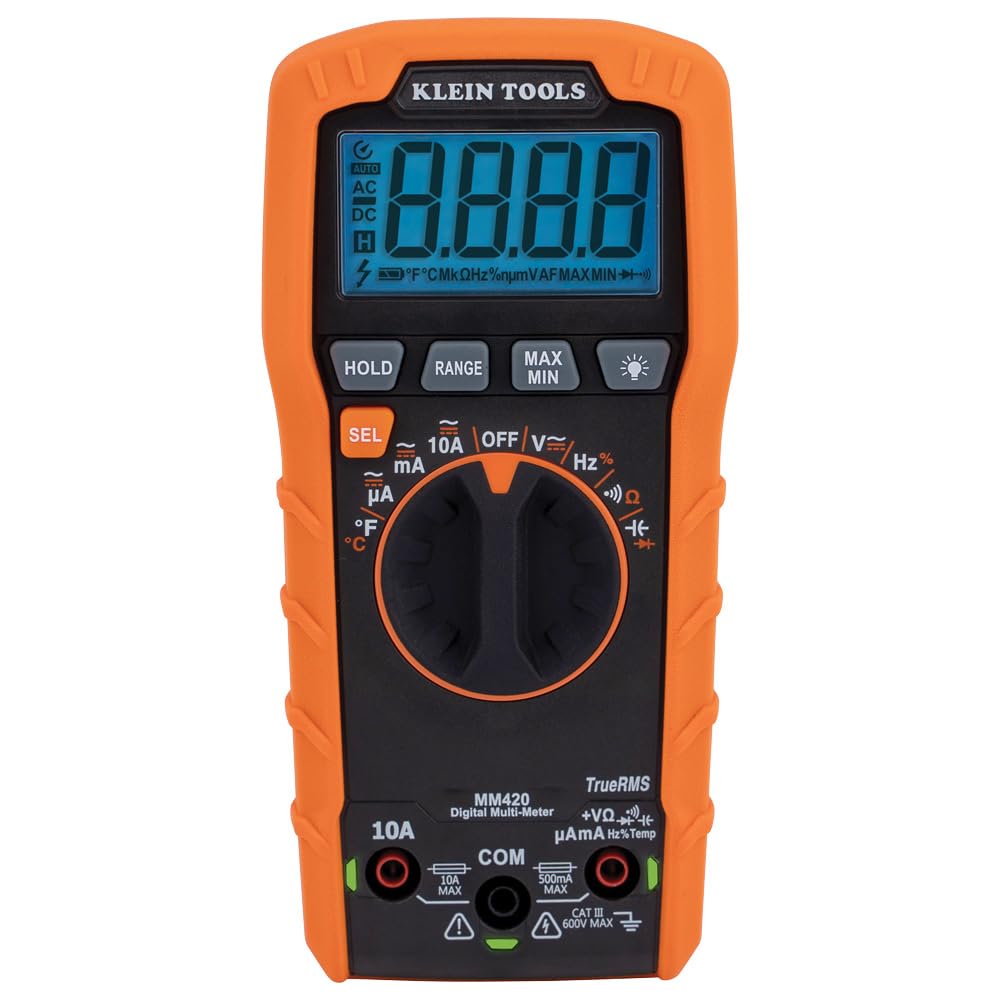
Klein Tools MM420 Auto-Ranging Multimeter
- TRMS V, resistance, and continuity
- Map each node vs the calculator model
- Budget bench/field diagnosis tool
- Electrical catalog

Ideal Industries 61-757 Clamp Meter
- 600A AC/DC TRMS branch current
- Measure current without breaking the branch
- Reconcile divider splits vs prediction
- Electrical catalog

Klein Tools CL800 Digital Clamp Meter
- 1000V class TRMS clamp
- Per-branch amps on live parallel groups
- Spot the branch that's shorted or open
- Electrical catalog

Klein Tools NCVT-3P Non-Contact Voltage Tester
- Confirm de-energized before ohms tests
- Dual-range presence check
- Prevents meter damage on in-circuit R
- Electrical catalog
As an Amazon Associate, TestTalkHQ earns from qualifying purchases. All five cards are sourced only from the affiliate CSV with verified product images.
Frequently Asked Questions
What's the difference between wire fill and conduit fill?
Wire fill audits a mixed list in a given raceway. Conduit fill sizes the raceway for a wire pull job.
I used conduit fill — do I need wire fill?
If you're verifying an existing pipe with a mixed conductor list, yes — wire fill is the audit tool.
Where do box fill errors go?
Box Fill Troubleshooting — different NEC article, different calculator.
Why did my audit fail after install?
Often wrong insulation OD, missing spares, or raceway type mismatch in the calc input.