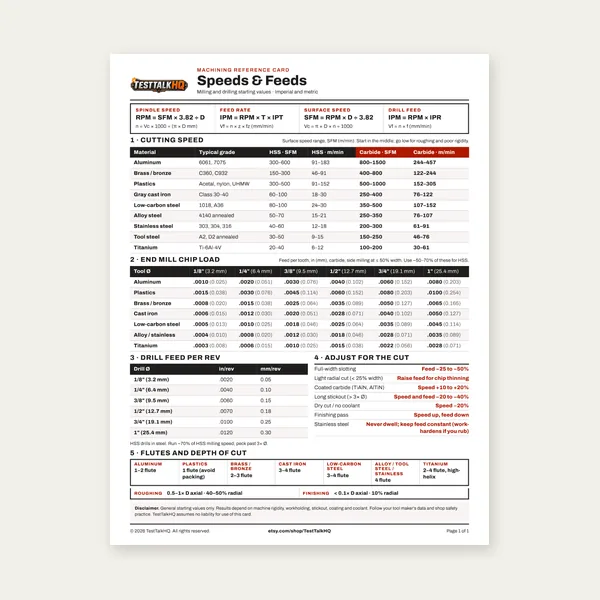
Machining Speeds & Feeds Card
One page. Speeds, chip load and drill feed, imperial and metric.
$3.99
BuySAE and metric tap drill sizes with adjustable thread engagement
Select thread system, size, and tap type, then set thread percentage from 50–100% to get the closest fractional, number, and letter drill for your hole.
One page. Speeds, chip load and drill feed, imperial and metric.
$3.99
Buy
27 pages. Milling, drilling, tapping, turning and CNC routing.
$12.99
Buy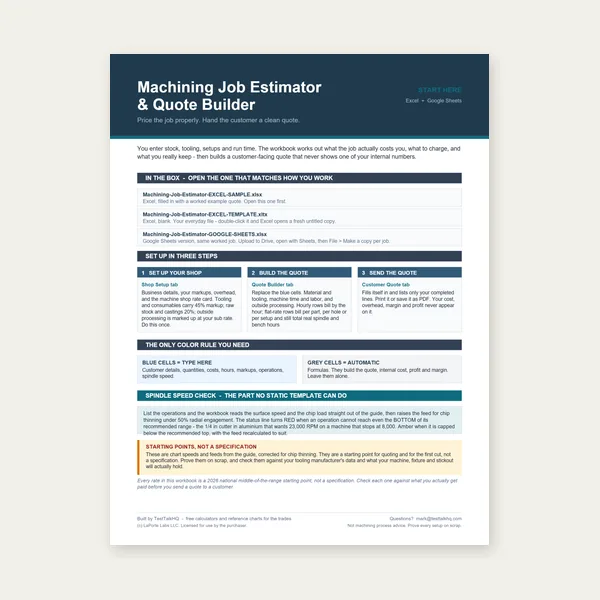
Quote shop work and check operations against your spindle's top speed.
Excel or Google Sheets. Best on a computer.
$29.00
Buy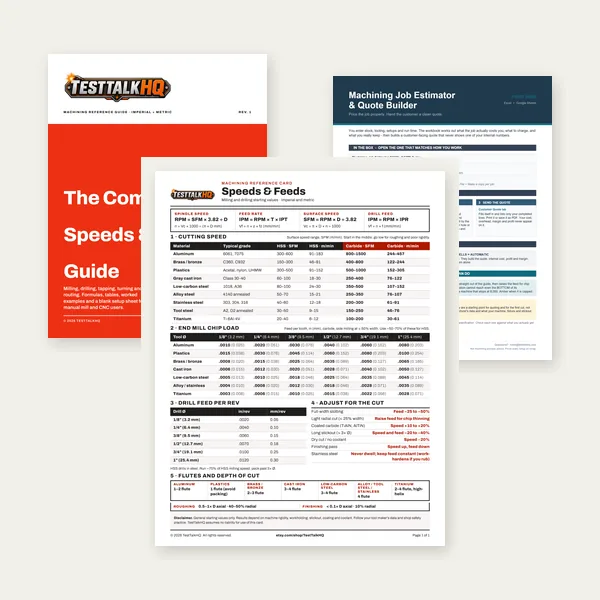
Card, 27-page guide and the estimator workbook. All six files.
Excel or Google Sheets. Best on a computer.
$34.99
$45.98 if bought separately — save $10.99
BuyCheckout opens in a new tab.
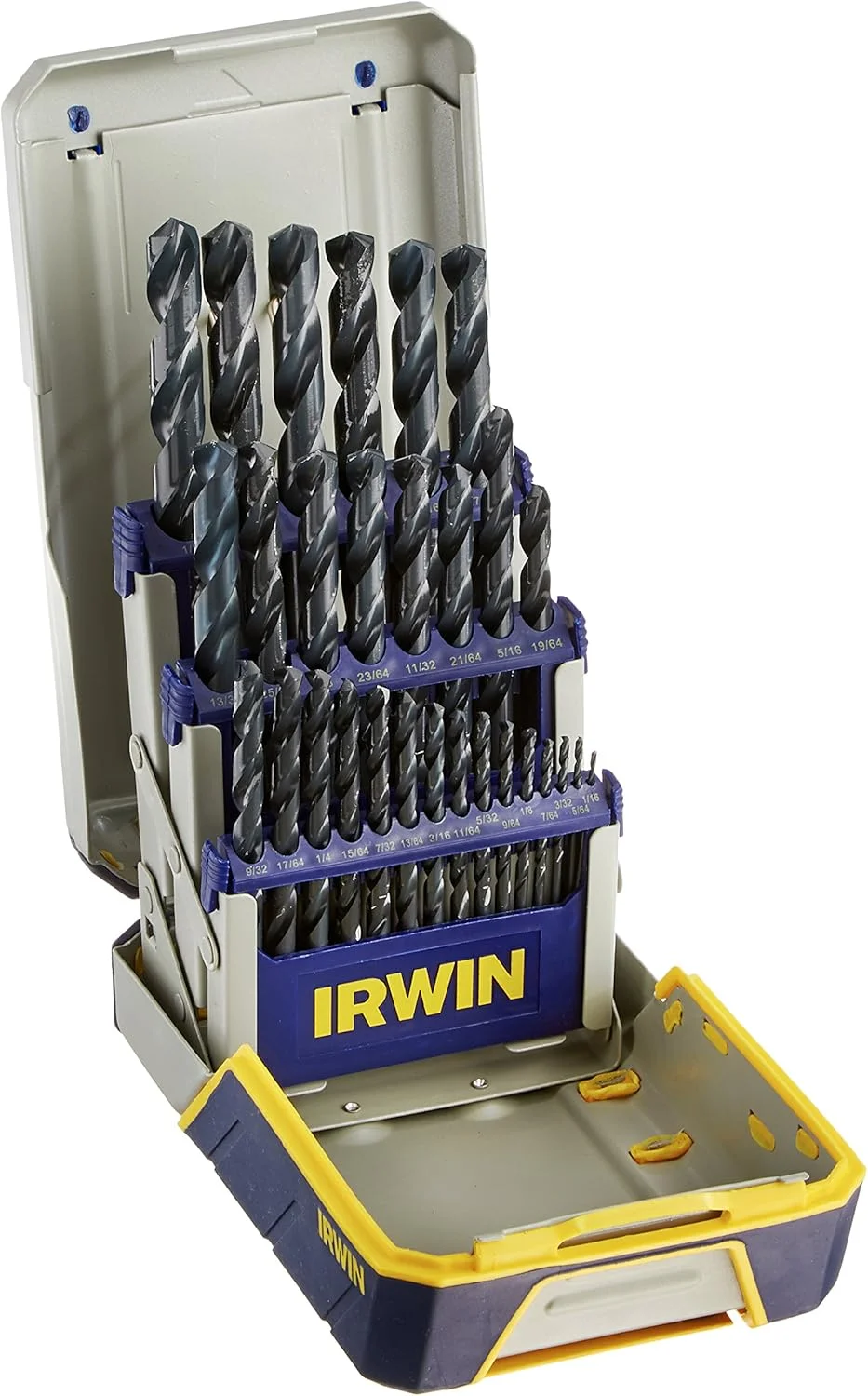
Drill bits, cutting fluid, and measurement tools that support clean holes and reliable thread cutting.
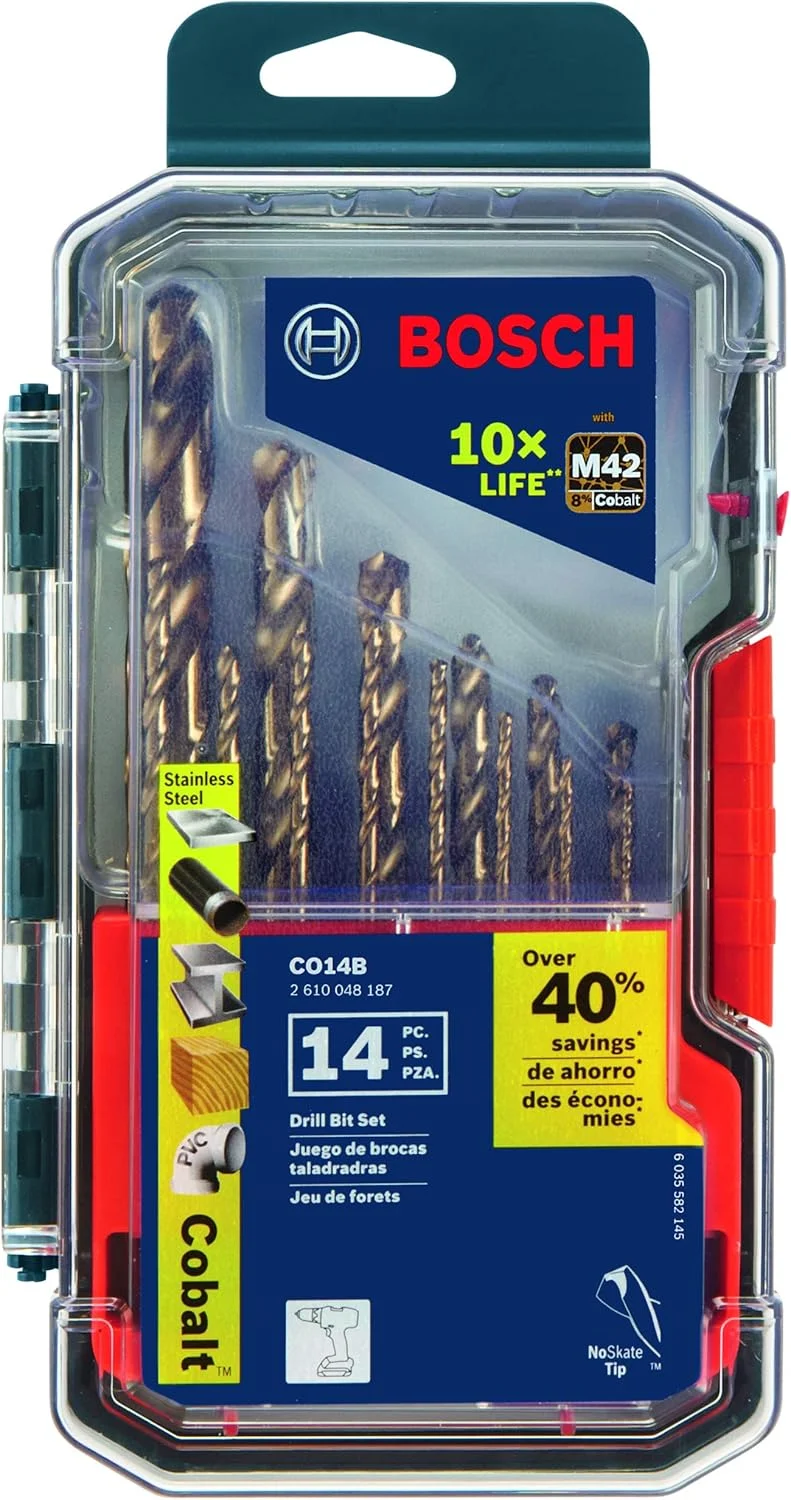


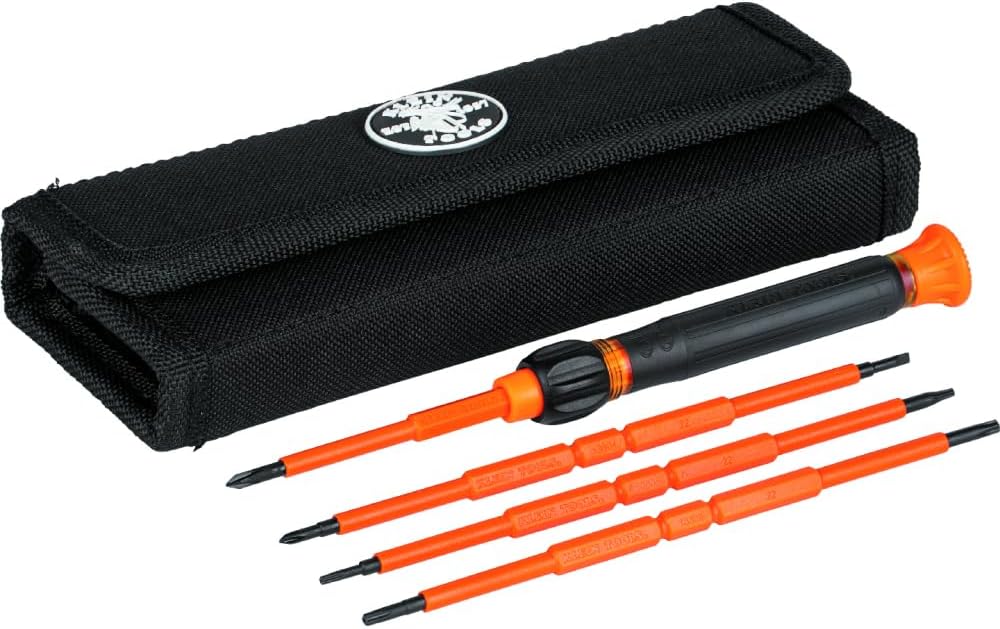
As an Amazon Associate, TestTalkHQ earns from qualifying purchases. Prices and availability may change.
Threading holes requires precision. Drill too small and you will break the tap. Drill too large and the threads will be weak and strip under load. This calculator removes guesswork for SAE and metric machine threads.
Unlike static tap charts that only show 75% engagement, you can adjust thread percentage to match your material and tap life goals.
Thread percentage is how much of the thread profile you are actually cutting. At 100% thread the valleys are sharp points. A slightly larger hole flattens those valleys — that is less than 100% engagement.
Going from 75% to 100% thread only increases strength by about 5%, but it can triple the torque required to tap the hole. That extra torque breaks taps and wears them out faster.
Cut taps remove material with flutes and create chips. SAE formula: Drill Size = Major Diameter − (0.01299 × Thread % ÷ TPI). Metric at 75%: Drill Size = Major Diameter − Pitch.
Form taps cold-form threads by displacing metal — no chips, but they need a larger hole. SAE form tap constant: 0.0068 instead of 0.01299.
| Thread Size | Tap Drill | Decimal |
|---|---|---|
| 1/4"-20 | #7 | 0.2010" |
| 5/16"-18 | F | 0.2570" |
| 3/8"-16 | 5/16" | 0.3125" |
| 7/16"-14 | U | 0.3680" |
| 1/2"-13 | 27/64" | 0.4219" |
| 9/16"-12 | 31/64" | 0.4844" |
| 5/8"-11 | 17/32" | 0.5312" |
| 3/4"-10 | 21/32" | 0.6562" |
| Thread Size | Tap Drill (mm) | Tap Drill (inch) |
|---|---|---|
| M3 × 0.5 | 2.5mm | #39 (0.0995") |
| M4 × 0.7 | 3.3mm | #30 (0.1285") |
| M5 × 0.8 | 4.2mm | #19 (0.1660") |
| M6 × 1.0 | 5.0mm | #8 (0.1990") |
| M8 × 1.25 | 6.8mm | 17/64" (0.2656") |
| M10 × 1.5 | 8.5mm | Q (0.3320") |
| M12 × 1.75 | 10.2mm | 13/32" (0.4062") |
| M14 × 2.0 | 12.0mm | 15/32" (0.4688") |
Use the calculator above to adjust for thread percentages other than 75% or to see the closest match in your drill index.
75% is a conservative shop standard. Many production jobs run 60–70% for dramatically better tap life with negligible practical strength loss in most materials.
Form taps displace metal instead of cutting it, so they need a larger hole. This calculator applies the correct constant for each tap type.
Yes, if you are within a few thousandths for general work. For precision or critical joints, use the exact decimal size or the named drill the calculator recommends.
After you size the tap drill, confirm pitch series and engagement depth — wrong pitch still strips a perfect % thread. Diagnose assembly failures with Thread Pitch & Engagement Troubleshooting and look up TPI/metric pitch on the Thread Pitch Chart.