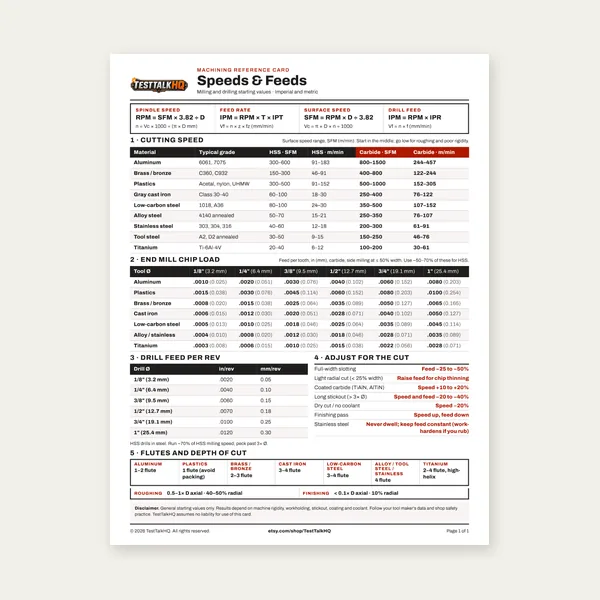
Machining Speeds & Feeds Card
One page. Speeds, chip load and drill feed, imperial and metric.
$3.99
BuyShop-tested RPM, feed, and chip guidance
Get practical starting points for drilling steel, stainless, aluminum, cast iron, plastics, and wood with HSS, cobalt, or carbide bits.
One page. Speeds, chip load and drill feed, imperial and metric.
$3.99
Buy
27 pages. Milling, drilling, tapping, turning and CNC routing.
$12.99
Buy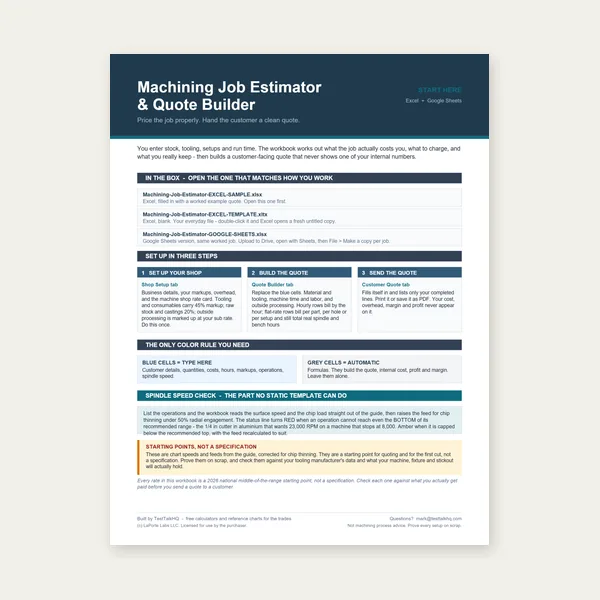
Quote shop work and check operations against your spindle's top speed.
Excel or Google Sheets. Best on a computer.
$29.00
Buy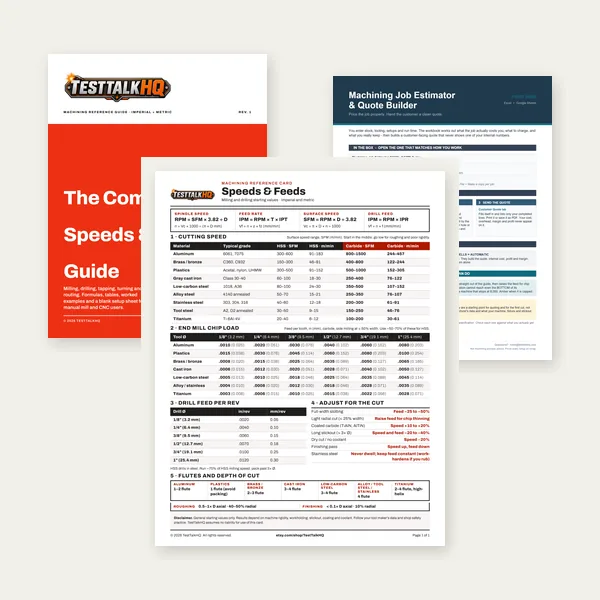
Card, 27-page guide and the estimator workbook. All six files.
Excel or Google Sheets. Best on a computer.
$34.99
$45.98 if bought separately — save $10.99
BuyCheckout opens in a new tab.
Topic-specific picks for drilling speed work, bit life, and hole-quality consistency.
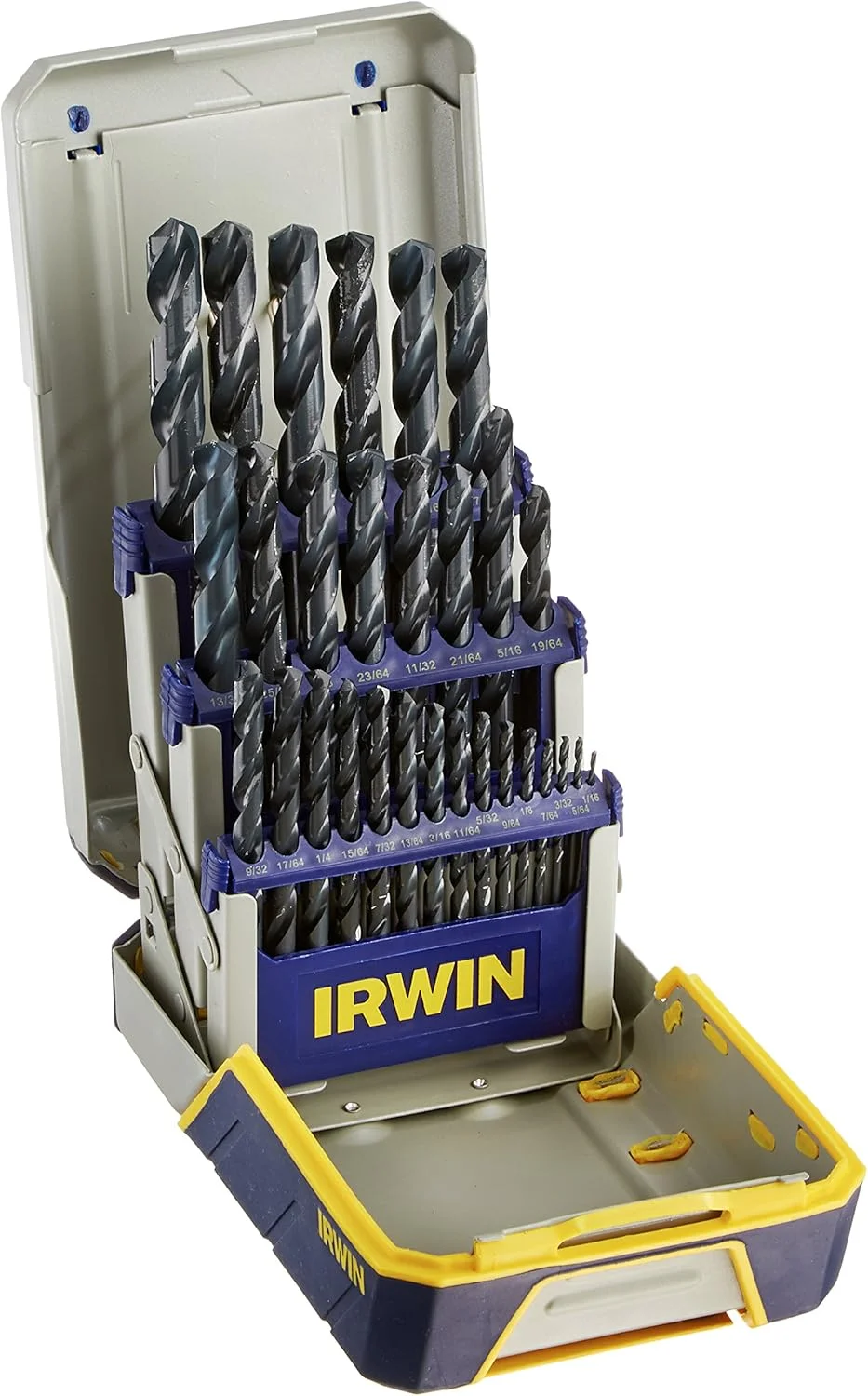
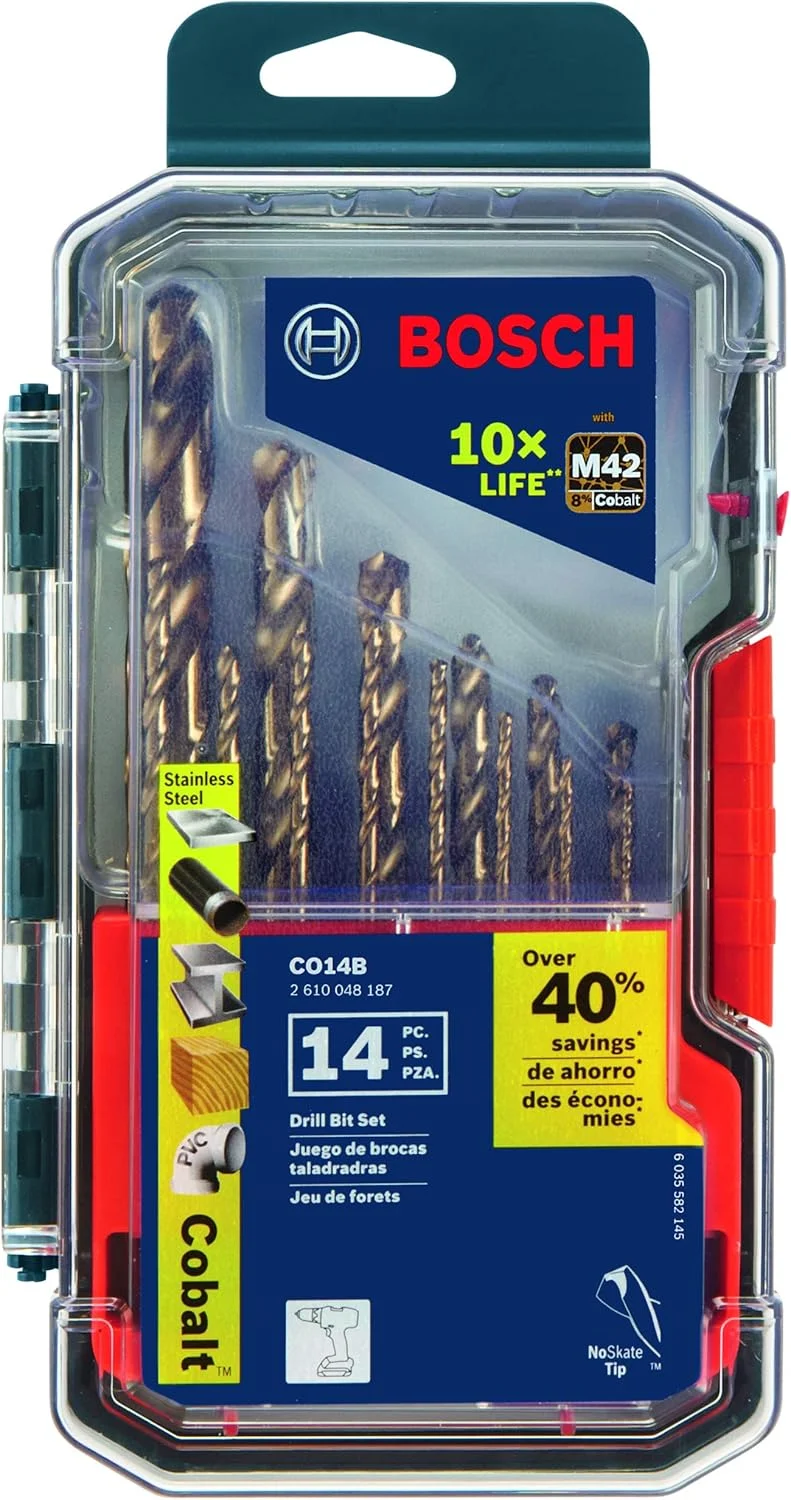


As an Amazon Associate, TestTalkHQ earns from qualifying purchases. Prices and availability may change.
Start by setting your units, then enter drill diameter, material, bit type, machine setup, and hole depth. The calculator returns RPM and feed values based on recovered live tables and shop modifiers. Treat the output as a starting point — chip color, sound, and bit temperature tell you whether to nudge RPM or feed up or down.
Record successful RPM and feed pairs by material and diameter in your shop notebook. Reusing proven settings beats guessing on every new job and extends bit life across the board.
Surface feet per minute (SFM) is the speed at which the cutting edge moves through the material. The calculator converts SFM to RPM using drill diameter: RPM ≈ (SFM × 3.82) ÷ diameter in inches. Smaller drills run faster RPM at the same SFM; larger drills run slower. Tool material matters — cobalt and carbide tolerate higher SFM than plain HSS.
| Material | HSS | Cobalt | Carbide | Notes |
|---|---|---|---|---|
| Mild Steel | 80-100 | 88-110 | 200-300 | Blue chips can be acceptable if cut remains stable. |
| Stainless 304 | 30-50 | 35-55 | 80-150 | Avoid rubbing to prevent work hardening. |
| Stainless 316 | 25-40 | 28-45 | 70-130 | Use sulfurized cutting fluid. |
| Aluminum | 200-300 | 220-330 | 500-800 | Fast speeds with chip evacuation control. |
| Cast Iron | 50-80 | 55-90 | 150-250 | Typically drilled dry. |
Use the table to sanity-check calculator output. If chips are too fine and powdery, you are likely rubbing — increase feed or reduce RPM. If the bit is smoking or blueing, reduce RPM and add coolant. Long-chipping materials like aluminum need aggressive chip evacuation; peck drilling keeps the flutes from packing.
Yes, but this calculator intentionally reduces speeds for hand drills due to lower rigidity and higher vibration. Clamp the workpiece, use sharp bits, and avoid side load that flexes the drill — flex causes intermittent cutting and work hardening on stainless.
The most common causes are excessive RPM, insufficient feed pressure, dull or wrong tool material, and no lubrication on materials that require coolant. A burning smell usually means the edge is rubbing, not shearing — lower RPM and push harder with steady pressure.
Use cobalt or carbide tooling, run conservative RPM from the calculator, apply sulfurized cutting oil, and maintain steady feed so the bit keeps cutting rather than rubbing. Stop immediately if you hear squealing — that is often the start of work hardening ahead of the tip.
Cutting fluid dramatically extends drill bit life by reducing heat and friction at the cutting edge. Heat is what kills edges first — long before you hit the theoretical SFM limit. For mild and medium carbon steel, use cutting oil or sulfurized thread-cutting oil applied at the hole mouth. For aluminum, WD-40, kerosene, or dedicated aluminum tapping fluid improves finish and prevents chip welding to the flutes.
For stainless and tool steel, use heavy-duty cutting fluid and conservative speeds from this calculator. Stainless work-hardens instantly if the bit rubs without cutting — you will hear the change before you see it. Never drill stainless dry in production work. Peck cycles, fresh coolant at each peck, and sharp cobalt bits are the combination that keeps stainless holes on size without destroying tooling.
Bit burn-up, walking on start, poor/oversized holes, breakage, or RPM beyond machine max: Drill Speed Troubleshooting. Bit type and coating (HSS vs cobalt vs carbide, twist vs step): How to Choose Drill Bits for Metal.