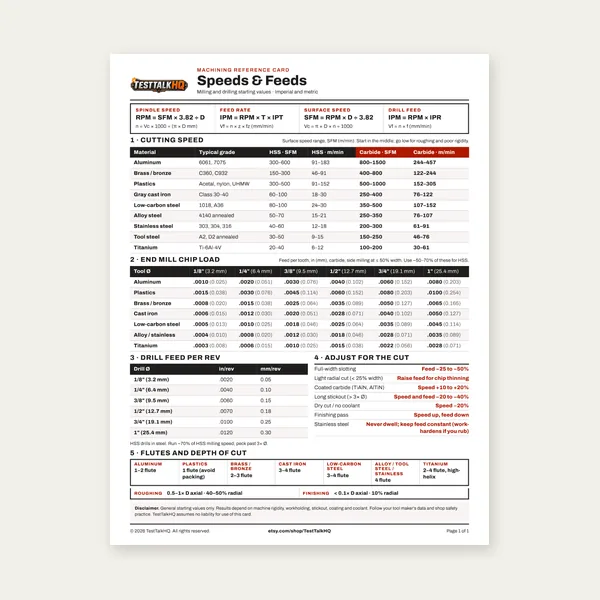
Machining Speeds & Feeds Card
One page. Speeds, chip load and drill feed, imperial and metric.
$3.99
BuySpeed and hardness vs. toughness and forgiveness — pick for your machine, not the forum.
Carbide runs faster and holds an edge at high temperature; HSS absorbs shock and forgives sloppy setups. Small shops often do better with HSS until rigidity and volume justify carbide. Start speeds with the Cutting Speed and Feed Rate Calculator, Drill Speed Calculator, and Metal Cutting Speed Calculator.
Carbide (cemented tungsten carbide) holds hardness at high cutting temperatures — so you run much higher SFM and feed than HSS on rigid setups. Production CNC milling and turning run carbide almost exclusively because machine time dominates cost. Carbide is also brittle: chatter, runout, interrupted cuts, and hand-drill flex chip edges before HSS would simply dull. Carbide rewards rigid spindles, short stick-out, and correct speeds from the Cutting Speed and Feed Rate Calculator.
High-speed steel bends and absorbs shock better than carbide. It runs at lower SFM but survives sloppy workholding, manual feed variation, and interrupted cuts (cross-holes, uneven cast surfaces). HSS is cheaper to replace and easier to sharpen in-house. On a manual mill, drill press, or hand drill, HSS (or cobalt HSS) is often faster overall because you are not stopping to replace chipped carbide.
Choose carbide when: CNC with low runout, production volumes, hard materials at high speed, and fixtures are solid. Choose HSS when: hand drilling, old manual machines, learning setups, interrupted cuts, or budget favors replaceable bits over machine time. Choose cobalt HSS when: stainless and alloy steel on drill press — a middle ground before solid carbide drill geometry.
Drilling RPM by material: Drill Speed Calculator. Broader process comparison: Metal Cutting Speed Calculator.
Internet feeds push carbide for everything because CNC creators run rigid machines. If you drill 20 holes a month in a hand drill, a $40 HSS index set beats $120 carbide you chip on the third hole. If your mill has noticeable backlash and you side-mill with hand feed, HSS end mills tolerate the abuse. Upgrade to carbide when (1) you have repeatable rigid setups, (2) you are burning or dulling HSS weekly, and (3) you are running speeds high enough that HSS cannot keep up — not because carbide sounds professional.
TiN, TiAlN, and similar coatings reduce friction and improve heat resistance on both HSS and carbide. Coated carbide runs hotter and faster; coated HSS lasts longer between sharpenings. Coatings wear through on regrinds — indexable inserts and replaceable-tip drills avoid that issue. Uncoated sharp HSS in aluminum with wax or dry often cuts better than coated dull HSS because geometry and sharpness matter more than color on the flute.
If calculated SFM looks right but the tool burns, chatters, forms BUE, or chip color contradicts the chart, diagnose with Cutting Speed Troubleshooting before rewriting your entire material table.
One page. Speeds, chip load and drill feed, imperial and metric.
$3.99
Buy
27 pages. Milling, drilling, tapping, turning and CNC routing.
$12.99
Buy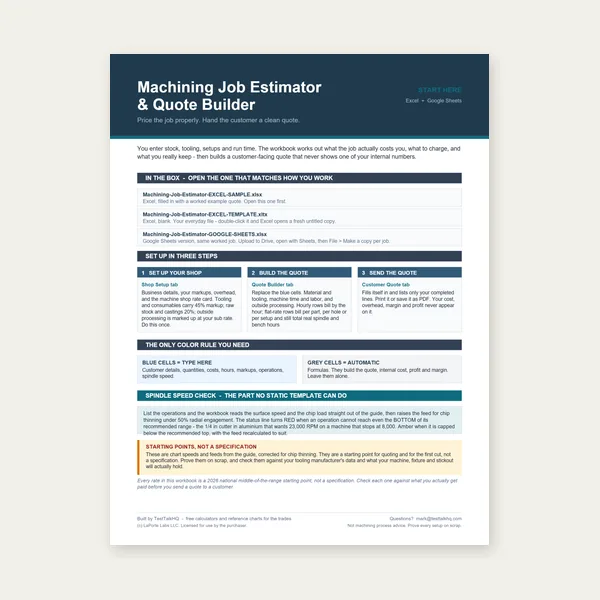
Quote shop work and check operations against your spindle's top speed.
Excel or Google Sheets. Best on a computer.
$29.00
Buy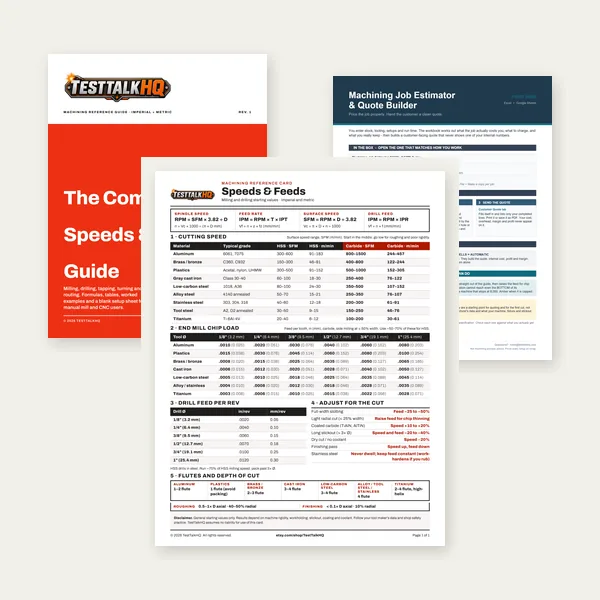
Card, 27-page guide and the estimator workbook. All six files.
Excel or Google Sheets. Best on a computer.
$34.99
$45.98 if bought separately — save $10.99
BuyCheckout opens in a new tab.
Starter sets that cover everyday HSS work and carbide upgrades when rigidity allows
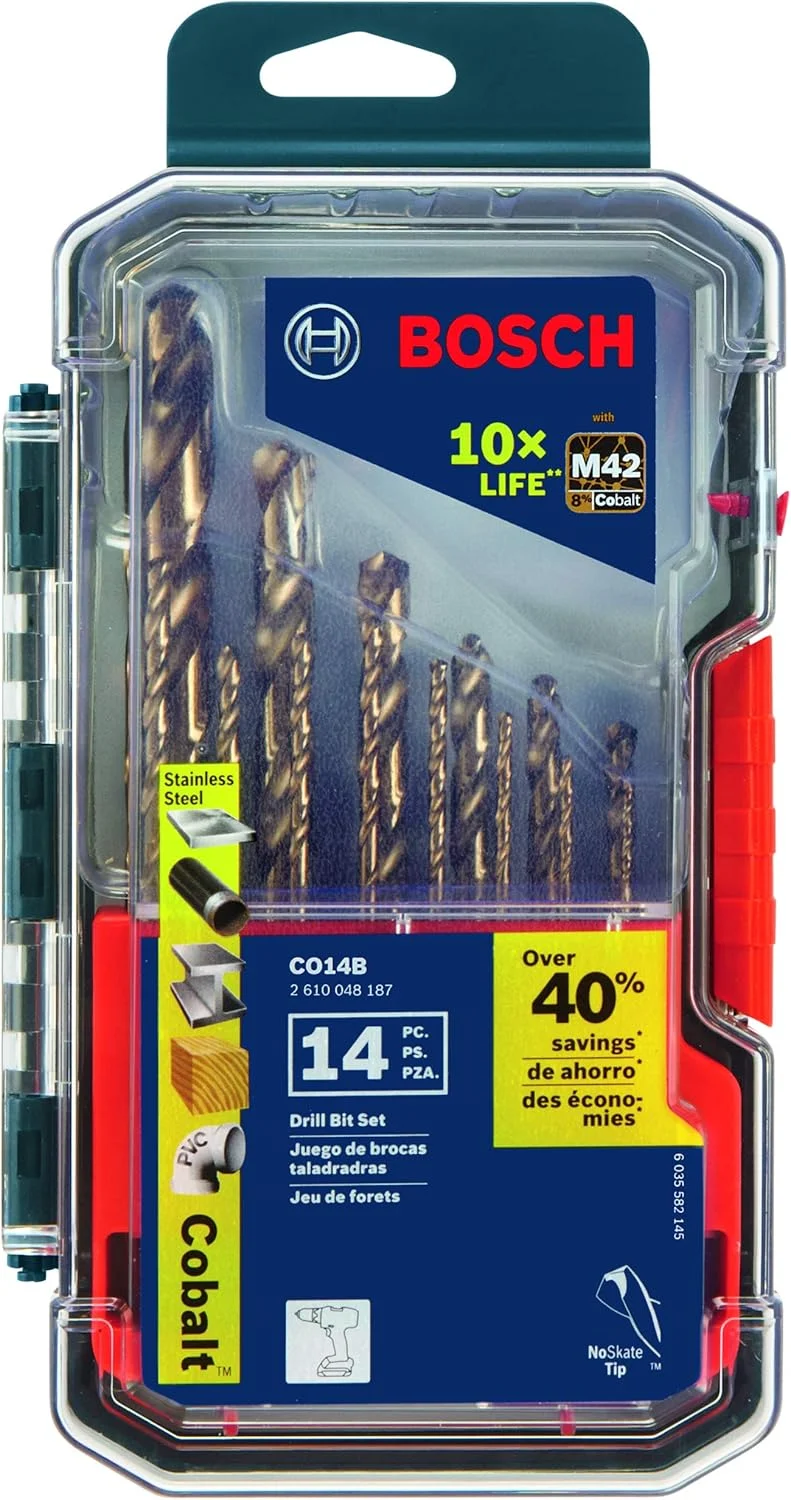
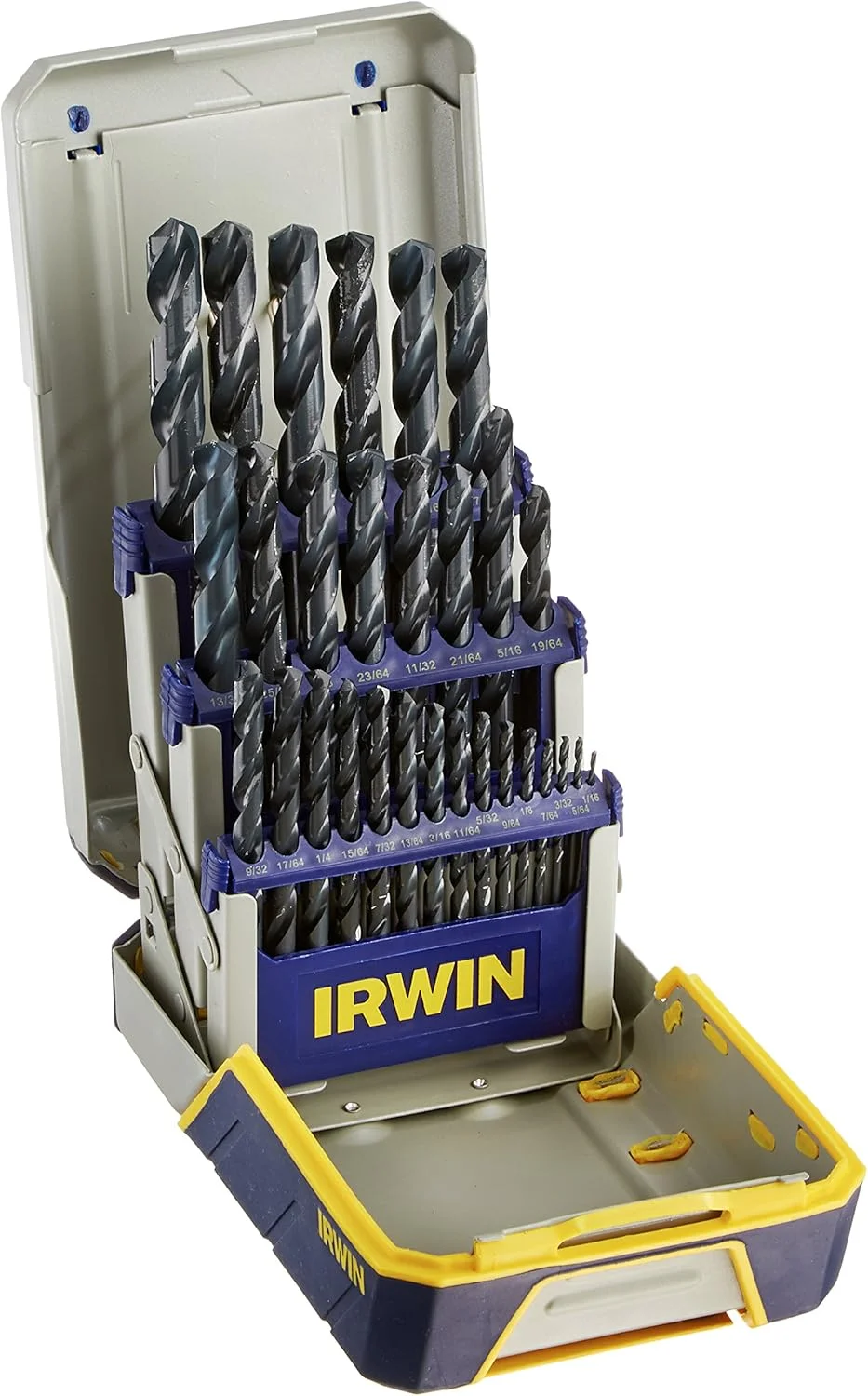
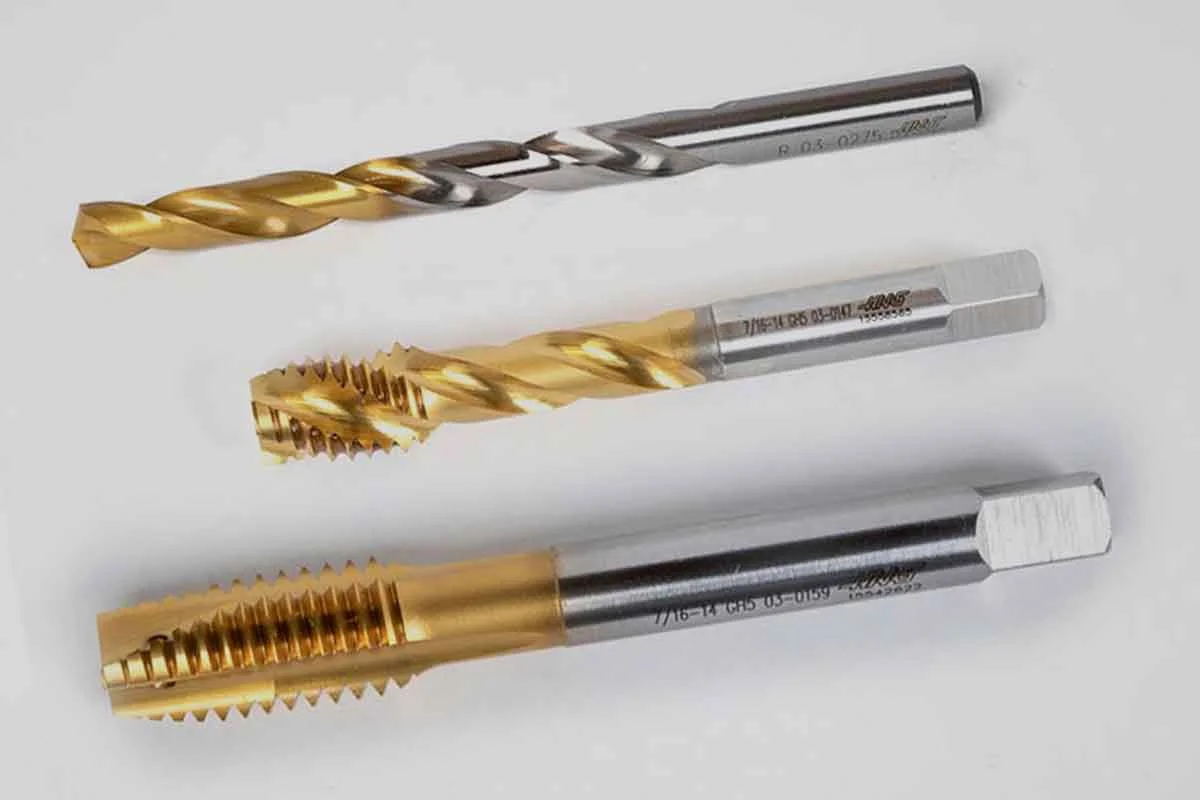


As an Amazon Associate, TestTalkHQ earns from qualifying purchases.
Carbide end mills on a loose Bridgeport chatter and chip; HSS or brazed-carbide-tipped tools survive. On a modern VMC, carbide is mandatory to compete on cycle time. The Milling Speed and Feed Calculator shows HSS vs carbide SFM ranges for the same material.
Twist drills follow the same logic — carbide drills need stable feed and no wandering. Cobalt M42 HSS is the standard upgrade for stainless on drill presses. See How to Choose Drill Bits for Metal for point angles and coatings.
HSS ground toolbits still appear in toolroom lathes for one-off forms and easy resharpening. Carbide inserts dominate production for speed. Match insert grade to material — a generic insert in 4140 at wrong speed wears fast regardless of carbide quality.
Compare cost per good part, not cost per tool. One carbide end mill at $45 running 40 hours beats ten HSS at $12 each if HSS dies every four hours and carbide lasts forty. If you run one hour a month, buy HSS and move on.