How to Choose the Right Drill Bit for Metal
Not all drill bits are the same. Here's exactly which type to use and when.
HSS, cobalt, carbide, step drills, split-point geometry, and coatings — the drill bit aisle is full of options that sound interchangeable but aren't. This guide breaks down which bit type matches which material, when to spend more on cobalt, and when a standard black oxide set is all you need. Pair it with our Drill Speed Calculator for exact RPM at any diameter.

HSS vs. Cobalt vs. Carbide — Which Coating Actually Matters
High-speed steel (HSS) is the baseline twist drill material in every fab shop. It holds an edge well at moderate heat and cuts mild steel, aluminum, brass, and plastic without complaint. Standard HSS bits are the right choice for occasional holes in soft-to-medium materials where you're not pushing speed or running production volumes. When the job is structural tube, plate, and general fabrication, a good black oxide HSS set covers 80% of the work.
Cobalt drill bits are HSS alloyed with 5–8% cobalt (M35/M42 grades). The cobalt doesn't coat the bit — it's in the steel itself, which raises red-hardness so the cutting edge stays hard at higher temperatures. That's why cobalt is the move for stainless steel, hardened steel, and cast iron. You're paying more per bit, but one cobalt bit drilling stainless can outlast a drawer full of burned HSS bits. If you drill stainless more than occasionally, cobalt isn't a luxury — it's the correct tool.
Carbide twist drills are a different class entirely. Solid carbide is extremely hard and heat-resistant but brittle — it demands rigid machine setups, correct RPM, and no hand-drill flex. Carbide shines on CNC mills, drill presses with minimal runout, and production hole-making in hardened alloys. For a hand drill in the shop, carbide is usually overkill and easy to chip. Save carbide for when you have a stable spindle, programmed feeds, and material that genuinely won't yield to cobalt.
Step Drills, Twist Drills, and Spotting Drills — When to Use Each
Twist drills are the standard workhorse — a helical flute design that cuts and evacuates chips from solid material. For holes in bar stock, plate, and structural members thicker than about 1/8 inch, a twist drill is the right starting point. Match diameter, point geometry, and material grade to the job, drill at the correct RPM, and peck on deep holes to clear chips.
Step drills (unibits) cut a series of increasing diameters in one pass. They're purpose-built for thin sheet metal, electrical enclosures, and panel work where you need a clean hole without the walking and burring that a standard twist drill causes on unsupported thin stock. One step drill can replace three or four twist drill changes on layout work. Don't use step drills in thick plate — they're not designed for deep cutting and the steps will rub instead of cut.
Spotting drills and center drills create a precise conical seat before the main twist drill enters. In hard material or precision mill work, a spotting drill prevents the twist drill from walking off center and ensures the hole lands exactly on the layout. A spotting drill has a short, stiff geometry and a defined included angle — typically 90° or 120° — that matches your follow-up tool. For hand drilling, a center punch achieves a similar result in two seconds; for CNC and jigged setups, a spotting drill is the professional approach.
Drill Point Angles: 118° vs. 135° Split Point
The standard 118-degree point angle is the default on most general-purpose twist drills. It's a good compromise for soft and medium materials — mild steel, aluminum, brass, and wood. The wider included angle cuts efficiently in ductile materials but the chisel point at the center doesn't self-center well, which is why 118° bits walk on smooth surfaces unless you punch a starting mark first.
The 135-degree split-point geometry was developed for harder materials and self-centering performance. The split point reduces the chisel edge to near zero, so the bit bites on contact instead of skating across the surface. Split-point bits start holes accurately without a center punch on most materials and are the standard choice for cobalt sets aimed at stainless and alloy work. If you're buying one upgrade for shop drilling, split-point cobalt bits in the sizes you use most is a high-return investment.
Use 118° HSS for general mild steel and aluminum where you center-punch anyway. Switch to 135° split-point cobalt when drilling stainless, hardened steel, or any job where hole location matters and you can't afford walk. Countersink and chamfer tools have their own angles (82°, 90°, 100°) — don't confuse drill point angle with countersink angle. For countersink depth math, use our Countersink & Counterbore Depth Calculator.
If calculated RPM looks right but the bit burns, walks, finishes poorly, or snaps, diagnose with Drill Speed Troubleshooting before rewriting your entire SFM chart.
Recommended Drill Bits for Metal
Cobalt, black oxide, and step drill sets for everyday fabrication and tough alloys
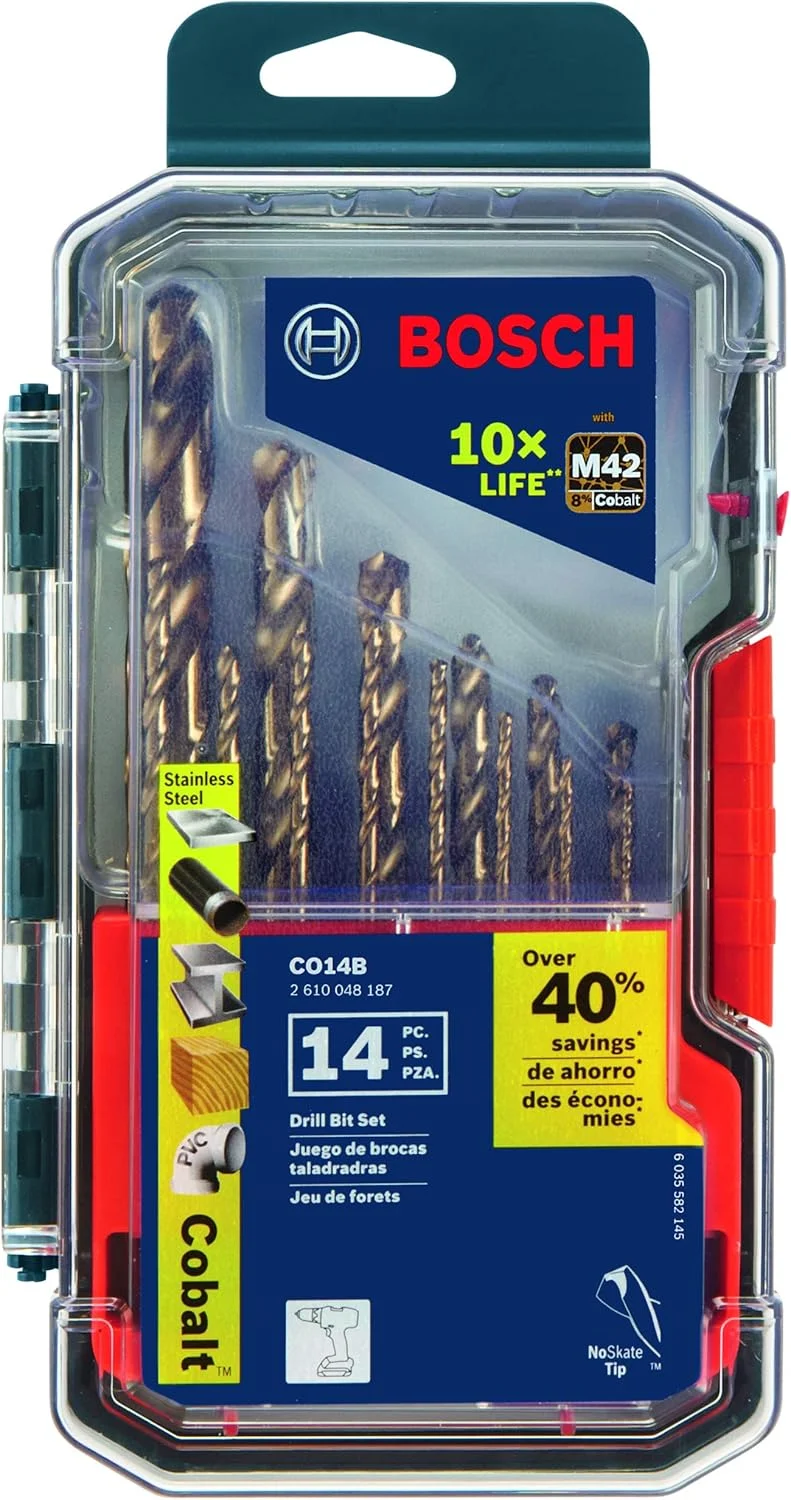
BOSCH CO14B 14-Piece Cobalt M42 Drill Bit Set
- M42 cobalt for stainless and hardened steel
- Split-point tip eliminates walking
- Handles heat that burns out HSS
- Three-flat shanks reduce chuck slip
- Worth the upgrade for tough materials
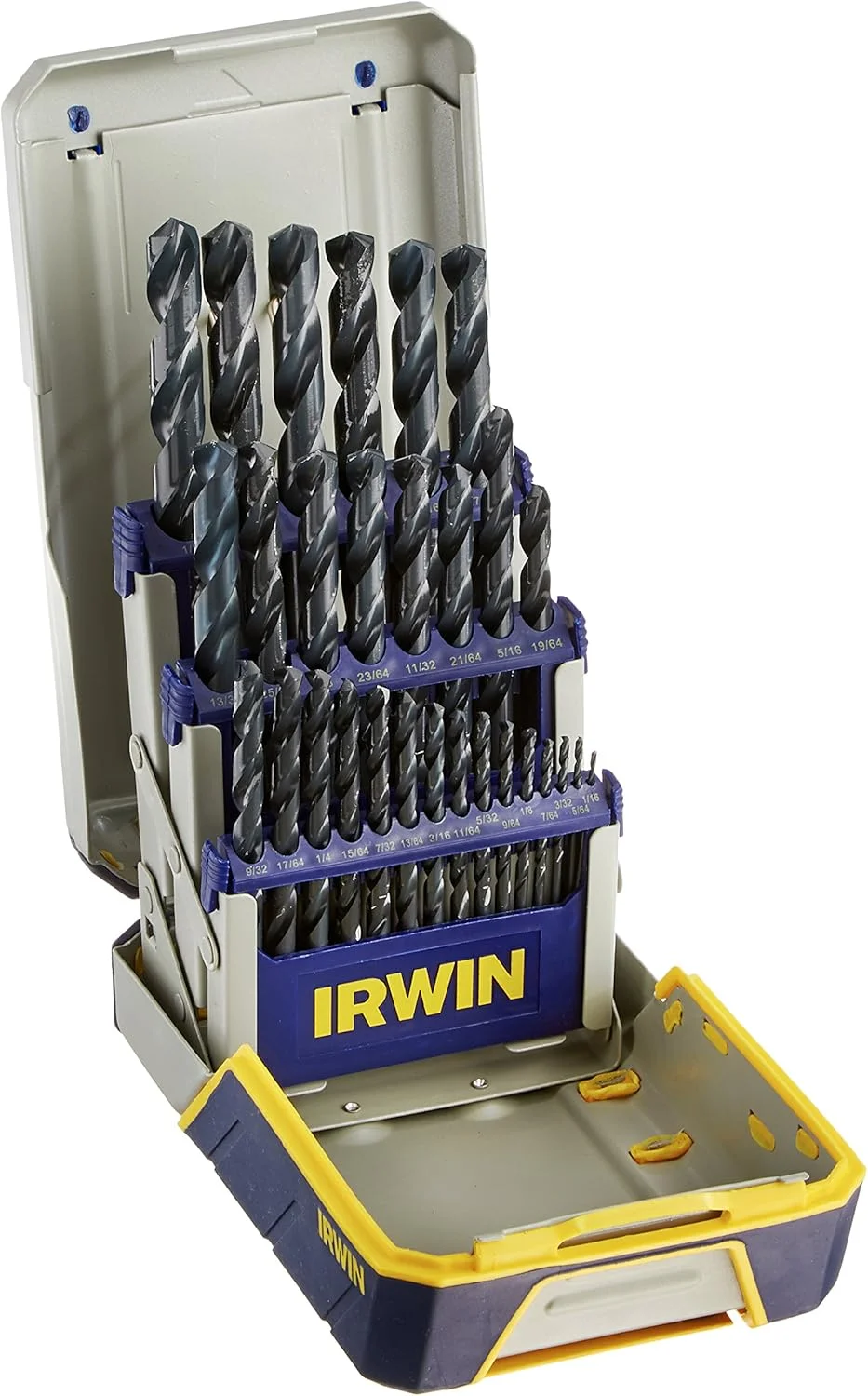
IRWIN 29-Piece Black Oxide Drill Bit Set
- Full fractional index 1/16 to 1/2 inch
- Black oxide for mild steel and aluminum
- Shop workhorse for structural tube
- Always have the right size on hand
- Strong value for general fab
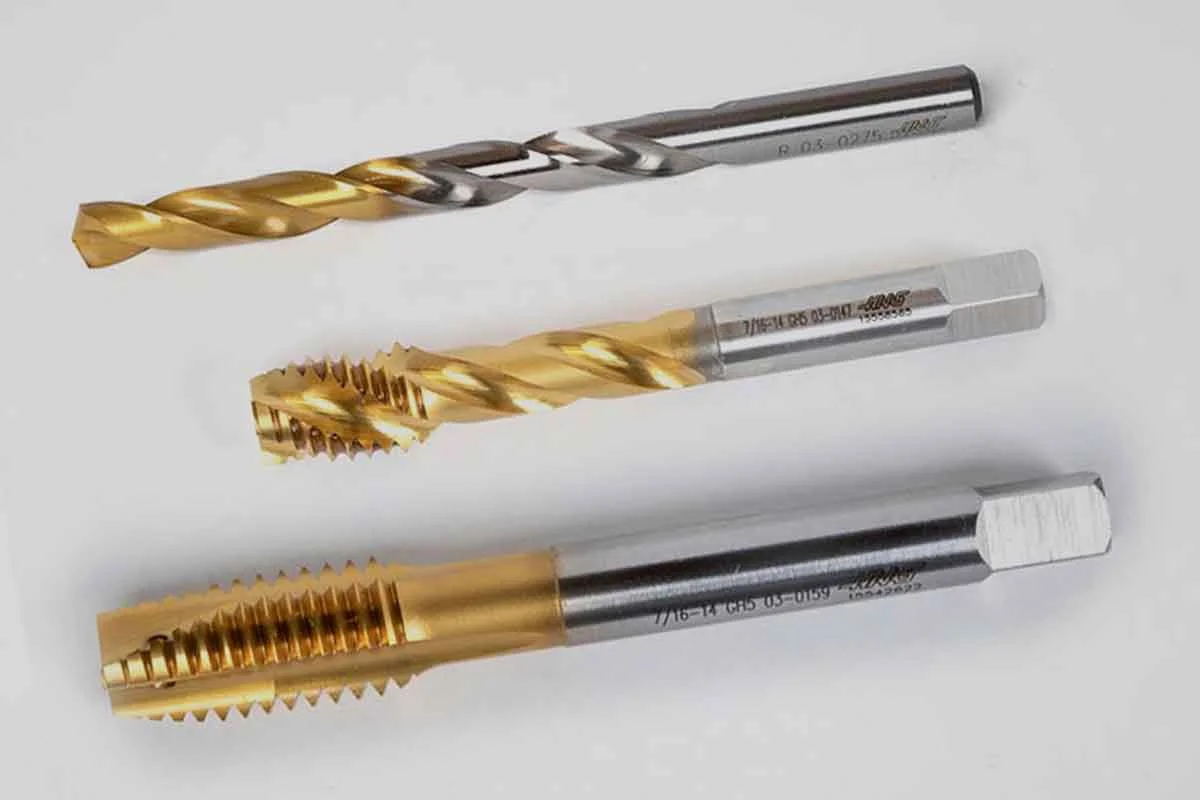
Ironant Step Drill Bit Set
- Clean holes in thin sheet metal
- Multiple sizes in one bit
- No pilot needed on thin stock
- Essential for 14 gauge and thinner
- Ideal for enclosures and panels
As an Amazon Associate, TestTalkHQ earns from qualifying purchases.
Drill Bit Coatings Explained (Black Oxide, TiN, TiAlN, Cobalt)
Black oxide is a surface treatment, not a coating in the PVD sense. It creates a thin oxide layer that reduces friction slightly and adds mild corrosion resistance. Black oxide HSS bits are the everyday economy choice — they perform identically to bright-finish HSS for most work but run a bit cooler and last modestly longer in mild steel. It's a finishing process on standard HSS, not a harder material.
Titanium nitride (TiN) is a gold-colored PVD coating that increases surface hardness and reduces friction. TiN-coated HSS bits run cooler and hold an edge longer than uncoated HSS in mild steel and aluminum. The coating wears through eventually, especially on the cutting edges, after which you're drilling on bare HSS underneath. TiN is a reasonable upgrade for general shop work but doesn't replace cobalt for stainless.
Titanium aluminum nitride (TiAlN) handles higher temperatures than TiN and is common on carbide tooling for CNC work. TiAlN-coated carbide drills excel in production environments with flood coolant and rigid setups. On hand-held and drill-press work in a fab shop, you rarely need TiAlN unless you're pushing carbide in hardened material on a stable machine.
Cobalt content (M35/M42) is a material property, not a coating. When a bit is labeled "cobalt," the alloy itself resists heat softening. For stainless and hard alloys, cobalt alloy beats any coating on plain HSS. Match the tool material to the workpiece first, then consider coatings as a secondary upgrade on top of the right substrate.
Matching Drill Bit to Material — Quick Reference
The right bit and RPM combination prevents burned edges, work hardening, and scrapped parts. Use the table below as a starting point for 1/4-inch diameter holes in a drill press. Scale RPM up for smaller diameters and down for larger — or use the Drill Speed Calculator for exact numbers at any diameter.
| Material | Best Bit Type | Point Style | Typical RPM (1/4" bit) | Fluid |
|---|---|---|---|---|
| Mild steel | Black oxide HSS or cobalt | 118° or 135° split | 1,200–1,800 | Cutting oil optional |
| Stainless steel | M42 cobalt | 135° split point | 400–700 | Cutting fluid required |
| Aluminum | HSS or cobalt | 118° or 135° split | 2,500–4,000+ | WD-40 or dry |
| Cast iron | HSS or cobalt | 118° | 600–1,000 | Run dry |
| Hardened steel | M42 cobalt or carbide | 135° split point | 100–300 | Heavy cutting fluid |
| Plastic | HSS (dedicated bits) | 118° — sharp only | 1,000–2,000 | Dry — no oil |
Thin sheet metal and enclosures call for step drills instead of twist drills — one pass, clean entry, no pilot hole on stock 14 gauge and thinner. After drilling, countersunk and counterbored holes need precise depth and pilot sizing — run those numbers through the Countersink & Counterbore Depth Calculator before you cut.
How to Make Drill Bits Last Longer
Cutting fluid is the single biggest factor in bit life after RPM. On stainless and hardened steel, fluid isn't optional — it carries heat away from the cutting edge and flushes chips before they weld back into the flutes. Tap Magic, sulfurized cutting oil, and dedicated stainless drilling fluids all work. On mild steel, fluid extends life noticeably on deep holes. On cast iron, skip fluid entirely — it creates an abrasive paste with graphite dust.
Correct RPM matters more than most operators realize. Running too fast generates heat; heat softens the cutting edge; a softened edge rubs instead of cuts, which creates more heat until the bit fails. When in doubt, run slower with steady feed pressure. Peck drilling — retracting every 1–2 diameters to clear chips — prevents chip packing in deep holes and reduces heat buildup at the tip.
Storage and handling finish the job. Keep bits in an indexed case, not loose in a drawer where edges bang against each other. Never run a dull bit harder to "make it cut" — sharpen or replace. And when extracting from a deep hole, stop the spindle before pulling back; dragging a spinning bit out of the hole chips the cutting edges on exit. The one mistake that kills bits faster than anything else in hard material is running too fast — slow down, use fluid, and let the bit cut.
Why Your Drill Bits Keep Breaking
The most common cause of drill bit breakage in metal is running too fast for the material. High RPM generates heat, heat softens the cutting edge, and a softened edge stops cutting and starts rubbing — which creates more heat until the bit fails. Hard materials like stainless and hardened steel need slow RPM, light feed pressure, and cutting fluid. The second most common cause is dull bits. A dull bit requires more force to cut, which increases torque and deflection. Sharpen or replace bits before they get to the point of struggling.
Do You Actually Need a Center Punch Before Drilling?
In most cases, yes — especially with a standard 118-degree twist drill. Without a center punch, the bit will walk across the surface before it bites in, leaving your hole off-location. A 135-degree split-point drill is far more self-centering and reduces walking significantly, but a punch mark still helps on smooth or hardened surfaces. For CNC and mill work with a rigid setup, a spotting drill is the professional approach — it creates a precise conical seat that the twist drill follows without deviation. For hand drilling in a shop environment, a punch takes two seconds and saves the part.
Cutting Fluid — When It Matters and When It Doesn't
Cutting fluid isn't optional when drilling stainless steel, hardened steel, or titanium — it's the difference between a bit that lasts hundreds of holes and one that burns out in ten. For mild steel and aluminum, cutting fluid extends bit life significantly and improves hole finish, but you can get away without it for short-run work. For cast iron, cutting fluid is actually counterproductive — cast iron machines dry, and adding fluid turns the graphite particles into an abrasive slurry. Tap Magic is a solid all-purpose cutting fluid for most metal drilling applications in a fabrication shop.
Storing Drill Bits So They Actually Stay Sharp
Drill bits stored loose in a drawer are drill bits that get dull fast. Metal-on-metal contact between bits dulls the cutting edges before you ever use them. An indexed drill bit case keeps each bit in its own slot and protects the flutes and point. Beyond storage, never run a drill bit in reverse — backing out without stopping and reversing direction chips the cutting edge on the way out. When a bit starts squealing instead of cutting clean, it's dull. Running a dull bit harder doesn't make it cut better — it just destroys the bit faster and makes a worse hole.