Drill Speed Troubleshooting
Diagnose bit burn-up, walking, poor finish, breakage, and RPM the machine cannot hit — when the calculator already “passed”
Not another SFM-to-RPM lesson. Pair this with the Drill Speed Calculator when the math looks right and the hole still fails. For formulas and material windows use the Drill Speed and Feed Rate Guide. For bit type and coating choice use How to Choose Drill Bits for Metal. This page stays on diagnosis.

Drill Speed Problems Quick Answer
Use this when calculated RPM is “in range” but the bit burns, walks on start, leaves a rough or oversized hole, snaps mid-cut, or the drill press cannot reach the number on the screen.
| Problem | What it usually means | First fix | Next tool |
|---|---|---|---|
| Bit overheats / burns / discolors | Dry cut when fluid required; dull edge; hardness higher than chart row | Add cutting fluid; replace dull bit; derate RPM for real hardness | Drill Speed Calculator |
| Bit walks / wanders on start | No center punch; 118° chisel skate; light starting pressure | Punch a start; use 135° split-point; firm bite pressure | Choose Drill Bits |
| Poor finish / oversized hole | Feed too aggressive; runout in chuck; wrong bit for material | Steady lighter feed; check chuck/runout; match bit grade | Speeds Chart |
| Bit breaks / snaps | Heat + brittleness from overspeed; no peck on deep holes; packed flutes | Lower RPM; peck every 1× diameter; clear chips; reduce leverage | Drill Speed Calculator |
| Calculated RPM exceeds machine | Small bit + high SFM needs speeds the press cannot deliver | Run max available (prefer slower); reset feed; upsize bit if needed | Speeds Chart |
1. Drill Bit Overheats / Burns / Discolors Despite “Correct” Speed
What it looks like: Tip goes blue or straw-colored after a short hole; smoke or burning smell; edge softens and rubs; bit life minutes instead of dozens of holes — even though RPM matched the calculator.
Likely causes: Insufficient coolant or cutting fluid on stainless, tool steel, or copper when the chart assumed wet cutting. Dull bit programmed at new-bit SFM — a worn edge converts spindle energy into heat, not chips. Wrong speed for actual hardness (cold-drawn or heat-treated stock labeled as “mild steel”). Rubbing from timid feed at “correct” RPM — heat without chip formation.
Fixes: Apply fluid at the hole mouth and re-wet on each peck for stainless/tool steel. Replace or resharpen before re-running the same RPM. Spot-check hardness or derate 20–40% when stock is tougher than the chart name. Increase feed until you get continuous chips, then re-check tip temperature — lowering RPM alone on a rubbing cut often fails.
2. Bit Walks / Wanders on Start Despite Correct RPM
What it looks like: Tip skates across the surface; hole lands off layout; oval start before the flutes engage — RPM is fine, location is not.
Likely causes: No center punch or spotting drill on a smooth face. Wrong point angle — 118° chisel edges skate; 135° split-point bites. Insufficient starting pressure so the tip polishes instead of cutting. Hand-drill flex or a loose chuck amplifies walk even at chart RPM.
Fixes: Punch a clear start (or spot-drill on the mill). Switch to split-point geometry for hard or critical-location holes. Apply firm, square pressure until the tip seats, then settle into feed. For thin sheet, prefer a step drill over a twist drill that walks on unsupported stock — that is a geometry decision, not an RPM rewrite.
Wrong bit type for the start? Point angle and twist vs step matter more than another RPM recalculation when the failure is walking.
Choose Drill Bits3. Poor Hole Finish or Oversized Hole Despite Correct Speed
What it looks like: Torn walls, spiral marks, bell-mouth entry, or a hole that gauges oversized while the RPM display matched the calc.
Likely causes: Feed pressure too aggressive for the diameter — the bit deflects and cuts large. Chuck runout or a bent bit — “correct” RPM on a wobbling tip excavates an oval. Wrong bit type (dull HSS in stainless; carbide in a flexing hand drill). Reaming was needed and drilling alone was expected to hold finish.
Fixes: Ease feed once the tip is buried; let the flutes cut, do not lean. Indicate or swap chucks if the tip orbits. Match bit grade to material. For precision ID after drilling, finish with a reamer rather than chasing finish by slowing RPM into a rub zone.
4. Bit Breaks / Snaps Mid-Hole
What it looks like: Shank snaps or tip wedges and twists off — especially small diameters, deep holes, or stainless — after “correct” RPM was set.
Likely causes: Speed too high for the rigidity of a small bit, heating the tip into a brittle failure. Wrong peck strategy — chips pack the flutes, torque spikes, bit locks and snaps. Side load from a walking start or hand-drill flex. Aggressive feed on a bit already heat-softened.
Fixes: Lower RPM on small bits even if chart SFM suggests higher. Peck to clear chips; blow or brush flutes. Keep the spindle square; never restart a jammed bit by powering through. Replace heat-blued bits — they snap easier than sharp ones at the same RPM.
5. Calculated RPM Exceeds Drill Press / Machine Capability
What it looks like: Calculator returns 8,000+ RPM for a small bit in aluminum; your press tops out at 3,000; operators either force half-speed with full chart feed or ignore the number entirely.
Likely causes: Real-world machine limit not in the formula. Small diameters at high aluminum/brass SFM need spindle speeds many drill presses and hand drills cannot deliver. Running max RPM with timid feed rubs and burns; running max RPM with full chart feed can overload a soft machine.
Fixes: Cap at machine maximum, compute actual SFM: SFM_actual ≈ (RPM_max × diameter) ÷ 3.82. Prefer the slower available step when between speeds. Reset feed for the SFM you actually have. Upsize diameter when possible so chart SFM fits the spindle — or accept lower productivity rather than fantasy RPM.
Decision: Which Drill Bit — Does Type Change the Speed Window?
HSS, cobalt, and carbide are not interchangeable at the same RPM. Cobalt holds heat better in stainless; carbide needs rigidity; step drills solve thin-sheet walk that no RPM fix will. If the “speed problem” is really the wrong bit for the material or machine, fix the tooling choice first.
Recommended Drill Bits & Drilling Tools
Five catalog picks from the affiliate CSV — cobalt/HSS sets, reamer, punch, and dry lube that support drill-speed diagnosis
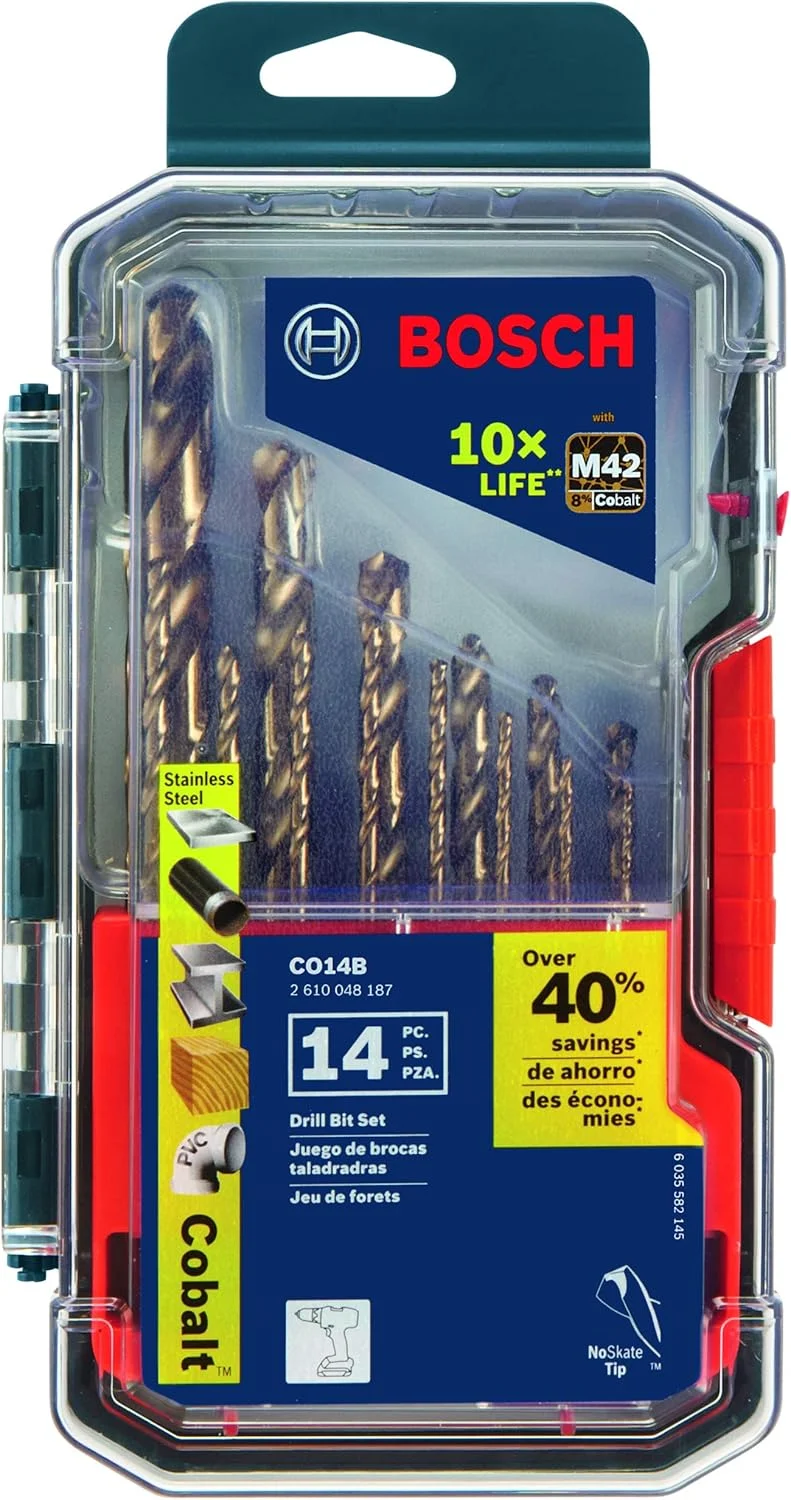
BOSCH CO14B 14-Piece Cobalt M42 Metal Drill Bit Set
- Replace heat-burned HSS before re-testing RPM
- Split-point reduces walk on start
- Stainless and hard steel speed windows
- Drilling / Machining catalog
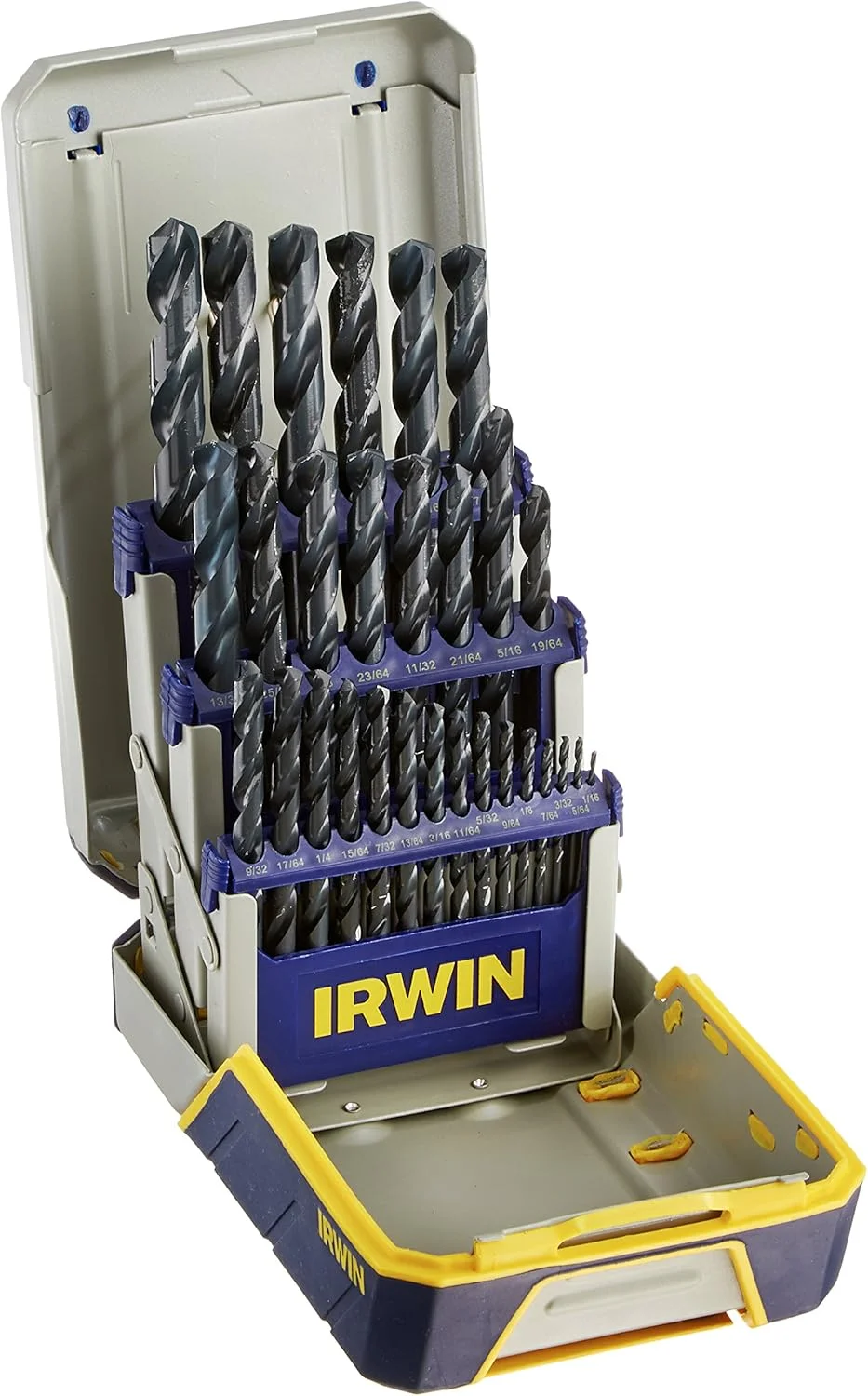
IRWIN Tools Black Oxide Metal Index Drill Bit Set 29-Piece
- Full fractional coverage for RPM tests
- Everyday mild steel and aluminum
- Cheap to replace when edges dull
- Drilling / Machining catalog
OMEX 8-Piece Expanding Adjustable Hand Reamer Set (15/32"–1.1/16")
- Finish ID after drill leaves oversize/tear
- Expanding range for shop holes
- Separates finish from RPM chasing
- Cutting Tools / Machining catalog
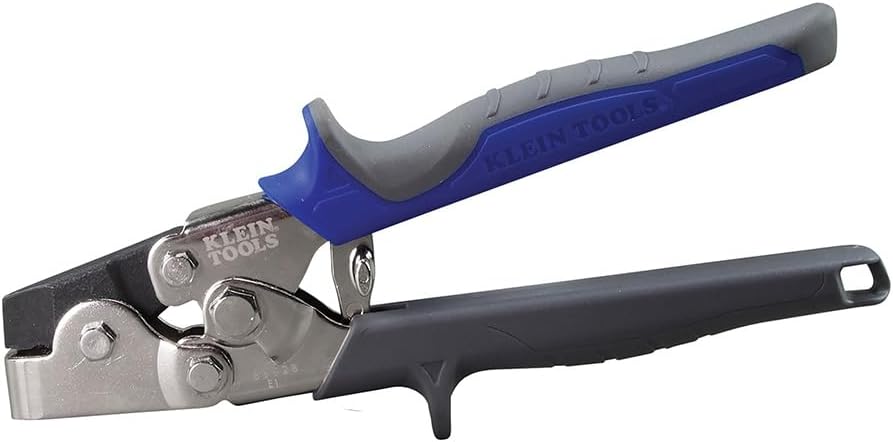
Klein Tools 86528 Sheet Metal Punch Set
- Clean starts that reduce twist-drill walk
- Sheet and enclosure hole locations
- Layout accuracy before RPM matters
- CSV: Sheet Metal / Fab

WD-40 Specialist Dry Lube Smart Straw 10oz Twin Pack
- Aluminum chip welding / BUE at the tip
- Supports “correct RPM” dry-cut failures
- Shop Supplies — drilling-adjacent
- CSV sourced
As an Amazon Associate, TestTalkHQ earns from qualifying purchases. All five cards are sourced only from the affiliate CSV (Drilling / Machining, Cutting Tools / Machining, Sheet Metal / Fab, Shop Supplies).
Frequently Asked Questions
The calculator says my RPM is fine — why is the bit burning?
Confirm fluid, edge sharpness, and real hardness. Chart RPM assumes a sharp bit and the lubrication the material needs. Blue tips are live heat data — fix those before raising speed.
Why does the bit walk even at the correct RPM?
Walking is geometry and start technique — punch mark, point angle, and starting pressure — not an SFM error. Fix the start before rewriting material tables.
Can correct RPM still leave an oversized hole?
Yes — runout, aggressive feed, and dull bits cut large at “right” speed. Diagnose those before slowing into a rub zone.
What if my drill press cannot reach calculated RPM?
Run the highest available speed (prefer slower if between steps), compute actual SFM, and reset feed — or change diameter. Do not keep chart feed attached to unreachable RPM.
Is this the same as the Drill Speed Guide?
No. The guide teaches formulas, SFM charts, and general mistakes. This page diagnoses failures when the calculation already looks correct.