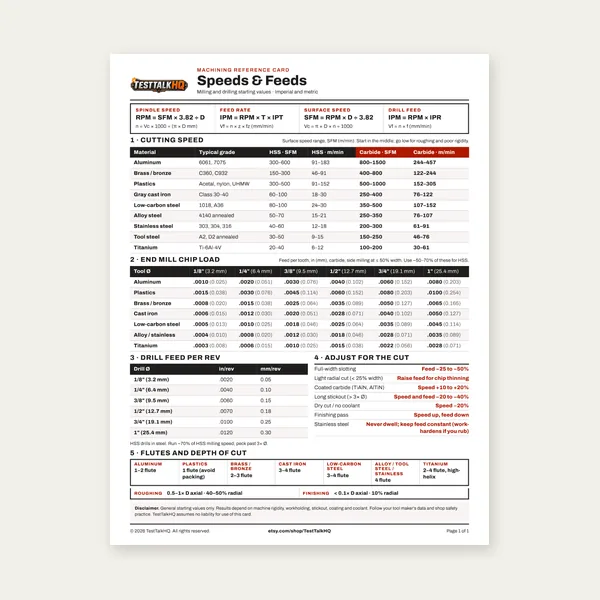
Machining Speeds & Feeds Card
One page. Speeds, chip load and drill feed, imperial and metric.
$3.99
BuyEnter material, thickness, bend angle from flat, inside radius, and outer flange lengths to get K-factor, bend allowance, outside setback, bend deduction, and flat blank length.
One page. Speeds, chip load and drill feed, imperial and metric.
$3.99
Buy
27 pages. Milling, drilling, tapping, turning and CNC routing.
$12.99
Buy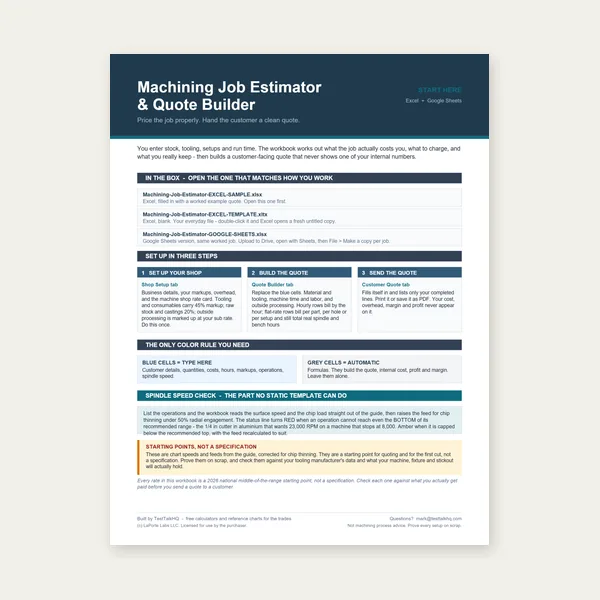
Quote shop work and check operations against your spindle's top speed.
Excel or Google Sheets. Best on a computer.
$29.00
Buy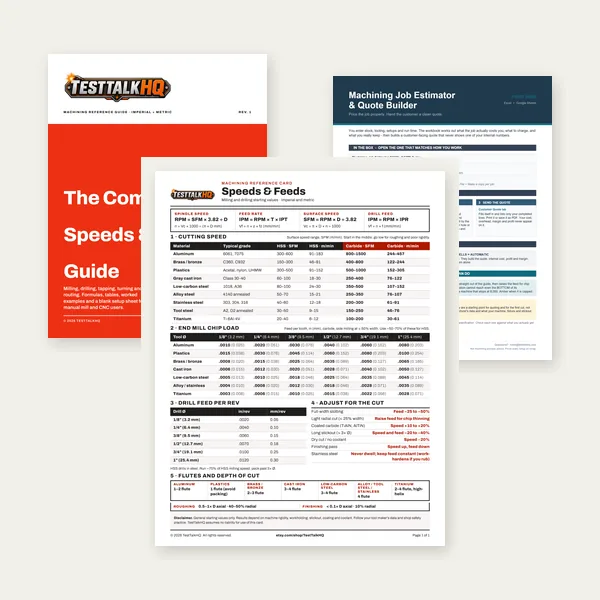
Card, 27-page guide and the estimator workbook. All six files.
Excel or Google Sheets. Best on a computer.
$34.99
$45.98 if bought separately — save $10.99
BuyCheckout opens in a new tab.
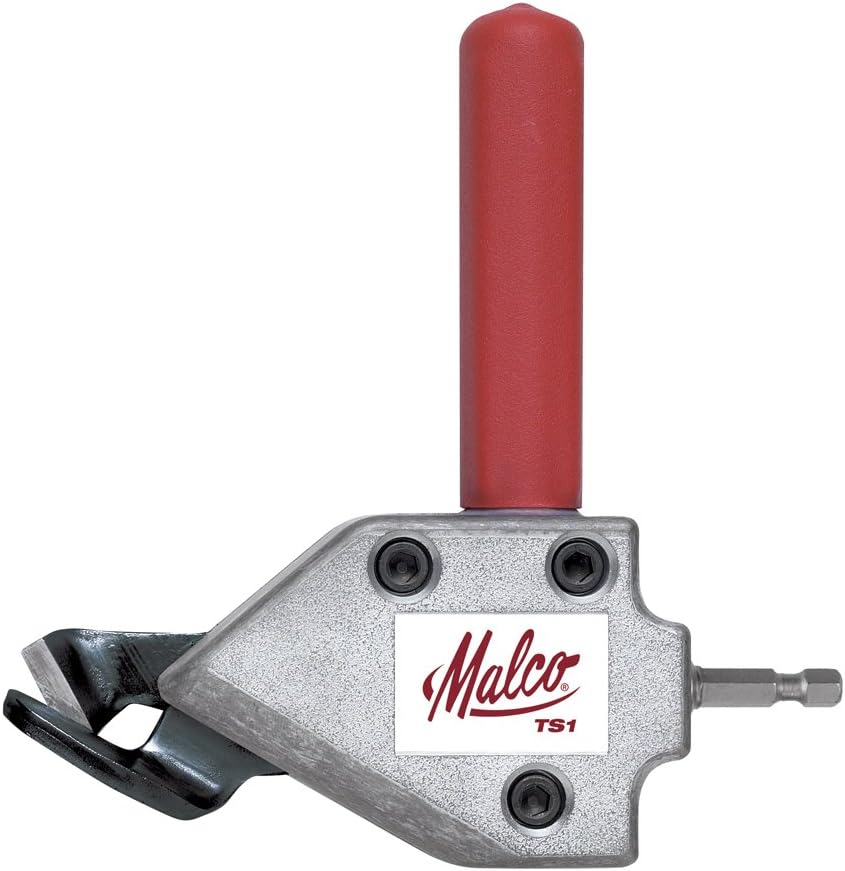
Shears, snips, and gauges that support press-brake flat patterns


As an Amazon Associate, TestTalkHQ earns from qualifying purchases.
This page focuses on the BD / K-factor workflow fabricators search for. Bend angle A is the angle from flat (90° for a right-angle flange), not the complement.
BA = (π/180) × A × (R + K × T)
OSSB = (R + T) × tan(A × π/360)
BD = 2 × OSSB − BA
Flat = L1 + L2 − BD
K-factor locates the neutral axis through the thickness (0 = inside, 1 = outside). Soft aluminum often uses a lower K than mild steel. Always prove K and BD on scrap with your die and punch set.
Also see the Bend Allowance Calculator for a BA-first workflow on the same geometry.
Finished dims wrong, cracks, springback, or short flanges: Sheet Metal Bending Troubleshooting. Additive vs subtractive flat-pattern method: Bend Allowance vs Bend Deduction — Which to Use.
Use BD when both flange lengths are outside dimensions. Use BA when you add the arc to the flange flats measured to the mold lines.