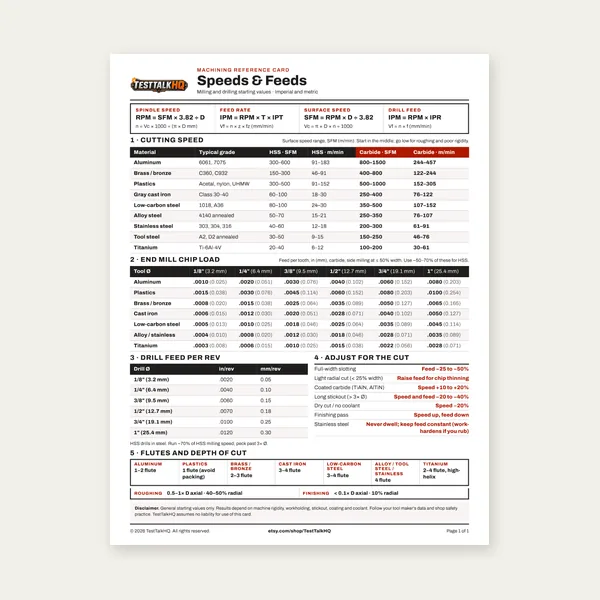
Machining Speeds & Feeds Card
One page. Speeds, chip load and drill feed, imperial and metric.
$3.99
BuyBend allowance, bend deduction, and flat pattern length for press brake work
One page. Speeds, chip load and drill feed, imperial and metric.
$3.99
Buy
27 pages. Milling, drilling, tapping, turning and CNC routing.
$12.99
Buy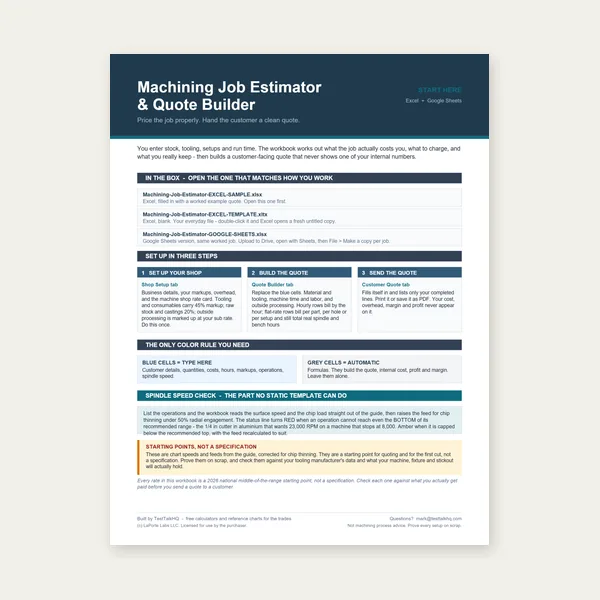
Quote shop work and check operations against your spindle's top speed.
Excel or Google Sheets. Best on a computer.
$29.00
Buy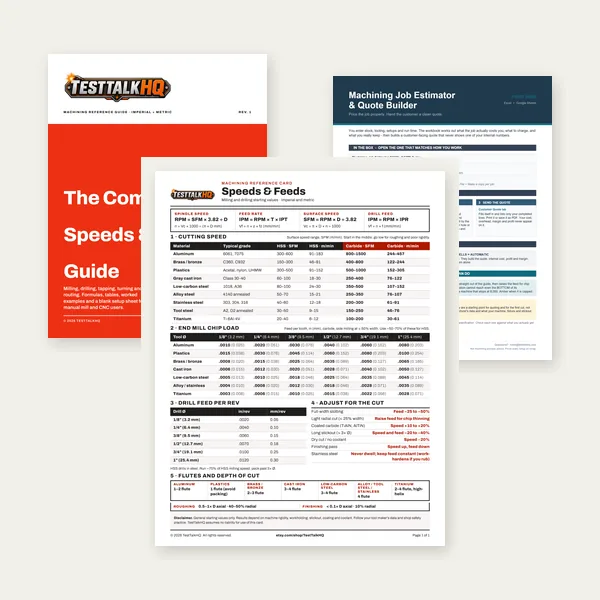
Card, 27-page guide and the estimator workbook. All six files.
Excel or Google Sheets. Best on a computer.
$34.99
$45.98 if bought separately — save $10.99
BuyCheckout opens in a new tab.
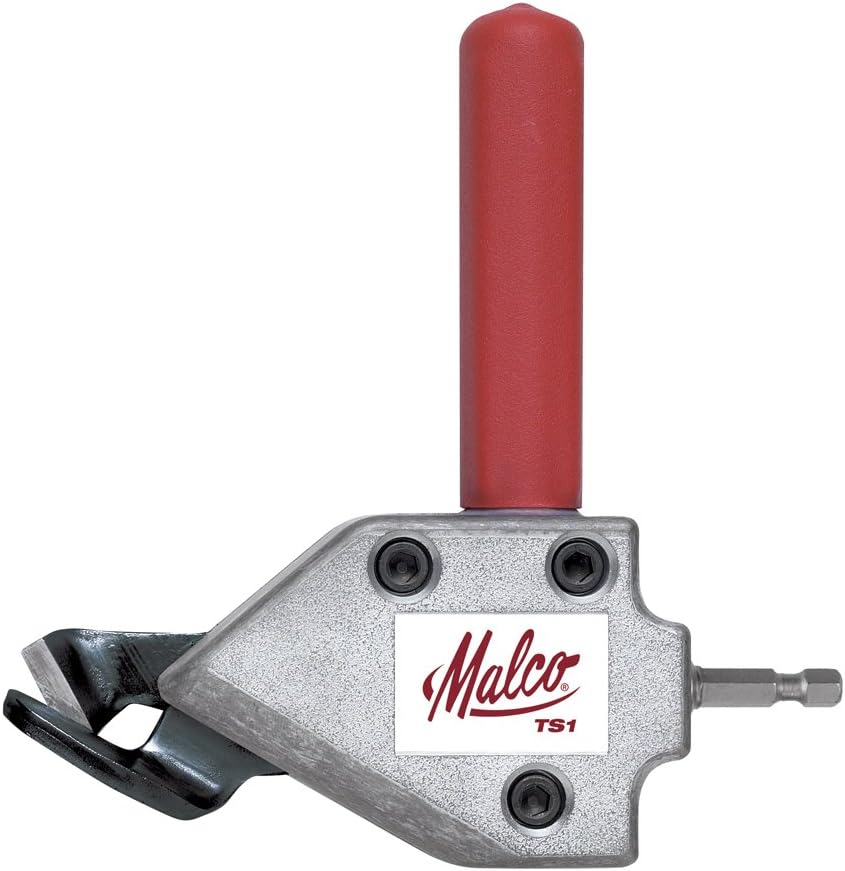
Five shop picks for cutting, notching, and finishing sheet stock after you calculate your flat pattern.
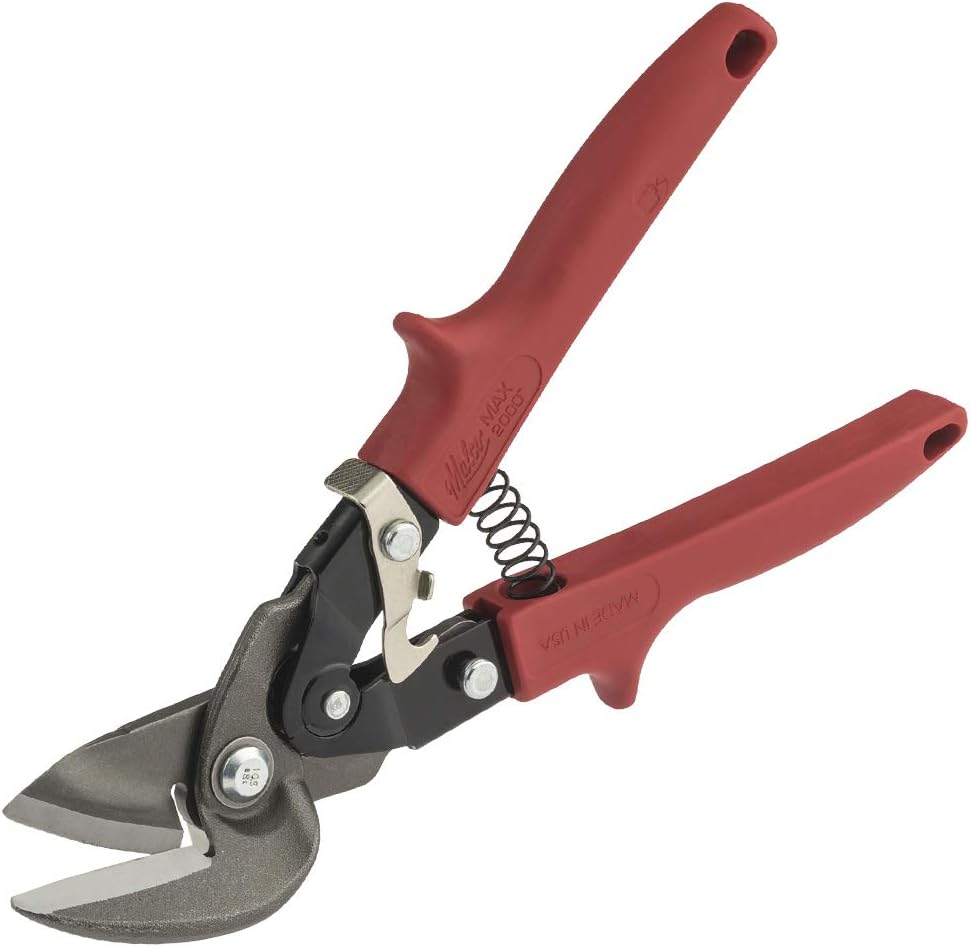
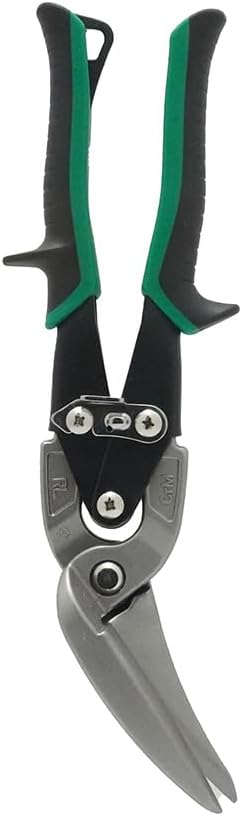
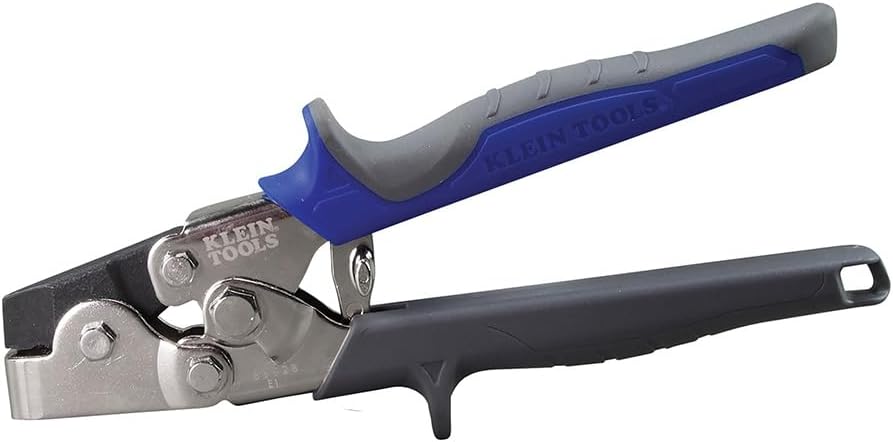
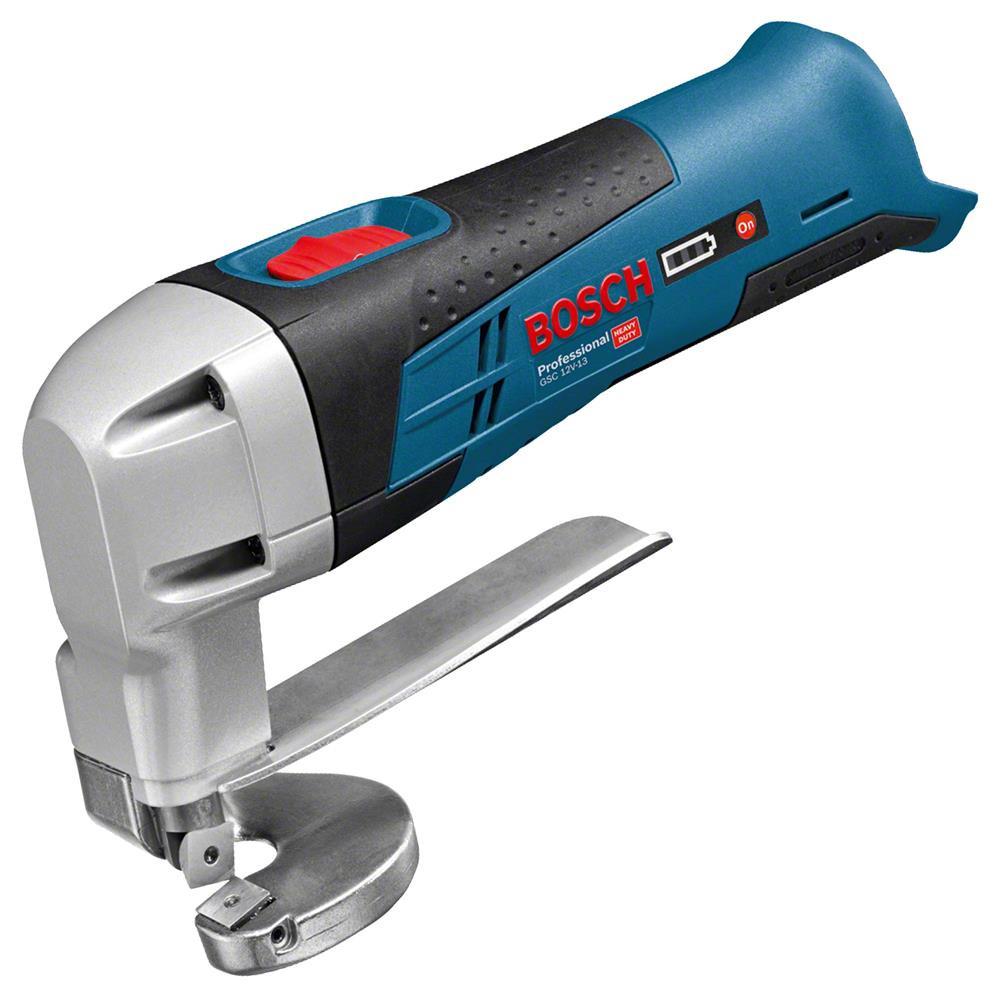
As an Amazon Associate, TestTalkHQ earns from qualifying purchases.
Bend allowance is the amount of flat material consumed in the bend zone. When sheet metal bends, the outer surface stretches and the inner surface compresses. Neither behaves like a rigid hinge — the material between them deforms along a neutral axis that does not stretch or compress.
Bend allowance calculates how much flat length you must add (or account for) to form the bend correctly. Without it, your flat pattern will be too short and the finished legs will not hit your target dimensions.
Use this calculator to size blanks before cutting on a shear, plasma table, or laser — especially on multi-bend brackets and box sections.
The K-factor defines where the neutral axis sits within the material thickness, expressed as a ratio from 0 to 0.5. A K-factor of 0.5 places the neutral axis at the center of the sheet — common for very soft bending assumptions. A K-factor of 0.44 for mild steel is the practical starting point most fab shops use on a press brake.
Softer materials like aluminum typically use slightly lower K-factors (~0.41) because the neutral axis shifts toward the inside of the bend. Stainless and mild steel often share similar values around 0.44, but you should confirm with test bends on your exact tooling and grain direction.
This calculator auto-fills K-factor by material but lets you override it when you have proven shop data.
Bend allowance and bend deduction describe the same physical bend from different reference points. Bend allowance is measured along the neutral axis arc — useful when you lay out from inside mold lines or CAD flat patterns.
Bend deduction is used when you work from outside dimensions: add the two outer leg lengths, then subtract the bend deduction to get the flat blank length. The formula used here is BD = 2 × OSSB − BA, where OSSB is the outside setback.
Both methods should produce the same flat pattern length when applied consistently. Pick whichever matches your shop drawing convention — full workflow fork: Bend Allowance vs Bend Deduction — Which to Use. If blanks still miss after you lock a method, see Sheet Metal Bending Troubleshooting.
A practical starting inside radius for mild steel air bending is about 1× material thickness. Tighter radii increase stress on the outer fiber and can crack paint, zinc, or the base metal — especially on stainless and hardened grades.
For aluminum, use at least 1.5× thickness as a safer minimum on most alloys. Copper and brass fall between these guidelines depending on temper.
On a press brake, air forming typically produces an inside radius roughly equal to 16% of the die opening width (V-die). If your radius is critical, select V-die width first, then verify with a test coupon before running production parts.
Finished dims wrong, cracks, springback, or short flanges: Sheet Metal Bending Troubleshooting. Additive vs subtractive flat-pattern method: Bend Allowance vs Bend Deduction — Which to Use.