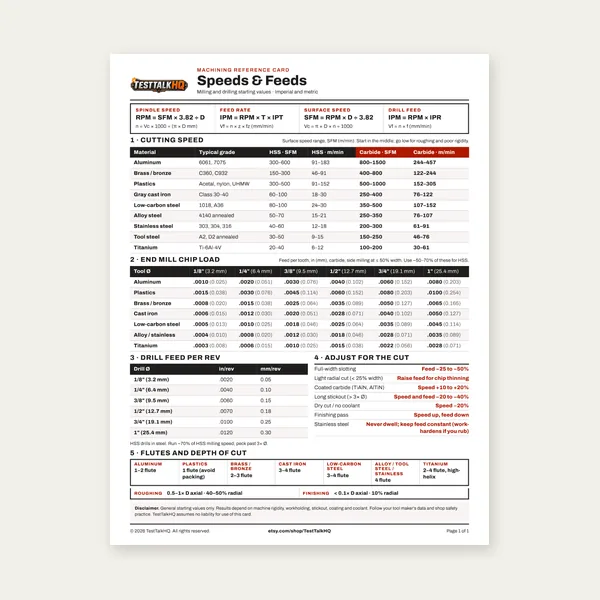
Machining Speeds & Feeds Card
One page. Speeds, chip load and drill feed, imperial and metric.
$3.99
BuyWhat drives threading torque, why taps break, and how to plan wrench size vs RPM vs hole prep
Tapping torque is how much twist the tap needs to cut threads — a different question from tap drill diameter or spindle RPM. Use the Tap Torque Calculator for a planning estimate by thread size and material.
That is cutting torque — not bolt clamp torque. For fasteners that snap, loosen, or need torque-vs-TTY decisions, use Bolt Torque Troubleshooting and Torque Spec vs Torque-to-Yield.

Tapping torque is the rotational force required to advance a cutting tap into a prepared hole. It rises with thread size (larger diameter and coarser pitch cut more metal per revolution), material hardness and toughness, percentage of thread engagement, and friction in the hole. It is not the same as bolt installation torque — that happens after threads exist and follows fastener specs. It is also not drilling torque; the tap is shearing and forming threads in material that already has a pilot hole.
Shop planning uses torque estimates to pick a tap wrench that will not flex or slip, set a drill-press clutch before you snap a tap in a blind hole, or decide whether a tapping head is worth setting up on a production run. The number is always approximate — sharpness, coating, fluid, and chip clearance move real torque more than any formula captures.
Stainless and high-alloy steels produce the highest tapping torque and the worst galling if run dry. Aluminum is softer but can still bind when chips weld to the tap. Cast iron varies with grade — flake graphite grades often tap easier than steel at the same nominal size. Always reduce speed before you fight torque with arm strength.
Torque scales roughly with the square of nominal diameter and increases with coarser pitch because each revolution removes more material. A 1/2-13 tap demands far more torque than a 1/4-28 even in the same material — plan a larger wrench or machine assist accordingly.
An oversize tap drill lowers engagement and can feel easier initially but weakens threads; an undersize hole spikes torque and breakage risk. Use the Tap Drill Size Calculator for 60–75% engagement on cut taps. Reamed or burr-free holes reduce friction spikes at the start of the cut.
Spiral point (gun) taps drive chips forward — lowest torque in through holes. Spiral flute taps pull chips out of blind holes. Straight flute hand taps are versatile but pack chips in deep blind holes unless you back off frequently. Wrong geometry for the hole type shows up as sudden torque spikes, not a smooth average.
Fluid separates the tap from workpiece material, carries heat away, and flushes chips. Dry tapping in stainless can double effective torque within a few turns. Tap-specific cutting fluid is not optional on production threads — it is part of the torque budget.
Broken taps are almost always a process failure, not a calculator miss. Common causes: dull or chipped tap lands, wrong or missing cutting fluid, RPM too high (especially stainless), undersize hole, chip packing in a blind hole, misalignment between tap and hole axis, or forcing the tap when torque suddenly increases instead of backing out. See Why Is My Tap Breaking? for failure-pattern diagnosis and a prevention checklist.
The tap's torsional strength is finite — but in practice you exceed it by binding, not by slowly approaching a published torque limit. If the tap gets tight, stop, back out, add fluid, clear chips, verify alignment, and check drill size. Running the correct tapping speed prevents heat that softens the tap and work-hardens the hole.
Hand tapping with a T-handle wrench works for small threads (roughly under ~150 in-lb peak in steel), short engagement, and one-off repair work. You feel torque rise and can back off — if you pay attention.
Drill-press tapping with a spring-loaded center and clutch set below expected peak torque protects the tap when the hole bottoms or chips pack. Set clutch from the torque calculator mid estimate, then prove on scrap.
Tapping heads (reverse-on-contact or tension-compression heads on mills and drill presses) maintain alignment and reverse automatically — justified for production quantities, large threads, or brittle taps in stainless. They cost setup time but eliminate most snap-offs from lateral load.
Joint strength depends on how many threads engage in the tapped hole — not just whether the tap turned easily. After planning torque, confirm engagement length with the Thread Engagement Calculator so you do not chase low torque with an oversize drill that strips under load.
One page. Speeds, chip load and drill feed, imperial and metric.
$3.99
Buy
27 pages. Milling, drilling, tapping, turning and CNC routing.
$12.99
Buy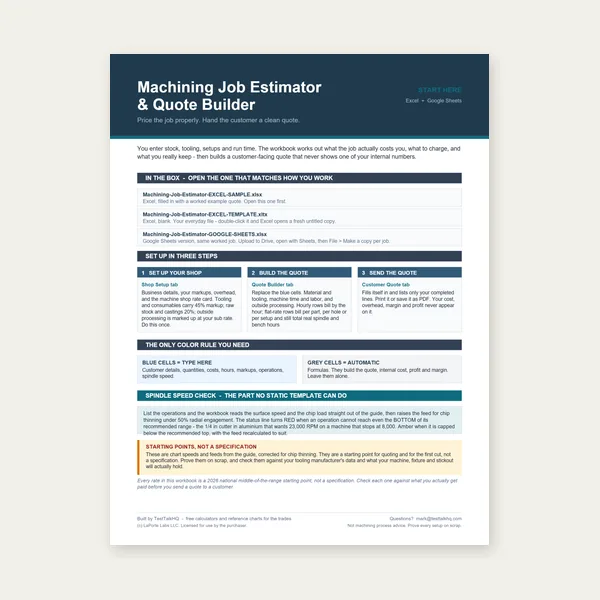
Quote shop work and check operations against your spindle's top speed.
Excel or Google Sheets. Best on a computer.
$29.00
Buy
Card, 27-page guide and the estimator workbook. All six files.
Excel or Google Sheets. Best on a computer.
$34.99
$45.98 if bought separately — save $10.99
BuyCheckout opens in a new tab.
Tap sets, cutting fluid, and torque wrenches for the full threading workflow
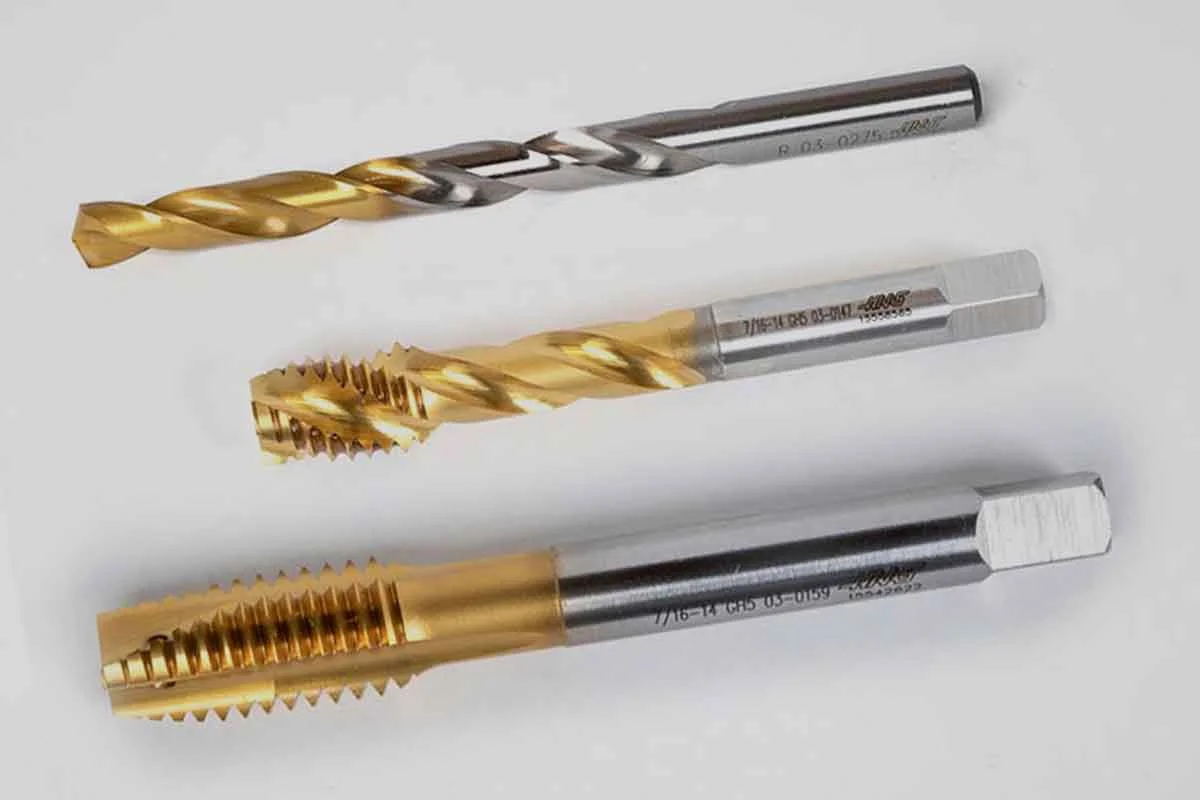
Imperial and metric coverage for hand and machine tapping — match tap style to through vs blind holes before you worry about torque limits.
Check Price
The cheapest torque reduction available — fluid lowers friction and carries heat away so peak twist stays within what your tap and wrench can survive.
Check Price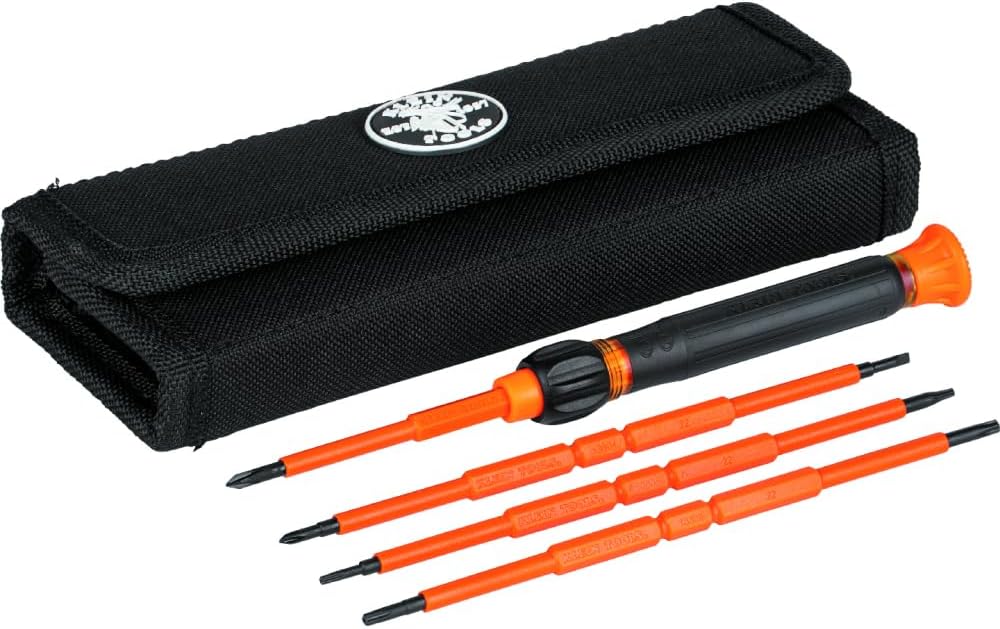
Calibrate your sense of tap torque on scrap and use click wrenches for assembly after tapping — different operation, same discipline about not exceeding fastener specs.
Check PriceAs an Amazon Associate, TestTalkHQ earns from qualifying purchases.
Complete threading workflow on TestTalkHQ:
If the estimate exceeds your wrench rating, switch to a tapping head, reduce thread size, verify material grade, or machine-tap with clutch protection — do not apply cheater bars to hand taps. High predicted torque is a signal to check drill size and RPM before you start, not a challenge to overpower the tap.
Thread designation changes; torque still tracks diameter and pitch. M10 × 1.5 behaves like a coarse 3/8-class thread in steel for planning purposes. Use the calculator dropdown for either system — compare in-lb or Nm with your wrench scale.
When a combination of drill size, fluid, speed, and tap style produces clean threads without snap-off, note it on the job traveler. Torque estimates get you in the ballpark; shop records close the loop for the next run of the same part.