Calculators & guides only — no articles or blog noise.
Bolt Torque Troubleshooting
Diagnose bolts that snap at spec, joints that loosen anyway, wrenches that disagree with the chart, stripped/galled threads, and conflicting torque sources
Not another explainer of what torque means. Pair this page with the Bolt Torque Calculator when the number looks right and the joint still fails. For friction corrections and sequences use the Bolt Torque Guide. For tables use the Bolt Torque Specifications Chart. This page stays on diagnosis.
Bolt Torque Problems Quick Answer
Use this when hardware fails during install, a joint walks loose in service, or your wrench reading refuses to match the chart or calculator.
Problem
What it usually means
First fix
Next tool
Bolt snaps at or below “spec”
Wrong grade, damaged threads, dry chart on lubed threads, or wrong K-factor assumption
Verify grade markings, chase/clean threads, match lube to the published condition
Diagnose in 60 seconds: (1) read the grade/class markings on the failed bolt, (2) confirm dry vs lubricated vs anti-seize against the source you used, (3) check whether the wrench range puts your target in the middle third of the scale, (4) ask whether the joint is torque-only or torque-plus-angle. Wrong grade + wrong friction condition cause more “mystery” failures than bad charts.
1. Bolt Breaks or Snaps at or Below Spec Torque
What it looks like: The fastener necks, shears under the head, or snaps in the threaded section while the wrench is still climbing toward the published number — or it clicks at “spec” and is found broken on the next pass.
Why it happens: Published torque assumes a grade, a friction condition (K-factor), and intact threads. Break any of those assumptions and the same ft-lb produces far more (or far less) stress than the table intended.
Likely causes checklist:
Wrong grade or class used — Grade 5 / Class 8.8 chart applied to Grade 2 / Class 4.8 hardware, or unmarked “mystery” bolts treated as Grade 8.
Thread damage, paint, rust, or cross-threading — friction spikes; torque climbs while preload stays low until the bolt yields suddenly.
Dry chart on lubricated or anti-seized threads — lower friction → same torque → higher preload → yield or snap. Classic shop failure mode.
Wrong K-factor assumption in a calculator — using a “lubricated” K when threads are dry (under-clamp) or the reverse (over-clamp). Confirm the factor matches the joint you actually assembled.
Undersized or soft parent threads — bolt survives; the nut or tapped hole strips and the bolt appears to “snap” or pull through.
Fixes:
Replace with the correct grade/class; do not reuse a stretched or necked bolt.
Chase threads, clean with solvent, and verify free running by hand before the torque wrench comes out.
Match lubrication to the published condition — or reduce dry torque 20–30% for anti-seize. Walkthrough: Bolt Torque Guide.
Re-run the Bolt Torque Calculator with the real size, grade, and friction condition — then compare to the OEM number if one exists.
Misdiagnosis: Do not “fix” a snapped bolt by switching to a longer wrench and leaning harder. If it failed below the chart value, friction or grade is wrong — more leverage just breaks the next one faster.
2. Joint Loosens Over Time Despite Correct Torque
What it looks like: Every fastener clicked at spec on install day. Weeks later: leaky flange, buzzing cover, wheel that needs re-torquing, or a gap that opened under vibration.
Why “correct torque” still walks: Torque sets preload at assembly. Service loads, embedment into soft surfaces, and vibration can shed that preload even when the wrench procedure was textbook.
Likely causes:
Vibration without a locking method — prevailing-torque nuts, thread locker, or lock washers specified but omitted.
Embedment / relaxation — gasket crush, paint under washers, soft aluminum, or stacked soft washers settle after the first heat/load cycle.
Missing, wrong, or undersized washer — bearing stress digs into the joint face; clamp load drops as material yields locally.
Incorrect multi-bolt sequence — one side of a flange or cover seats first; far-side bolts show “spec” but the joint never compresses evenly.
No follow-up pass — soft joints need a re-torque after settle; skipping it leaves the joint under-clamped in service.
Fixes:
Retorque in the published star/cross/spiral sequence after the joint settles (and after first heat cycle when the OEM says so).
Install the specified washer stack; replace crushed soft washers.
Add the locking method the application calls for — do not invent a Grade 8 “solution” to a vibration problem that needs a nyloc or anaerobic locker.
For sequences and staged passes, use the guide; for size/grade lookup, the calculator.
Field rule: If one bolt in a pattern is loose and the others are tight, treat it as a sequence/settle problem first — not a reason to overshoot every fastener by 20%.
3. Torque Wrench Reading Doesn’t Match the Calculated Value
What it looks like: Chart or calculator says 75 ft-lb. Your click wrench “feels early,” a beam wrench reads differently, or a digital adapter never agrees with the clicker. Or you convert Nm ↔ ft-lb and the numbers still fight.
Common instrument errors:
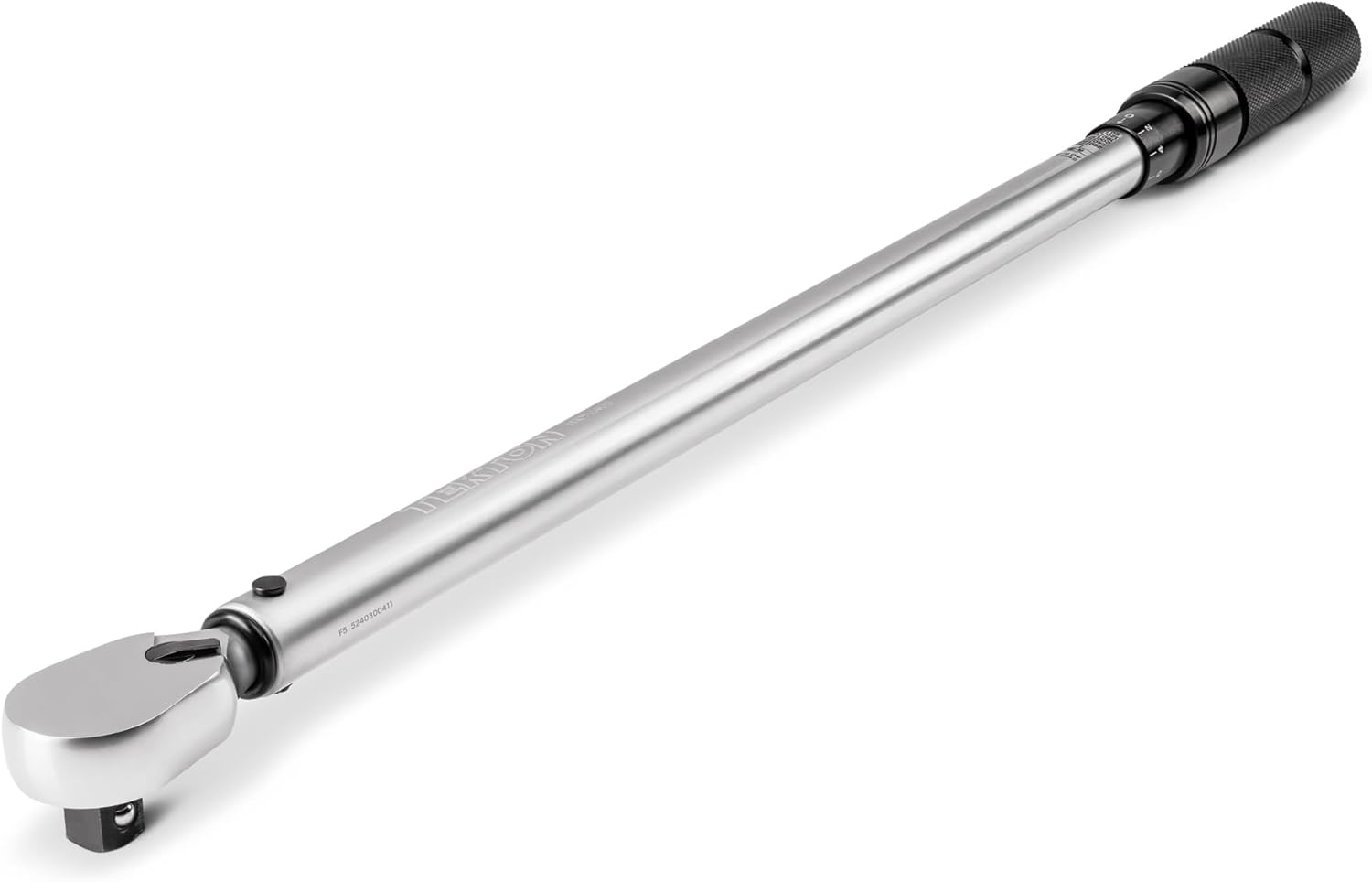
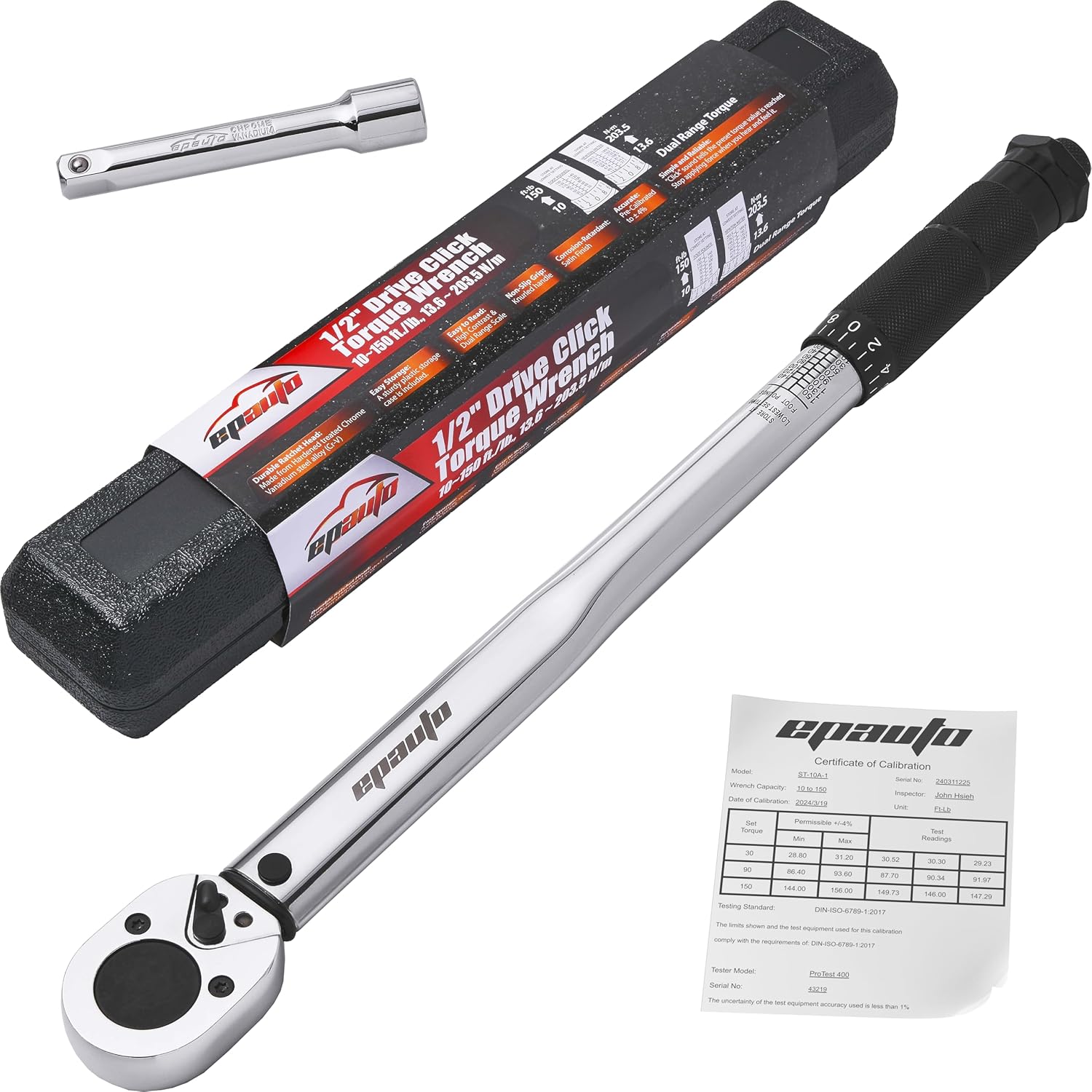
Click-type calibration drift — drops, impacts, and leaving the wrench wound up at working torque crush the spring. Annual / 5,000-cycle calibration is the usual shop rule.
Wrong wrench for the range — a 50–250 ft-lb wrench used at 18 ft-lb lives in the inaccurate bottom of the scale. Target the middle third of the wrench range; use an inch-pound wrench for small fasteners.
Extension / crowfoot / adapter effects — adding length parallel to the drive changes effective torque. Side adapters need a correction formula; unmarked cheater pipes invalidate the setting entirely.
Unit confusion — ft-lb vs in-lb vs Nm mix-ups. Convert carefully with the Torque Unit Conversion Chart before blaming the hardware.
Fixes:
Store click wrenches at the lowest setting; recalibrate after any drop.
Pick a wrench whose scale brackets the target comfortably; do not “guess” from the bottom 10% of the dial.
Apply torque through the calibrated drive path — if you must use a crowfoot, apply the manufacturer’s effective-length correction.
4. Stripped Threads or Galling During Tightening
What it looks like: Torque climbs, then suddenly free-spins. Stainless fasteners seize and tear metal out of the nut or hole. Soft aluminum tapped holes strip before the steel bolt reaches chart torque.
Likely causes:
Stainless-on-stainless without anti-seize — adhesive wear (galling) welds the threads together under pressure and heat.
Missing lubricant when the joint needs it — dry stainless and some plated combinations gall even at modest preload.
Wrong tap drill on the mating hole — undersize hole = high tapping stress and thin thread flanks that strip under clamp load. Confirm with the Tap Drill Size Calculator.
Soft parent material vs hard bolt — Class 10.9 into thin aluminum without inserts: the hole fails first.
Fixes:
Stop at the first sign of seize — forcing it destroys both parts.
For stainless, use anti-seize and reduce dry torque (typically 20–30%). See the lubrication section.
Verify tap drill and thread engagement length before blaming the torque wrench. Tapping cutting torque is a different problem — use the Tap Torque Guide when the tap is breaking, not when the bolt is stripping.
Do not confuse topics:Tapping torque is the twist needed to cut threads with a tap. Bolt torque is the twist used to clamp a finished fastener. Different calculators, different failures.
5. Torque Spec Conflicts — Manufacturer vs Generic Chart
What it looks like: The OEM service manual says 28 ft-lb + 90°. A generic Grade 8 chart for that size says 75 ft-lb dry. Or a flange manufacturer publishes a different number than an ISO class table.
Which to trust:
Manufacturer / engineering drawing for that joint wins — they know gasket crush, clamp length, plating, and whether the fastener is torque-to-yield.
Generic charts are starting points — useful for non-critical shop fab when no OEM number exists, not overrides for labeled assemblies.
When sources conflict, do not average them — pick the governing document for the part you are assembling.
Full tables and grade context: Bolt Torque Specifications Chart. When the fork is torque-only vs torque-plus-angle, see the decision guide below.
Decision: Standard Torque Spec vs Torque-to-Yield?
If the procedure is a single torque (or staged torques to a final ft-lb/Nm), a chart or calculator can guide non-OEM work. If the procedure is torque plus angle-of-turn, you are usually in torque-to-yield territory — charts alone are the wrong tool and reuse is typically prohibited.
As an Amazon Associate, TestTalkHQ earns from qualifying purchases. Always follow OEM torque and lubrication guidance.
Frequently Asked Questions
Why did my bolt snap before reaching the chart torque?
Wrong grade, damaged threads, or a dry chart applied to lubricated/anti-seized threads are the usual causes. Verify markings and friction condition before increasing wrench effort.
I torqued to spec — why is the joint loose now?
Embedment, vibration, missing lock hardware, or a bad multi-bolt sequence shed preload after assembly. Retorque after settle and confirm washer/lock method.
My click wrench and the calculator disagree. Who is wrong?
Often the wrench: calibration drift, wrong range, or adapter leverage. Convert units carefully, then verify the instrument before rewriting the joint design.
Is galling the same as over-torque?
No. Galling is adhesive wear — common on stainless — and can seize below the chart value. Anti-seize plus a reduced torque is the usual prevention path.
Should I trust a generic chart over the OEM manual?
No. OEM/engineering specs own the joint. Charts fill gaps when no application-specific number exists.