
Contractor Job Estimator
Price remodels and GC work, then send a quote with no internal numbers.
Excel or Google Sheets. Best on a computer.
$29.00
BuyHow far this board moves between the moisture content it is at now and the one it will live at — species by species, flatsawn or quartersawn, per board and across the whole run
Price remodels and GC work, then send a quote with no internal numbers.
Excel or Google Sheets. Best on a computer.
$29.00
BuyCheckout opens in a new tab.
Three of the five inputs on this page are measurements you take on site, and the fourth — ring orientation — is a thing you read off the end grain in two seconds once you know what you are looking at. One tool we would put at the top of this list and cannot: a pin-type moisture meter is the single most useful object a finish carpenter can own for this work, and we have no verified affiliate link for one, so that slot is deliberately empty rather than filled with something adjacent. Buy one anyway.

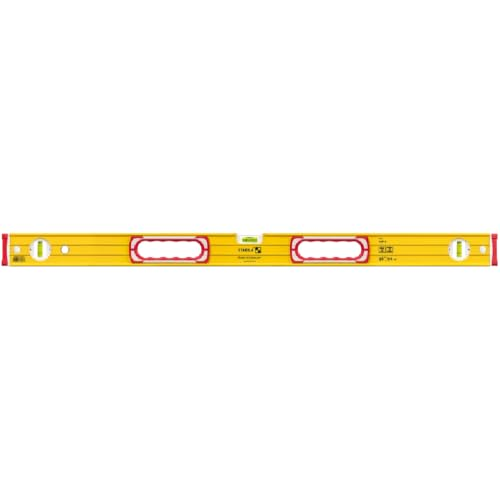

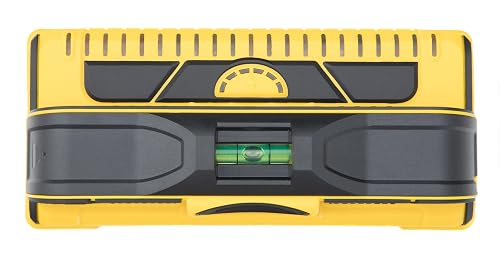

As an Amazon Associate, TestTalkHQ earns from qualifying purchases. Prices and availability can change.
The whole calculation is one line. Wood Handbook Equation 13–2:
| Symbol | What it is | Where it comes from |
|---|---|---|
| ΔD | Change in dimension | What you are solving for |
| DI | Dimension at the start of the change | Your tape |
| CT or CR | Dimensional change coefficient, per 1 percent of moisture content | Table 13–5, by species |
| MF − MI | Change in moisture content, in points | A meter, or Table 4–2 from temperature and humidity |
Multiply them: ΔD = DI [ C ( MF − MI ) ]. Negative answer, the board shrank. Positive, it swelled. That is it.
The range attached to it matters, though, and it is the reason this page has two equations rather than one. Wood does not shrink in a straight line all the way from green to bone dry — the relationship curves. The Handbook says so plainly, and quantifies the error from pretending otherwise: “the equation assumes that the shrinkage–moisture content relationship is linear… so some error is introduced. The error is in the direction of underestimating dimensional change, by about 5% of the true change.” So rather than one coefficient covering the whole range, the Laboratory published a set fitted to the straight part of the curve, between 6 and 14 percent moisture content, which is where almost all wood in a building actually lives. That is Table 13–5, and that is what Equation 13–2 uses.
Step outside 6 to 14 — and construction-dry framing at 15 to 19 percent is outside it before you start — and you need Equation 13–3 instead, which is the same straight line written from the green dimension rather than from the 10 percent one. This page switches automatically and tells you which it used.
Wood does not move the same amount in every direction, and the gap between the two directions is bigger than most people assume. Every species in Table 13–5 has two coefficients:
Which of the two governs the width of your board depends entirely on how it was sawn out of the log, and the Handbook states the rule without hedging: “Tangential values for S0 should be used for estimating width shrinkage of plainsawn material and radial values for quartersawn material. For mixed or unknown ring orientations, tangential values are suggested.”
| Species | CR radial | CT tangential | T/R ratio | What that means on site |
|---|---|---|---|---|
| Oak, red (commercial) | 0.00158 | 0.00369 | 2.34 | Flatsawn red oak moves more than twice as far as quartersawn, and cups readily |
| Oak, white (commercial) | 0.00180 | 0.00365 | 2.03 | Moves nearly as much as red oak, but a shade more evenly |
| Maple, hard (sugar) | 0.00165 | 0.00353 | 2.14 | A big mover; wide flatsawn maple tops are a known problem |
| Beech, American | 0.00190 | 0.00431 | 2.27 | One of the worst-behaved domestic hardwoods for movement |
| Cherry, black | 0.00126 | 0.00248 | 1.97 | Noticeably calmer than oak or maple, which is part of why it is loved |
| Walnut, black | 0.00190 | 0.00274 | 1.44 | A low ratio: unusually even, so wide flatsawn boards behave |
| Douglas-fir (Coast) | 0.00165 | 0.00267 | 1.62 | The framing default, and the reason a 2x10 joist loses depth as it dries |
| Pine, eastern white | 0.00071 | 0.00212 | 2.99 | The smallest radial coefficient on the list — quartersawn, it barely moves |
| Cedar, western red | 0.00111 | 0.00234 | 2.11 | Low absolute movement, which is half of why it survives outdoors |
| Teak | 0.00101 | 0.00186 | 1.84 | Genuinely stable in both directions, which is the reason for the price |
That last column of ratios is also a cupping forecast, and it is worth being precise about why. A flatsawn board has growth rings that are roughly parallel to its faces in the middle and curve toward the edges. The face nearer the bark is closer to pure tangential; the face nearer the heart has more radial character. Dry the board and the bark side wants to shrink further than the heart side — so the board cups away from the heart. The bigger the T/R ratio, the harder it pulls.
Wood in a building is in a slow negotiation with the air around it, and it always loses. Leave it long enough at a fixed temperature and humidity and it settles at a specific moisture content — its equilibrium moisture content, EMC. Table 4–2 of the Wood Handbook is the whole map, 25 temperature rows against 19 humidity columns, and this page interpolates inside it.
The row that matters for interior work is 70 degrees F:
| Relative humidity at 70°F | Equilibrium moisture content | What that is |
|---|---|---|
| 20 percent | 4.5 percent | A heated house in a cold snap, forced air running |
| 30 percent | 6.2 percent | A normal northern winter indoors |
| 40 percent | 7.7 percent | About the middle of a conditioned year |
| 50 percent | 9.2 percent | Comfortable, and close to the Table 13–2 interior target |
| 65 percent | 12.0 percent | An unconditioned summer, or a basement |
| 80 percent | 16.0 percent | A damp crawl space, or a job site before the HVAC runs |
| 90 percent | 20.5 percent | Above anything you should be installing into a house |
Read the first and fifth rows together and you have the entire problem of interior joinery in one line. The same room, same thermostat, swinging between a 30 percent winter and a 65 percent summer, asks the wood in it to travel from 6.2 to 12.0 percent moisture content. Nearly six points, every year, in both directions. A 10 in flatsawn red oak panel takes that as 10 × 0.00369 × 5.8 = 0.214 in of seasonal breathing. Trap it in a tight frame and something gives.
Two cautions about the table, both from the source. First, the published values were “derived primarily for Sitka spruce” under a desorption condition chosen to sit “midway between adsorption and desorption”, because wood gaining moisture lands slightly lower than wood losing it — the ratio is about 0.8 near room temperature. The table is a practical compromise, and the Handbook says so. Second, it is an equilibrium. It tells you where the wood is going, not when it gets there.
The Forest Products Laboratory publishes exactly what moisture content wood should be at when you install it, and it is a short table:
| Use | Most of the US | Dry southwest | Damp warm coast |
|---|---|---|---|
| Interior: woodwork, flooring, furniture, trim | 8 percent average (6–10 individual) | 6 percent (4–9) | 11 percent (8–13) |
| Exterior: siding, trim, sheathing, laminated timbers | 12 percent average (9–14) | 9 percent (7–12) | 12 percent (9–14) |
And for framing, from the same chapter: construction softwood is “usually targeted for drying to an average moisture content of 15%, not to exceed 19%”, appearance-grade softwood to 10 to 12 percent, and furniture, cabinet and millwork stock to 7 to 9 percent. Hardwood for furniture, cabinets and millwork is “usually dried to 6% to 8% moisture content.”
Now the mistake. A KD‑19 stamp on a stud means the lumber left the kiln at or below 19 percent. A heated house in a cold climate pulls studs and joists down to 6 or 7. That is a twelve-point change, and the Handbook names its consequences in a single sentence worth memorising: “The most common signs of excessive shrinkage are cracks in plastered walls, truss rise, open joints, and nail pops in dry-wall construction; distortion of door openings; uneven floors; and loosening of joints and fastenings.”
The fix is also published, and it is a tolerance rather than a target: “If, at the time the wall and ceiling finish is applied, the moisture content of the framing lumber is not more than about 5% above that which it will reach in service, there will be little or no evidence of defects caused by shrinkage of the frame.” Five points. Not zero — five. That is an achievable standard, and it is the number to argue about on a schedule.
Wood moves whatever you do. Every piece of good joinery is an answer to the question of where you are going to let it. There are only four answers, and they have been the same for several hundred years.
| Strategy | How it works | Where you see it |
|---|---|---|
| Leave a gap | Build the calculated movement into the layout as clearance | Flooring expansion gap under the baseboard; deck board spacing; the gap behind a stair skirt |
| Let it float | One fixed point, everything else free to slide | Tabletop fasteners in slotted holes; a panel loose in its frame groove; flooring clips |
| Make it narrow | Movement is proportional to width, so subdivide it | 2¼ in strip flooring instead of 8 in planks; frame-and-panel instead of a wide slab |
| Choose the cut or the species | Quartersawn roughly halves the width movement; some species move far less | Quartersawn oak flooring in a humid climate; teak and cedar outdoors |
What is not on that list is holding it still. A glued or screwed wide panel does not stop moving; it develops internal stress until something yields, and what yields is a split, a popped joint or a torn-out screw. The force is not small — it is the same force that splits rock when a wooden wedge is soaked, and it has been used that way deliberately for millennia.
Several things a wood movement calculator could appear to offer are not in the source, so they are not here.
And one thing that is here but deserves reading carefully: the Handbook puts the variability of shrinkage at “a coefficient of variation of approximately 15%” for pure tangential or radial orientation, and “probably somewhat greater in commercial lumber, where ring orientation is seldom aligned perfectly parallel or perpendicular to board faces.” The results panel reports that band. An individual board is an individual board; the average of a quantity of pieces is what the table predicts well.
How much does wood shrink? It depends on three things, and the calculator multiplies them together: the species, the direction relative to the growth rings, and how many points of moisture content it loses. The Wood Handbook publishes a dimensional change coefficient per species per 1 percent of moisture content change — commercial red oak is 0.00369 tangentially and 0.00158 radially, eastern white pine is 0.00212 and 0.00071. Multiply the coefficient by the starting dimension and by the change in moisture content. A 6 in flatsawn red oak board losing five points of moisture content shrinks 6 × 0.00369 × 5 = 0.111 in, a little over 7/64 in.
What is the formula for wood shrinkage? Within the 6 to 14 percent moisture content band, Wood Handbook Equation 13–2: the change in dimension equals the starting dimension multiplied by the dimensional change coefficient multiplied by the difference between the final and initial moisture contents. Outside that band, Equation 13–3 instead, which divides the starting dimension times the moisture content change by the quantity 30 times 100 divided by the total green-to-ovendry shrinkage, minus 30, plus the initial moisture content. The two describe the same straight line; the second is written from the green dimension so it stays correct when the starting dimension was measured a long way from 10 percent moisture content.
Does wood shrink across the width or along the length? Across the width and thickness, almost entirely. The Wood Handbook states that shrinkage occurs primarily in the width and thickness of members and not the length, and that the extent of vertical shrinkage in a house is proportional to the depth of wood used in a horizontal position — girders, floor joists and plates — rather than to the height of the studs. Longitudinal shrinkage does exist but it is very small in normal wood, and it becomes unpredictable only where cross grain or reaction wood is present.
What is the difference between tangential and radial shrinkage? Tangential is movement around the growth rings, radial is movement across them from pith to bark, and tangential is typically one and a half to three times larger. Which one governs your board's width depends on how it was sawn: the Wood Handbook directs that tangential values be used for the width of plainsawn material, radial values for quartersawn material, and tangential values where the ring orientation is mixed or unknown. The ratio between the two is also what drives cupping in a flatsawn board, because the face nearer the bark shrinks further than the face nearer the heart.
How much does quartersawn wood move compared to flatsawn? Across its width, roughly half as much in most species, because the width is then governed by the radial coefficient instead of the tangential one. In commercial red oak that is 0.00158 against 0.00369, so quartersawn moves about 43 percent as far. In eastern white pine the gap is even larger, 0.00071 against 0.00212. The trade is yield and price: quartersawing produces less usable width per log. The thickness, meanwhile, moves more on a quartersawn board, because the two coefficients simply swap faces.
What moisture content should wood be at when I install it? Wood Handbook Table 13–2 gives 8 percent average for interior woodwork, flooring, furniture and trim across most of the United States, with individual pieces between 6 and 10 percent; 6 percent average in the dry southwestern area, individual pieces 4 to 9; and 11 percent average in a damp warm coastal area, individual pieces 8 to 13. For exterior siding, trim, sheathing and laminated timbers it gives 12 percent average in most of the country and 9 percent in the dry southwest. The table also recommends testing at least 10 percent of each item to get a realistic average.
What is equilibrium moisture content? The moisture content a piece of wood settles at if it is held long enough at a given temperature and relative humidity. Wood Handbook Table 4–2 publishes the whole grid, from 30 to 270 degrees F against 5 to 95 percent relative humidity. At 70 degrees F, 30 percent relative humidity gives 6.2 percent moisture content and 65 percent gives 12.0 percent, which is why a conditioned house asks interior woodwork to travel nearly six points of moisture content between a normal winter and a normal summer. The tabulated values were derived primarily for Sitka spruce at a condition chosen to sit midway between adsorption and desorption, so they are a practical compromise rather than a species-specific figure.
How big an expansion gap does a wood floor need? Enough to absorb half the total swelling of the run at each side, because the floor grows from both ends. Work out the per-board movement from the species, the cut and the expected moisture content rise, multiply by the number of boards across the run, and halve it. A 40-board run of 3 in flatsawn commercial red oak rising three points of moisture content grows 40 × 3 × 0.00369 × 3 = 1.33 in in total, so each side needs about 0.66 in of free clearance. Manufacturer instructions for a specific product take precedence over any calculation where the two differ.
Why did my hardwood floor gap in winter and buckle in summer? Because both are the same number read in opposite directions. The floor was installed at one moisture content and the house swings either side of it. Gapping in winter means the boards lost moisture and shrank, with the total shared out across every joint in the run; buckling in summer means they gained moisture, grew, and ran out of somewhere to grow into. The two fixes are different: gapping is addressed by installing at the mid-point of the seasonal range rather than at the top of it, and buckling by leaving the expansion clearance the calculated growth needs.
Does kiln-dried lumber still move? Yes. Kiln drying sets the moisture content at the time it leaves the kiln; it does not change the species coefficient and it does not stop the wood responding to the air afterwards. A KD‑19 stud left the kiln at or below 19 percent moisture content, and a heated house in a cold climate will take it to 6 or 7 percent, which is a twelve-point change the wood will make regardless of what happened in the kiln. What kiln drying buys is a known, lower starting point and a dead set of fungi and insects, not stability.
How much does a floor joist shrink in depth? Run the numbers rather than guessing, but the scale is larger than most people expect. A 2x10 Coast Douglas-fir joist is 9.25 in deep, with a tangential coefficient of 0.00267; taken from a construction-dry 19 percent down to an in-service 8 percent it loses about 0.265 in of depth. The Wood Handbook notes that vertical shrinkage in a house is proportional to the depth of wood used horizontally, which is why girders, joists and plates drive the problem and studs barely contribute.
Can I use this for plywood or MDF? No. Every coefficient on this page is for solid wood. Plywood's cross-banded construction restrains in-plane movement to a small fraction of solid wood's, and MDF and particleboard behave differently again. Using a solid-wood coefficient on a sheet good will overstate the movement by close to an order of magnitude.
What does the tangential-to-radial ratio tell me? How unevenly a species moves, which is the driver behind cupping and behind the difference flatsawn and quartersawn stock makes. A ratio near 1.4, like black walnut, means a species that moves almost as much in one direction as the other, so wide flatsawn boards stay flatter and quartersawing buys less. A ratio past about 2.2, like American beech at 2.27 or commercial red oak at 2.34, means a species where the flatsawn face shrinks far more than the thickness and a wide flatsawn board has a strong built-in reason to cup. The ratio is a warning, not a cup prediction — an actual cup figure needs the ring curvature of the individual board.
How long does wood take to acclimate? Nothing in the Wood Handbook's dimensional change chapter answers that, because it depends on thickness, species, air movement, the drying history of the piece and the size of the gap between where the wood is and where the room is. What can be said is that acclimation is a moisture content target rather than a length of time: wood comes to equilibrium with the conditions it is actually in, so stock left in an unconditioned house with wet drywall mud is acclimating to the wrong number no matter how many days it sits there. Meter it, and install when it reads what the Table 13–2 band for that use and region says.