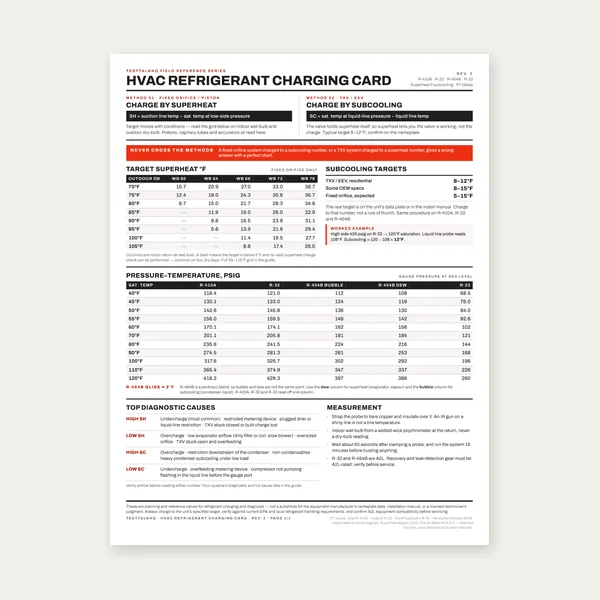
HVAC Refrigerant Charging Card
$3.99
BuyHeating BTU load from square footage, climate zone, insulation, and ceiling height — then the furnace input rating you actually shop for
This is the heating-side counterpart to the BTU / tonnage cooling load calculator. Climate-zone BTU/sqft ranges, insulation and ceiling adjustments, AFUE-to-input conversion, and a round-up to a standard furnace size. Walkthrough: furnace sizing guide. Wrong-size symptoms: troubleshooting. When to stop guessing: rule of thumb vs Manual J heat loss. Cooling-side twin: rule of thumb vs Manual J cooling load. HVAC index: HVAC calculators hub.
Enter heated square footage. Pick the climate zone that matches your region. Set insulation quality, average ceiling height, and the furnace AFUE you are quoting or replacing. Read the output range, the midpoint recommended output, the input rating (output ÷ AFUE), and the standard size to shop.
Walk through climate zones, AFUE, and why you shop input not output: furnace sizing guide. If the existing unit short-cycles or never catches up: troubleshooting. When this ROT is not enough: rule of thumb vs Manual J heat loss.
The number you buy on a furnace is the input rating — gas the burner consumes. The house needs output. AFUE is the ratio. An 80% AFUE 100,000 BTU furnace delivers about 80,000 BTU/hr to the ductwork. Size the output to the heating load, then divide by AFUE to get the catalog input.
Climate-zone BTU/sqft is a published rule of thumb, not a room-by-room heat-loss takeoff. It does not know your windows, wind exposure, or design outdoor temperature. That is why the result is a range plus a midpoint, matching how the cooling-load calculator presents sq-ft-per-ton bands.
$3.99
Buy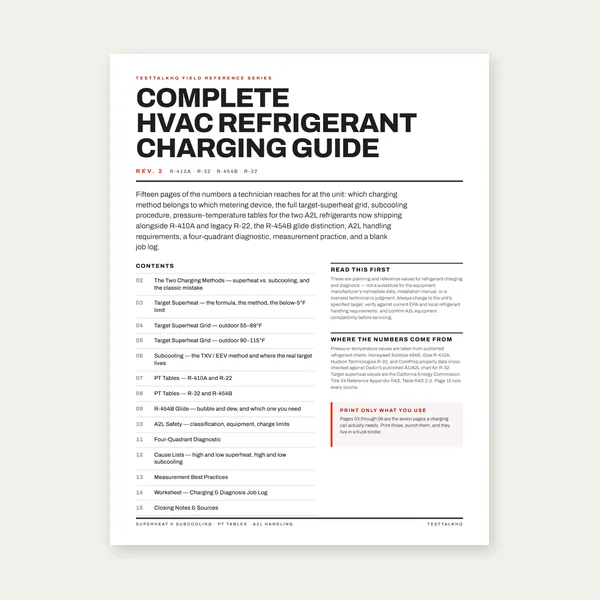
$12.99
Buy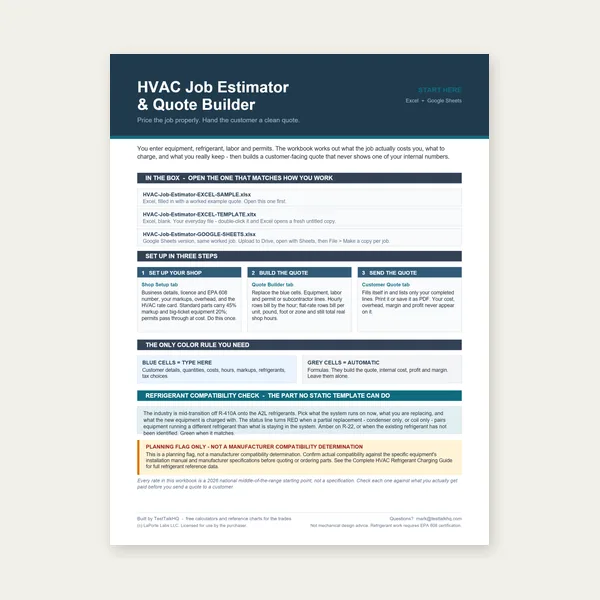
$29.00
Buy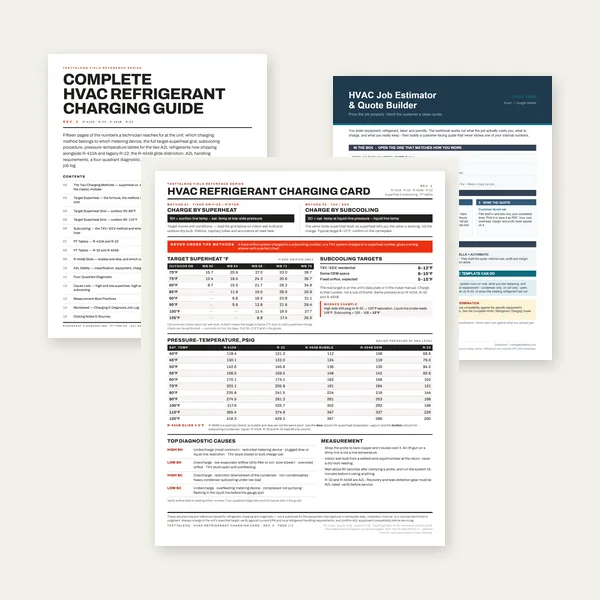
$39.00
BuyCheckout opens here — you stay on this page.
A BTU estimate is only a starting point. After install (or when a furnace misbehaves), confirm runtime, air-side split, and static before you chase the wrong size. These products are from the live TestTalkHQ affiliate CSV — thermostats, manometers, and infrared thermometers. Furnace filters and duct sealant were not in the CSV.
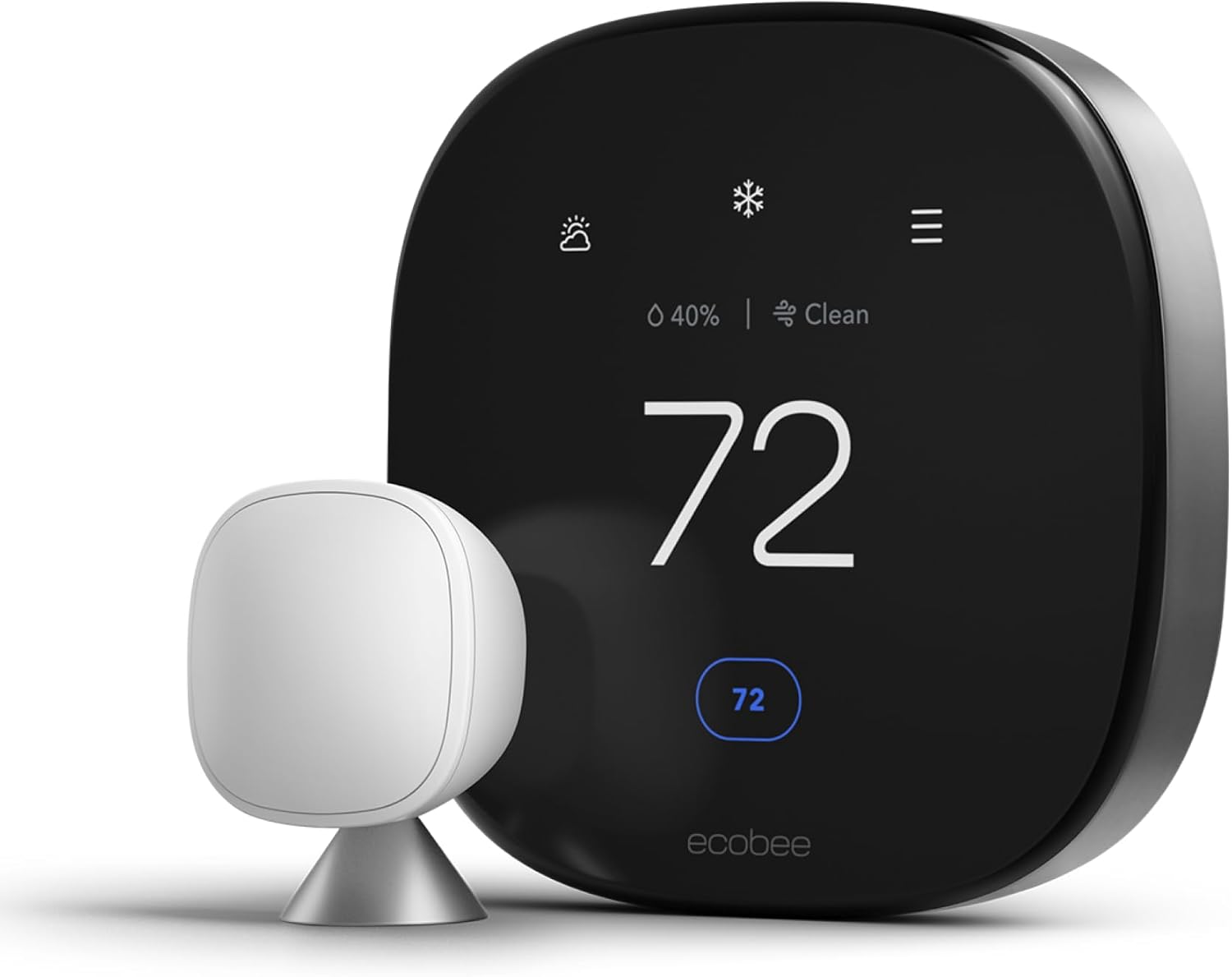
Cycle history and remote sensors show short-cycling versus a furnace that never reaches set point — the two classic sizing failure modes.
View on Amazon →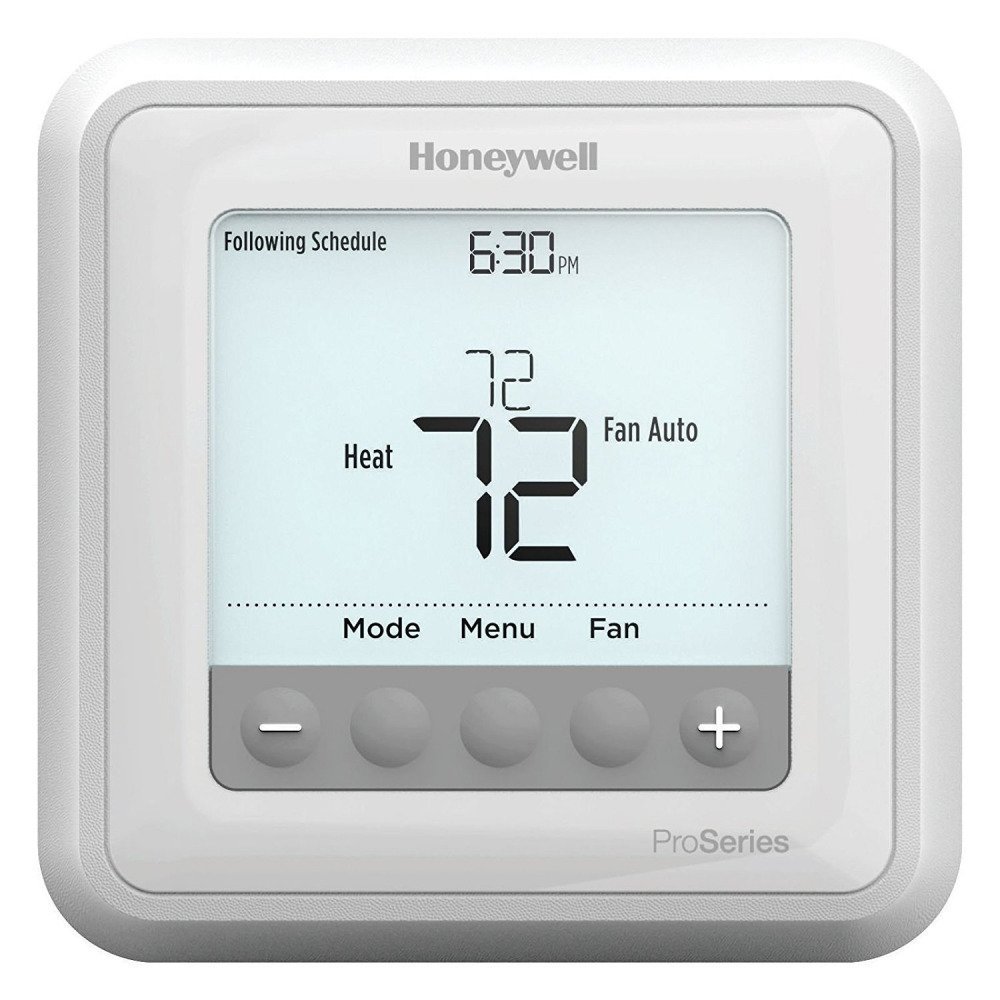
A stable setpoint and cycle count beat guessing whether the new cabinet is too big or the old one was too small.
View on Amazon →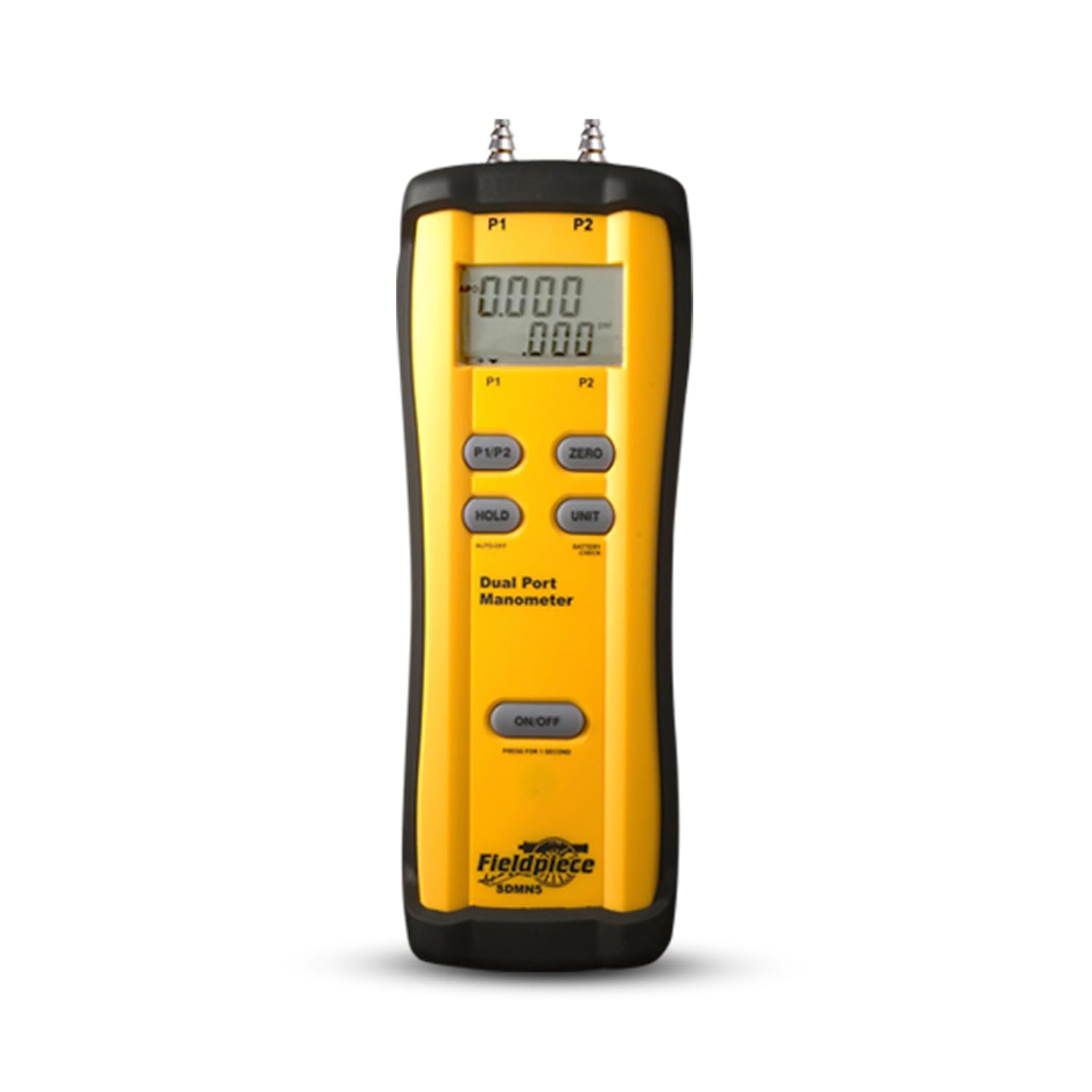
External static is not furnace BTU, but high TESP starves airflow and looks like an undersized heat exchanger. Measure before you upsize.
View on Amazon →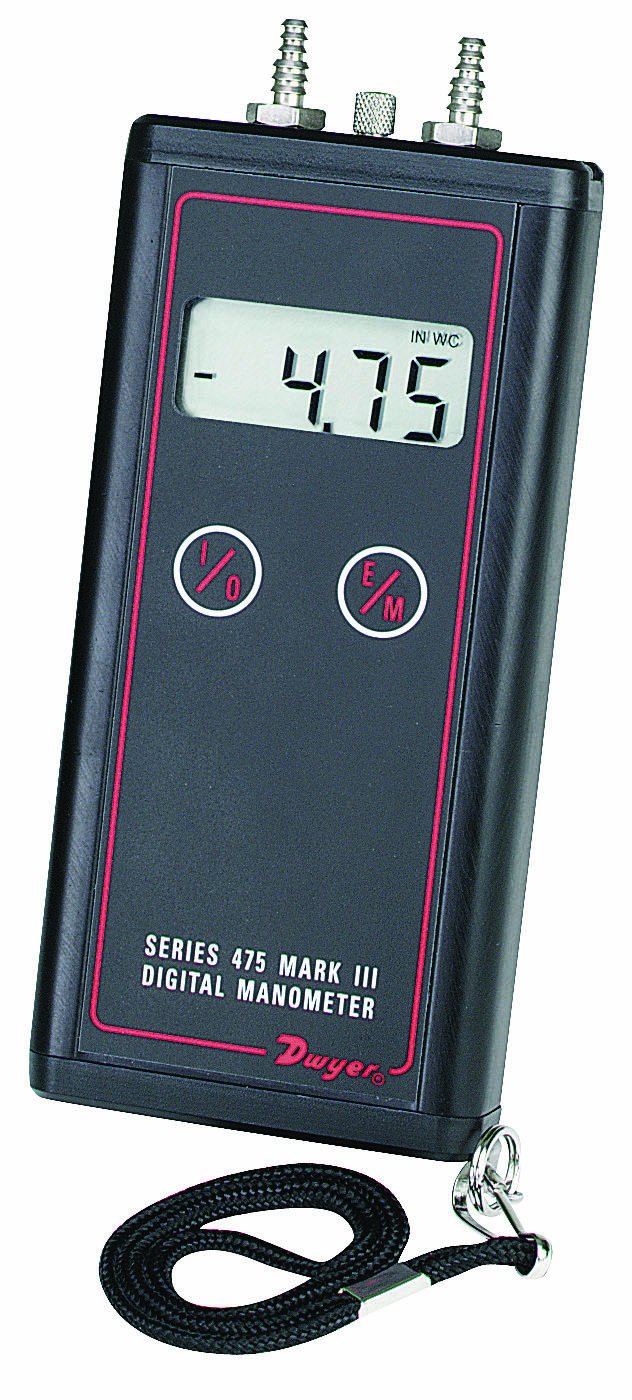
Handheld differential pressure for filter drop, coil drop, and total external static versus the blower nameplate.
View on Amazon →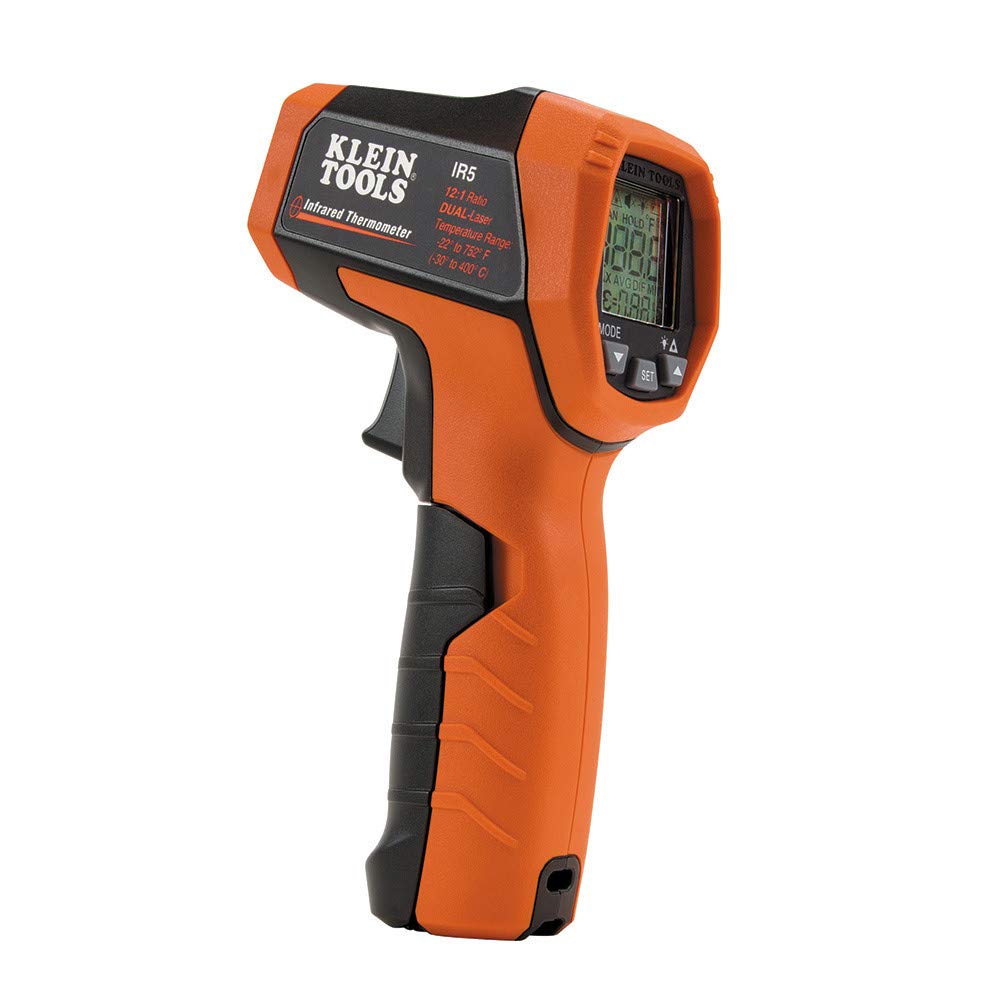
Non-contact supply and return temps for a heating-mode delta-T check after the furnace runs. Pair with the delta-T calculator.
View on Amazon →As an Amazon Associate, TestTalkHQ earns from qualifying purchases. Product links are from the live TestTalkHQ affiliate CSV only.