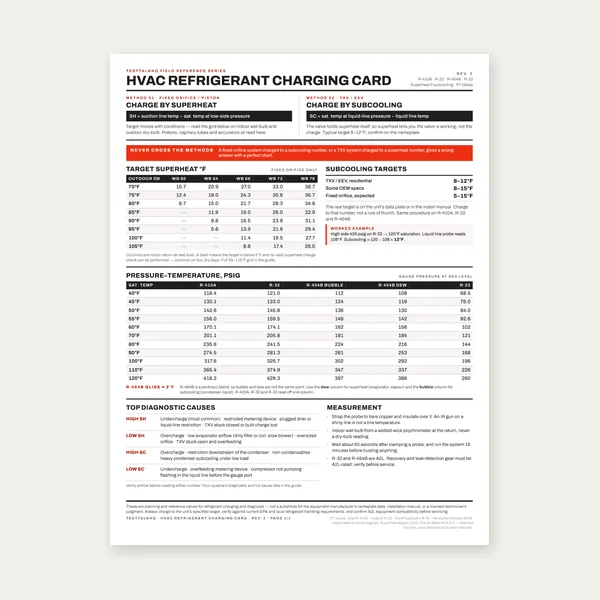
HVAC Refrigerant Charging Card
$3.99
BuyFix short-cycling from oversized heads, humidity buildup, and single-head open-floor-plan undersizing — diagnose which sizing mistake you have
Re-run capacity in the mini-split sizing calculator. Method: guide. Central vs ductless: comparison. Charts: BTU chart. For the general AC short-cycle / humidity pattern (not mini-split-specific): oversized vs undersized AC troubleshooting. Hub: HVAC tools.
Suspect the head is the wrong size? Re-check zone BTU before you blame charge or airflow alone.
Open Mini-Split Calculator →What you see: The room hits setpoint in minutes, the head shuts down, then the temperature swings. Occupants feel blasts of cold then stillness.
Why it fails: Round-up from a 6k raw load to a 12k head (or stacking sun/insulation knobs aggressively) leaves too much capacity for the envelope. Inverter units modulate, but they still have a minimum output — below that they cycle.
Mini-split angle: Do not duplicate the full central-AC essay here — the short-cycle physics is covered in oversized vs undersized AC. On ductless, also check whether the contractor picked the next head size “for future expansion” without a load.
What you see: Thermostat satisfied, walls clammy, musty smell, windows fog at night.
Why it fails: Sensible capacity is satisfied before the coil runs long enough to pull moisture. Oversized heads are the classic cause; so is a head that short-cycles because it is serving a tiny room.
How to catch it: Runtime logs, coil temperature, and a re-run of zone BTU. For the general humidity / short-cycle diagnosis tree, use oversized vs undersized AC troubleshooting — then come back here to resize the ductless head, not the whole central plant.
What you see: Living/kitchen great room never quite cools at the far end; the area near the head is freezing.
Why it fails: One catalog head sized to “half the sq ft” or to a midpoint that ignores sun on the glass wall. Throw distance and stratification beat nameplate BTU.
How to catch it: Split the open plan into zones in the calculator (or size one head to the true open volume with heavy-sun and ceiling knobs). Often the fix is a second head, not a bigger single cassette aimed at the sofa.
What you see: A multi-zone system with heads in the hall or living room only. Bedrooms with doors closed never catch up.
Why it fails: Ductless does not push air under doors the way a forced-air supply register can. Each closed room needs its own head (or a door left open + acceptance of uneven comfort).
How to catch it: Count closed sleeping rooms as separate zones. Do not assume “open door policy” will hold after the homeowners move in.
What you see: Sum of head nameplates looks fine, but the outdoor unit faults, derates, or cannot run all heads hard on a design day.
Why it fails: Outdoor cabinets have maximum connected capacity and diversity rules. Adding head BTUs without the manufacturer chart is how jobs fail inspection or comfort on the hottest afternoon.
How to catch it: Use the calculator total as a planning number, then verify the exact outdoor model’s combination table. Above ~48k recommended total, budget two outdoors early.
What you see: Summer is comfortable; January needs strip heat or a furnace assist that was never planned.
Why it fails: This tool sizes cooling. Heat-pump capacity drops as outdoor temperature falls. Cold-climate tables and balance-point calcs are separate from the cooling midpoint formula.
How to catch it: After cooling heads are drafted, check manufacturer heating capacity at your design outdoor temperature. Cross-check whole-home heat with the furnace sizing calculator if dual-fuel is on the table.
Rebuild the zone list? Start with climate and closed-door rooms.
Mini-Split Calculator →Often, but low airflow, dirty filters, and sensor placement can mimic it. Confirm capacity first, then air path. General AC tree: oversized vs undersized AC.
Lower fan or setpoint does not fix chronic oversize humidity. You need longer coil runtime or a smaller effective capacity.
$3.99
Buy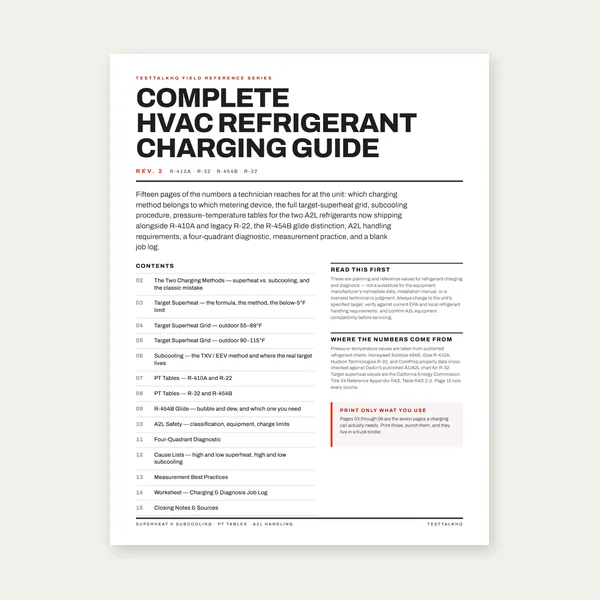
$12.99
Buy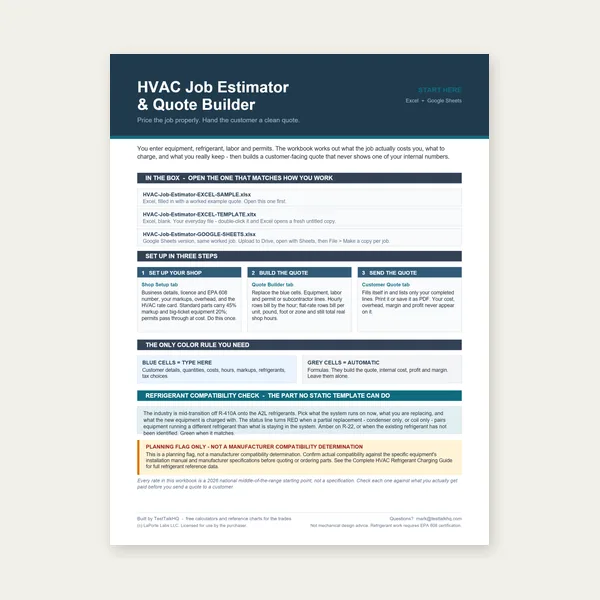
$29.00
Buy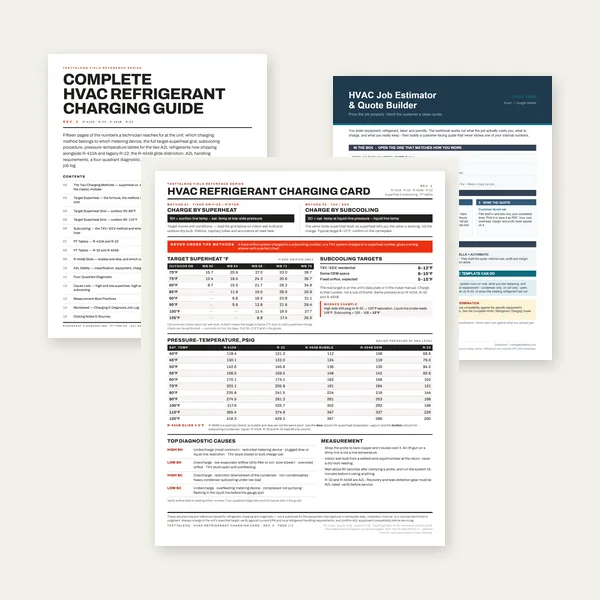
$39.00
BuyCheckout opens here — you stay on this page.