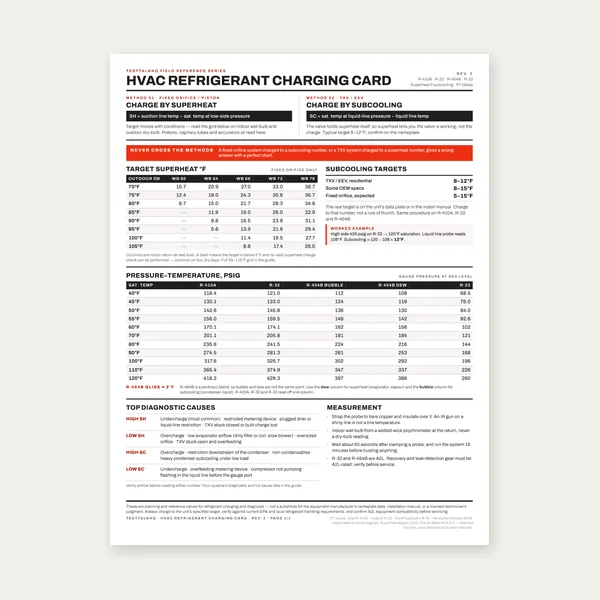
HVAC Refrigerant Charging Card
One page. Superheat, subcooling and PT for four refrigerants.
$3.99
BuyWhat a “ton” of cooling means, why sq-ft-per-ton varies by climate and insulation, and why a rule of thumb is only a starting point
The BTU / tonnage cooling load calculator returns a rough tonnage from floor area. This page is the why: the 12,000 BTU definition, the 400–800 sf/ton public range, and why ACCA Manual J still owns equipment decisions.
Wrong-size symptoms: troubleshooting. ROT vs Manual J: comparison. Heating-side: furnace sizing guide, furnace sizing calculator, rule of thumb vs Manual J heat loss.
Have a floor area? Get a rough ton / BTU estimate with the disclaimer banner on-screen.
Open Calculator →One ton of air-conditioning capacity removes 12,000 BTU per hour of heat. The name comes from the heat it takes to melt one ton of ice in 24 hours. Residential condensers are commonly sold in half-ton steps (1.5, 2, 2.5, 3 …).
One page. Superheat, subcooling and PT for four refrigerants.
$3.99
Buy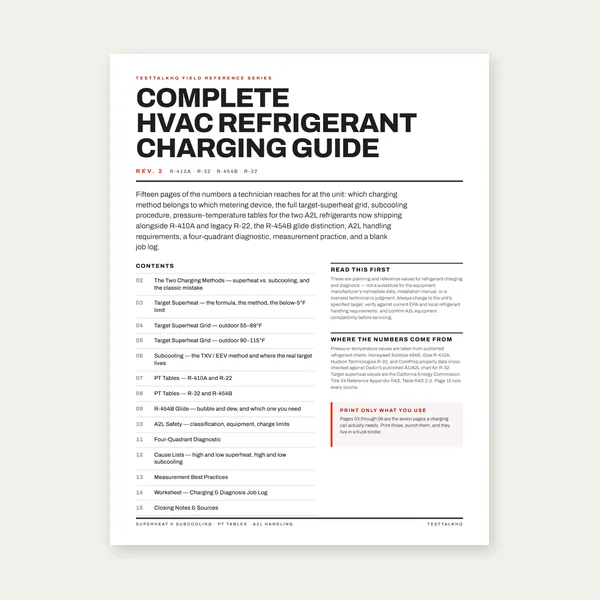
15 pages. Full superheat grid, PT tables, A2L safety and diagnosis.
$12.99
Buy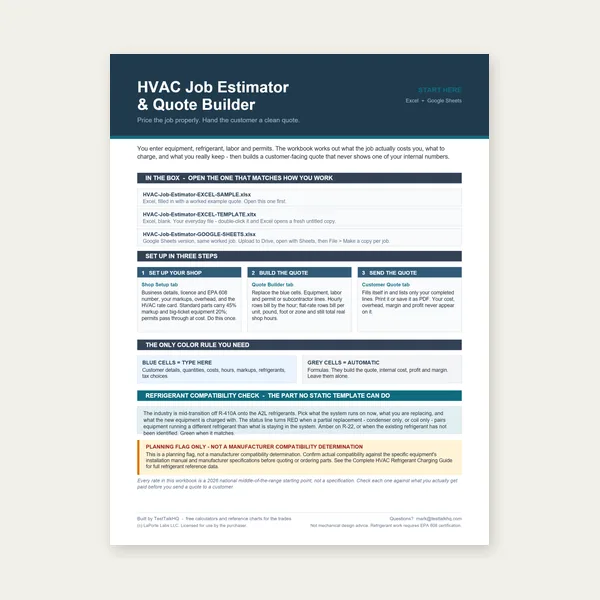
Quote HVAC work and catch a refrigerant mismatch before you order.
Excel or Google Sheets. Best on a computer.
$29.00
Buy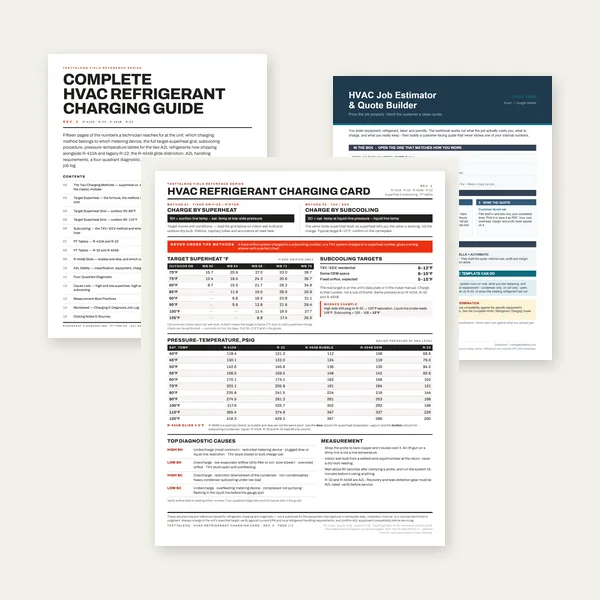
Card, 15-page guide and the estimator workbook. All six files.
Excel or Google Sheets. Best on a computer.
$34.99
$45.98 if bought separately — save $10.99
BuyCheckout opens here — you stay on this page.
A tonnage estimate is only a starting point. After install (or when a system misbehaves), confirm airflow and air-side split before you chase the wrong problem. These are tools already on the TestTalkHQ HVAC affiliate list.

Stable setpoints and sensor feedback help you see whether the system short-cycles or never reaches set point — classic oversize vs undersize symptoms.
View on Amazon →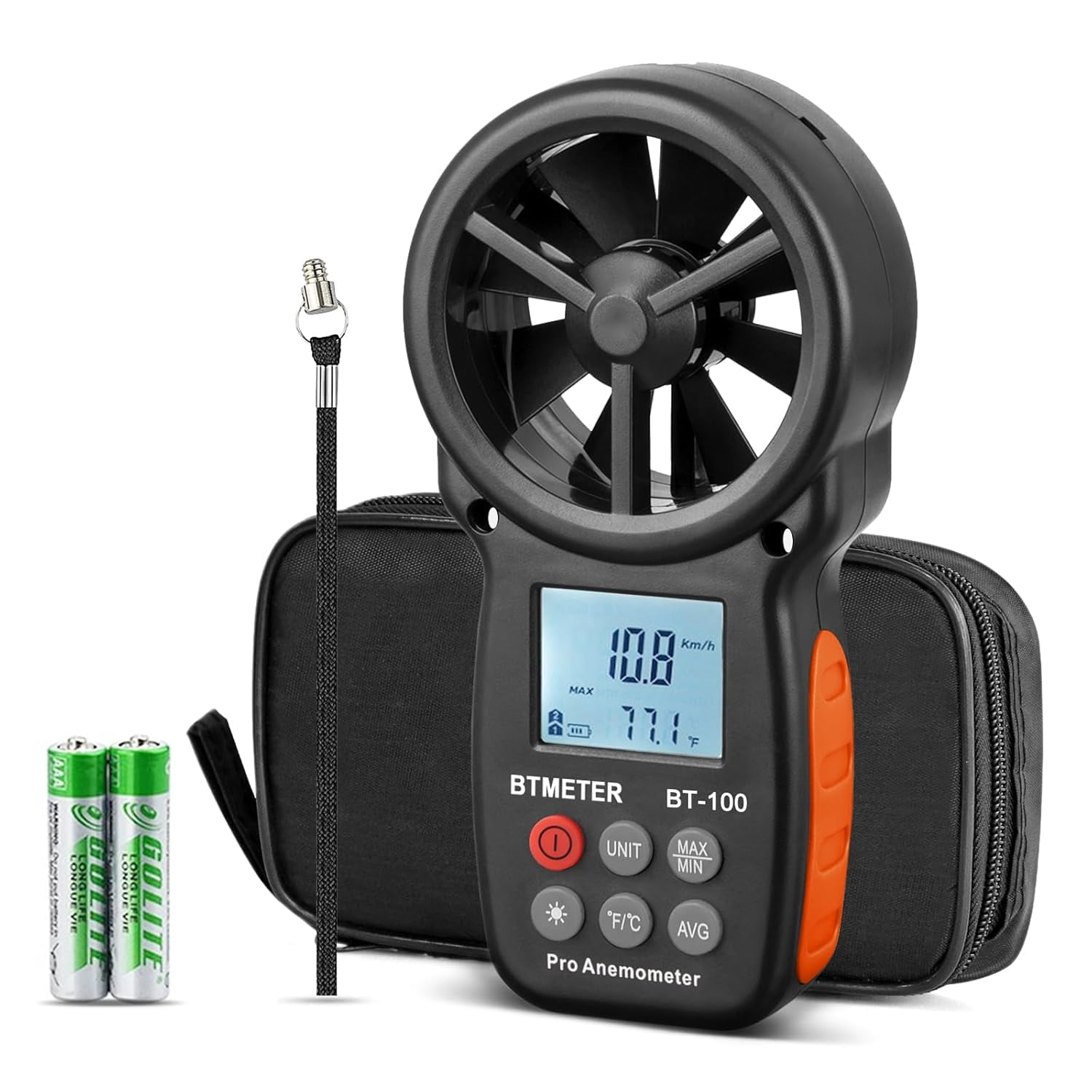
Rule-of-thumb tonnage does not prove duct CFM. Measure face velocity, then convert with the duct CFM calculator.
View on Amazon →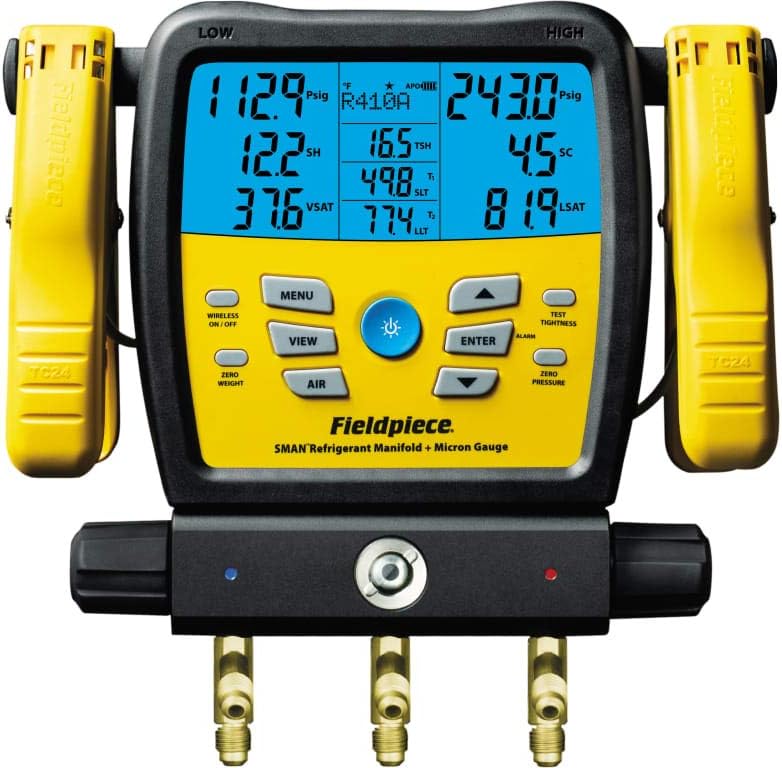
When the air split looks wrong, verify charge with superheat/subcooling — not with square footage.
View on Amazon →
Sq ft, climate band, ceiling height, insulation quality → rough tons and BTU/hr with Manual J disclaimer.
Open Cooling Load Calculator →
After the system is running, return-vs-supply split is a quick air-side health check.
Open Delta-T Calculator →
Why sq-ft-per-ton varies, and why this tool is not ACCA Manual J.
Read the Cooling Load Guide →As an Amazon Associate, TestTalkHQ earns from qualifying purchases.
Hotter, more humid climates and leaky envelopes need more capacity per square foot (lower sf/ton). Milder cooling climates and better insulation need less (higher sf/ton). Ceiling height adds volume. Public contractor rules of thumb are often discussed around roughly 400–600 sq ft per ton, with some charts stretching toward ~800 in milder conditions. That band is what the calculator’s climate bases sit inside.
Energy Vanguard and ACCA’s HVAC blog have shown that real Manual J jobs — especially on newer, tighter homes — frequently land at much higher sf/ton (smaller equipment) than those old rules. Using 500 sf/ton on a modern house can install a system that is grossly oversized.
Manual J accounts for construction details, glass, orientation, infiltration, occupants, and internal gains room by room. A single sq-ft number cannot. Use the calculator to frame a conversation, then pay for Manual J before you buy. Full contrast: rule of thumb vs Manual J.
As a rough public rule of thumb it is still widely cited. As a substitute for Manual J on modern homes, ACCA and Energy Vanguard argue it often oversizes.
Not if it short-cycles. Oversizing is a humidity and comfort problem. See troubleshooting.