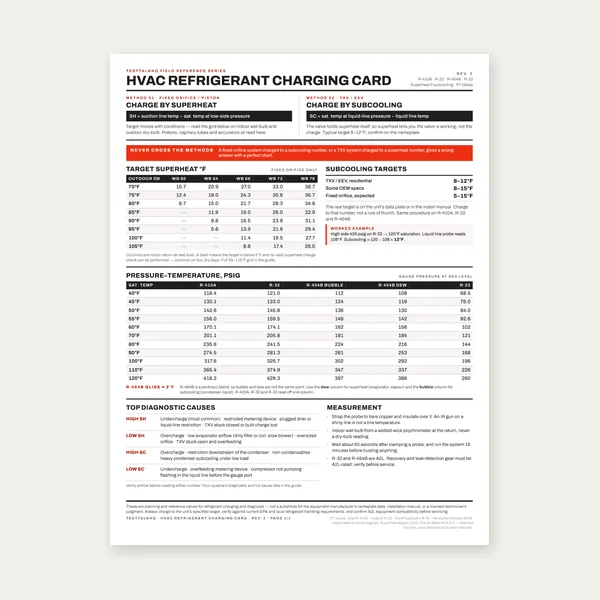
HVAC Refrigerant Charging Card
$3.99
BuyThe outdoor temperature where the compressor stops keeping up — and exactly how much backup heat lives below it
$3.99
Buy
$12.99
Buy
$29.00
Buy
$39.00
BuyCheckout opens here — you stay on this page.
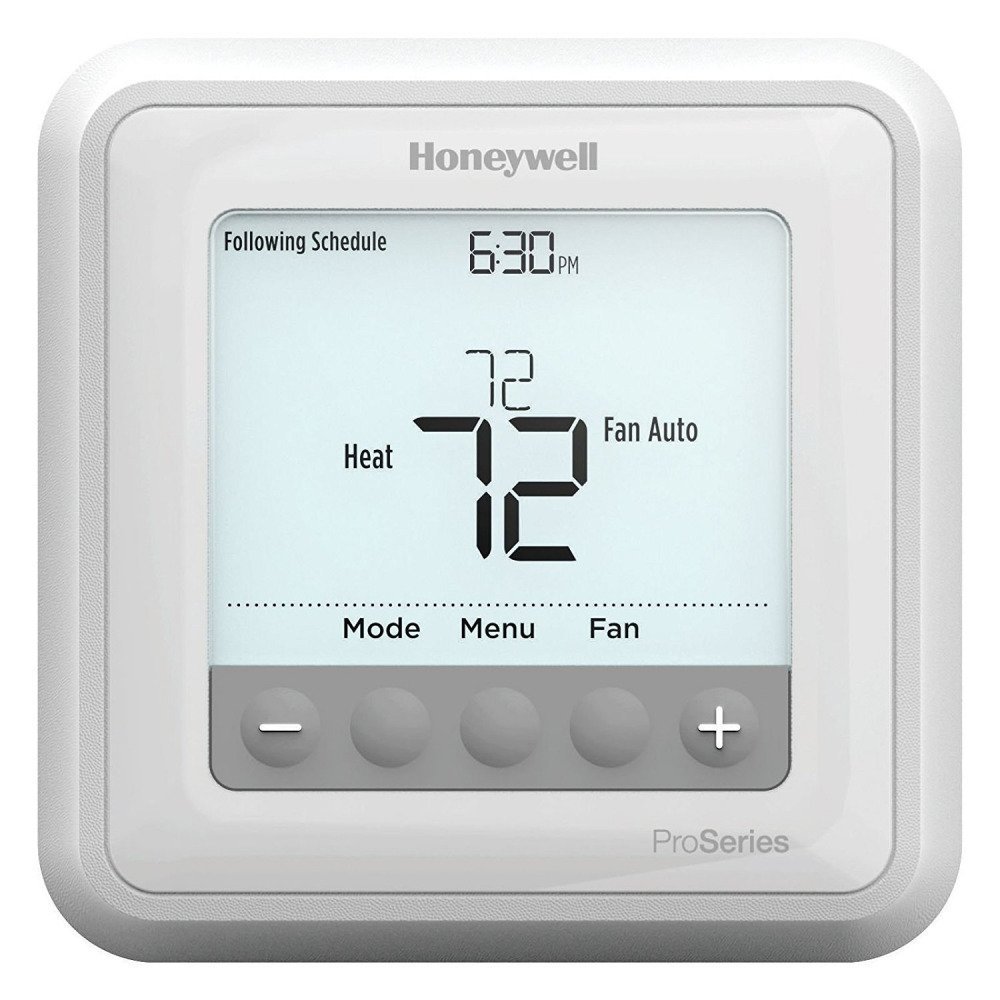
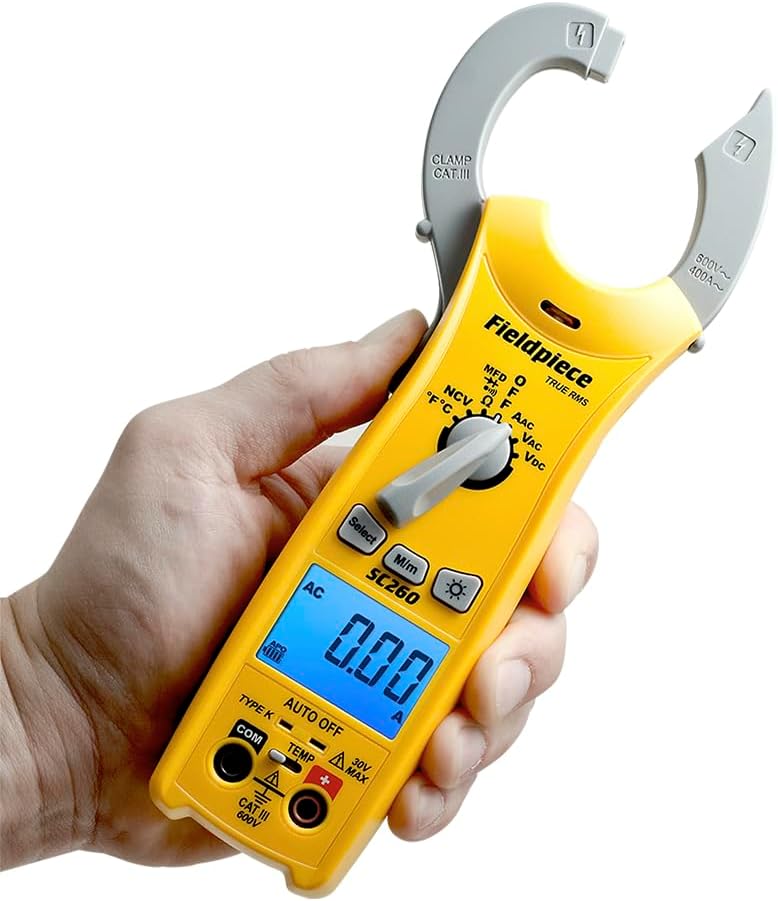
A balance point is only worth calculating if something acts on it. The thermostat is where the compressor lockout and the aux-heat lockout are actually set, and where you find out whether the strips have been running all winter. A clamp meter on the heater kit is the only way to know what is genuinely energising and when.



As an Amazon Associate, TestTalkHQ earns from qualifying purchases. Prices and availability can change.
Everything on this page comes from one picture. Draw outdoor temperature along the bottom and Btu per hour up the side. The house is a line sloping down to the right: it wants a lot of heat when it is cold outside and none at all once the outdoor temperature reaches the point where sunlight, bodies, cooking and the refrigerator cover the losses. The heat pump is a line sloping the other way: it makes plenty of heat at 47 °F and progressively less as the outdoor coil has less heat to harvest.
They cross once. That crossing is the balance point.
None of that is a rule of thumb. The straight load line with a zero-load intercept is the form the federal test procedure uses in Equation 4.2-2 of 10 CFR 430 subpart B appendix M1, where Tzl is named the zero-load temperature. The capacity line is Equation 4.2.1-4 from the same appendix, which interpolates between exactly the rating points that appear on an AHRI certificate. And the definition of the balance point itself is written into section 4.2 in plain words: auxiliary resistive elements run “when operating below the balance point”, a condition that “occurs when the building load exceeds the space heating capacity of the heat pump condenser”.
Because those are the temperatures the equipment was actually tested at. The federal test procedure runs an H1 test at 47 °F, an H2 test at 35 °F, an H3 test at 17 °F, and for cold-climate equipment an H4 test at 5 °F. The AHRI certificate for a given outdoor unit and indoor coil combination publishes the results. Anything else you have been told about a machine's cold-weather output — a tonnage, a percentage, a salesman's reassurance — is downstream of those numbers at best.
Give the calculator only 47 and 17 and it draws one straight line through both and extends it in each direction, which is precisely what the regulation does when no other test data exists. Give it the 35 °F rating as well and the 17-to-45 °F stretch bends down to meet it, because that test is run with frost forming on the outdoor coil and defrost cycles taking output away. Give it the 5 °F rating and everything below 17 °F rides a real measured line rather than an extrapolation.
Two things fall out of that example that catch people.
The first is how much of the winter sits above 24.5 °F. In most of the United States, the overwhelming majority of heating hours are warmer than the balance point of a competently selected heat pump, which is why the strips contribute a small fraction of annual heating energy even when they look alarming on a design-day calculation. The design day is a sizing condition, not a description of the season.
The second is that 5.92 kW is not 10 kW, and it is certainly not 20 kW. Heater kits get specified by habit rather than calculation constantly, and the consequences run downstream into the branch circuit, the panel and occasionally the service.
The top end of the load line is the outdoor temperature at which the building needs no heat at all. 65 °F is the traditional answer, and it is the base temperature heating degree days have always been counted from. It is also a convention rather than a measurement.
The current federal procedure does not use 65. Table 20 of appendix M1 assigns a zero-load temperature by climate region, and the values run from 55 to 58 °F:
In the worked example above, switching from a 65 °F base to a 55 °F base moves the balance point from 24.5 °F to 22.5 °F. That is why the calculator reports both: the difference is real but it is a couple of degrees, not a category change, and pretending the balance point is precise to a tenth of a degree would be false confidence.
The deeper point is that a house does not stop needing heat at one crisp temperature. Sun on the south side, an oven running, four people in the living room and a still afternoon all move the real no-load temperature around by several degrees over the course of a single day. The balance point is a band, and the arithmetic gives you the middle of it.
There are two temperature settings in most heat pump controls, they do opposite things, and mixing them up is expensive in both directions.
Compressor lockout (sometimes “compressor minimum outdoor temperature”) switches the compressor off below a set temperature and hands the entire load to resistance heat. If that is set above the real balance point, you are paying resistance rates for heat the compressor was still perfectly capable of making. In the worked example, a 30 °F compressor lockout would shut off a machine that was still producing over 26,000 Btu/h and put a 21,000 Btu/h load entirely onto the strips.
Auxiliary heat lockout (or “aux maximum outdoor temperature”) does the opposite: it prevents the strips energising above a set temperature. Set sensibly, a little above the calculated balance point, it stops a thermostat from calling for expensive heat on a mild day just because the setpoint was raised four degrees.
Enter a compressor lockout in the calculator and the balance point becomes the lockout, because that is what physically happens: below it the compressor makes nothing regardless of what it was capable of. Watching the supplemental heat number jump when you do that is the fastest way to see what the setting is worth.
It is the outdoor temperature at which the heat pump's heating capacity has fallen to exactly the building's heating load. Above it the compressor can hold the house on its own; below it the load exceeds what the compressor can make and something else has to supply the difference. The federal test procedure in 10 CFR 430 subpart B appendix M1 defines the condition in those terms: auxiliary resistive elements run below the balance point, which occurs when the building load exceeds the space heating capacity of the heat pump condenser.
Draw two straight lines. The building load runs from your Manual J design heat loss at the winter design temperature to zero at the zero-load temperature, typically 65 °F. The heat pump capacity runs through the published AHRI heating capacities at 47 °F and 17 °F. Where they cross is the balance point. With a 36,000 Btu/h load at 5 °F and a heat pump rated 34,000 at 47 °F and 21,000 at 17 °F, the crossing is at 24.5 °F.
Enough to cover the gap between the building load and the heat pump capacity at the winter design temperature, converted at 3,412 Btu/h per kW. In the example above, a 36,000 Btu/h load at 5 °F against 15,800 Btu/h of compressor capacity leaves 20,200 Btu/h, which is 5.92 kW. Strip heat is routinely specified far above the calculated requirement, and the oversizing follows through into the branch circuit and the panel.
There is no single right answer, because it is the result of a selection rather than a target. A lower balance point means more compressor capacity, which costs more to buy and can cause short cycling and poor summer dehumidification if the same box has to handle the cooling load. A higher balance point means more hours on resistance heat. The useful question is not what the number should be but whether the backup heat, the controls and the electrical service match the number you actually have.
Yes, by a couple of degrees. Using 65 °F — the heating-degree-day base and the traditional field choice — the worked example gives 24.5 °F. Using 55 °F, which is the value appendix M1 Table 20 assigns to several climate regions, the same numbers give 22.5 °F. The calculator reports both. A real house does not stop needing heat at one exact temperature anyway, so treat the balance point as a band rather than a threshold.
Usually a control setting rather than a capacity problem. An auxiliary heat lockout left at a factory default will let the strips energise on mild days, and many thermostats bring on backup whenever the setpoint is raised by more than a couple of degrees, regardless of outdoor temperature. A compressor lockout set too high does something worse: it switches off a compressor that was still making useful heat and hands the whole load to resistance elements.
Yes. The 35 °F (H2) test is run with frost on the outdoor coil and defrost cycles running, so real output in that region sits below a straight line between 47 and 17 °F. The 5 °F (H4) rating, published for cold-climate equipment, replaces an extrapolation below 17 °F with measured data, and for variable-capacity machines that extrapolation is often unduly pessimistic.
You can use it for the thermal half. The temperature at which the heat pump can no longer carry the house is the same calculation whether the backup is electric resistance or a gas furnace. What this page does not do is find the economic switchover temperature for a dual-fuel system, which depends on electricity and gas prices, the heat pump's COP at each temperature and the furnace's efficiency, and which is usually a warmer temperature than the thermal balance point.