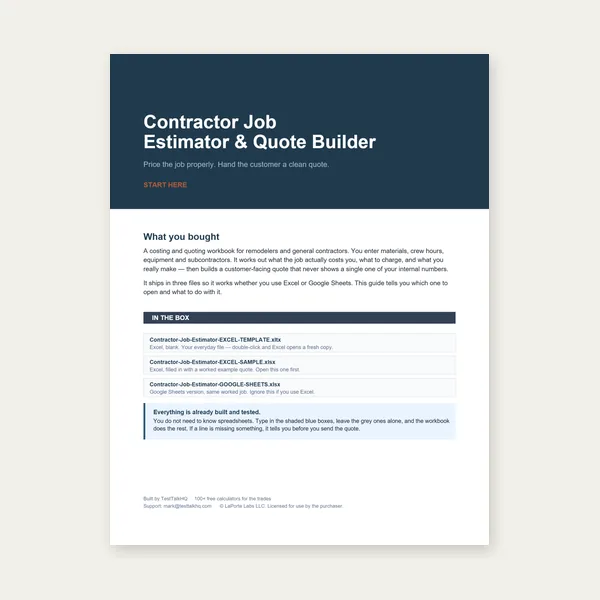
Contractor Job Estimator
$29.00
BuyHow beam span relates to joist span, what “plies” means, and why deck beams are built up from multiple 2x members
A deck beam does not have a single span the way a 2x10 “always spans X.” The number you get is a cell in IRC Table R507.5(1): species group, number of plies, size of each ply, and the effective deck joist span that beam has to carry. Change the joist run and the same 2-ply 2x10 suddenly cannot reach as far between posts. The deck beam span calculator looks up the common residential cells. It is a starting point, not a stamp and not a permit.
Joists first: joist span calculator. Midspan bounce: troubleshooting. Why you cannot swap the two numbers: beam vs joist span. Full grids: IRC deck beam span tables.
Need the tabulated beam span?Species, plies, size, effective joist span. Starting point only.
Open Calculator →Joists collect live load from the decking and dump it onto a beam (or a ledger). The beam then dumps that load onto posts. The farther the joists run, the more square feet of deck ride on each foot of beam. That is why Table R507.5(1) is not “2-ply 2x10 spans 10 feet” — it is “2-ply 2x10 spans this far when the effective joist span is that column.”
The 2021 IRC named that column effective deck joist span length on purpose. It is not always the tape measurement from ledger to beam. For a dropped beam carrying joists from one side only, the joist span and the table column are often the same number. For a center beam with joists both sides, or for joists with a cantilever, you convert the actual joist span using Table R507.5(5). No cantilever uses a factor of 0.66. Maximum cantilever (C/J = 1/4) uses 1.00. The calculator takes the table column (6, 8, 10, 12, 14, 16, or 18 ft) after you have done that conversion. It does not interpolate.
Size the joists first so you know which column to open. Then size the beam. Running them in the other order is how you order a 2-ply 2x8 that only reaches 6′-2″ under a 12-foot joist run and then try to stretch the posts.
A ply is one sawn 2x in a built-up beam. Two 2x10s, face-nailed, are a 2-ply 2x10. Three are a 3-ply. IRC R507.5 says those plies shall be fastened with two rows of 10d (3-inch × 0.128-inch) nails minimum at 16 inches on center along each edge. Skip that nailing and you do not have the member the table assumed — you have two joists pretending to be a beam.
The table also lists 1-ply rows (a single 2x6 through 2x12). Those cells exist. They are short. A 1-ply Southern Pine 2x10 under a 12-foot joist span is 4′-11″ between posts. That is a rim or a very tight post grid, not a typical dropped beam. Most residential decks land on 2-ply or 3-ply because the post spacing has to clear a patio, a stair, or a door swing.
Yards stock treated 2x8, 2x10, and 2x12 in the same bunk as the joists. They do not always stock a 4x10 or 6x12 in the species and treatment you need, on the day you need it, at a price that beats two 2x10s. Built-up 2x beams let you:
A single large timber can be a better beam when it is graded, treated, and listed. It is not automatically stronger than a properly nailed 3-ply of the same depth. The table is the tie-breaker for sawn 2x assemblies. For LVL, glulam, or steel, leave this page and use the manufacturer or a licensed engineer.
Buying the stock by volume: board foot calculator. Two 16-foot 2x10s is a different invoice than three, and the table will tell you which invoice you actually need.
It is not joist span. Joists use Table R507.6. Beams use Table R507.5(1). Same deck, different load path. That split is the whole beam vs joist comparison.
It is not snow country. R507.5(2) through R507.5(4) shrink every cell for 50 / 60 / 70 psf ground snow. This cluster uses the 40 psf live-load table only.
It is not post size, footing size, or the connector. R507.4 and R507.3 still apply. A beam that reaches 8 feet is useless on a 4x4 post the table does not allow for that height.
Layout after the table: deck stairs, interior stringers, common rafters.
The IRC footnote says interpolation is permitted and extrapolation is not. This calculator does not interpolate. If your effective span is 11 ft, either use the 12 ft column (conservative) or interpolate yourself from the adopted table and show that math to the inspector.
Not always. A post shortens the beam span and can leave you on a cheaper 2-ply. That tradeoff is troubleshooting.
Joists first, so you know the effective-span column. Then the beam. Then posts and footings. Stairs last: deck stair calculator.
A licensed engineer. Long spans, snow, point loads, and anything the inspector will not accept as prescriptive are not calculator jobs.
$29.00
BuyCheckout opens here — you stay on this page.
Confirm the stamp and the bay. Then layout. The table does not replace a square or a level on an existing sag.
Mark post layout after the table says the beam reaches. Same square for the deck stairs off that frame.
View on Amazon →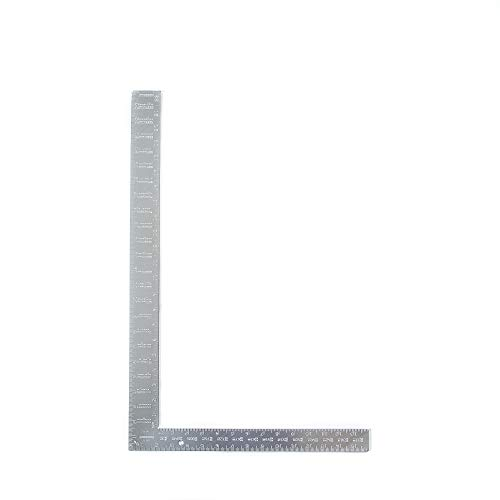
Quick 90s and ply checks. The calculator still wants species from the stamp, not from memory.
View on Amazon →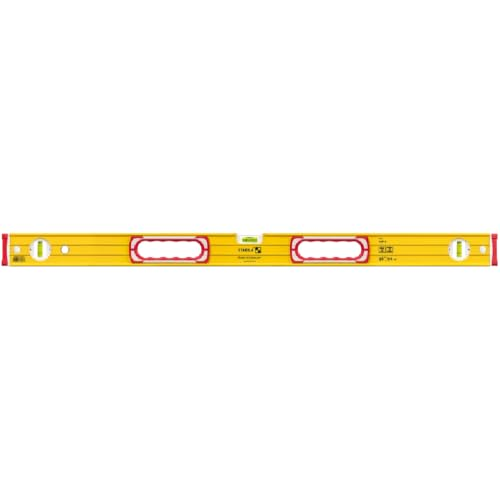
Existing midspan bounce and sag are a field measurement first. Compare that to the tabulated beam span second.
View on Amazon →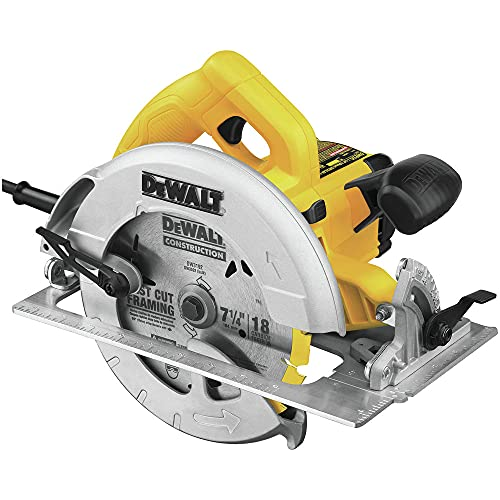
Do not cut a beam longer than the table allows and hope. Add a post, change plies, or get engineering.
View on Amazon →
When the deck also needs stairs, lock the square. Beam span and stringer math are separate.
View on Amazon →
Species, plies, size, effective joist span. Starting point only — verify local code and the stamp.
Open Deck Beam Span Calculator →As an Amazon Associate, TestTalkHQ earns from qualifying purchases.