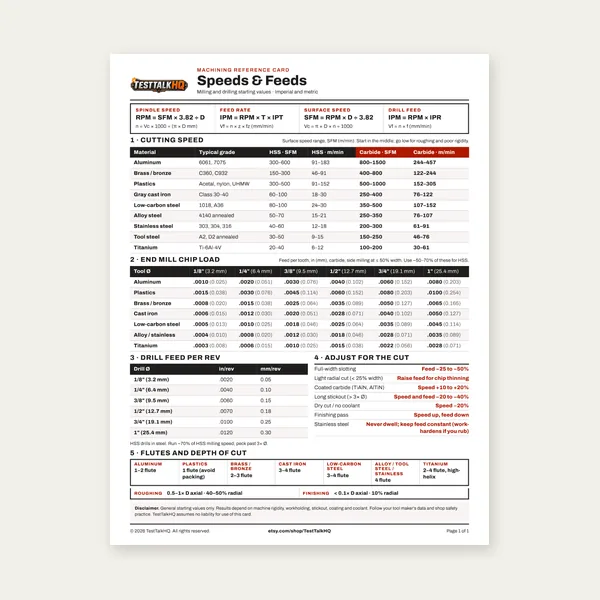
Machining Speeds & Feeds Card
One page. Speeds, chip load and drill feed, imperial and metric.
$3.99
BuyDross, blown pierces, angled edges, and eaten consumables — which table variable is actually wrong
On a gantry, “the speed is wrong” is the default complaint. Half the time it is pierce height, delay, cut height, a worn orifice, or wet air. Match the defect to the knob before you rewrite every feed in the post processor.
Confirm the starting point first: CNC Plasma Calculator. How the four numbers relate: dial-in guide. Handheld torch faults stay on plasma cutting troubleshooting.

Get the starting band before you chase drossPierce height, delay, cut height, IPM — then change one variable.
Open Calculator →| What you see | First suspect | Not the first knob |
|---|---|---|
| Soft, easy-chip dross on the bottom | Cut speed too slow (or amps high for the thickness) | Raising pierce height |
| Hard, welded-on bottom fin | Cut speed too fast, or cut height too high | Adding pierce delay |
| Top spatter / paint-rough top edge | Too slow, or cut height too low | Shortening delay on thick plate |
| Pierce blows back on the shield; nozzle cratered | Pierce height too low, or delay too long on thick plate (volcano), or motion before breakthrough | IPM on the contour |
| Lead-in skips / uncut bridge at start | Pierce delay too short | Cut height |
| Same-direction bevel on both sides of a part | Torch not square, or cut height / THC lag | Material type in the calculator |
| Opposite bevels, left vs right of kerf | Worn / oval nozzle, or swirl ring installed wrong | Rewriting IPM |
| Tips die in a few pierces | Low pierce, wet air, or piercing at cut height | Buying a “faster” chart |
Handheld dross forks (top vs bottom vs hard fin) are documented for torch work in handheld plasma troubleshooting. The physics of dross is the same. The knobs are not: you cannot roll a wrist on a gantry, so height and delay do the job the operator used to do by feel.
After a new nozzle and dry air, use speed and cut height:
If the contour starts before the hole is through, you get a skip, a blowout later in the part, or a torch crash when the THC dives into a blind puddle.
A few degrees of bevel is normal on air plasma. A consistent lean that makes the part oversized on one face is a setup fault:
If you only need a torch-in-hand diagnosis, the handheld settings guide covers standoff and angle for a human. This page stays on programmed Z.
Nozzles do not “just go.” On a table, the usual killers are low pierces, wet air, and moving before the pierce is through (the shield takes the splash). A nest that destroys a tip every three pierces is not an IPM problem.
Match the defect to one knobStarting-point pierce / delay / height / IPM, then one coupon change.
Open CNC Plasma Calculator →Usually not on the contour. Piercing too low or too long, and wet air, eat nozzles. Slow speed makes soft dross.
Fixed Z is fine on flat, even plate. Warped sheet and long contours need THC. The calculator cut height is the set point, not a promise the plate is flat.
Same melt physics, different controls. Use handheld troubleshooting when a person is holding the torch.
One page. Speeds, chip load and drill feed, imperial and metric.
$3.99
Buy
27 pages. Milling, drilling, tapping, turning and CNC routing.
$12.99
Buy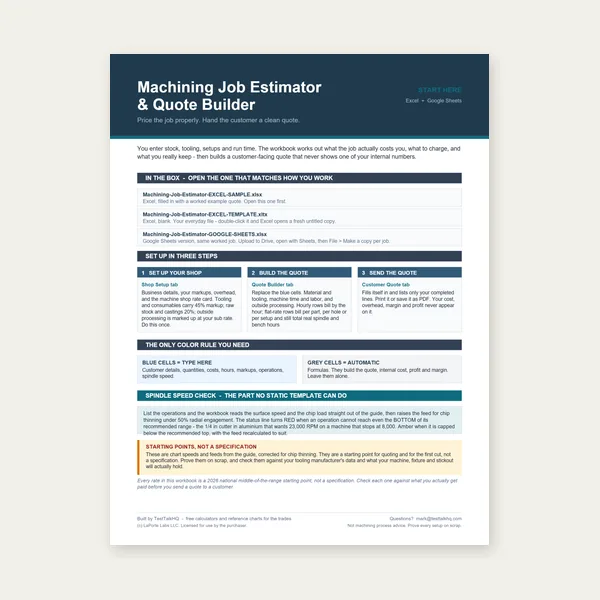
Quote shop work and check operations against your spindle's top speed.
Excel or Google Sheets. Best on a computer.
$29.00
Buy
Card, 27-page guide and the estimator workbook. All six files.
Excel or Google Sheets. Best on a computer.
$34.99
$45.98 if bought separately — save $10.99
BuyCheckout opens here — you stay on this page.
From the TestTalkHQ plasma catalog — CNC-ready amperage, shop air that holds PSI under a long gantry cut, and spare consumables. Handheld torch amps still live on the handheld plasma calculator.
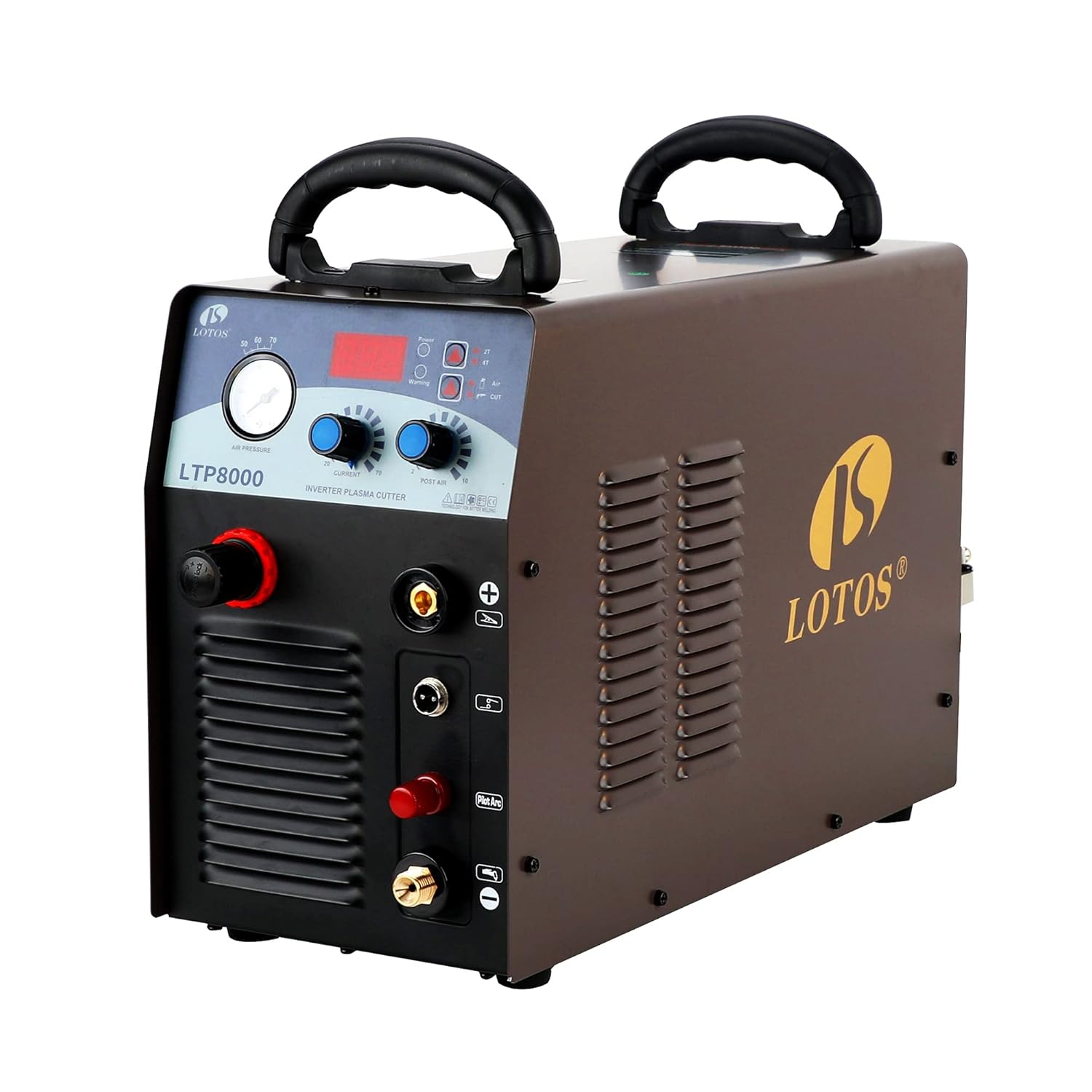
80A class with a CNC-ready torch lead. Matches the 85A column in this calculator for 1/4–1/2" mild steel on a small gantry.
View on Amazon →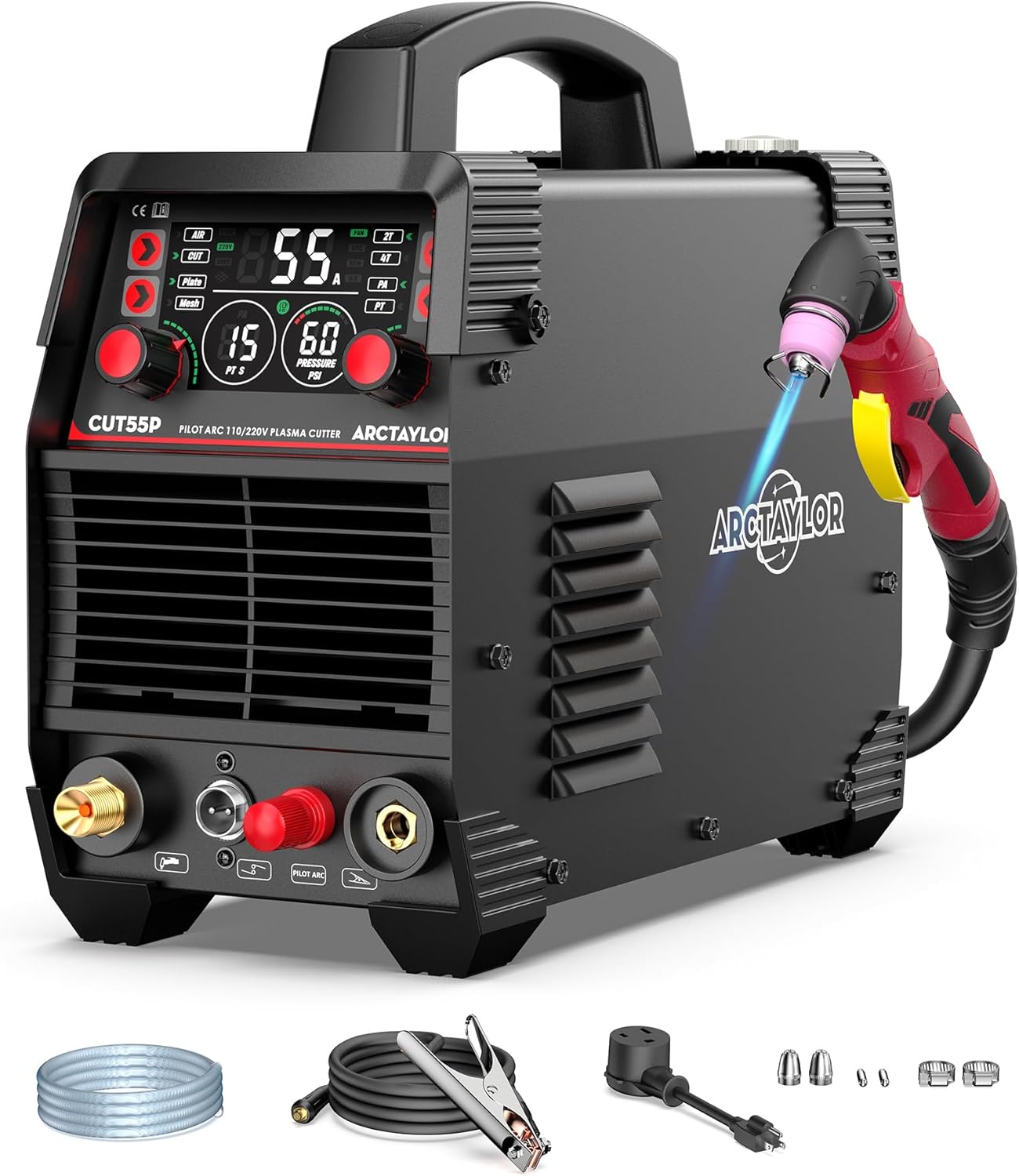
Hobby-table range. Use the 45A or 65A starting points here, then drop pierce delay if the stack is 16 ga, not 1/4".
View on Amazon →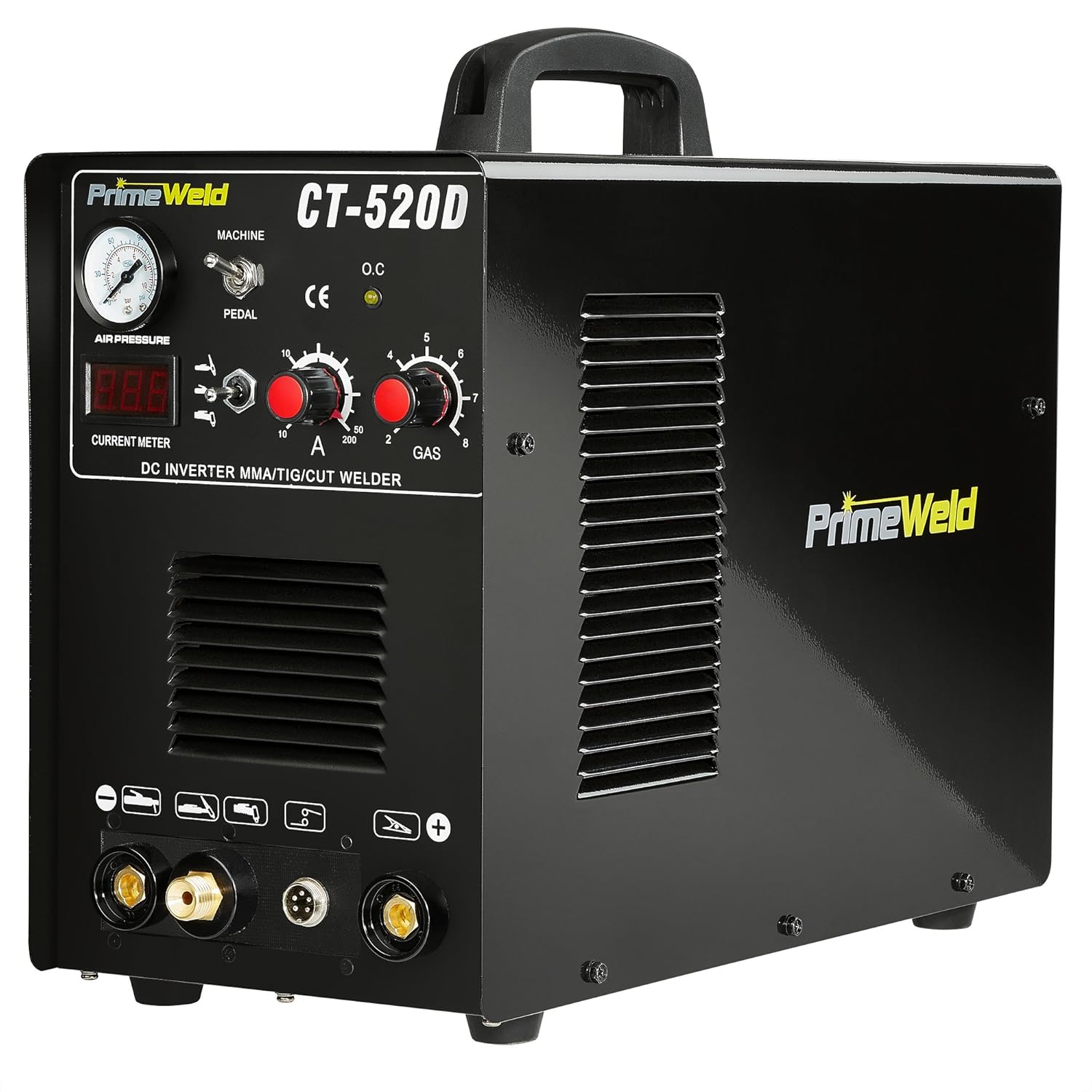
50A plasma on a combo box. Fine for a small CNC table on sheet; do not treat it as a 105A production chart.
View on Amazon →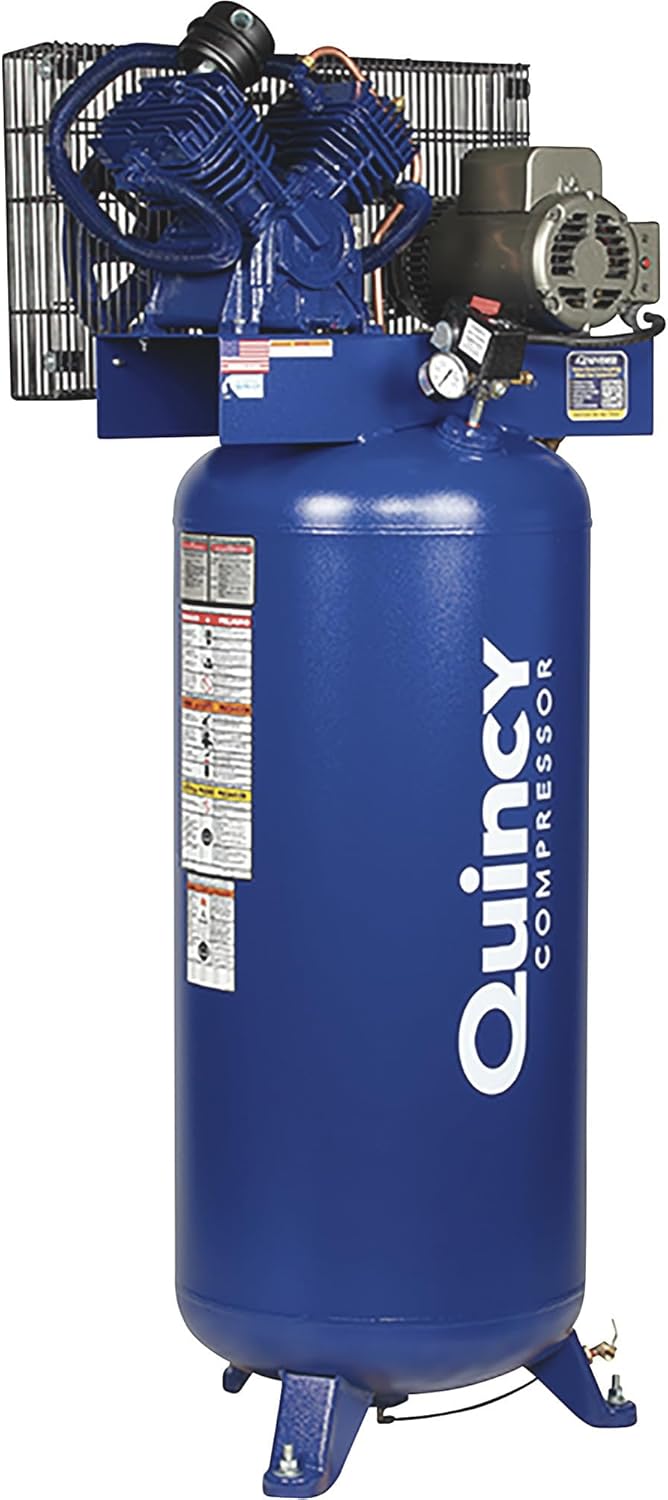
Gantry cuts run longer than a handheld pass. If PSI sags, pierce delay and cut height will not save the edge. Sizing: plasma compressor guide.
View on Amazon →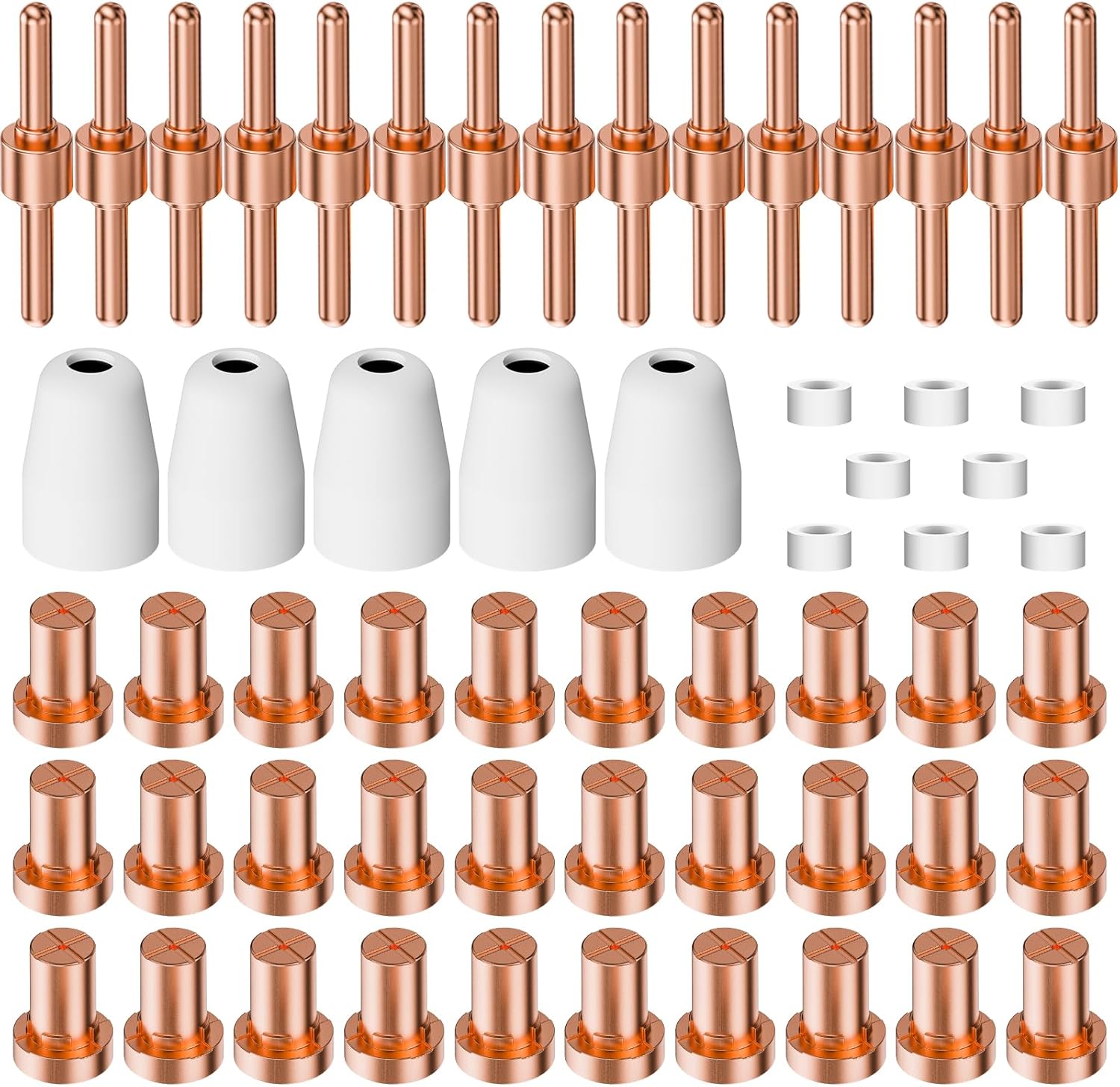
Blown nozzles from a low pierce or a late motion command look like “wrong IPM.” Change tip and electrode as a pair before you rewrite the post processor.
View on Amazon →
Every new material lot gets a 2" test pierce and a 6" straight cut before the nest. This calculator is the starting point; the coupon is the lock-in.
Read the Dial-In Guide →As an Amazon Associate, TestTalkHQ earns from qualifying purchases.