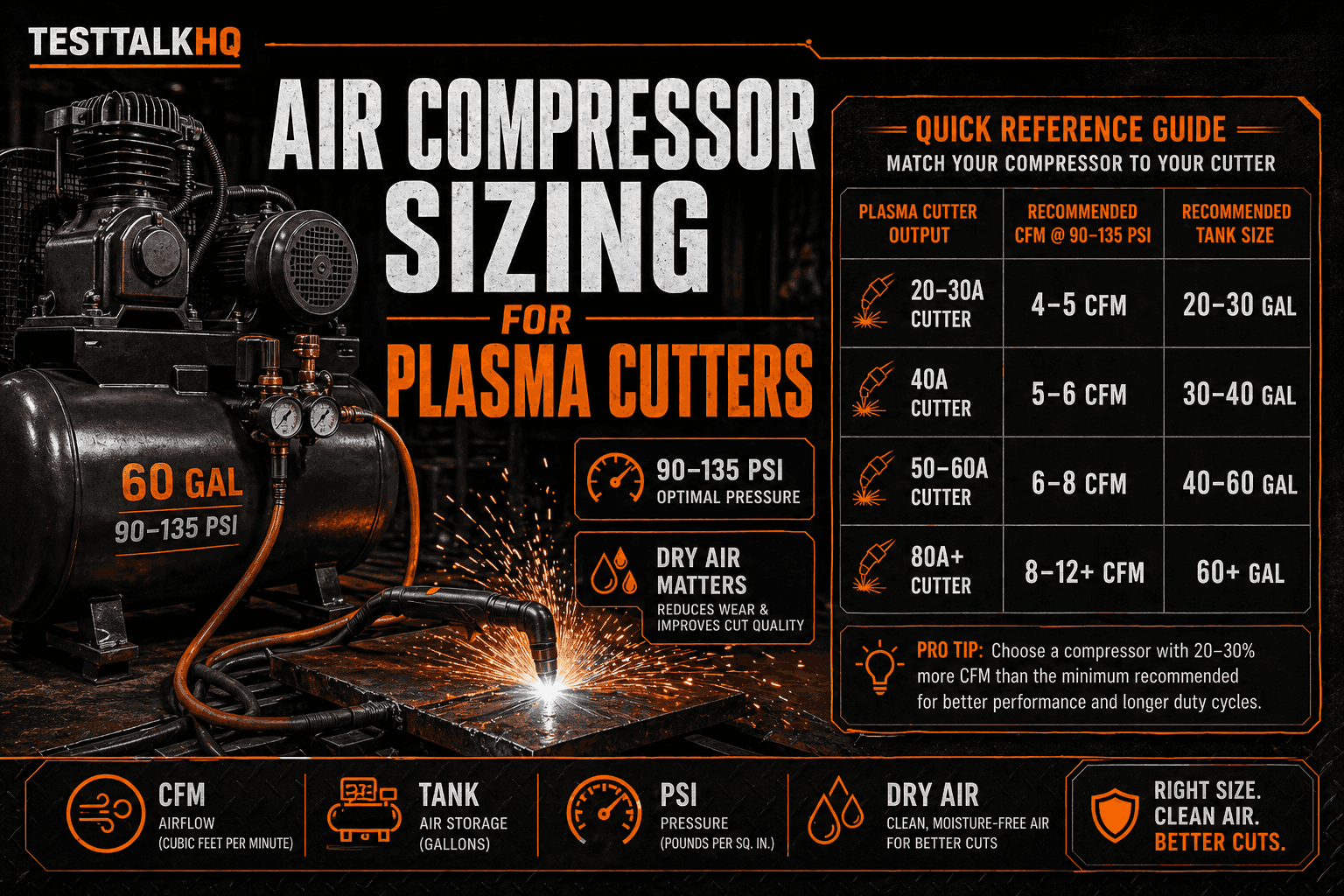
Fast answer: size the compressor so delivered air meets or beats plasma cutter SCFM at required PSI. Tank size buys a few extra minutes, but pump CFM decides whether you can keep cutting. If pump output falls behind demand, pressure drops, arc quality falls, and consumables burn faster. You just bought a plasma cutter and hooked it to your shop compressor. The arc starts, cuts for 20 seconds, then dies. The compressor kicks on, straining and rattling. You wait. Cut another 20 seconds. Wait again. That is classic undersized air supply: not enough sustained CFM and not enough reserve for your cut pattern. This guide keeps the sizing practical: CFM by cutter amps, PSI and line loss reality, tank size, compressor duty cycle, and moisture control. Use these with our Air Compressor Runtime Calculator, Tank Size Calculator, and CFM Calculator so you buy once instead of guessing twice. Practical starting points from the article data. “Minimum” works for short duty. “Better” is what keeps you from stop-and-wait cutting. Rule-of-thumb from this guide: buy compressor capacity at about 150-175% of cutter demand because real delivered flow is lower than optimistic nameplate numbers. Need the numbers, not the lecture? Use the calculators below when you want compressor runtime, tank size, CFM demand, or plasma cutting settings without guessing. Plasma cutters use compressed air to sustain the arc and eject molten metal. Drop below required pressure/flow and the arc gets unstable, dross increases, and consumables wear faster. Shop compressors are often advertised with optimistic numbers. In real work, delivered CFM at pressure is what matters, not brochure displacement CFM. For reliability, this guide data supports carrying margin above the cutter minimum, especially in hot weather, long hose runs, and daily use. CFM demand scales with cutter amperage and duty pattern: A big tank does not replace enough CFM. If compressor pump output cannot keep up with plasma demand, pressure drops, the arc gets ugly, cut quality falls apart, and consumables wear faster. Most systems need stable inlet pressure for reliable arc starts and clean cuts. Line size and hose length can steal pressure fast at plasma flow rates. Use 3/8 in ID hose minimum for plasma work. Long runs often need 1/2 in ID to keep pressure drop under control. Tank size buys runtime between cycles. Pump CFM controls sustained cutting. Recovery time can kill productivity if you only size from “minimum CFM.” Small units can technically run a plasma cutter for short bursts, but the workflow can be miserable: cut a little, wait a lot. Wet air ruins cut quality and eats consumables. Moisture control is not optional if you want clean plasma results. Drain the tank daily in humid climates. A dry-air setup often pays for itself quickly through better cut quality and longer consumable life. Match delivered compressor output to at least the cutter’s required CFM at pressure, then add margin. For 40-amp class cutters, real-world setups are usually happier around 10-12 CFM rated with meaningful tank reserve. Common range is about 4-15 CFM depending on cutter amperage and cut load. Small units use less, bigger and production cutters use much more. Yes for short, intermittent cuts on smaller cutters. It is usually a stop-and-wait workflow for regular fabrication. CFM for sustained cutting, tank size for burst length. You need both, but pump output is the hard limit. Most systems need stable pressure around the manufacturer minimum at inlet; many setups run with compressor output near 100-110 PSI to maintain reliable pressure at the torch. Pressure and flow often collapse as tank pressure drops below what the cutter needs. Moisture can also degrade arc and consumables. For clean cuts and consumable life, yes. At minimum use regular tank draining plus coalescing filtration. Usually no for practical work. It may strike an arc briefly but cannot sustain air demand for productive cutting. From this guide data, plan around 12-15 CFM rated minimum, with better real-world behavior in the 16+ CFM class and larger tank. Plasma air sizing is simple when you stay practical: meet cutter CFM at pressure with margin, use enough tank for your cut pattern, and keep air dry. If your compressor cannot keep up, no amount of tank wishful thinking fixes ugly arcs. Also useful: Free Calculators & Tools
Air Compressor Tank Size Calculator
CFM Calculator / Air Compressor Sizing Tool
Plasma Cutting Calculator
Plasma Cutter Air Compressor Quick Answer
Plasma Cutter Size
Air Demand
Minimum Compressor
Better Compressor
Notes
20-30 amp
4-5 CFM @ 90 PSI
20-30 gal, 7-8 CFM rated
40-60 gal, 10-12 CFM rated
Small cutters can work on modest systems for short cuts.
40-45 amp
6-7 CFM @ 90 PSI
30-40 gal, 10-12 CFM rated
60 gal, 16-18 CFM rated
Common fab range; undersized pumps cause stop/start misery.
50-60 amp
7-9 CFM @ 90 PSI
60 gal, 12-15 CFM rated
60-80 gal, 16-20 CFM rated
Pump output matters more than just tank gallons.
80-90 amp
12-15 CFM @ 90 PSI
80 gal, 18-20 CFM rated
80-120 gal, 25-30 CFM
Production-class air requirement; tiny compressors will not cope.
CNC plasma table
Continuous high flow
Two-stage, high duty cycle
Rotary screw / 100% duty setup
Stable pressure and dry air are mandatory for repeatable quality.
Why Plasma Cutters Need So Much Air
What compressor size actually means
Compressor Size by Plasma Cutter Amps
Plasma Cutter Amperage
Cut Capacity (Mild Steel)
Minimum CFM @ 90 PSI
Recommended Compressor CFM
25-30 amp
3/8 in (9mm)
4-5 CFM
7-8 CFM rated
40-45 amp
1/2 in (12mm)
6-7 CFM
10-12 CFM rated
50-60 amp
5/8 in (16mm)
7-9 CFM
12-15 CFM rated
80-90 amp
7/8 in (22mm)
12-15 CFM
18-20 CFM rated
Big warning: tank does not replace CFM
PSI Requirements and Regulation
Pressure Consideration
Recommended Setting
Why It Matters
Compressor tank pressure
120-135 PSI max fill
Pressure reserve while tank depletes
Regulator output pressure
100-110 PSI
Compensates line losses, keeps torch above minimum
Torch cutting pressure
55-75 PSI (material dependent)
Cut quality and dross control
Minimum arc start pressure
85-90 PSI at torch inlet
Below this, pilot arc may not initiate
CFM vs Tank Size
Tank Size
Suitable For
Approx Runtime (40-amp cutter)
6-11 gallons
Emergency use only
60-90 sec continuous cutting
20-30 gallons
Hobbyist, light fab
2-4 min before compressor cycle
40-60 gallons
Regular shop use
4-8 min before compressor cycle
80-120 gallons
Production / long duty
10-15 min before compressor cycle
Compressor Recovery Rate and Duty Cycle
Compressor Type
Typical Duty Cycle
Best Application
Portable oil-free
30-40%
Nailers, inflation – not plasma cutting
Portable oil-lubricated
50-60%
Hobby plasma, light fab
Stationary two-stage
75%
Regular plasma use, small production
Industrial rotary screw
100% continuous
CNC and multi-shift production
Small Compressor Reality Check
Dry Air and Filtration
Air Treatment Stage
What It Removes
Cost Range
Tank drain valve
Bulk water accumulation
$5-15 manual / $30-80 automatic
Coalescing filter
Water droplets, oil vapor, particles
$40-120
Desiccant dryer
Water vapor, low dew point
$200-500
Refrigerated dryer
Water vapor, stable dew point
$300-800
Common Sizing Mistakes
Shop Compressor Recommendations by Usage
Usage Level
Recommended Specs
Budget Range
Occasional hobbyist
20-30 gal, 3 HP, 10-12 CFM
$600-900
Regular fabricator
60 gal, 5 HP, 16-18 CFM
$1,200-2,000
Small production shop
80 gal, 7.5 HP, 25-30 CFM
$3,000-6,000
Multi-shift production
120+ gal, rotary screw, 40+ CFM
$6,000-15,000
Frequently Asked Questions
What size air compressor do I need for a plasma cutter?
How many CFM does a plasma cutter use?
Can I run a plasma cutter on a 20-gallon compressor?
Is tank size or CFM more important?
What PSI does a plasma cutter need?
Why does cut quality drop halfway through a cut?
Do I need an air dryer for plasma cutting?
Can a pancake compressor run a plasma cutter?
What compressor size do I need for a 50 amp plasma cutter?
Conclusion
Air Compressor Tank Size Calculator
CFM Calculator / Air Compressor Sizing Tool
Plasma Cutting Calculator
When CFM looked right but plasma cuts still failed (dross, arc dropouts), see Plasma Cutting Troubleshooting.
Chart and duty-cycle walkthrough for the same SCFM lookup: Per-Tool CFM Requirement Chart and the CFM Requirement Guide.
For a single-tool SCFM lookup with duty-cycle guidance, use the Per-Tool CFM Requirement Calculator.
Welding
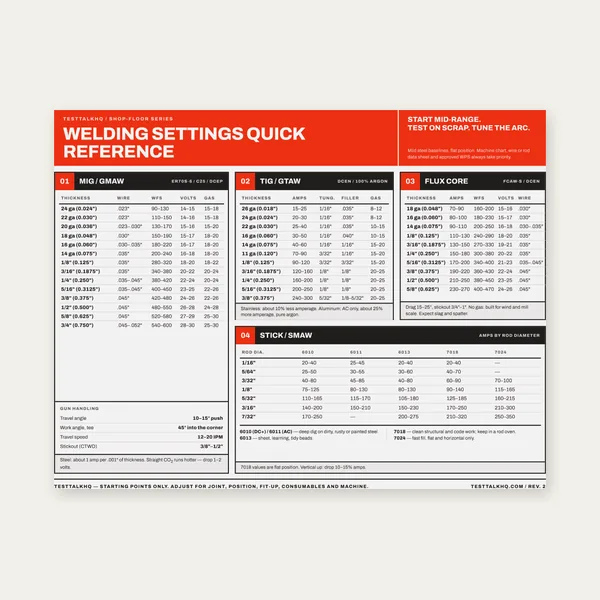
Welding Reference Card
One page. MIG, TIG, stick and flux core settings by thickness.
$3.99
Buy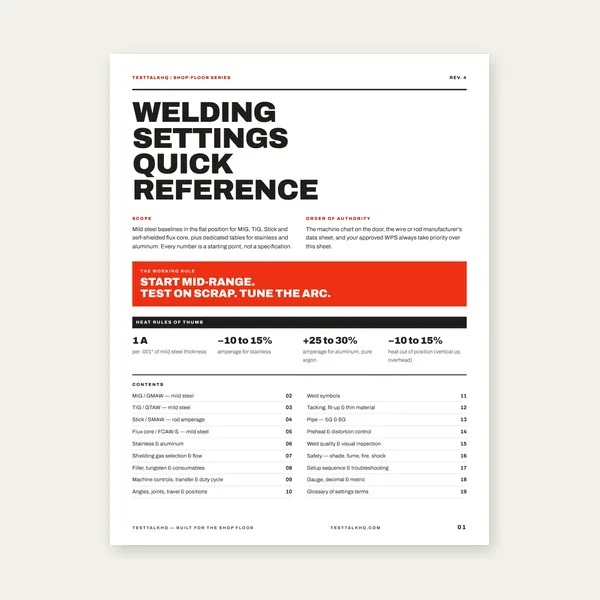
Complete Welding Settings Guide
19 pages. Four processes, stainless and aluminum, symbols and inspection.
$12.99
Buy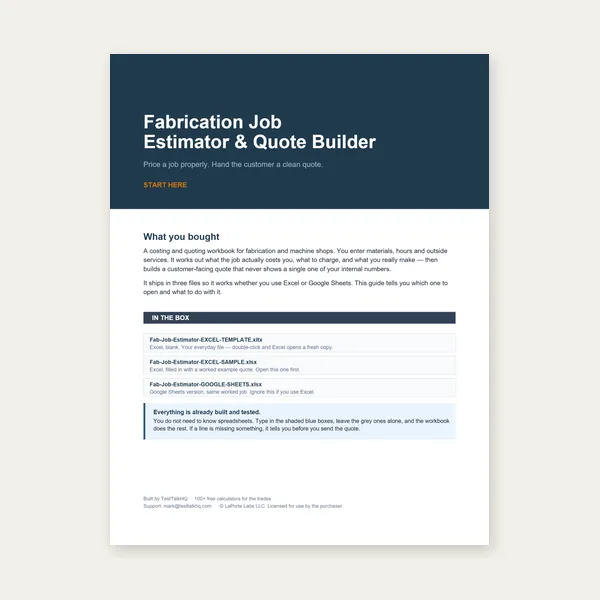
Welding Job Estimator
Price the job, then hand over a quote with no internal numbers.
Excel or Google Sheets. Best on a computer.
$29.00
Buy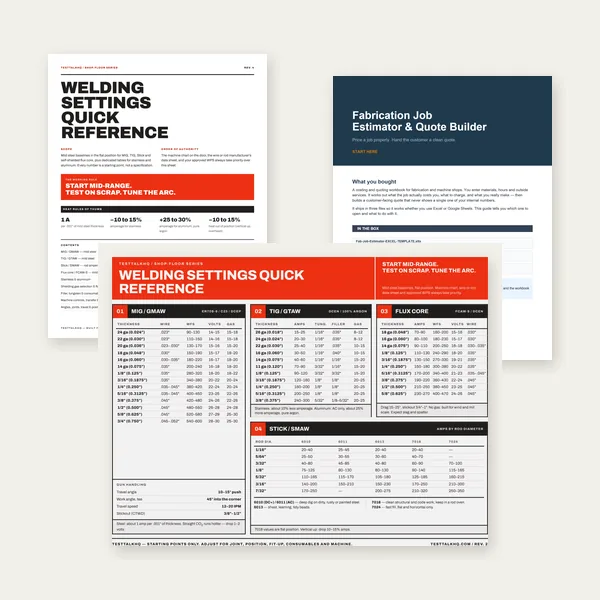
Welding Complete Bundle
Card, 19-page guide and the estimator workbook. All six files.
Excel or Google Sheets. Best on a computer.
$34.99
$45.98 if bought separately — save $10.99
BuyCheckout opens in a new tab.