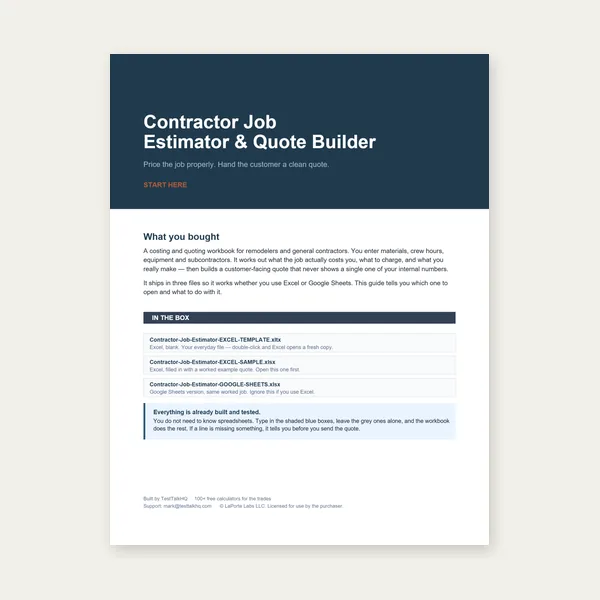
Contractor Job Estimator
Price remodels and GC work, then send a quote with no internal numbers.
Excel or Google Sheets. Best on a computer.
$29.00
BuySigns of a settling or undersized footing, and frost depth as a separate failure mode from plan size
An undersized or shallow footing rarely drops the deck in one Hollywood afternoon. It settles a little each season, pulls the ledger line, dishes the surface, and opens cracks in the concrete or the rim. Compare the existing tributary area, assumed soil, and frost depth to the deck footing size calculator and the published grids first. Then decide whether a new pad, a deeper pour, or an engineer is the honest fix.
How the table columns work: guide. Pad vs post: comparison. Bounce that is actually a beam: beam troubleshooting.
Need the tabulated pad before you diagnose?Load, tributary area, soil. Starting point only.
Open Calculator →Deck pulling away from the house. A growing gap at the ledger, flashing that has torn, or lag screws that have elongated their holes often means the outer posts dropped relative to the band joist. Joist hangers and a ledger that was installed correctly do not create a 3/4-inch air gap on their own. Measure the gap at several bays. If it is worse at midspan posts than at the corners, those interior footings are the suspects.
Uneven deck surface. Stand a 4-foot level on the decking in both directions. A dish over one post, a ridge over another, or a consistent tilt away from the house is settlement, not “the boards dried.” Compare that map to the post grid. The low post is the one whose pad moved.
Cracking. Cracked concrete at the top of a tube, a split in a post base, stucco cracking on the house under the ledger, or decking fasteners that keep backing out are movement. Hairline shrinkage in a pad is not the same as a pad that has tilted. Photograph and date the cracks; seasonal growth is the story.
Rule out the other two tables before you blame the dirt. Midspan bounce with a level deck can be an undersized beam or joist. A deck that is both bouncy and out of level is often both.
Plan size (diameter / square side / thickness) is Table R507.3.1. Depth is R507.3.2 and R507.3.3. You can pass one and fail the other.
Frost depth is a local number in Table R301.2, not a national average you can memorize. The ranges below are order-of-magnitude context so you know whether a 24-inch tube is even in the conversation. Always verify the published depth with the building department.
Detached low decks sometimes get a frost-depth exception in a given code cycle; attached decks generally do not. If the house is frost-protected, the deck that is attached to it usually must be too. Confirm the exception in the adopted code before you pour a shallow pad because a forum said it was fine.
Same post, different table.Pad size is R507.3.1. Post height is R507.4. Sizing one does not size the other.
Footing vs Post →Usually no. New concrete on a tilted, heaved, or undersized cookie just makes a thicker wrong thing. Get to undisturbed soil at the right depth, or use an approved alternative (helical, engineered pier) your AHJ accepts.
That pattern is frost first. Check depth against Table R301.2. Plan size can still be short; seasonal lift is the giveaway that depth is in the story.
No. The table is plain concrete pads. Helicals are a manufactured system with listed capacities. That is engineer or manufacturer territory, not this calculator.
Price remodels and GC work, then send a quote with no internal numbers.
Excel or Google Sheets. Best on a computer.
$29.00
BuyCheckout opens in a new tab.
Confirm the post grid and the hole. The table does not replace a square on layout or a tape on frost depth.
Mark post layout after the beam table says the span reaches. Tributary length starts there.
View on Amazon →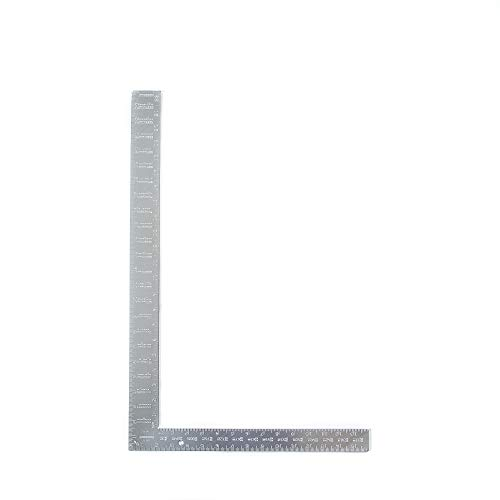
Quick 90s and post-plumb checks over a fresh pad. Soil column still has to be a number you can defend.
View on Amazon →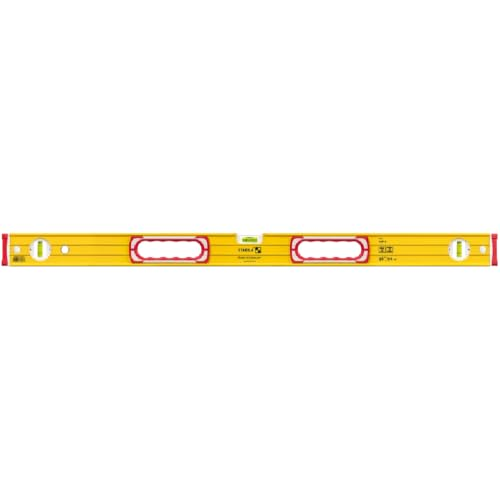
Existing settlement is a field measurement first: dish in the deck, gap at the ledger. Compare that to the tabulated pad second.
View on Amazon →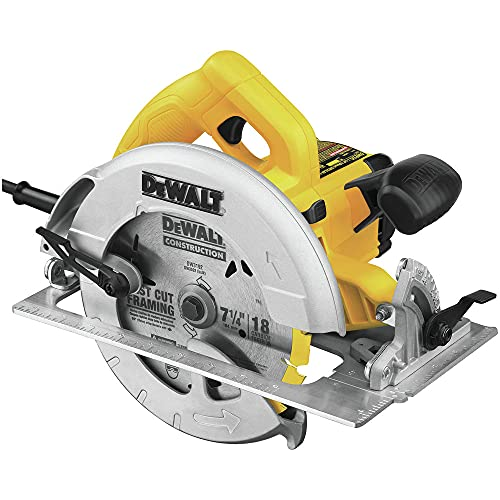
Posts get cut to Table R507.4 height, not to the pad diameter. Different table, same post.
View on Amazon →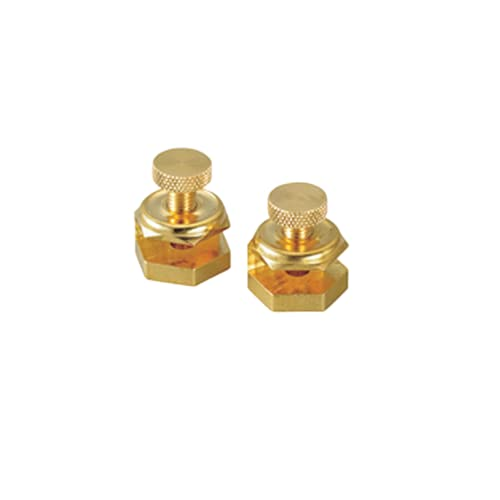
When the deck also needs stairs, lock the square. Footing size and stringer math are separate.
View on Amazon →
Load, tributary area, soil column. Starting point only — verify local soil, frost, and code.
Open Deck Footing Size Calculator →As an Amazon Associate, TestTalkHQ earns from qualifying purchases.