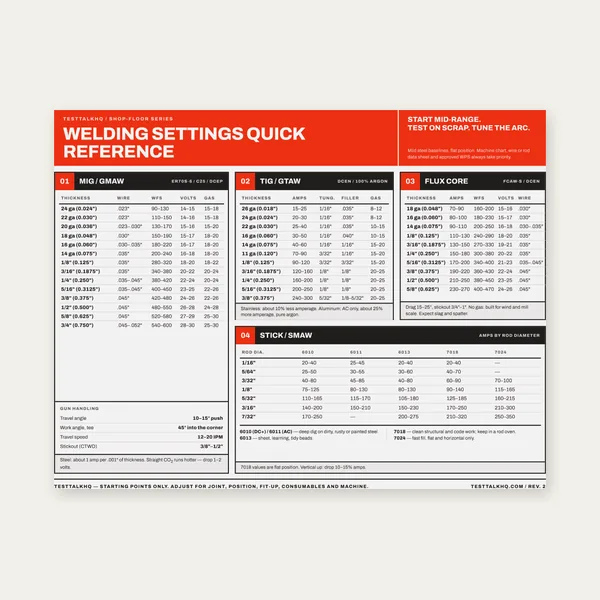
Welding Reference Card
One page. MIG, TIG, stick and flux core settings by thickness.
$3.99
BuyCalculate exact weld time and cool-down periods for your welder
Duty cycle determines how long you can weld before your machine forces you to take a break. A welder rated at "60% duty cycle @ 180A" can weld for 6 minutes out of every 10-minute period at 180 amps, then must cool for 4 minutes before welding again.
Understanding your welder's duty cycle prevents thermal overload shutdowns and helps you pick the right machine. This calculator shows weld time, cool-down time, a visual cycle bar, and a hobby-through-industrial classification.
One page. MIG, TIG, stick and flux core settings by thickness.
$3.99
Buy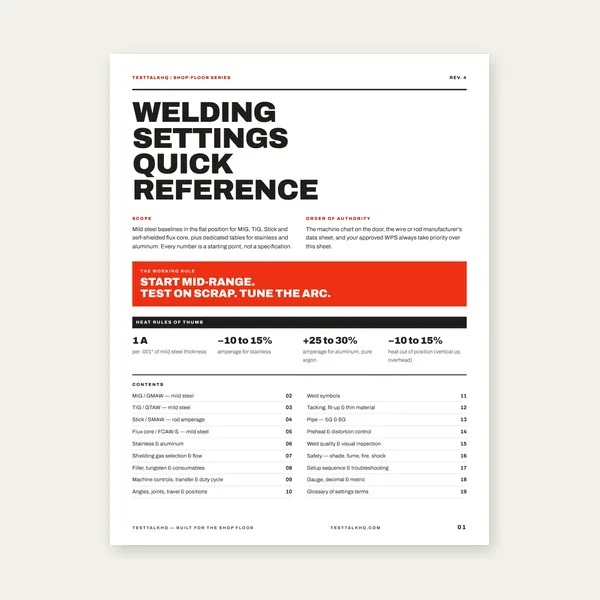
19 pages. Four processes, stainless and aluminum, symbols and inspection.
$12.99
Buy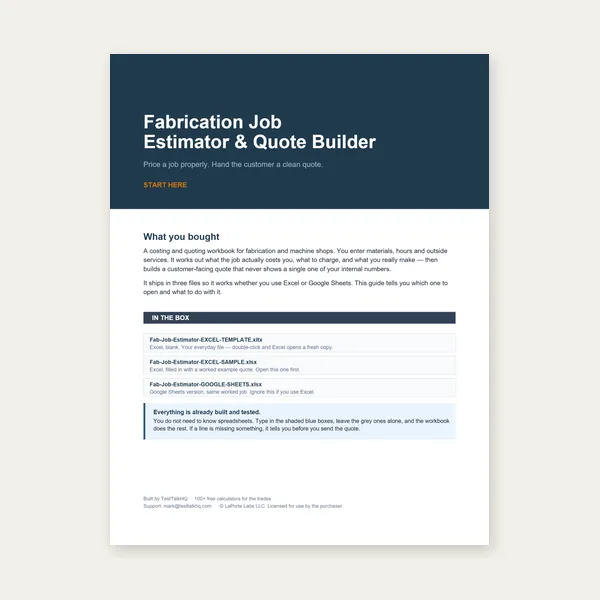
Price the job, then hand over a quote with no internal numbers.
Excel or Google Sheets. Best on a computer.
$29.00
Buy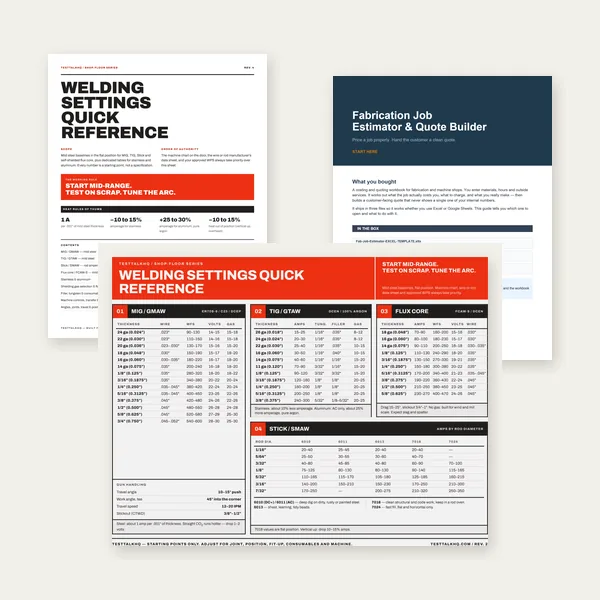
Card, 19-page guide and the estimator workbook. All six files.
Excel or Google Sheets. Best on a computer.
$34.99
$45.98 if bought separately — save $10.99
BuyCheckout opens in a new tab.
Machines with different real-world duty ratings plus portable and helmet picks for productive cool-down breaks.
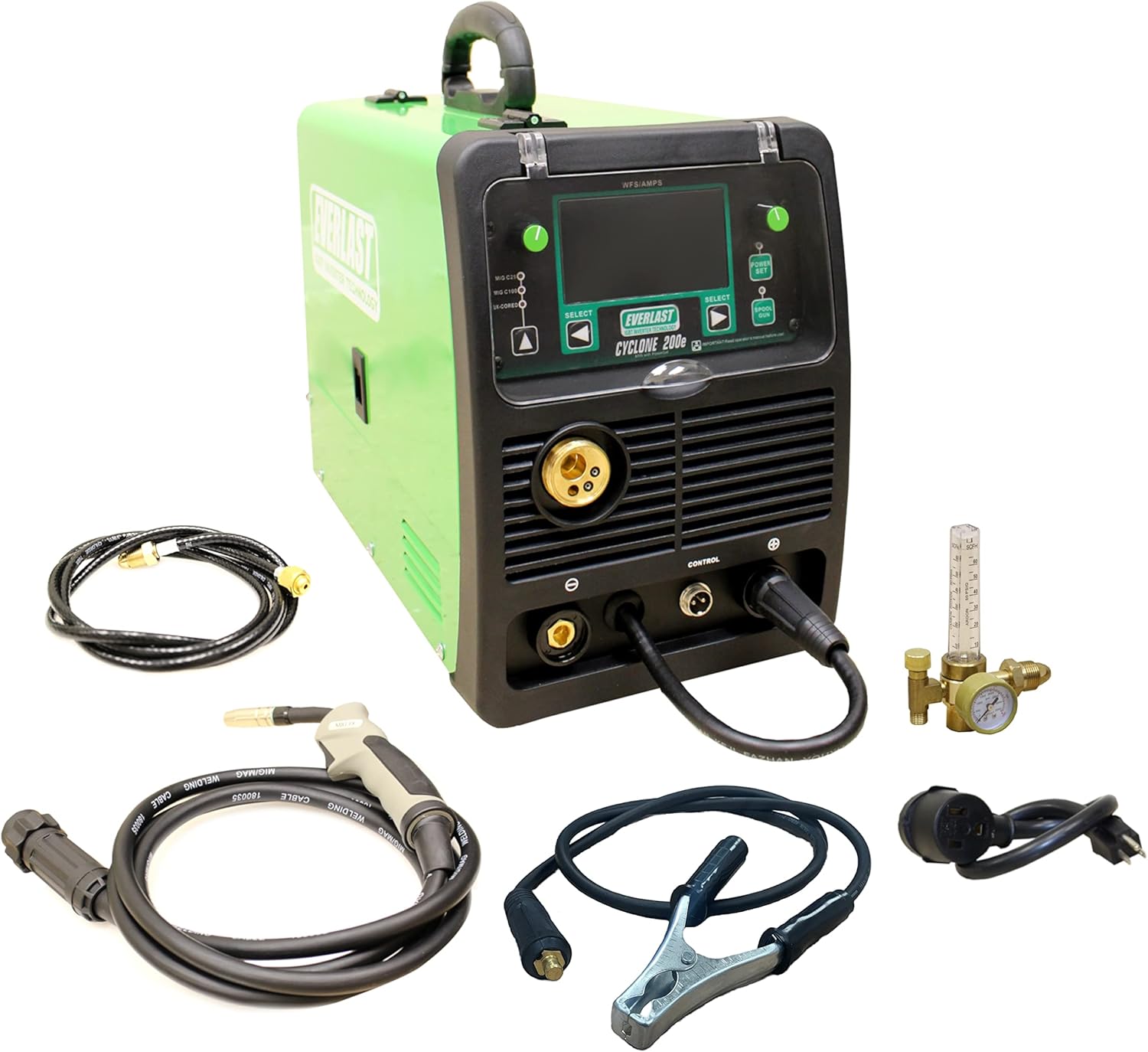
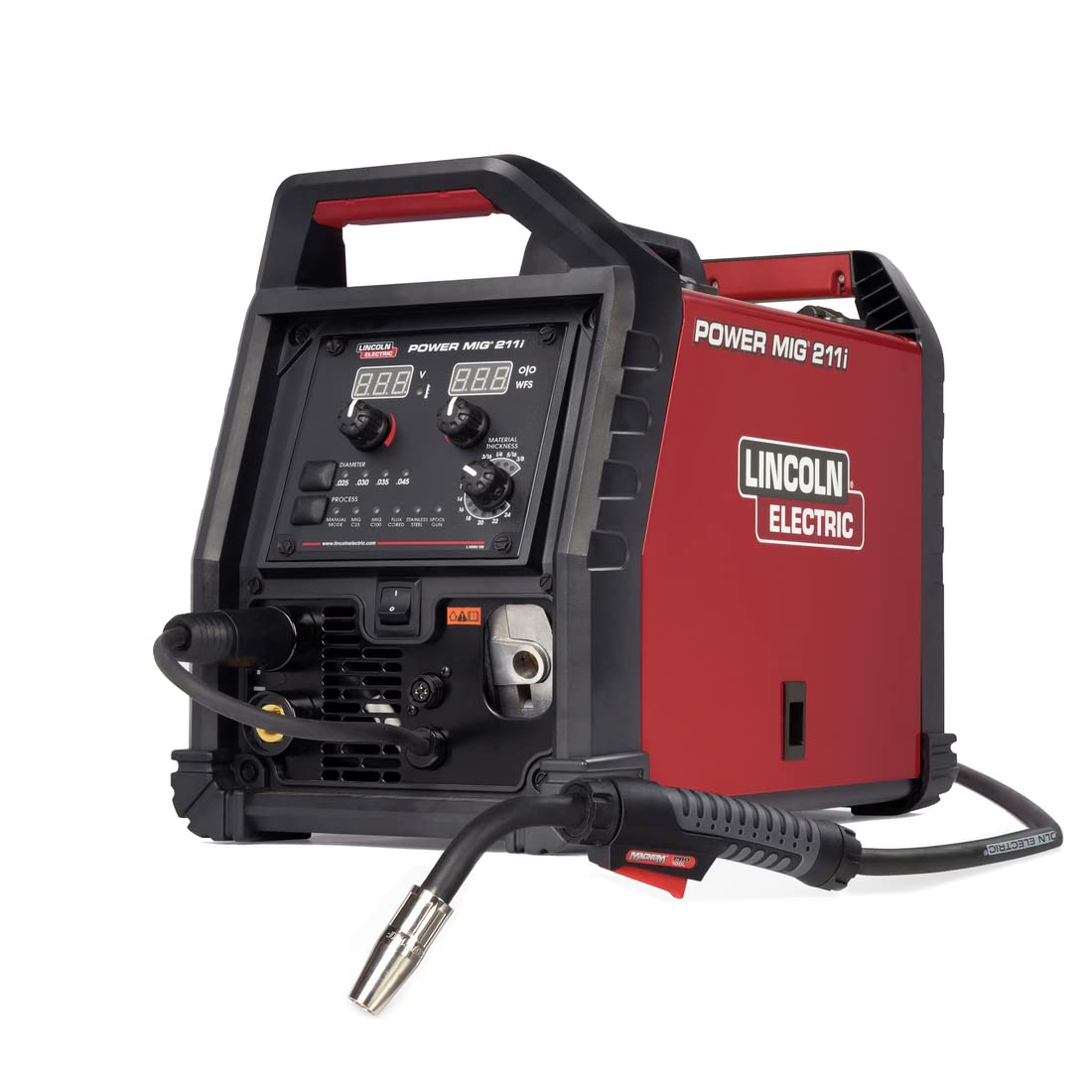
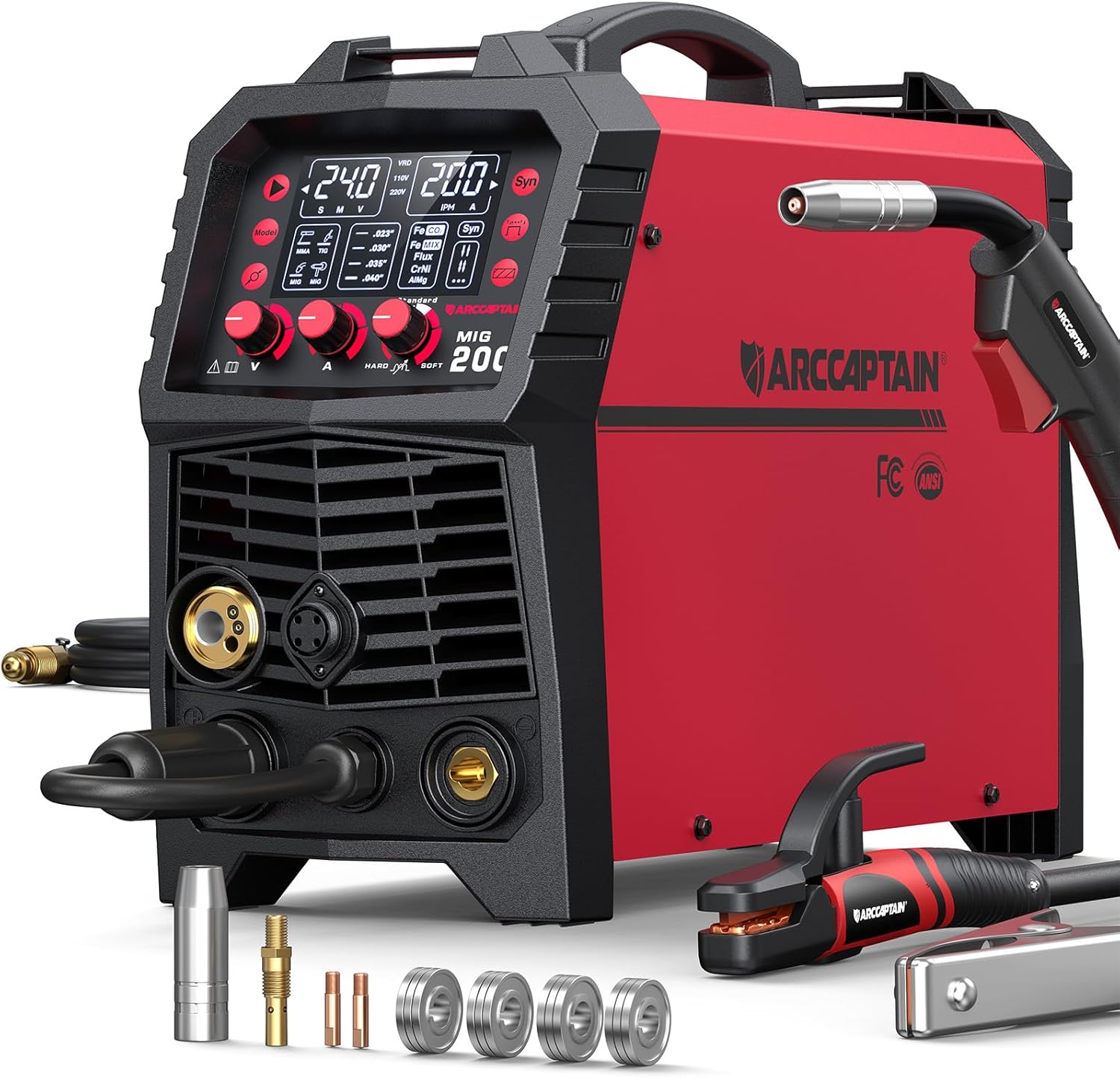
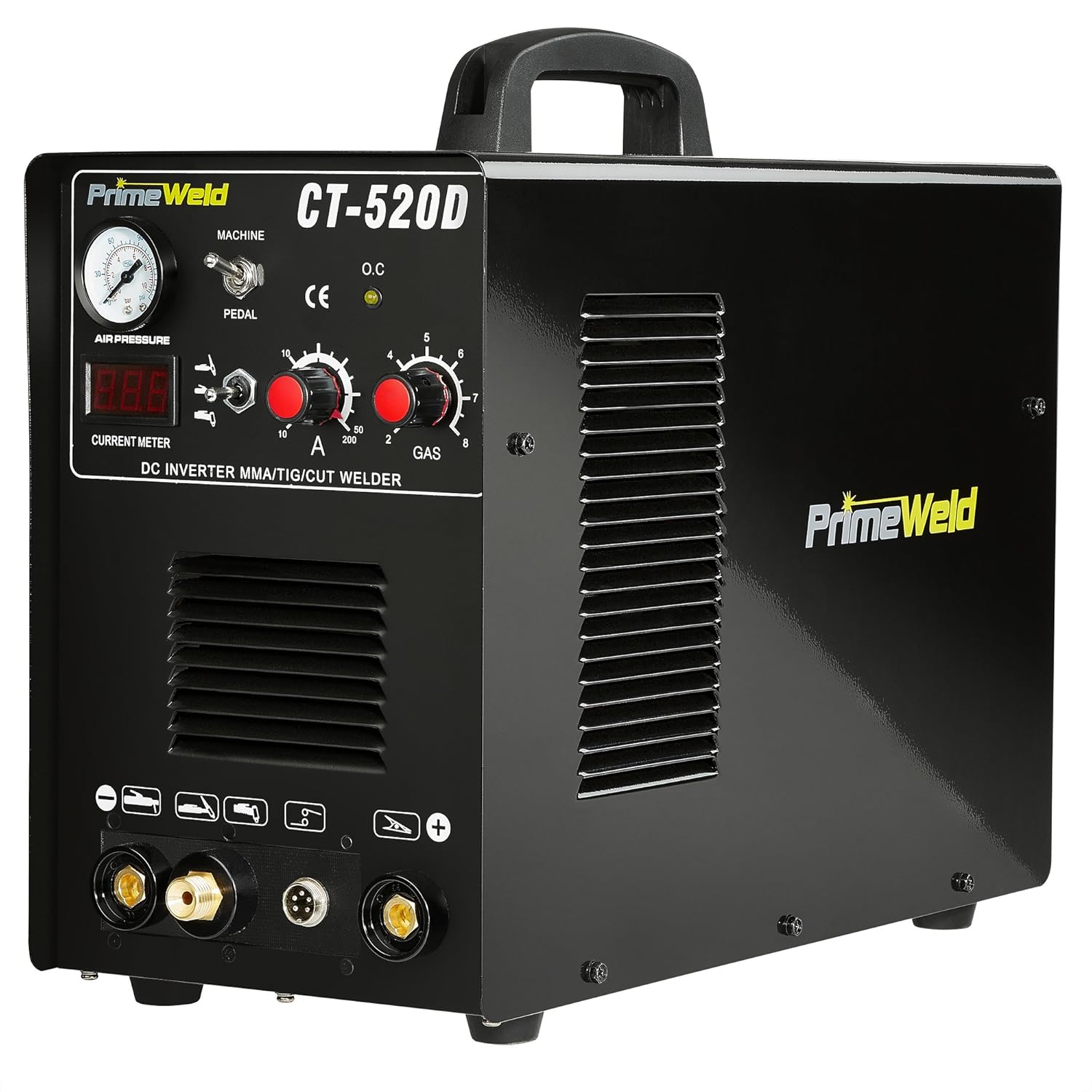
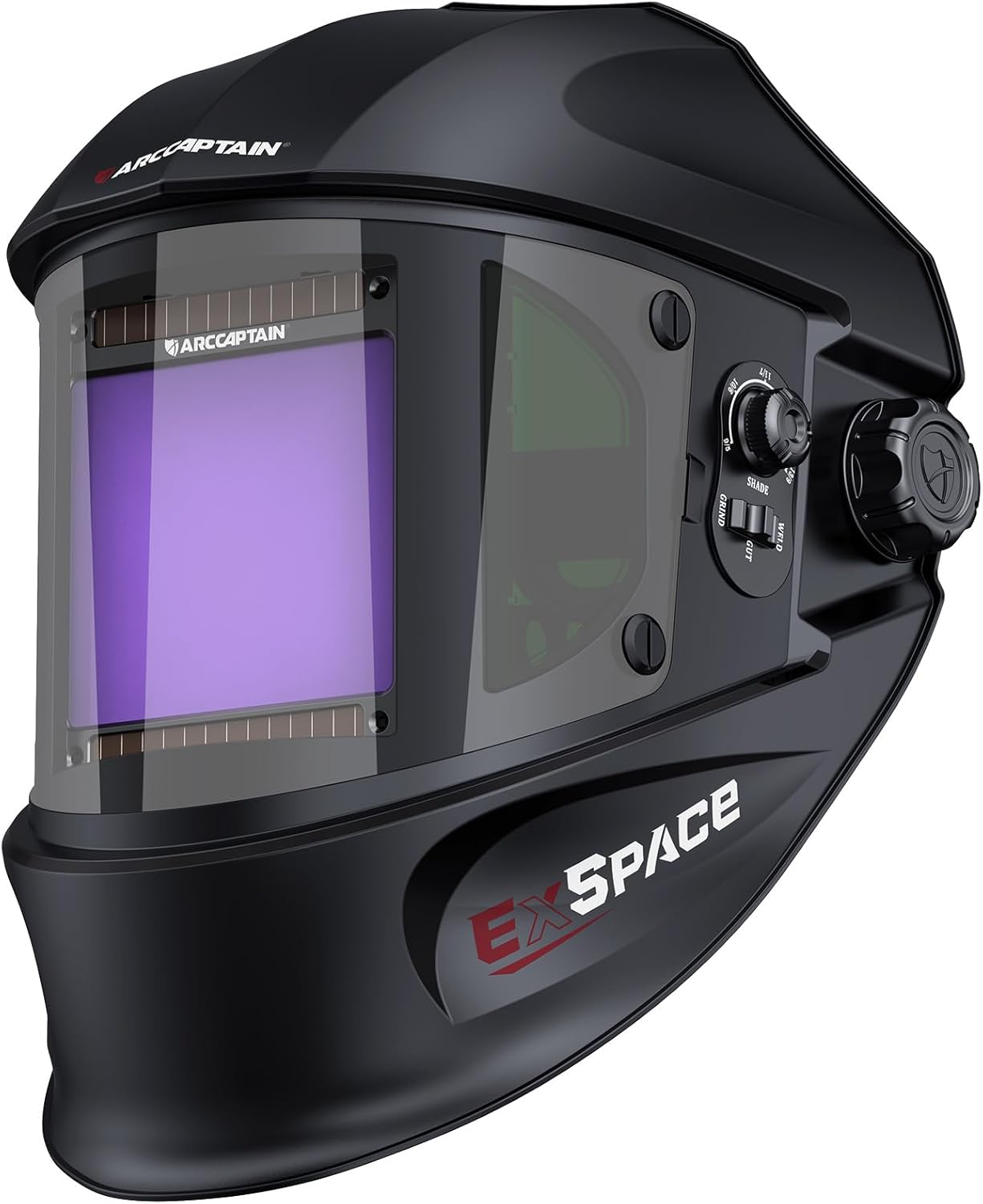
As an Amazon Associate, TestTalkHQ earns from qualifying purchases.
Early thermal trips, hot-shop derates, cord sag, dirty vents, amp-line confusion, or multi-pass heat buildup: Duty Cycle Troubleshooting. What 20% / 60% / 100% you actually need when buying: Duty Cycle Explained Guide.
Enter duty cycle %, rated amperage (validated), and NEMA 10-minute or IEC 5-minute cycle. Results update on change; you can also press Calculate.
Use the number from your nameplate (e.g. 60 for 60%).
Enter the amps the duty cycle is quoted at. Duty varies with amperage—see welding amperage chart for setting context.
Pick 10 min (US) or 5 min (EU) to match your standard.
Weld time is continuous arc-on time before thermal protection at the rated condition—not necessarily a hard power-off; the machine blocks further welding until cooled.
Leave the machine on so the fan can run. Turning off can slow cooling.
Short bursts; more cool than weld per cycle.
Intermittent shop and auto repair work.
Typical fab-shop standard with natural pauses.
Near-continuous production duty.
Higher amps usually mean lower duty at the same machine—always read the plate at the amps you actually run.
Reduce amps if you hit thermal overload often. Sequence work so grinding and fit-up happen during cool windows. Improve airflow around vents; blow out dust periodically.
At the rated amps, 60% of each cycle is weld time and 40% is required cool time (e.g. 6 weld / 4 cool in 10 minutes).
Not at the rated amperage; lowering amps often raises effective duty toward continuous on many inverters.
(Welding time ÷ cycle period) × 100.
Not if you rarely need continuous beads—balance cost vs. real workload.
More context: Welding amperage · Welding cable size · Cable size guide · MIG calculator · All calculators · Articles