Two air-side checks that answer different questions. What delta-T is genuinely good at, the three things it structurally cannot see including why low airflow makes a starving system look healthy, what the capacity measurement costs you in time and certainty, why the sensible heat ratio survives a bad airflow figure, a situation-by-situation table, and where superheat and subcooling fit into the order.
Two checks, two different questions
Both of these are air-side checks. Both need a thermometer in the return and one in the supply. They cost about the same in time. And they answer genuinely different questions, which is why the choice between them is not about which is “better.”
| Delta‑T | Sensible heat ratio | |
|---|---|---|
| Question it answers | Is the temperature drop in the expected range? | How much capacity is being delivered, and what kind? |
| What you measure | Two dry bulbs | Two dry bulbs, two wet bulbs, airflow, elevation |
| Output | A temperature difference | Total, sensible and latent BTU/h, plus a ratio |
| Sees latent capacity | No | Yes — that is the point |
| Needs an airflow measurement | No | Yes, for the BTU figures |
| Survives a bad airflow figure | N/A | The ratio does; the BTU figures do not |
| Time on site | Two minutes | Fifteen to thirty, mostly the traverse |
| Best at | A fast go/no-go on a system you have no history with | Quantifying a shortfall, and diagnosing comfort complaints |
What delta‑T is good at
It is fast, it needs no airflow measurement, and it has a long history of published target ranges. You walk up to a machine you have never seen, put a probe in each plenum, and inside two minutes you know whether the number is in a normal band. For triage that is genuinely hard to beat, and any technician who skips it is wasting time.
It is also self-contained. Two temperatures, no psychrometrics, nothing to look up beyond a target table. That matters when you are on a roof in August.
What delta‑T cannot see, and why that is not a small gap
A dry-bulb reading responds only to sensible heat. Everything the coil does by condensing water out of the air is invisible to it. On a humid day that can be a quarter or more of what the equipment is producing, and two systems with an identical temperature split can be delivering capacities thousands of BTU an hour apart.
Three specific blind spots follow from that, and they are the reason this comparison exists.
Blind spot 1: low airflow makes a starving system look healthy
This is the important one. Reduce the airflow across a coil and the same — or less — capacity is spread over fewer pounds of air, so each pound gets colder. The temperature split gets wider. A delta‑T check reads that as more cooling, or at worst as still inside the band, while total delivered capacity has fallen.
The air-side capacity measurement cannot make this mistake, because it multiplies the enthalpy drop by the airflow. Less air, less capacity, every time.
Blind spot 2: a clammy house with a perfect temperature split
“It’s cold but it feels damp” is a latent complaint, and delta‑T has nothing to say about it. A system moving too much air across the coil delivers its sensible capacity, hits its temperature target, satisfies the thermostat — and removes almost no water. The sensible heat ratio identifies that immediately, and it also tells you which way to move the blower tap and by roughly how much.
Blind spot 3: you cannot put a number on the shortfall
Delta‑T gives a temperature, not a capacity. It can tell you something is off; it cannot tell you the machine is delivering 27,000 BTU/h against a 36,000 nameplate. For a warranty claim, a replace-or-repair conversation, or a before-and-after on a repair you just made, you need the BTU figure.
HVAC
HVAC Refrigerant Charging Card
$3.99
Buy
Complete HVAC Charging Guide
$12.99
Buy
HVAC Job Estimator
$29.00
Buy
HVAC Complete Bundle
$39.00
BuyCheckout opens here — you stay on this page.
The instruments that decide whether the number is real
Six measurements go in and everything else is arithmetic. Airflow scales the whole answer; the supply wet bulb sets the latent half of it, and it is a small difference between two nearly equal numbers. No amount of care with the equations rescues a bad reading, which is why the instruments matter more here than the maths does.
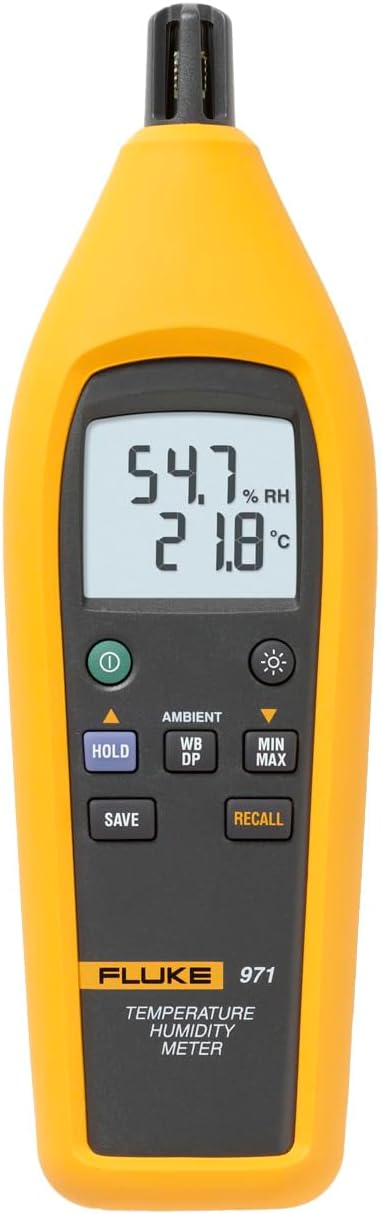
Fluke 971 Temperature Humidity Meter
- Dry bulb and relative humidity, with wet bulb and dew point computed
- Covers both humidity input modes with one instrument
- No wick to dry out, which removes the commonest wet-bulb fault
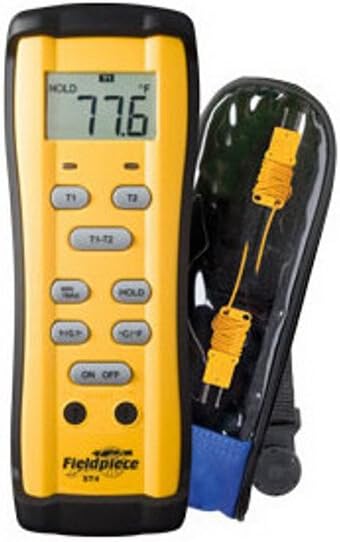
Fieldpiece ST4 Dual Temperature Meter
- Two probes so return and supply are read at the same moment
- Removes the drift you get walking one probe between two places
- Displays the difference directly
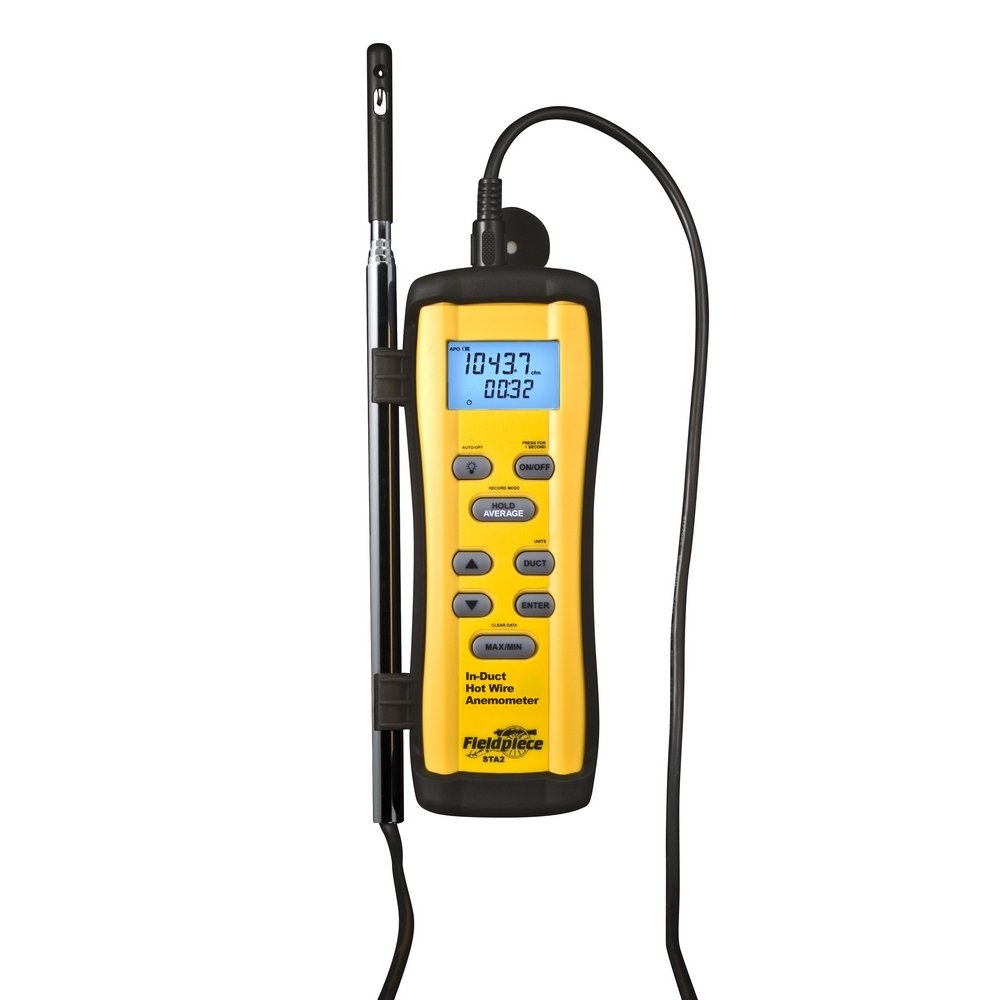
Fieldpiece STA2 In‑Duct Hot Wire Anemometer
- Telescoping hot wire for a proper in-duct traverse
- Airflow multiplies every BTU figure, in the same direction
- A measured traverse beats a nameplate CFM by a wide margin
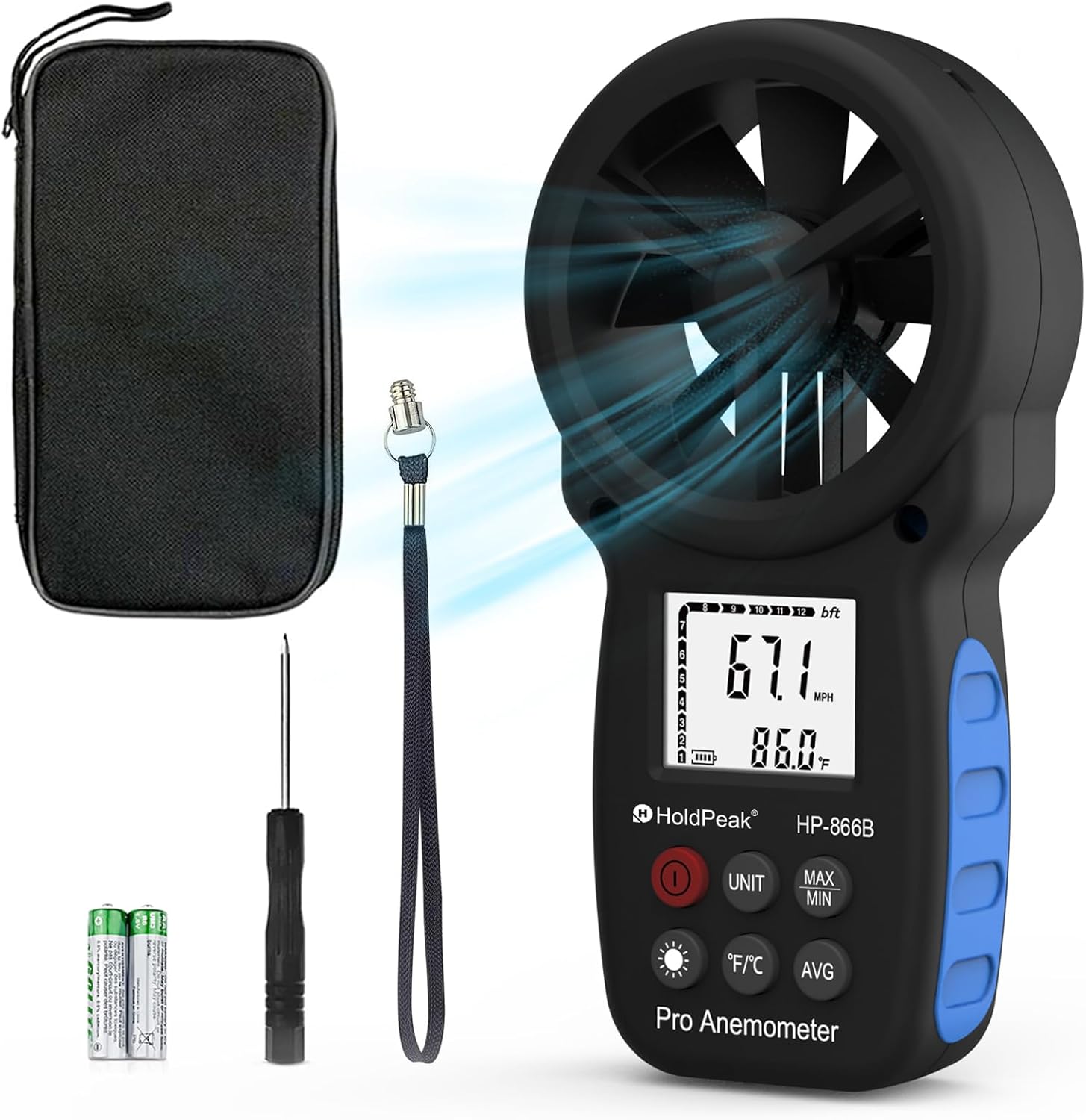
HoldPeak 866B Digital Thermo‑Anemometer
- Vane anemometer for register and grille face velocities
- Reads air temperature too, so one tool covers two inputs
- A useful cross-check when a duct traverse will not fit
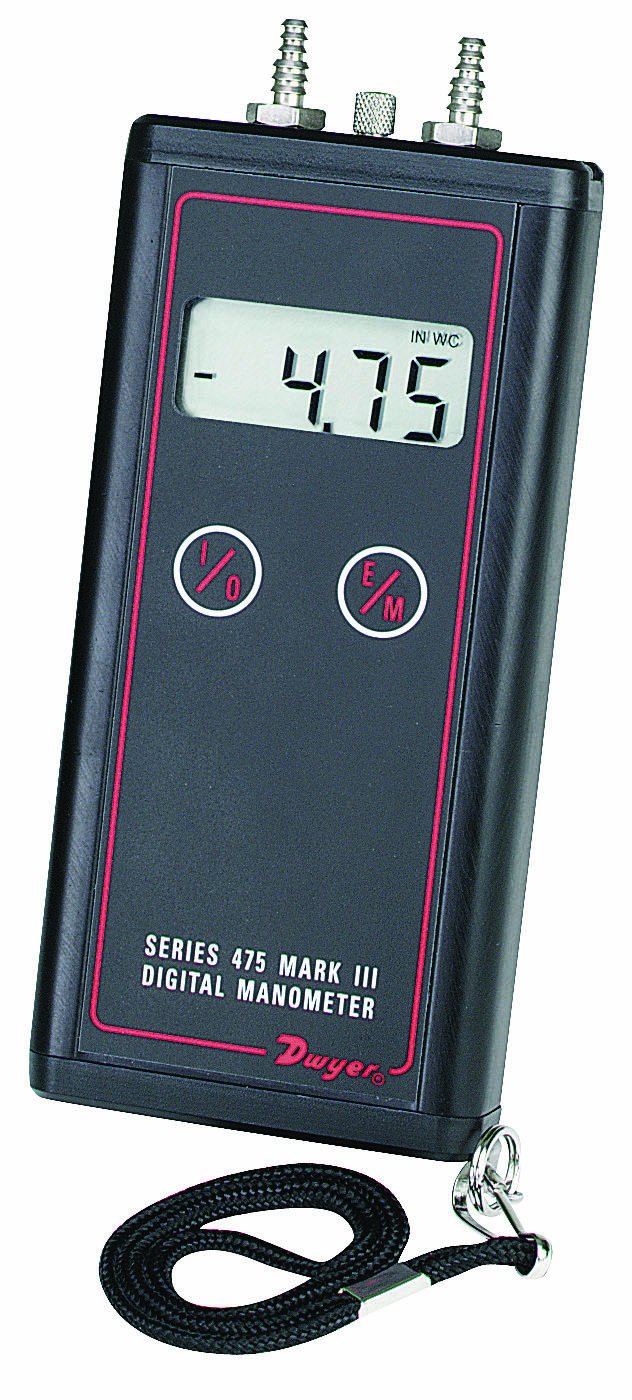
Dwyer Series 475 Mark III Digital Manometer
- Total external static pressure to 0.01 in w.c.
- Gets CFM off the manufacturer’s blower table
- High static is itself a common reason capacity comes up short
As an Amazon Associate, TestTalkHQ earns from qualifying purchases. Prices and availability can change.
What the capacity measurement costs you
It is not free, and pretending otherwise would be dishonest.
- You need an airflow number. A traverse takes real time, a flow hood on every register takes more, and the blower-table route is only as good as the table. This is the whole reason delta‑T stays in the kit.
- You need two more temperatures, well taken. Wet bulb is fussier than dry bulb: a dry wick reads high, a wet sensor reads low, and supply air sits so close to saturation that a small error is a large proportional one.
- The latent half is the least certain part. It rests on a difference between two nearly equal numbers. Half a degree on the supply wet bulb moves it by roughly a fifth.
- It is a snapshot. The answer is for the conditions at that moment. Come back in three hours and the return air has changed and so has the capacity.
Which to use, by situation
| Situation | Use | Why |
|---|---|---|
| Maintenance call, no complaint | Delta‑T | Two minutes for a go/no-go. Escalate only if it is out of band |
| “It’s not cooling” | Delta‑T first, then capacity | Delta‑T triages; capacity quantifies and rules airflow in or out |
| “It’s cold but clammy” | Capacity and SHR | A latent complaint. Delta‑T is structurally blind to it |
| Commissioning a new install | Capacity | Establishes a baseline in BTU, which a later call can be measured against |
| Warranty or replace-or-repair | Capacity | You need a number, and it needs to be defensible |
| Before and after a repair | Capacity, both times | Quantifies what the repair actually bought |
| Airflow you have not measured | Capacity, and measure the airflow | This is exactly where delta‑T misleads |
| Working at altitude | Capacity, with elevation entered | Both are affected; only one lets you correct for it |
| Checking a blower speed change | SHR, before and after | The direct feedback signal for a dehumidification adjustment |
The pattern, put simply: delta‑T tells you whether to look harder. Capacity tells you what you found. They are not competitors. Most calls that need the second one start with the first.
Where the refrigerant side comes in
Neither of these is a charge check, and it is worth being explicit about that because the three get run together.
Both delta‑T and air-side capacity measure outcome: what the air did. Superheat and subcooling measure mechanism: what the refrigerant is doing. An air-side measurement tells you precisely how much capacity is missing and says nothing about why; the refrigerant side is where the why lives.
The useful order on a real shortfall is: triage with delta‑T, quantify with air-side capacity, eliminate airflow, then go to the refrigerant side with a known magnitude to explain. Arriving at the gauges already knowing the machine is 9,000 BTU/h short is a much better position than arriving with “it doesn’t feel cold.”
The same argument, one level up
There is an existing article here on static pressure against airflow, and it is the same shape of argument: a fast proxy measurement against a slower direct one. Static pressure is a symptom of an airflow problem; CFM is the airflow. Delta‑T is a symptom of a capacity problem; BTU per hour is the capacity.
In both pairs the proxy is worth taking, because it is quick and it tells you whether to keep going. And in both pairs the proxy can be normal while the thing it proxies for is not — which is the entire reason the direct measurement exists.
Frequently asked questions
Is sensible heat ratio better than delta‑T?
They answer different questions. Delta‑T is a two-minute go/no-go that needs no airflow measurement; sensible heat ratio and air-side capacity quantify what the equipment is delivering and split it into sensible and latent. Most calls that need the second start with the first.
Can a system have a good delta‑T and still be underperforming?
Yes, and it is common. Low airflow spreads the same or less capacity over fewer pounds of air, so the temperature split gets wider, not narrower. A dirty evaporator or a crushed duct run can produce a textbook delta‑T on a system delivering well under its capacity.
Which measurement finds a clammy house?
The capacity measurement, through the sensible heat ratio. A high SHR means the coil is doing very little dehumidification, which is precisely the “cold but damp” complaint. A dry-bulb split cannot see latent capacity at all.
Do I need a good airflow number for the sensible heat ratio?
No, and this is the useful part. Sensible and total capacity both scale with airflow, so it cancels out of their ratio completely. The BTU figures need a good CFM; the ratio does not, so even a rough airflow estimate gives you a valid answer on whether the coil is dehumidifying.
When should I take both?
On any call where the complaint is about comfort rather than a hard failure, and on any system whose airflow you have not measured. Delta‑T tells you whether to look harder, the capacity measurement tells you what you found, and together they eliminate airflow before you open the gauges.
Does either of these check the refrigerant charge?
No. Both measure the outcome on the air side. Superheat and subcooling measure what the refrigerant is doing, which is where the cause of a shortfall usually is. The efficient order is triage with delta‑T, quantify with air-side capacity, eliminate airflow, then go to the gauges with a known magnitude to explain.
Does altitude change which one I should use?
It strengthens the case for the capacity measurement. Both are affected — less dense air carries less heat per cubic foot — but only the capacity calculation takes elevation as an input and corrects for it. Published delta‑T target tables are generally sea-level tables.