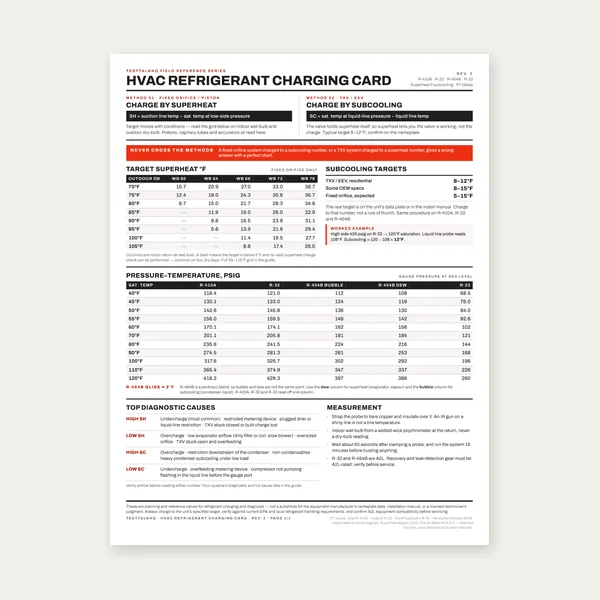
HVAC Refrigerant Charging Card
$3.99
BuyRefrigerant-side charge numbers vs air-side temperature split — techs grab the wrong one and then “fix” the wrong thing
Superheat and subcooling tell you what the refrigerant did in the coil and condenser. Delta-T (temperature split) tells you what the air did across the coil. They move together on a healthy system and lie in opposite directions when airflow is the real problem. If you only carry one of those habits, you will mis-call charge on a restricted duct.
Start with SH or SC if the question is chargePiston superheat or TXV subcooling from line temp and pressure.
Open SH/SC Calculator →Use superheat or subcooling when the question is “is this system charged, restricted, or leaking?” That is a PT-chart job: line temperature minus (or from) saturation. Metering device picks the method — piston SH, TXV SC. Walkthrough: how to measure SH and SC. Math: calculator.
Use delta-T when the question is “is the air actually picking up (or dropping) the temperature it should?” Cooling split is typically return dry-bulb minus supply dry-bulb, often ~16–22°F on a wet coil at ~400 CFM/ton. Heating rise is supply minus return, compared to the furnace nameplate range (often 30–60°F depending on the unit). Delta-T does not know what refrigerant you have, and it does not know whether a TXV is holding superheat.
If the complaint is “I added 3 pounds and it still ices,” you needed SH/SC and airflow, not a bigger bottle. If the complaint is “one bedroom is 8 degrees off and the coil looks fine,” start with delivered CFM and split at that run — SH on the suction line will look legal.
SH/SC is a poor room-comfort tool. A correctly charged system can still have three rooms at 40 CFM. That is anemometer / ESP work — static vs CFM.
How to take it: return probe in the stream before the coil (not in a dead corner of the cabinet). Supply probe after the coil, not in a jet off a takeoff 20 feet downstream. Cooling: ΔT = T_return − T_supply. Heating: ΔT = T_supply − T_return. Typical cooling 16–22°F at design CFM; heating must match the rating-plate temperature rise, not a meme “50 degrees.”
A dedicated HVAC delta-T calculator is the planned companion for that subtraction and the typical-range flag. Until it ships, do the two-probe math on paper and come back here for charge. If split is high, prove restriction with the ESP calculator and delivered air with the duct CFM calculator.
Common miss: tech sees 18°F cooling split, calls it “charged,” never measures SH on a piston. The system is two pounds light and the split is being held up by low CFM. Other miss: tech recovers to “fix” 4°F SH on a piston without measuring static; the media filter was the entire plant. Match the tool to the failure mode.
There is no honest “typical superheat by refrigerant” table that replaces indoor WB, outdoor DB, and the OEM chart — R-410A, R-22, and R-32 all use the same SH/SC ideas with different PT numbers. That is why this cluster has a calculator with three refrigerants, not a wall chart of “R-410A = 10°F always.”
Charge number first if you brought gaugesThen confirm the air split so you do not recover a duct problem.
Open SH/SC Calculator →No. Different fluids, different locations, different physics. A 20°F air split is not 20°F SH.
No. It is a ballpark air-side capacity check at roughly 400 CFM/ton on a wet coil. Outdoor 115°F and indoor 68°F dry / 55°F WB will not land on the same split as a 95/75 day.
You need the one that answers the question. Charge calls need SH or SC. Comfort and icing calls need split plus static/CFM. Carrying both habits is how you stop guessing.
$3.99
Buy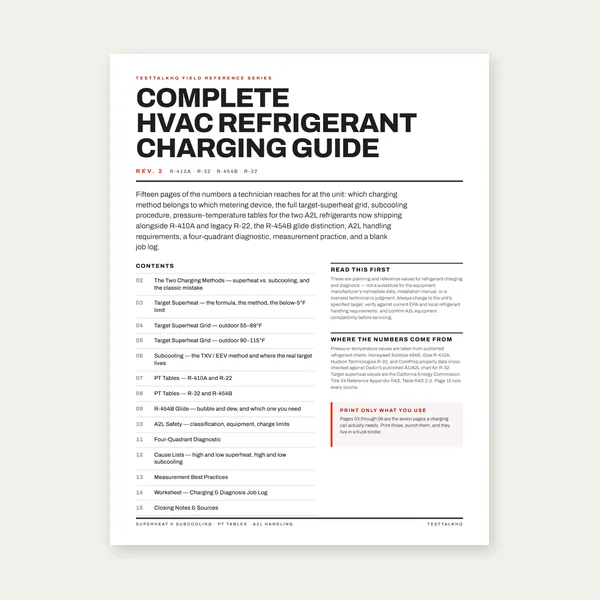
$12.99
Buy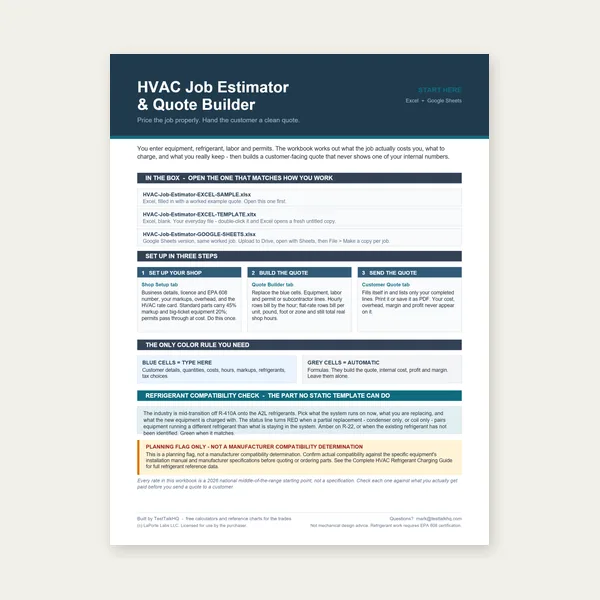
$29.00
Buy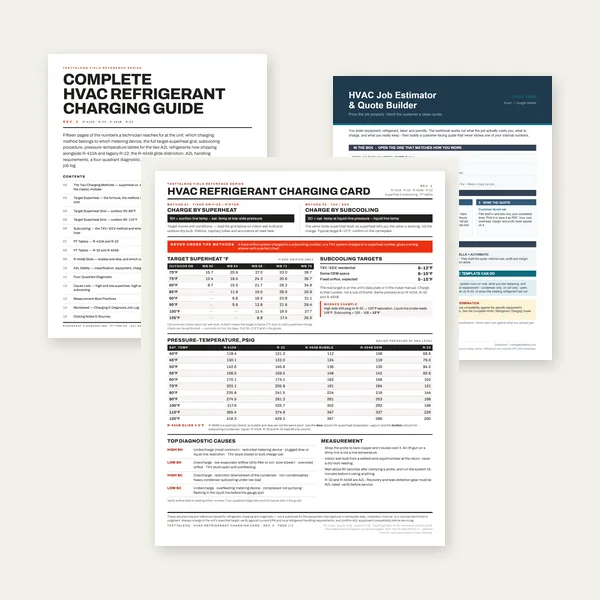
$39.00
BuyCheckout opens here — you stay on this page.
From the TestTalkHQ HVAC Tools / Manifold Gauges catalog — digital manifolds for the pressure + line-temp pair this calculator uses, plus a scale for the charge change and a leak detector for the high-superheat path.
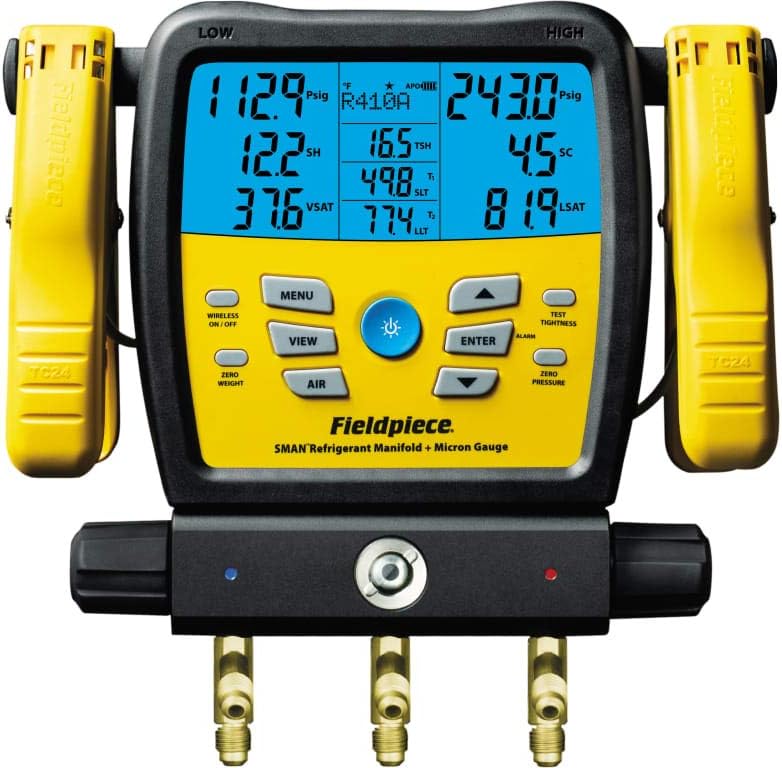
Digital manifold with pipe-clamp probes — suction/liquid pressure and line temperature on one screen. This calculator is the independent PT check against that display.
View on Amazon →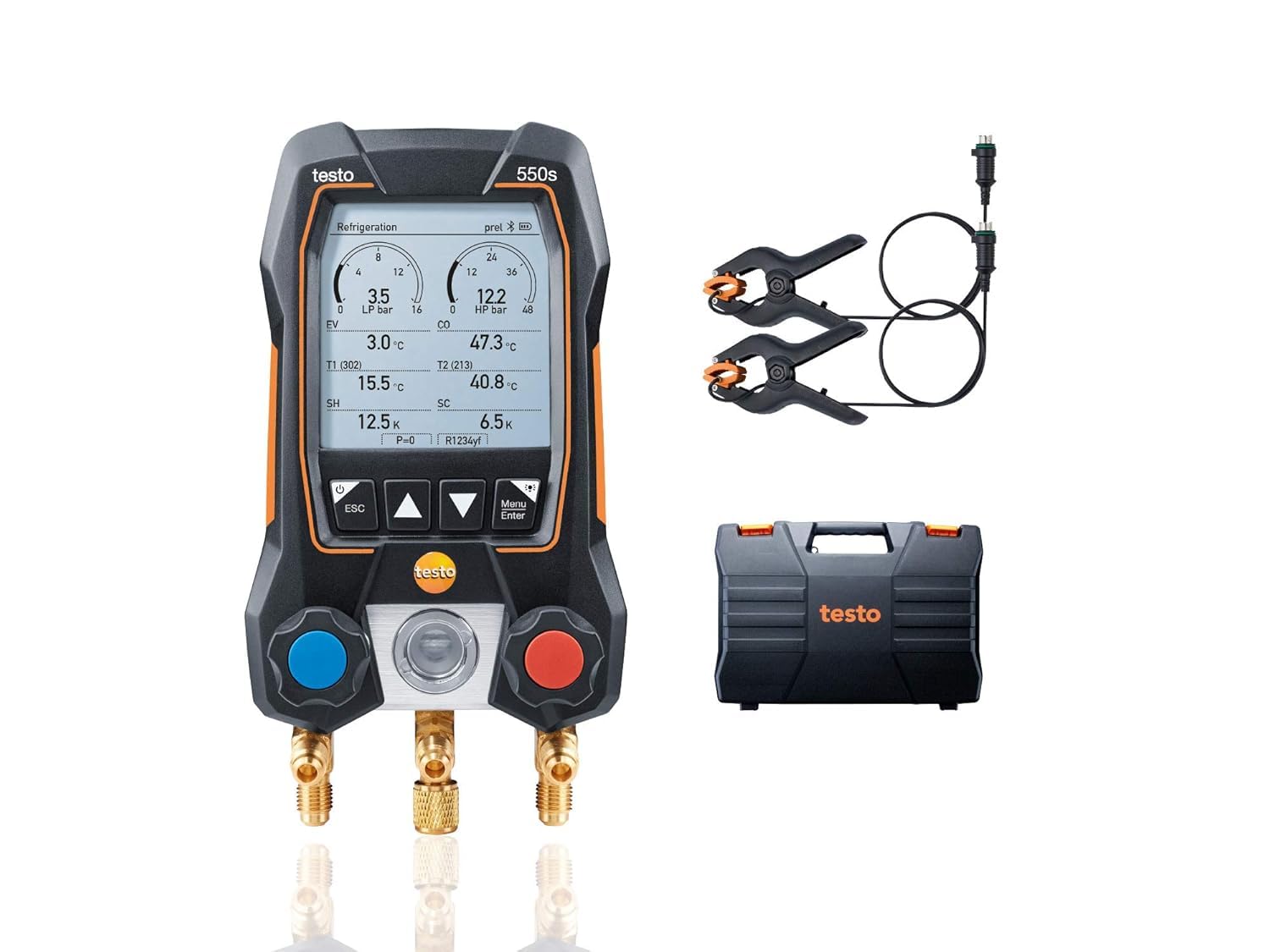
Bluetooth manifold set for R-410A / R-22 / R-32 work. Clamp the probes on the suction or liquid line, read pressure, then run the numbers here.
View on Amazon →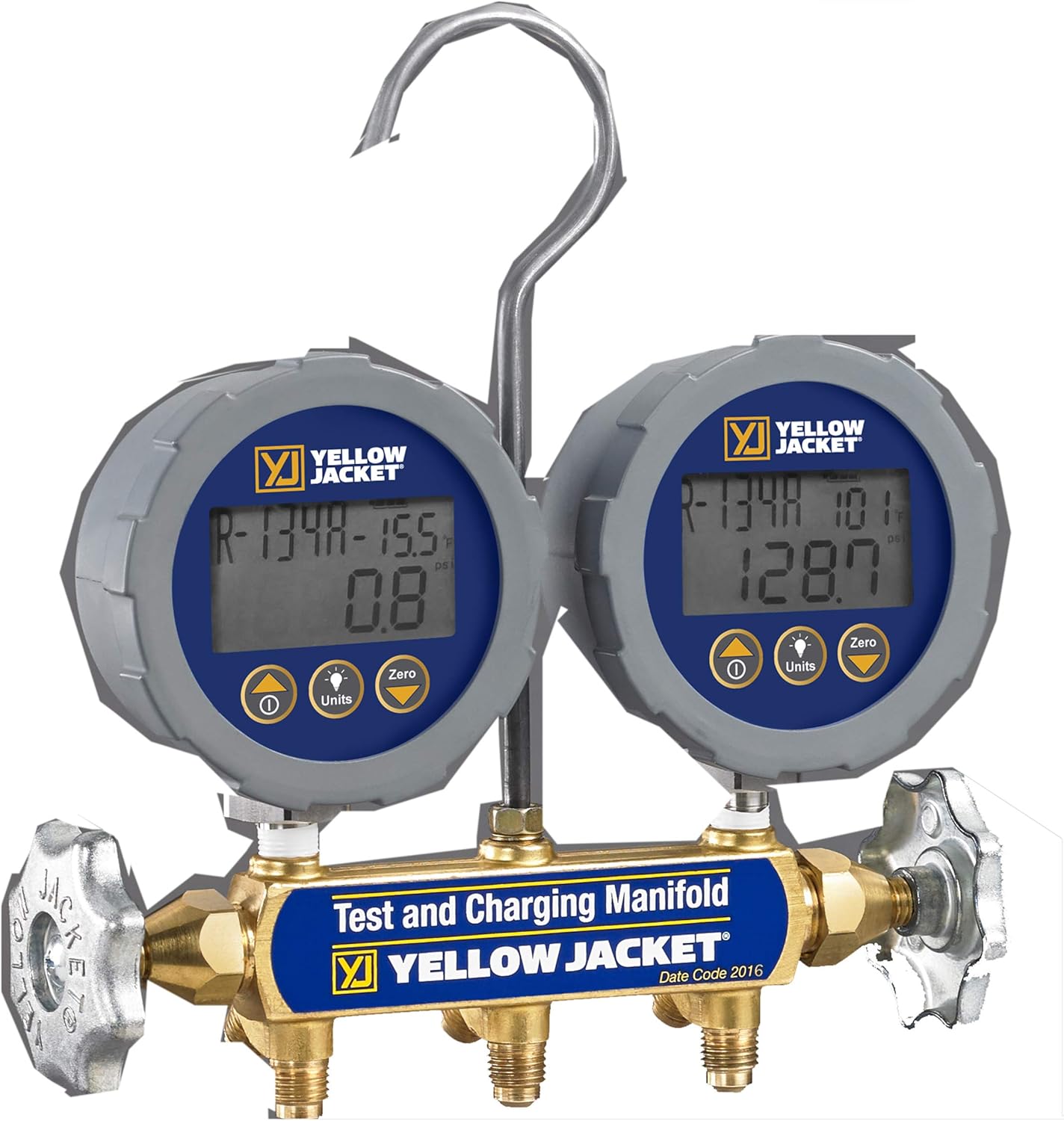
Series 41 digital manifold many trucks still carry. Same psig + clamp-temp workflow as the SMAN — the PT math does not care which brand produced the two numbers.
View on Amazon →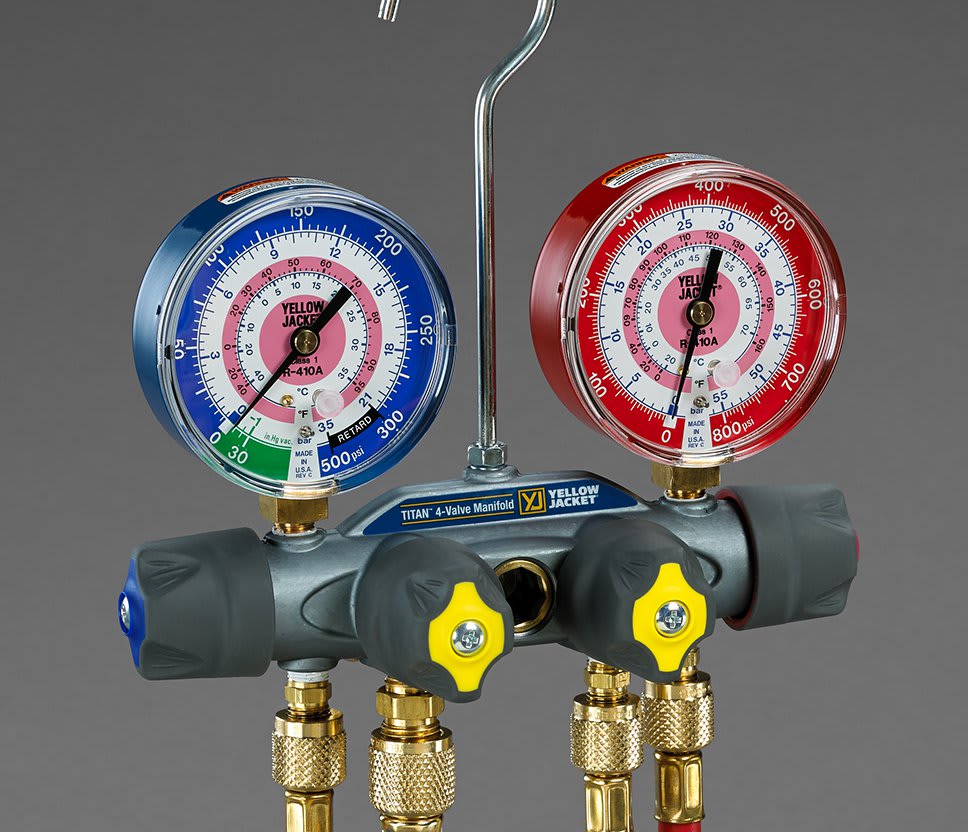
4-valve charging manifold for recovering, vacuuming, and weighing in a charge after superheat or subcooling says you are short or long.
View on Amazon →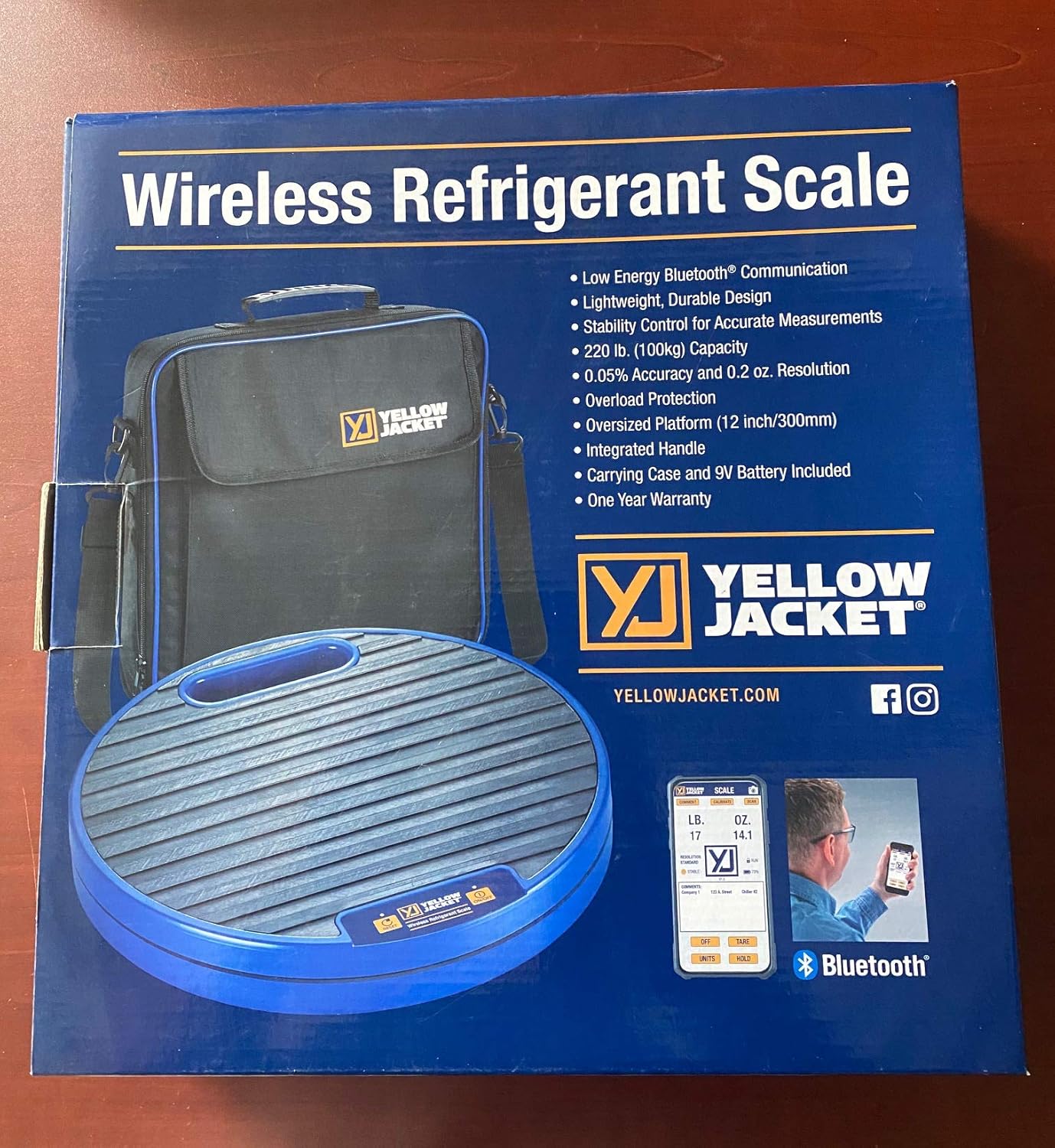
Weigh the charge in or out. Superheat/subcooling tells you direction; the scale is how you stop guessing ounces on a TXV or piston system.
View on Amazon →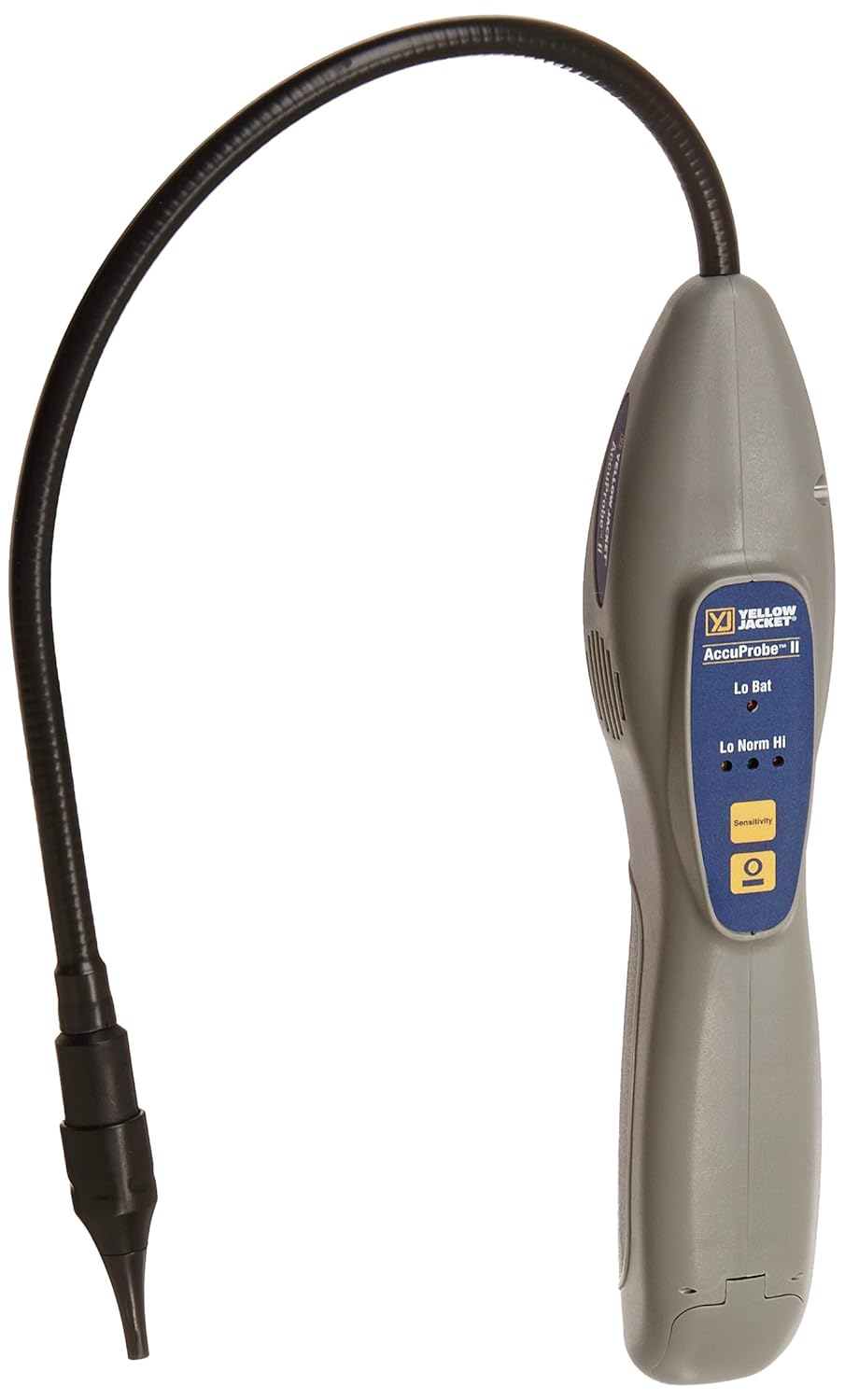
High superheat plus low subcooling is often a leak, not a “needs more gas forever” story. Sniff before you keep adding refrigerant.
View on Amazon →As an Amazon Associate, TestTalkHQ earns from qualifying purchases.