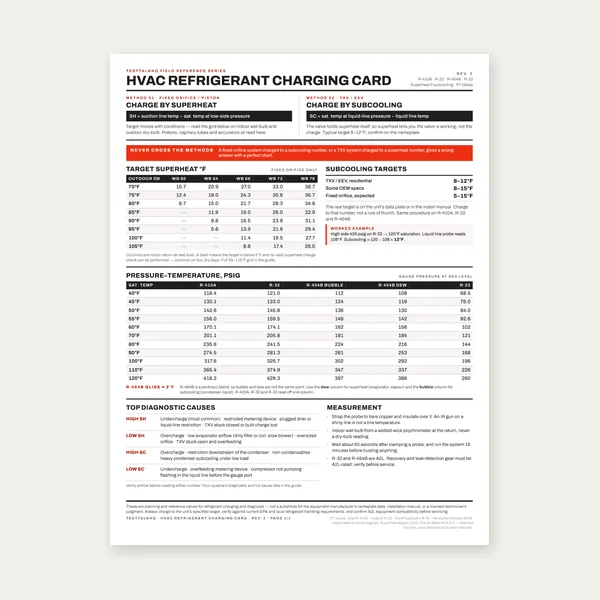
HVAC Refrigerant Charging Card
$3.99
BuyTwo probes in the airstream vs gauges on the process tubes — they answer different questions
Delta-T asks whether the air changed temperature the way a healthy coil should. Superheat and subcooling ask whether the refrigerant finished boiling or stacking liquid. A 20°F split can sit on a starved piston. A perfect TXV subcooling can sit on a 0.90 in. WC duct. Grab the check that matches the question, then use the other to keep from lying to yourself.
Start with delta-T if you have not hung gauges yetReturn vs supply, humidity-adjusted band, thirty seconds.
Open Delta-T Calculator →Run a delta-T check when the question is “is the air actually picking up (or dropping) temperature?” Two dry-bulbs. That is the delta-T calculator and the measurement guide.
Run superheat or subcooling when the question is “is this system charged, restricted, or leaking?” Metering device picks the method — piston SH, TXV SC. That is the SH/SC calculator, now live, and the refrigerant-side sibling writeup Superheat/Subcooling vs Delta-T.
Delta-T is a poor leak detector and a poor TXV test. A valve that will not hold superheat will not show up in a 19°F split until capacity is already gone.
How to take those readings: SH/SC guide.
Air split first if you have not hung gaugesThen SH/SC if the band says capacity, not duct.
Open Delta-T Calculator →Common miss: tech sees 18°F split, calls it charged, never measures piston superheat. The system is light and the split is being held up by low CFM. Other miss: tech recovers to “fix” a 26°F split; the media filter was the entire plant. Match the failure mode.
You cannot convert delta-T to superheat. A 20°F air split is not 20°F SH. Different fluids, different locations. Use both tools; do not translate between them.
Not if you are charging, recovering, or chasing a leak. 20°F is a healthy-looking air-side number, not a PT-chart number.
Not if rooms are wrong. Perfect SH on a piston with three closed bedrooms is still a comfort failure. Measure split and CFM.
This one starts from the air-side check. The SH/SC vs Delta-T page starts from the gauges. Same pair of tools; different first question.
$3.99
Buy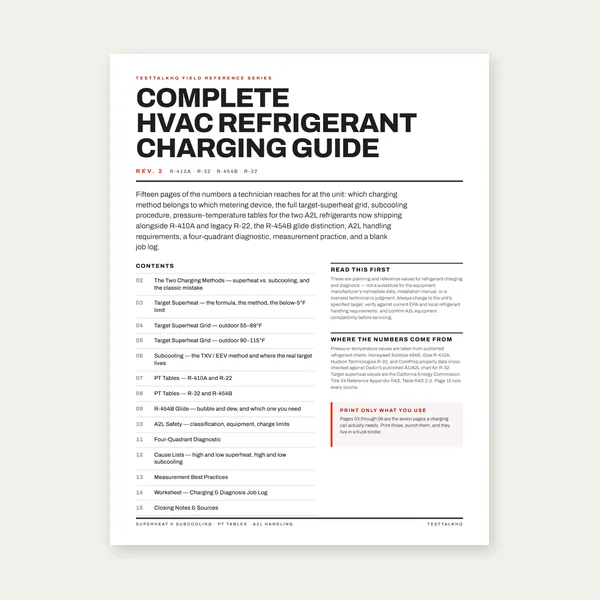
$12.99
Buy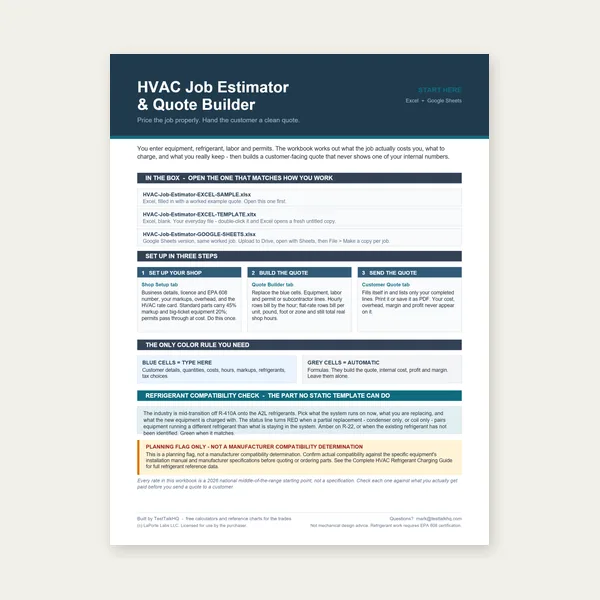
$29.00
Buy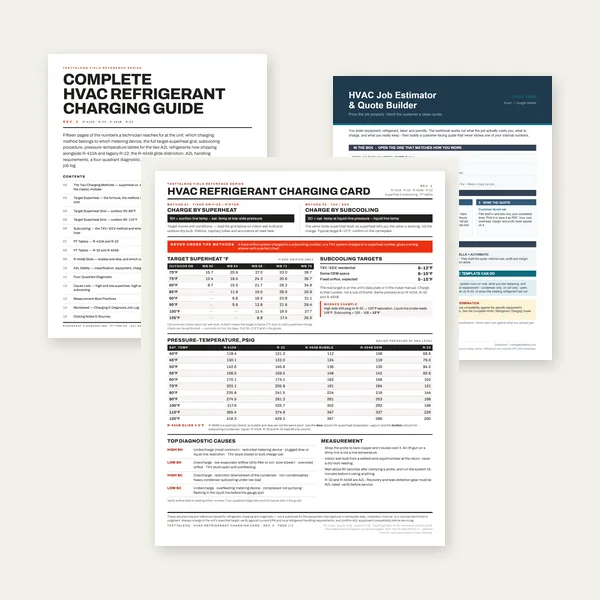
$39.00
BuyCheckout opens here — you stay on this page.
From the TestTalkHQ HVAC Tools / Thermometers catalog — a dual-probe meter for return vs supply air, IR guns for a quick surface check (not a substitute for in-stream probes), plus the next meter when split says airflow or charge.
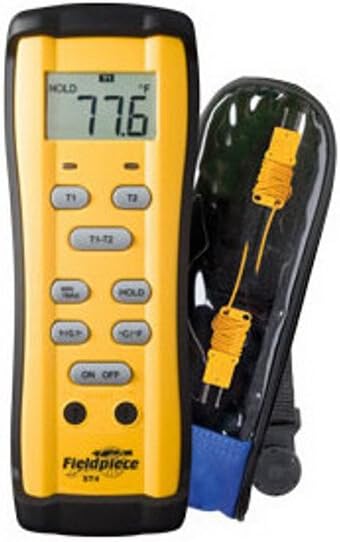
Two probes, one delta. Park one in the return stream and one in the supply after the coil — this calculator is the expected-range check against that display.
View on Amazon →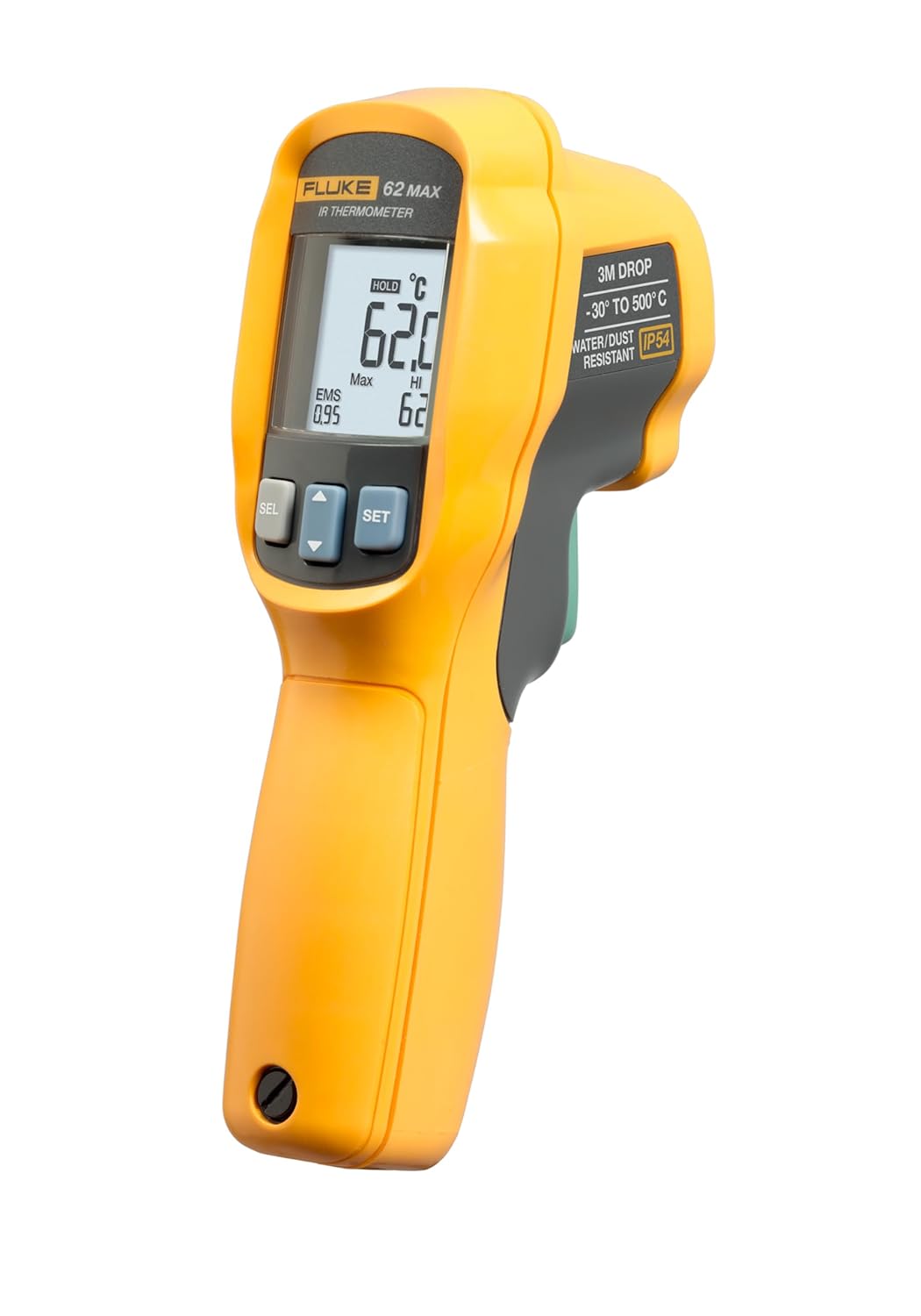
Fast surface scan of a supply plenum or register. IR is not in-stream dry-bulb — use it to find a hot/cold spot, then confirm split with probes.
View on Amazon →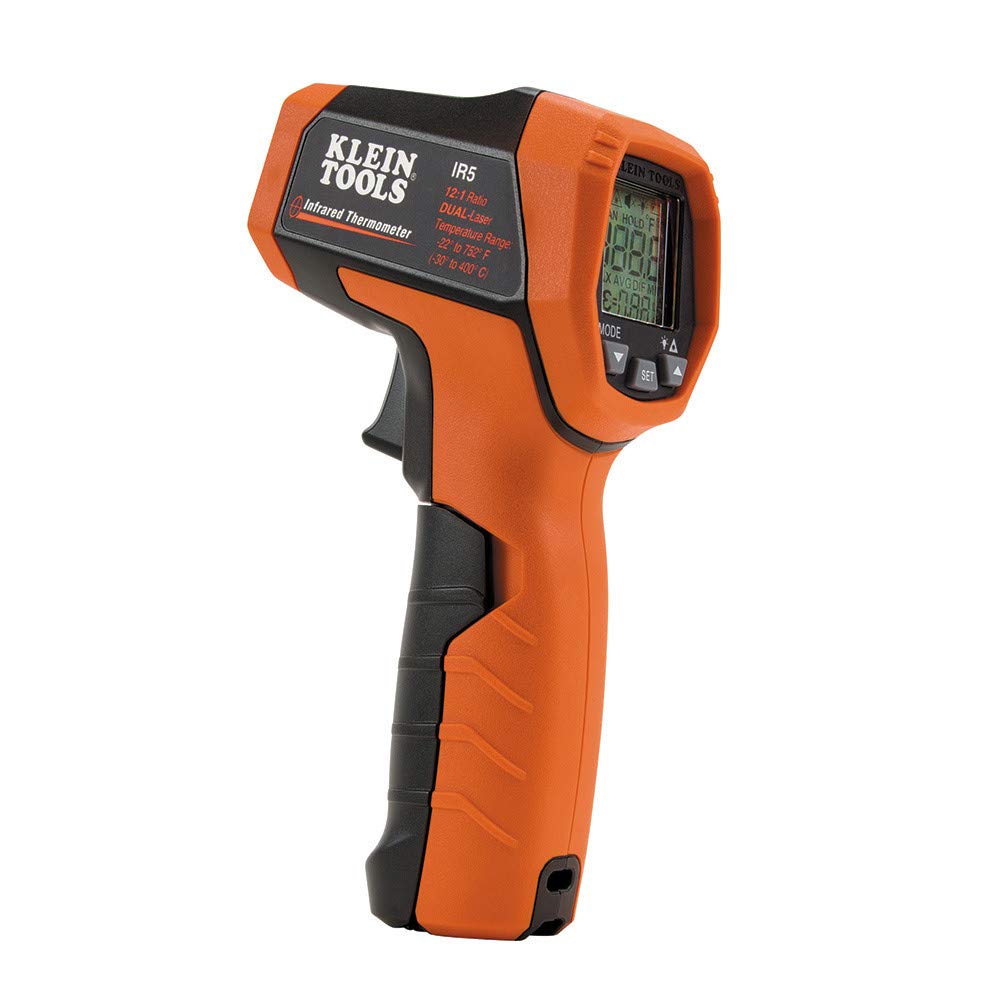
Dual-laser IR for a quick plenum or grille surface read. Same caveat as the Fluke: emissivity and mixing air will lie. Probes own the calculator inputs.
View on Amazon →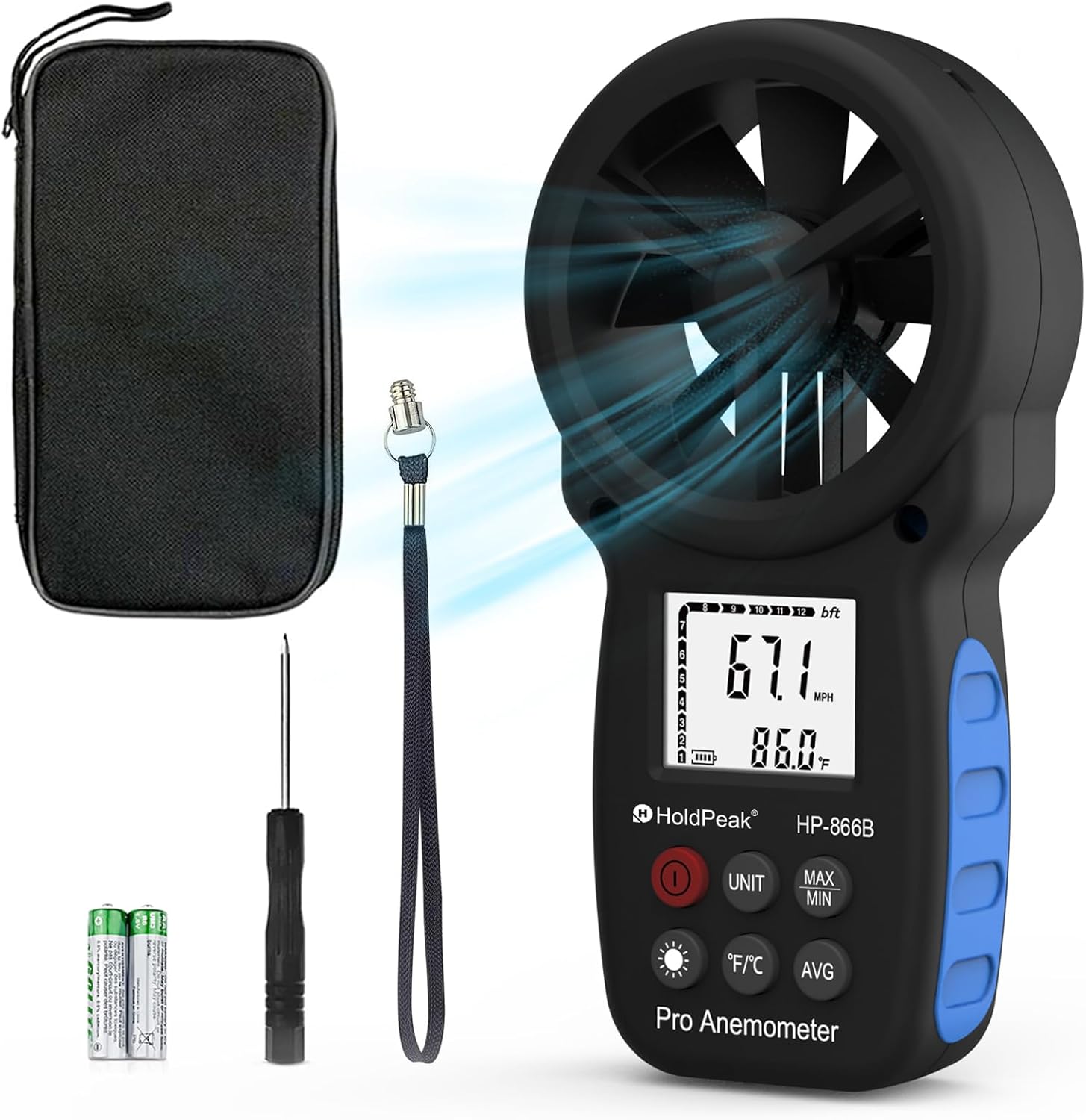
When split is high, you still need FPM. Vane meter for register face velocity after delta-T says the coil is seeing too little air.
View on Amazon →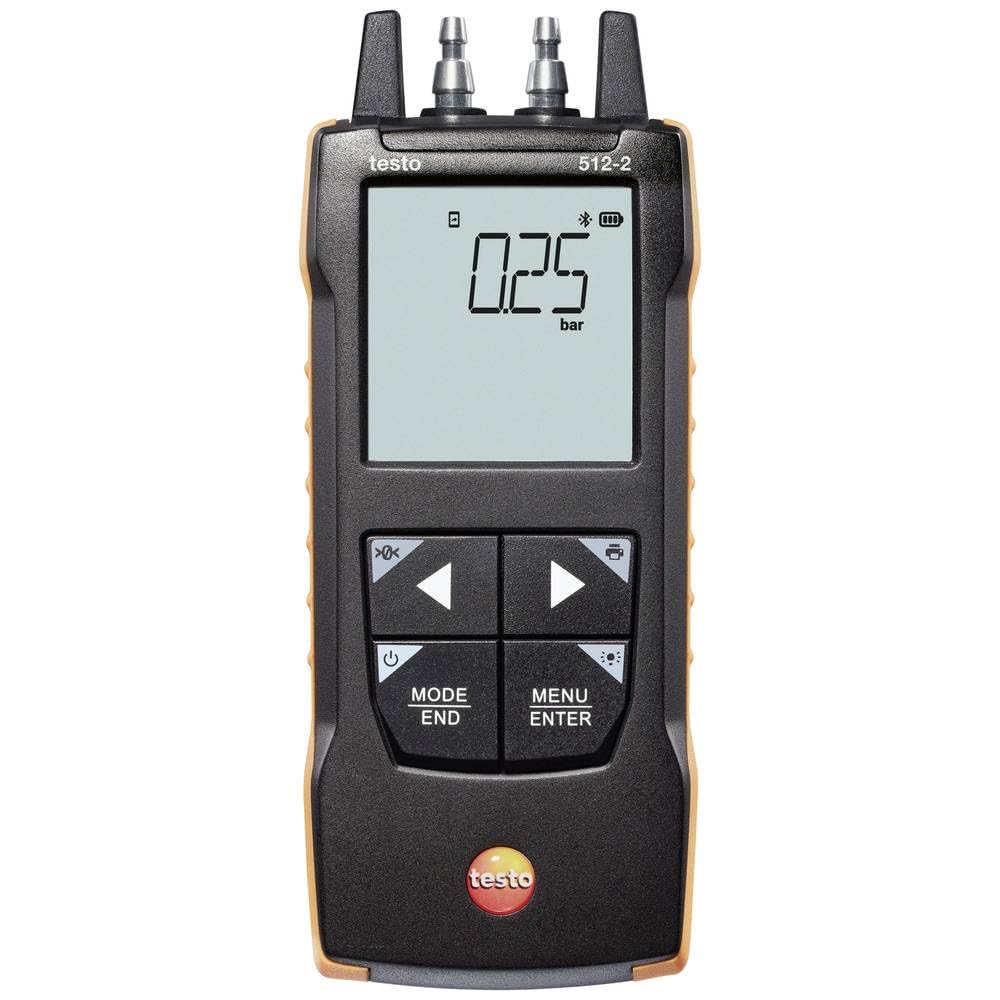
High cooling split usually means low CFM. TESP vs nameplate is the restriction check — pair with the ESP calculator, not a second guess at thermometers.
View on Amazon →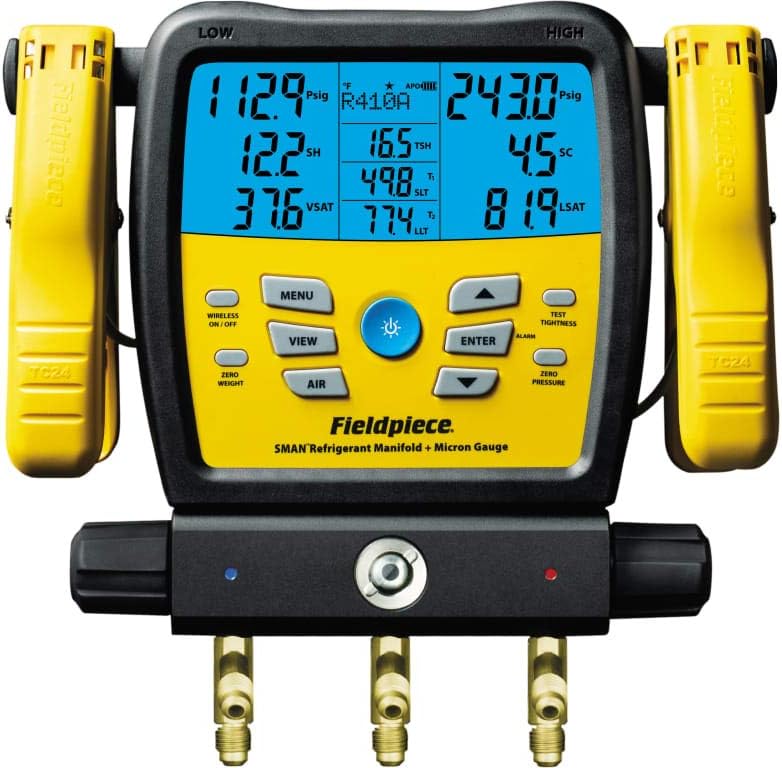
Low split with decent airflow is often charge. Hook gauges and run superheat / subcooling — delta-T is not a charging chart.
View on Amazon →As an Amazon Associate, TestTalkHQ earns from qualifying purchases.