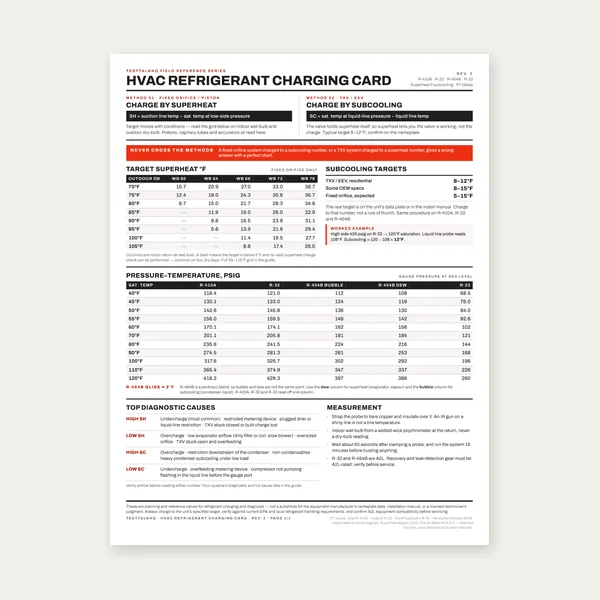
HVAC Refrigerant Charging Card
$3.99
BuyLow split is not automatically low airflow — high split usually is
A 10°F cooling drop and a 28°F cooling drop are different failures. Low delta-T is a capacity / charge / coil / extra-air story. High delta-T is almost always not enough air across the coil. Mixing those up is how you recover a dirty filter or add gas to a plugged return.
Compute the split first: Delta-T Calculator. Probe placement: measurement guide.
Confirm high vs low before you weigh or cutHumidity-adjusted band, then pick charge vs airflow.
Open Calculator →This is the mix-up. Air that crawls across a cold evaporator drops more degrees (high ΔT) and can ice the coil. Air that blasts across does not stay long enough to drop 20°F (low ΔT). Dirty filter / duct is high split. Dirty evaporator fin film that kills capacity is low split. Both are “dirty.” They are not the same test.
| Cooling ΔT | First suspects | Not the first move |
|---|---|---|
| Low (below humidity-adjusted band) | Low charge, weak compressor, dirty/insulated coil, bypass/leak mixing, too much CFM | Cranking the blower higher (that lowers split further) |
| High (above the band) | Dirty filter, closed registers, high ESP, undersized/restricted duct | Adding refrigerant |
| On target, house still wrong | Room CFM, duct leaks downstream, latent vs sensible comfort | Calling the split “proof of charge” |
Coil is not as cold as it should be, so the air barely drops. Confirm with superheat (piston) or subcooling (TXV) — high SH / low SC is the charge/leak row, not a 10°F split by itself.
A mat of dust on the leaving face cuts heat transfer. Split falls. Static may also rise if the coil is plugged as a filter. Look at the slab; do not guess from ΔT alone.
Blower on a tap that is too high, missing filter, cabinet leak mixing supply back into return. Air does not stay on the coil. TESP can look low. This is the “low airflow” people wrongly assign to a low split — it is actually extra air or mixed air.
Dirty condenser, bad fan, failing compressor. Head and suction will tell you. Split is just the air noticing the capacity is gone.
The usual. Air lingers, drop climbs, coil may ice, then split collapses after ice insulates the slab — so a 28°F reading on a dry coil and a 12°F reading on an iced coil can be the same restriction two hours apart. Measure before it ices if you can.
Prove it: ESP vs nameplate, then traverse CFM. If the run is small, size it with the ductulator.
Homeowner shut the bedrooms. Supply static up, CFM down, split up. Open them, re-test.
High or low?Let the humidity-adjusted band pick airflow vs charge before you weigh.
Open Calculator →Not as the first physics. Low airflow raises cooling ΔT, then icing can crash the number. If you walked up to an iced coil showing 8°F, you missed the high-split chapter. Melt, measure ESP, then decide.
A coil that is plugged like a filter raises static and can raise split. A coil that is filmed over and not transferring heat lowers split. Look at the slab.
High rise = low airflow (dangerous for the exchanger). Low rise = too much air or weak heat. Compare to the furnace plate, not 16–22°F.
$3.99
Buy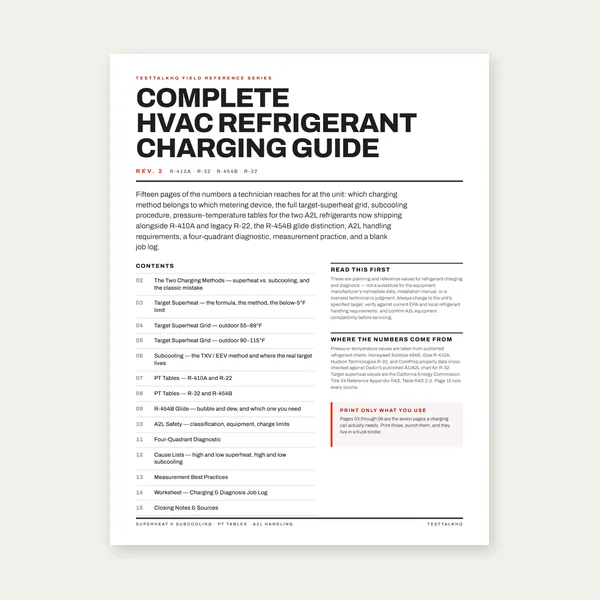
$12.99
Buy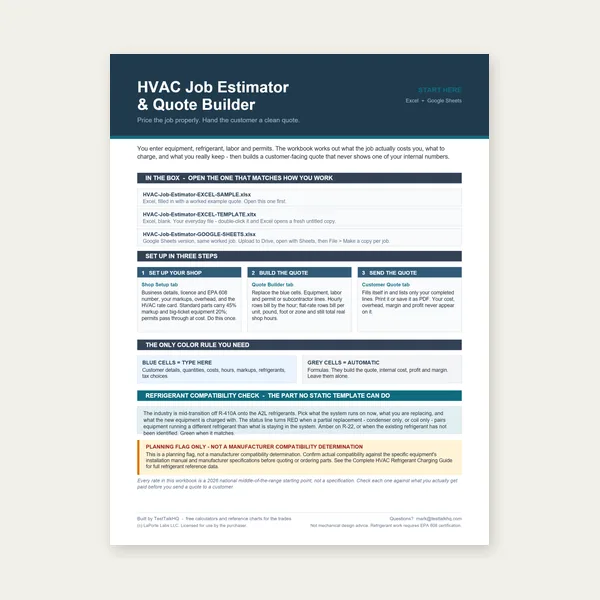
$29.00
Buy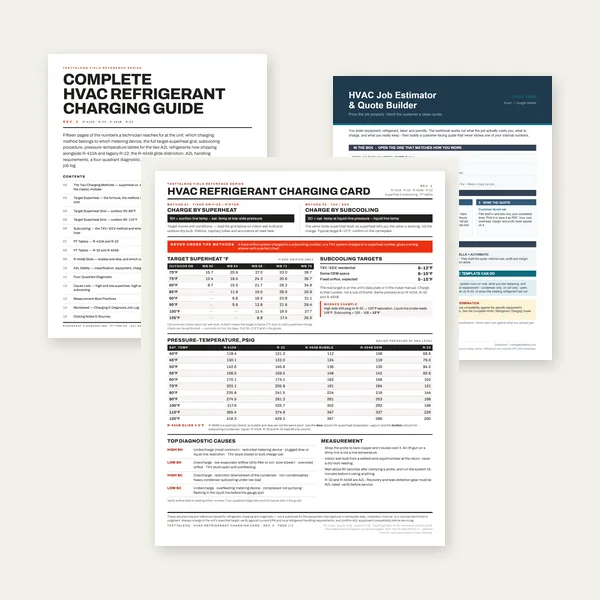
$39.00
BuyCheckout opens here — you stay on this page.
From the TestTalkHQ HVAC Tools / Thermometers catalog — a dual-probe meter for return vs supply air, IR guns for a quick surface check (not a substitute for in-stream probes), plus the next meter when split says airflow or charge.
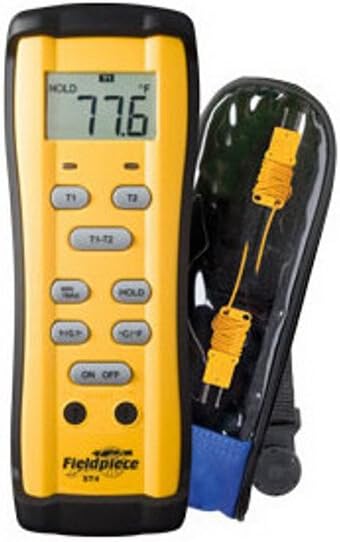
Two probes, one delta. Park one in the return stream and one in the supply after the coil — this calculator is the expected-range check against that display.
View on Amazon →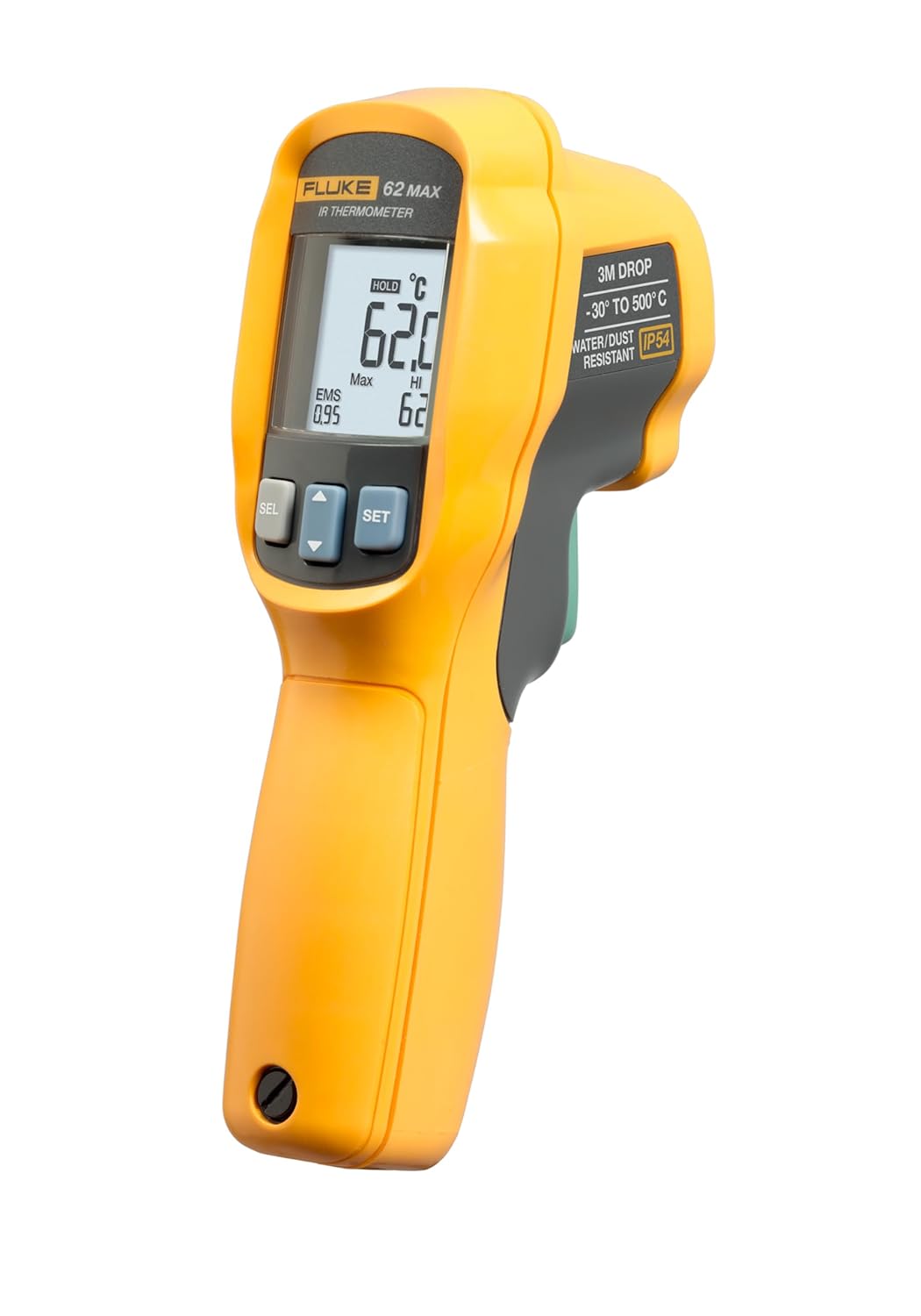
Fast surface scan of a supply plenum or register. IR is not in-stream dry-bulb — use it to find a hot/cold spot, then confirm split with probes.
View on Amazon →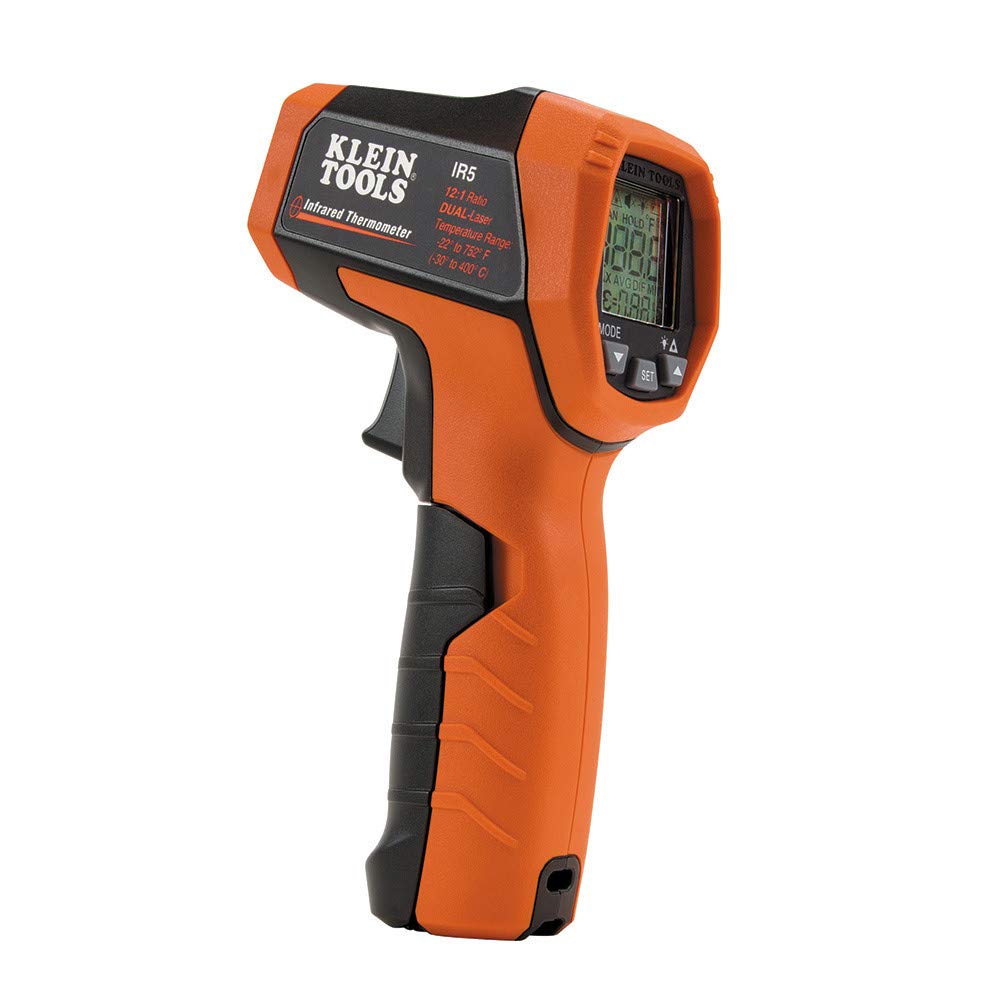
Dual-laser IR for a quick plenum or grille surface read. Same caveat as the Fluke: emissivity and mixing air will lie. Probes own the calculator inputs.
View on Amazon →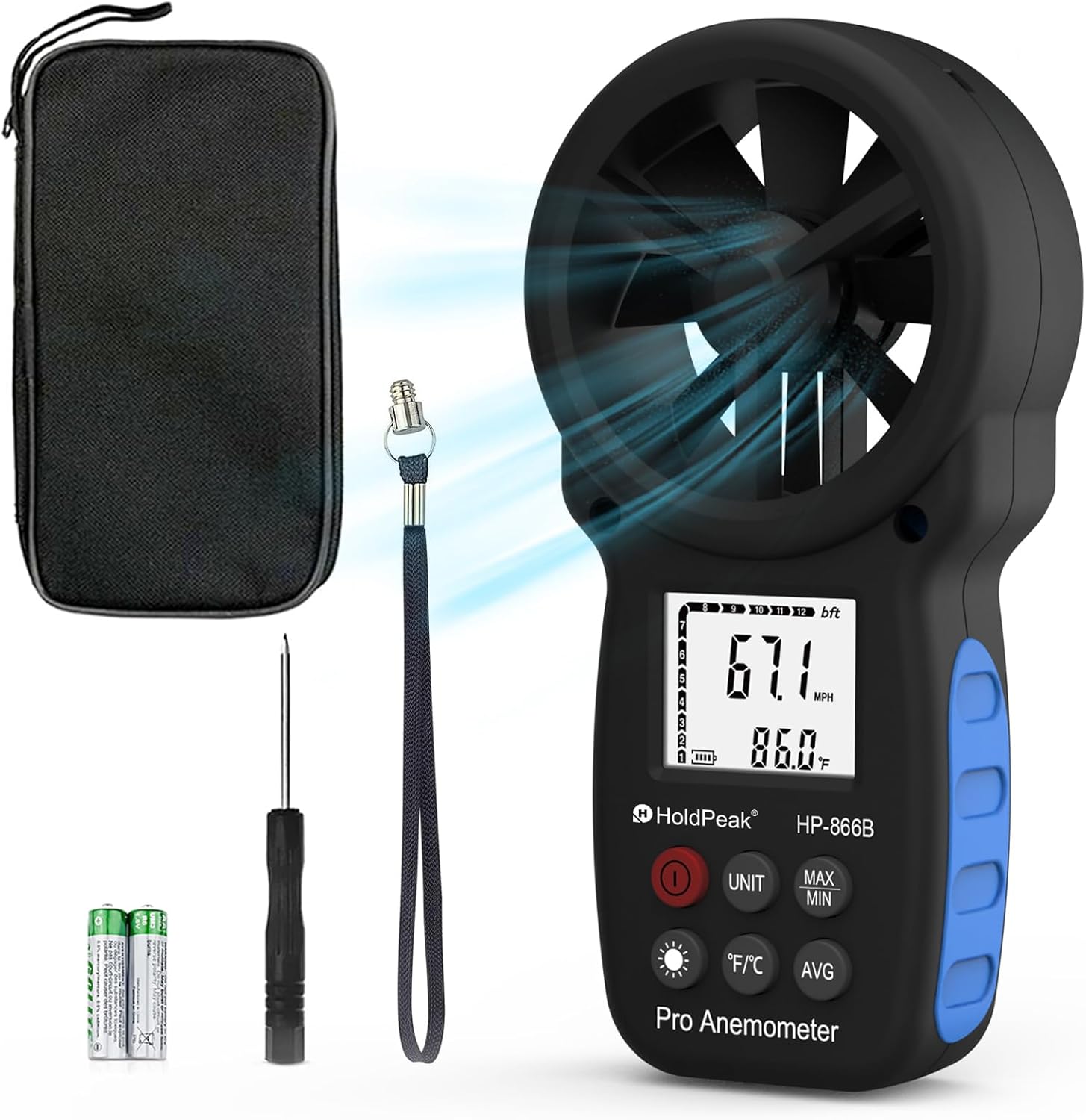
When split is high, you still need FPM. Vane meter for register face velocity after delta-T says the coil is seeing too little air.
View on Amazon →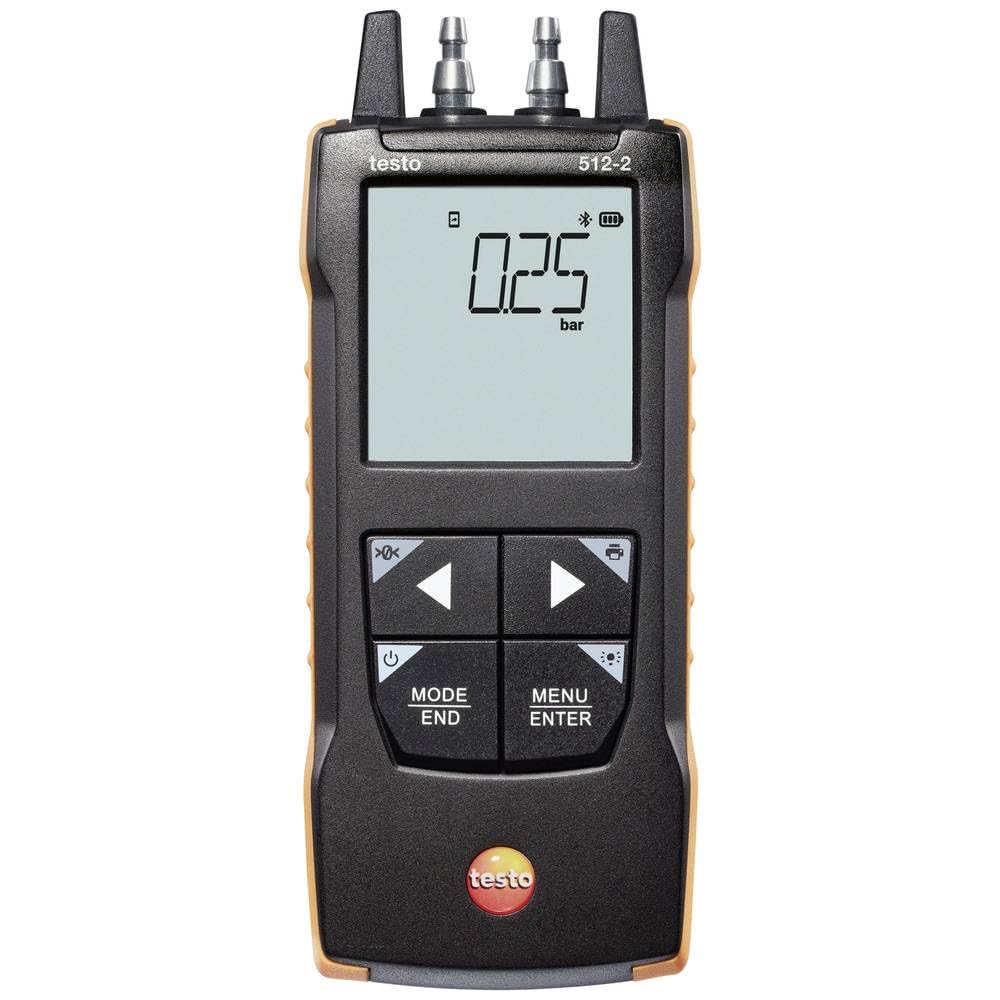
High cooling split usually means low CFM. TESP vs nameplate is the restriction check — pair with the ESP calculator, not a second guess at thermometers.
View on Amazon →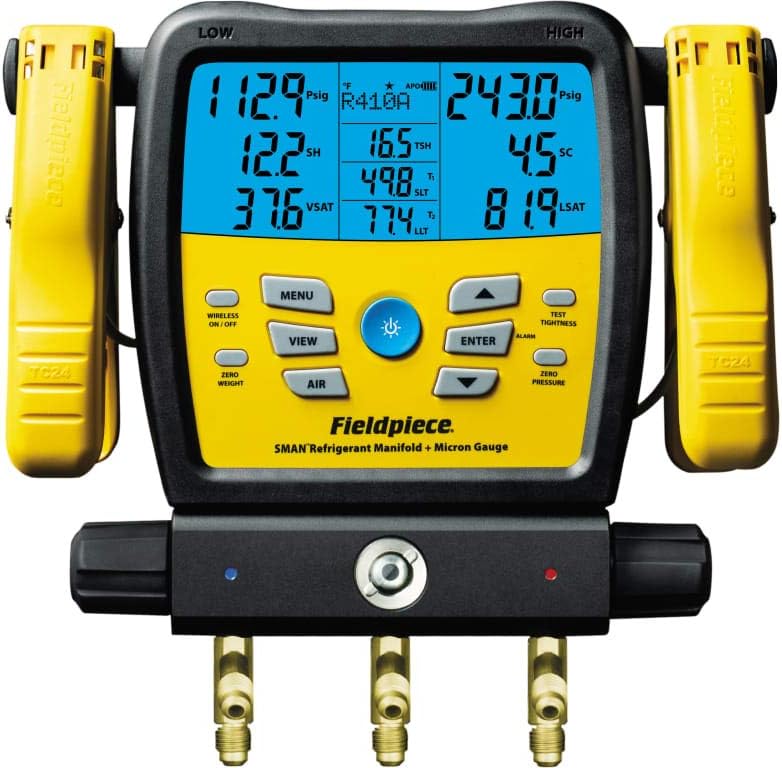
Low split with decent airflow is often charge. Hook gauges and run superheat / subcooling — delta-T is not a charging chart.
View on Amazon →As an Amazon Associate, TestTalkHQ earns from qualifying purchases.