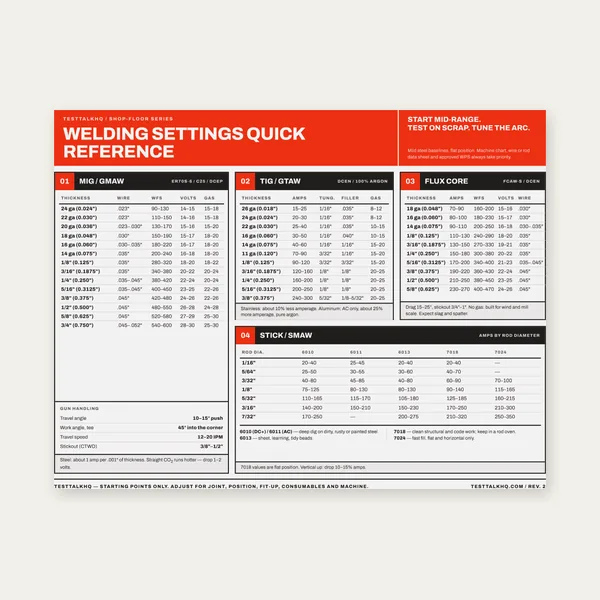
Welding Reference Card
One page. MIG, TIG, stick and flux core settings by thickness.
$3.99
BuyAmperage, electrode size & bevel specs by schedule
One page. MIG, TIG, stick and flux core settings by thickness.
$3.99
Buy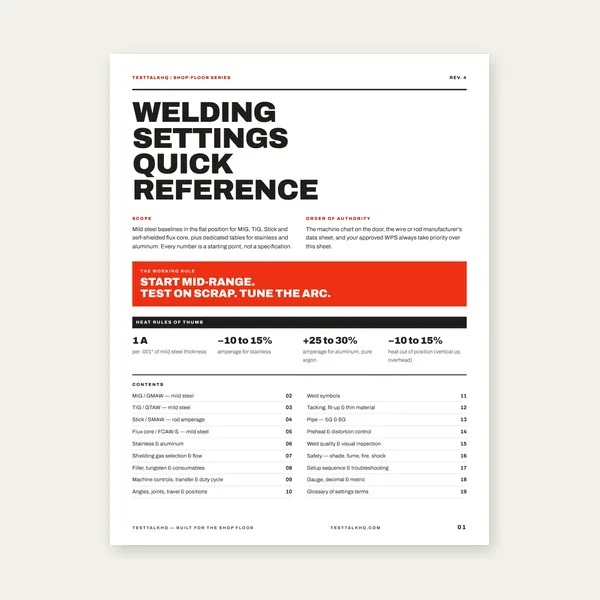
19 pages. Four processes, stainless and aluminum, symbols and inspection.
$12.99
Buy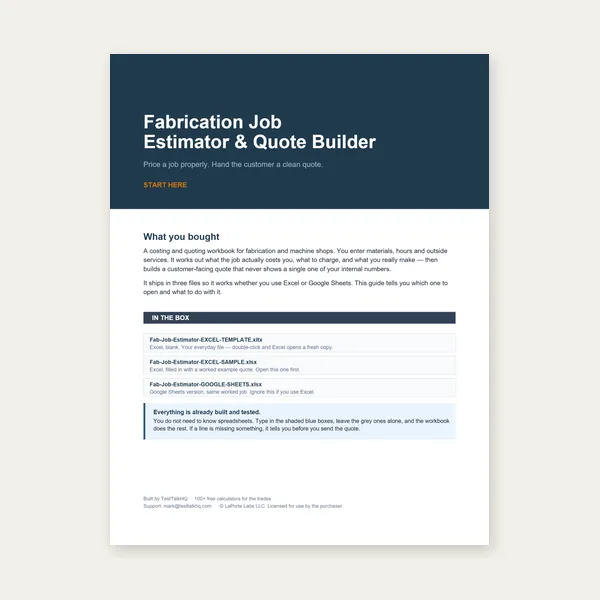
Price the job, then hand over a quote with no internal numbers.
Excel or Google Sheets. Best on a computer.
$29.00
Buy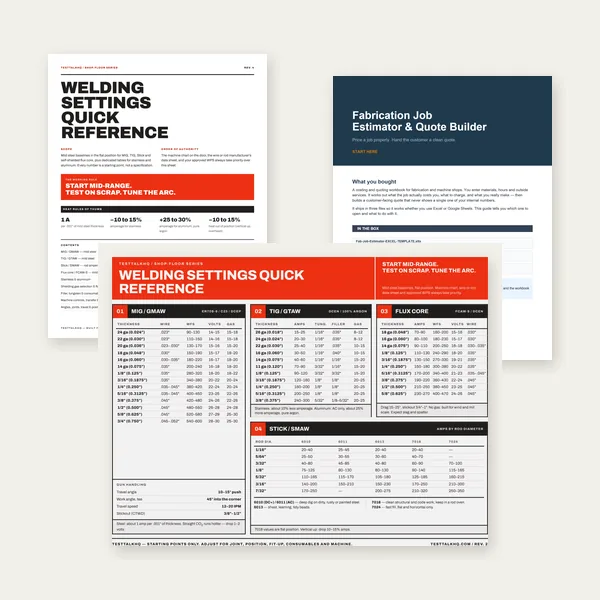
Card, 19-page guide and the estimator workbook. All six files.
Excel or Google Sheets. Best on a computer.
$34.99
$45.98 if bought separately — save $10.99
BuyCheckout opens in a new tab.
Electrodes, machines, and shop tools for pipe groove welds
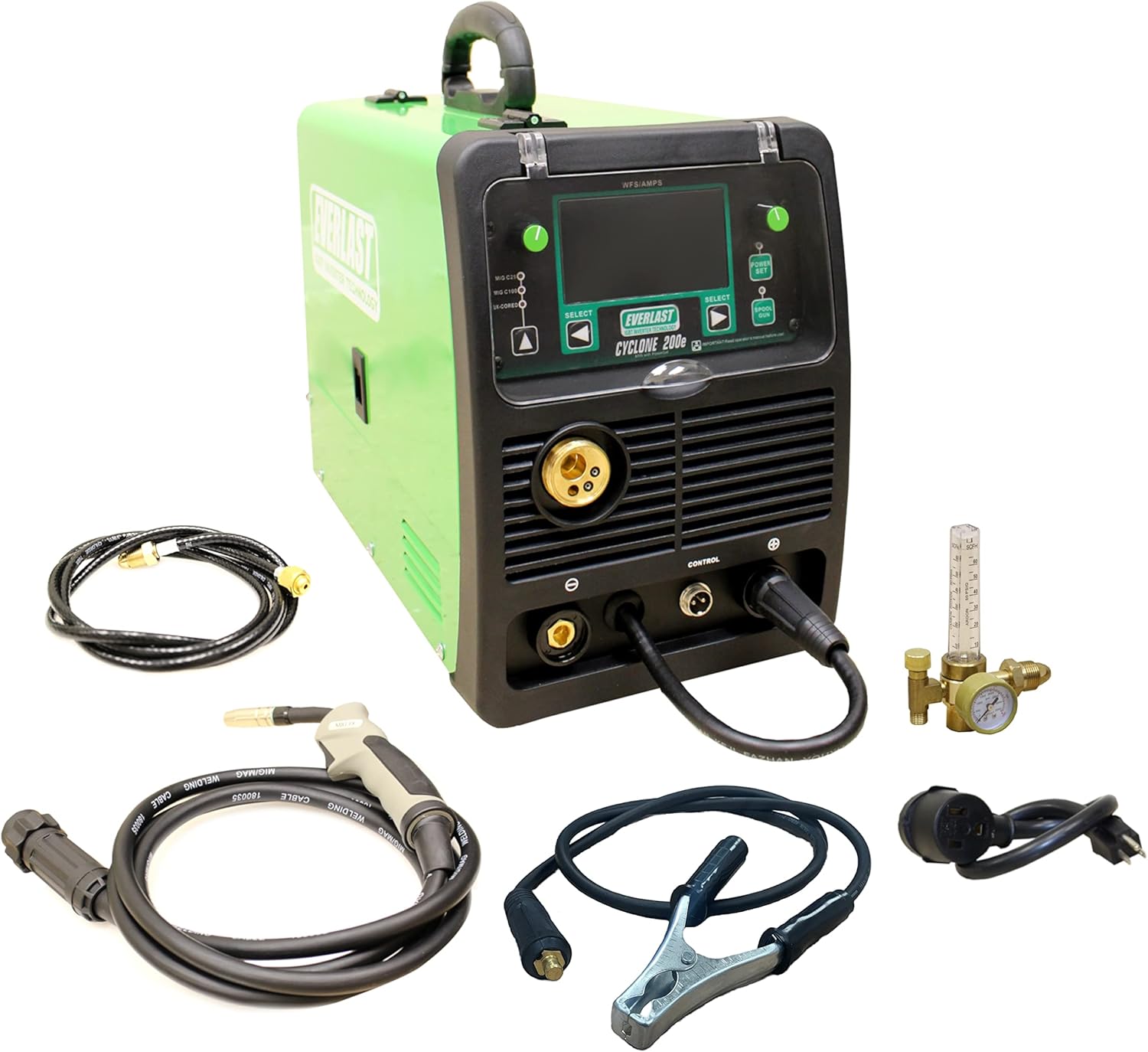
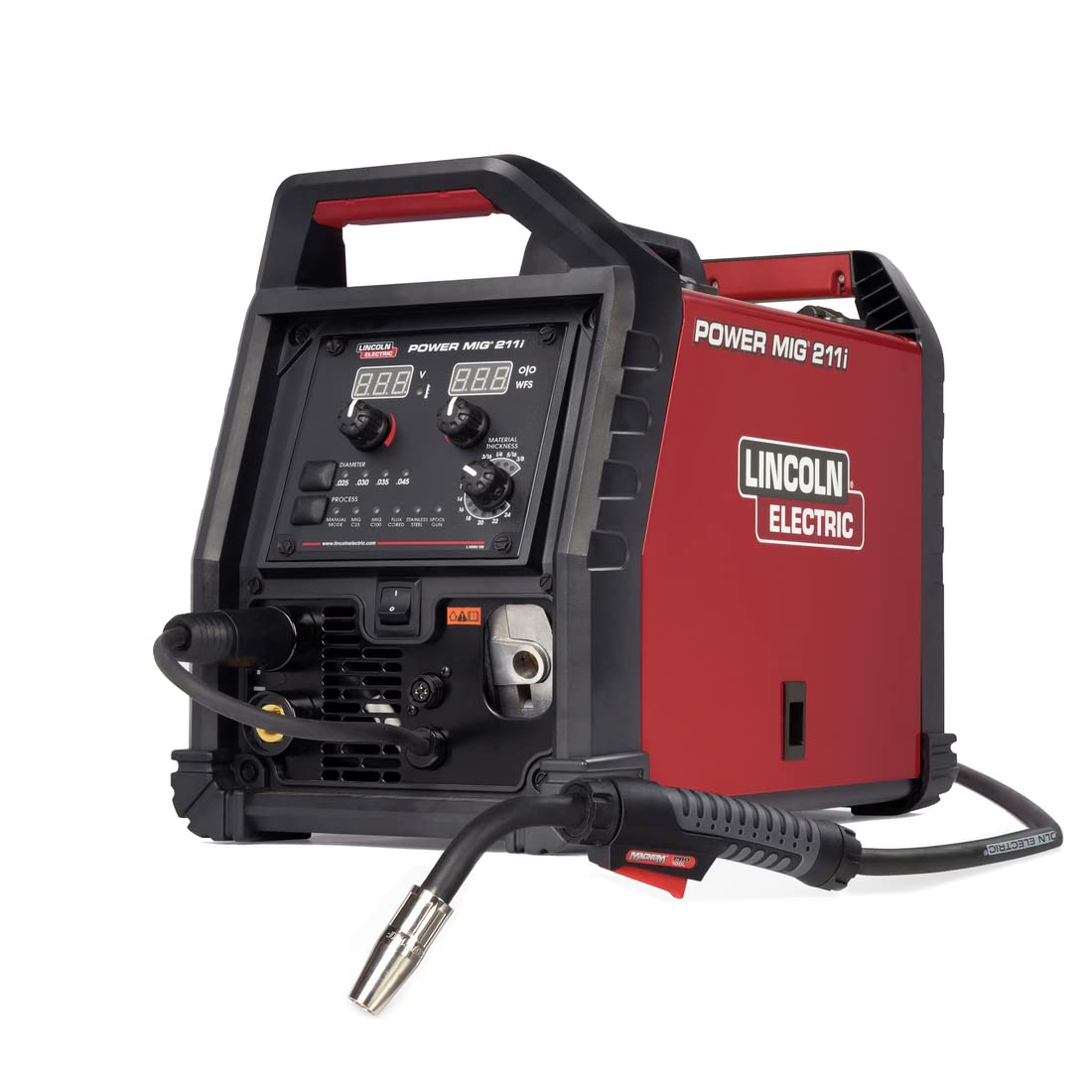
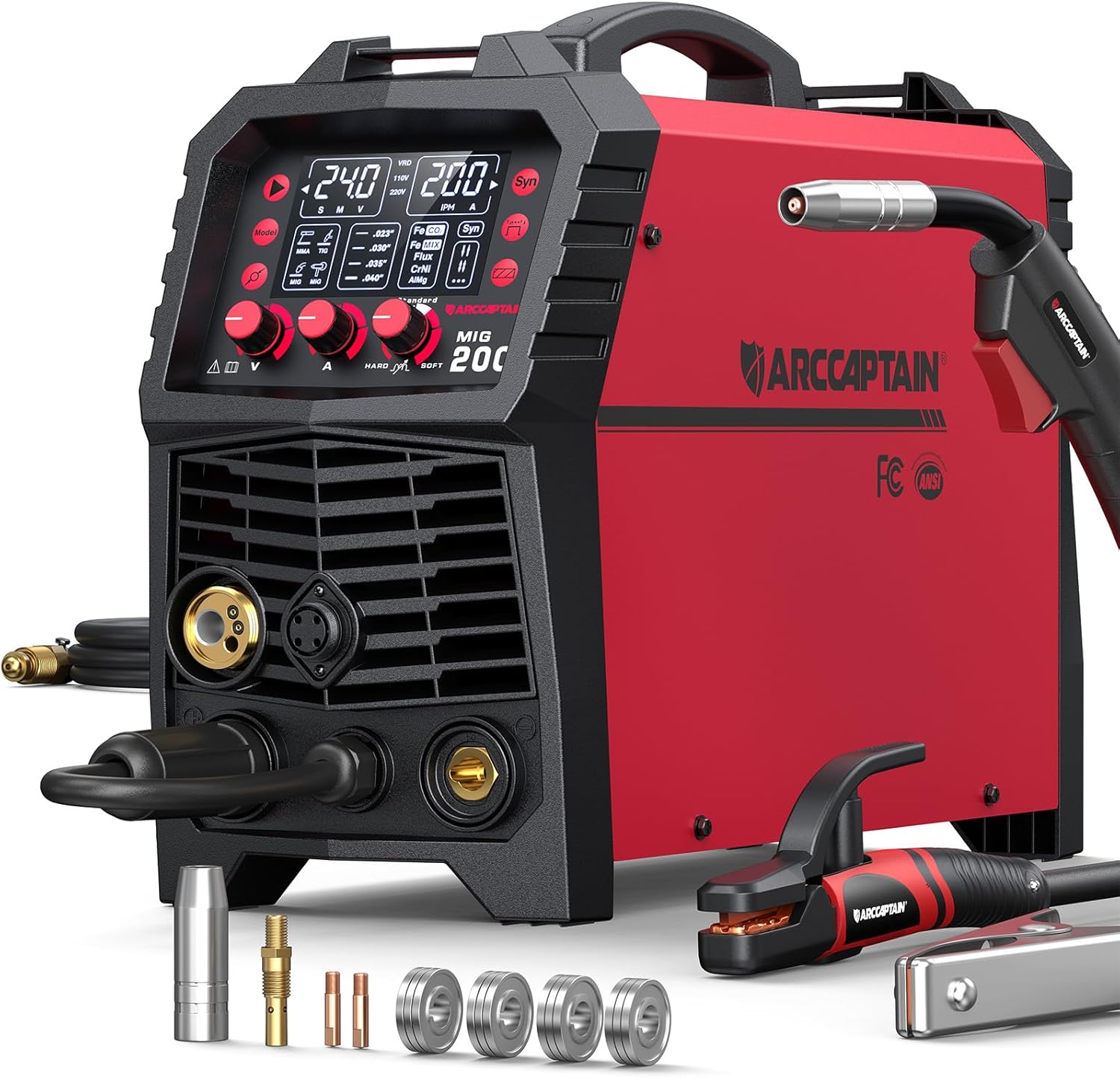
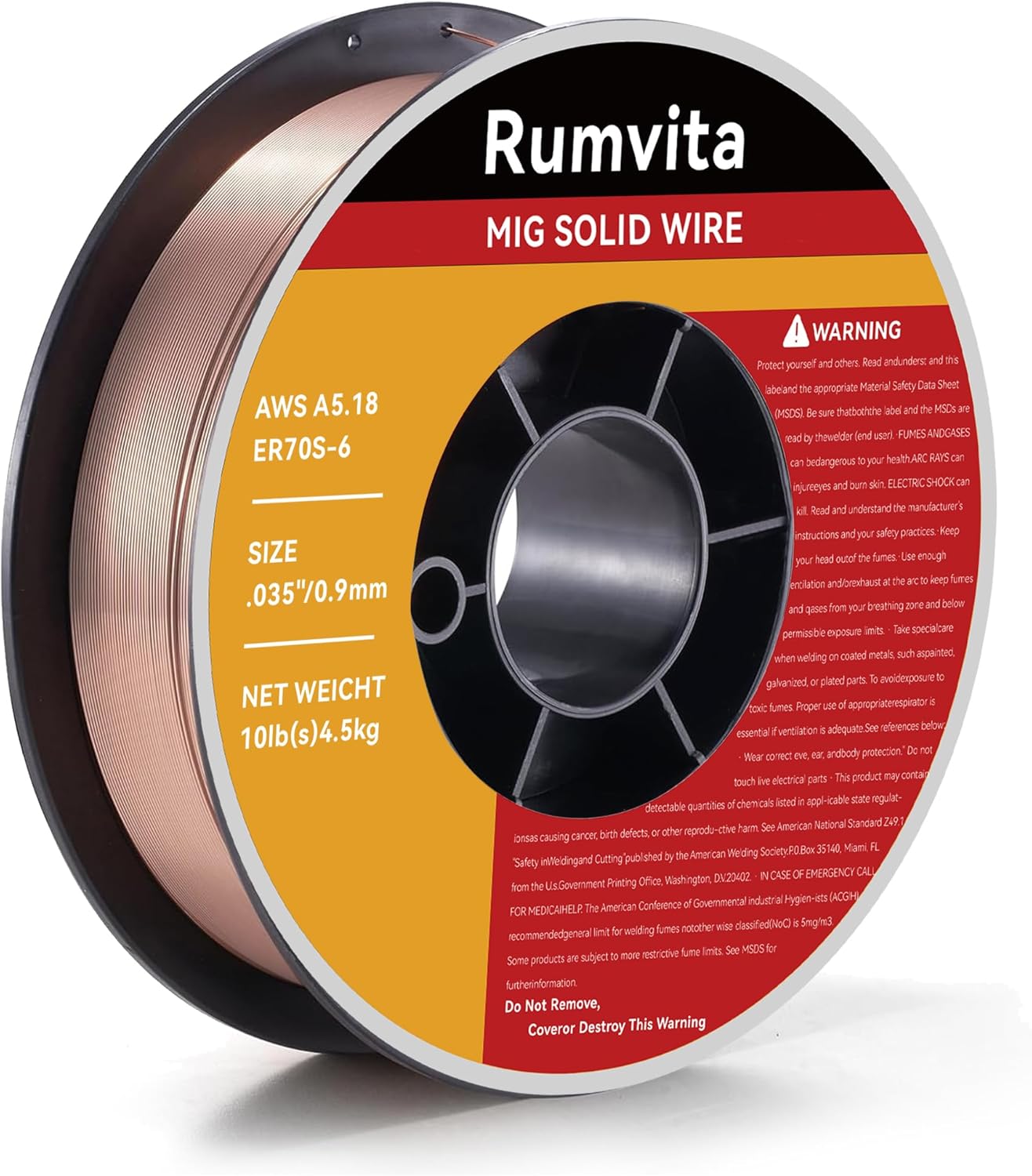
As an Amazon Associate, TestTalkHQ earns from qualifying purchases.
This calculator provides starting parameters for pipe groove welds based on pipe schedule (wall thickness), nominal diameter, base material, and welding process. It outputs bevel angle, root face, root opening, root pass amperage, electrode/filler selection, and a complete pass sequence for your wall thickness.
These are starting points — not a substitute for a qualified Welding Procedure Specification (WPS). On code work (AWS D1.1, ASME B31.1, B31.3), you must weld to an approved WPS.
Calculator amps looked right but the root failed RT or the cap failed VT: Pipe Welding Troubleshooting. Setup and process theory: Pipe Welding Guide. Reference tables: Pipe Welding Chart.
Do these parameters replace a WPS?
No. On code-governed pipe welding, weld to a qualified WPS. This calculator gives starting points for practice and field reference.
Why does wall thickness matter more than pipe diameter?
Amperage is determined by the metal you're melting — primarily wall thickness. A 2" Schedule 160 pipe can require higher amperage than a 12" Schedule 10 pipe.
What's the difference between 5G and 6G?
5G is horizontal fixed pipe. 6G is 45° inclined fixed — the certification test that qualifies you for all positions.