Airflow, static pressure, fan speed and watts. Which one is out of place against the other three tells you what is wrong before you take anything apart
A blower fault is almost never visible in one reading. It is visible in the pattern — which of airflow, static pressure, fan speed and power is out of step with the other three. Take all four, compare them against what the fan laws say they should be, and most of the list below identifies itself before you have opened a panel.
The method, in one table
Take the four readings. Compare them to the design figures, or to what they were before whatever changed. Then find your row.
| Airflow | Static pressure | Fan speed | Power | Points at |
|---|---|---|---|---|
| Low | High | Correct | Normal or low | The duct. Faults 1 and 9 |
| Low | Low | Correct | Low | The fan is not developing. Faults 2 and 8 |
| Low | Low | Low | Low | The drive. Faults 3 and 4 |
| Correct | Correct | Correct | High | Density, a loaded wheel, or the meter. Faults 7 and 11 |
| Correct | Correct | High | High | The cube law doing exactly what it says. Faults 5 and 6 |
| Varies with the season | Varies with it | Correct | Varies with it | Air density. Fault 12 |
Two readings have guides of their own on this site and there is no sense duplicating them here. If the static pressure reading itself is what you doubt, go to external static pressure troubleshooting; if it is the airflow figure, duct CFM troubleshooting covers measurements that do not agree with each other. What follows assumes the readings are sound and asks what the pattern between them means.
Faults 1 to 6
1. Airflow low, static pressure high, speed correct
This is a duct fault, not a fan fault. The fan is doing what it was built to do and the system is asking more of it than the design allowed. The fan has slid up its own curve to a point of higher pressure and lower flow, which is exactly what a fan does when resistance rises.
Look for the usual culprits in order of how often they are it: a loaded filter, a filter of a higher MERV than the system was designed around, a dirty evaporator coil, crushed or kinked flexible duct, a closed balancing damper somebody forgot, and undersized return. Note that the fix is not more speed. Speeding the fan up to force air through a restriction puts the square law on the pressure and the cube law on the power, and buys noise with both. Open the duct up instead — the duct sizing calculator and round against rectangular duct are the right tools for that.
2. Airflow low, static pressure also low, speed correct
The opposite pattern and the opposite conclusion. If the duct were restricted, the pressure would be high. Low pressure and low flow at the right speed means the fan is not developing what it should, and there are four common reasons.
- A loaded wheel. Forward-curved wheels pack dirt into the blade cups and lose their shape aerodynamically. This is extremely common and nearly invisible without pulling the blower.
- System effect at the inlet. An elbow landing on the inlet, a cramped inlet box, two elbows in different planes putting spin into the eye of the wheel. New York Blower is explicit that these losses “cannot be measured or even detected with field instruments” and that an inlet box, even fully vaned, “could still easily represent losses of 10% to 15% of the required flow.”
- No outlet duct. NYB puts a number on this one: omitting the outlet duct entirely costs “a static pressure loss equal to one half the outlet velocity pressure”, and the fan needs between 2½ and 6 wheel diameters of straight outlet duct to develop its full rated pressure.
- A hole on the wrong side. Return-side leakage in an unconditioned space delivers plenty of air to the plenum and very little of it from the house.
3. Airflow low and the fan speed is low too
Now the drive is in the frame, and the readings separate the causes cleanly. If the motor is at speed and the wheel is not, the belt is slipping — glazed, loose, or oil-contaminated. If both are low, you are on a low motor tap, the motor is failing to come up to speed under load, or on a drive the frequency reference is not what you think it is.
Belt slip is the one worth measuring rather than guessing, because a slipping belt mimics every other fault on this list. Belt and sheave problems covers the mechanical side in full.
4. You fitted a bigger sheave and got less airflow than the arithmetic said
Three candidates, in the order to check them.
- Measure the speed you actually got. Standard sheaves come in discrete sizes, so you landed near the calculated pitch diameter rather than on it. An adjustable sheave may not be where you think it is set. Three percent of speed is nine percent of power and three percent of airflow.
- The belt is slipping at the new, higher torque. The old belt tension was set for the old load.
- The system changed between your two measurements. If the baseline was taken with a clean filter and the result with a loaded one, the two points are on different system curves and the fan laws were never going to connect them.
5. The airflow is right and the breaker trips
This is the cube law arriving on schedule. New York Blower states it as plainly as it can be put: speed a fan up 10 percent and “the fan BHP will increase 33%.” Greenheck adds the 25 percent case: 1.253 is 1.95, so a quarter more speed is nearly double the power.
Work the new brake horsepower, compare it to nameplate times service factor, and if it does not fit the answer is a bigger motor — not a bigger breaker. Upsizing the overcurrent protection to stop nuisance trips on an overloaded motor removes the only thing protecting the winding. Branch circuit and overcurrent sizing for the replacement is covered in motor circuit sizing.
6. The motor runs hot but the amps are under nameplate
Load is not the problem here, so look at heat removal. Common causes: a blocked or missing motor cooling fan cover, high ambient temperature in a hot mechanical room or a rooftop curb, a motor running continuously at reduced speed on a drive with its own shaft-mounted cooling fan, or a motor sitting inside its service factor where it is specified to run hotter by design.
Joliet Technologies, summarising NEMA MG 1-2007, gives the reason this matters rather than being merely untidy: “each increase of 10 degrees Celsius in winding temperature above rated levels reduces winding insulation life by 50%.” A motor that runs hot is not failing today; it is failing on a schedule you have just halved.
Any trade

Contractor Job Estimator
Price remodels and GC work, then send a quote with no internal numbers.
Excel or Google Sheets. Best on a computer.
$29.00
BuyCheckout opens in a new tab.
The four readings, and what takes them
Every fault below is settled by taking the same four readings and asking which one is out of place. The diagnosis is almost never in one number on its own — it is in the pattern, and you cannot see a pattern in three readings out of four.

NEIKO 20713A Digital Laser Tachometer
- A belt that slips reads as a fan speed below the one you calculated
- The single fastest way to separate a drive fault from a duct fault
- Also confirms what a sheave change actually produced
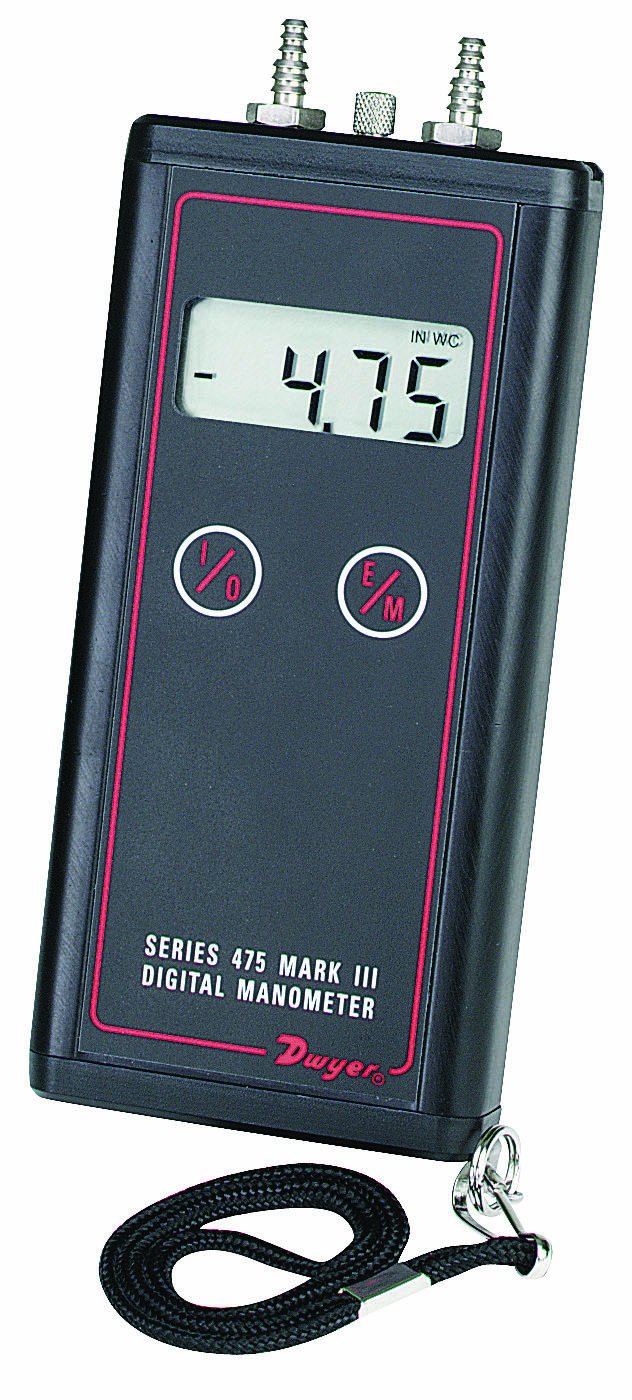
Dwyer Series 475 Mark III Digital Manometer
- High static with low airflow is the duct; low both is the fan
- That one comparison sorts most of the list below
- Supply and return separately, so you know which side it is
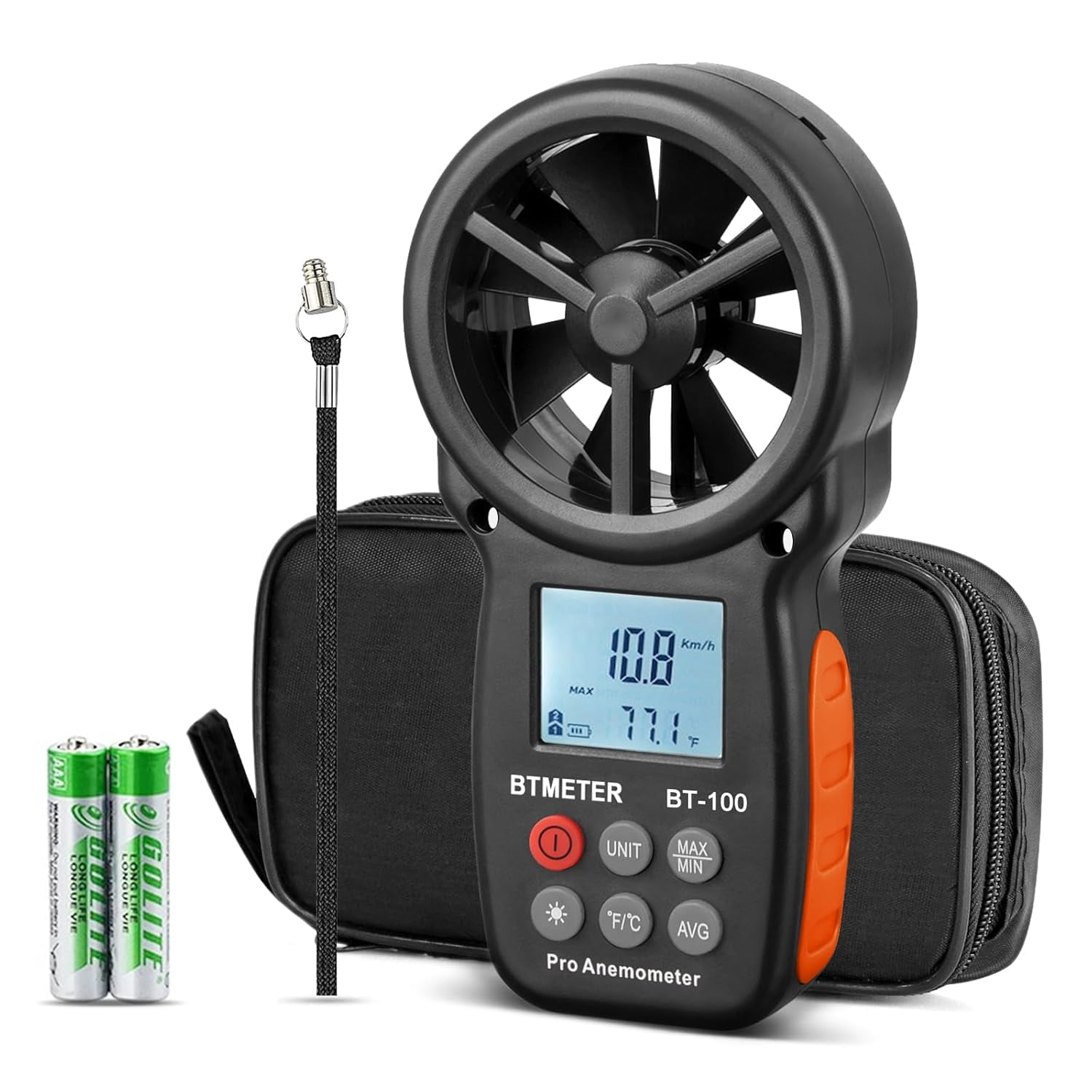
BTMETER BT‑100 Handheld Anemometer
- Confirms the airflow number before anything is blamed on it
- Catches a register-by-register loss the plenum reading hides
- Fast enough to repeat after every change you make
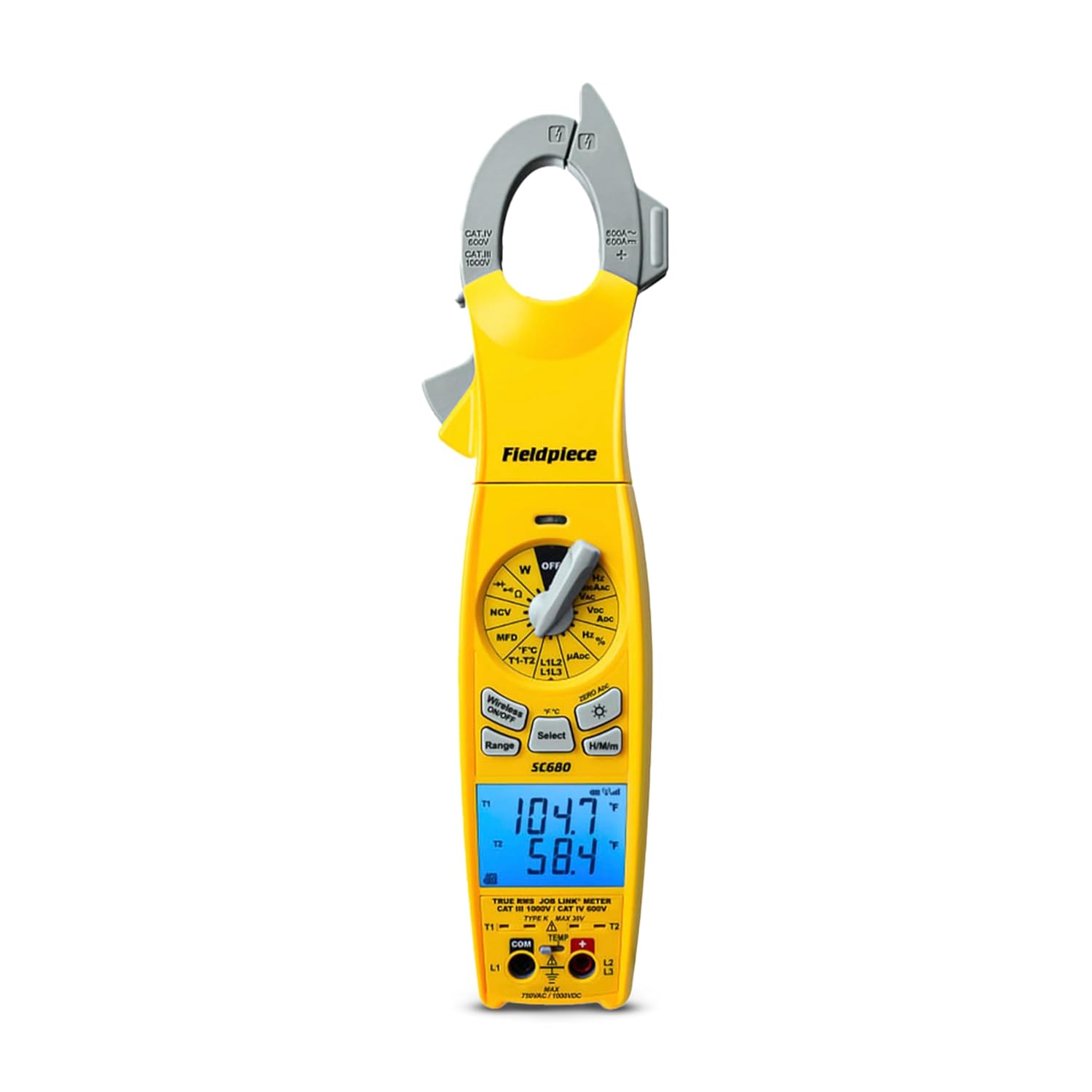
Fieldpiece SC680 Wireless Clamp Meter
- Amps over nameplate is fault 5 in one reading
- A motor hot but under nameplate amps points at cooling, not load
- True RMS so a drive-fed motor reads honestly
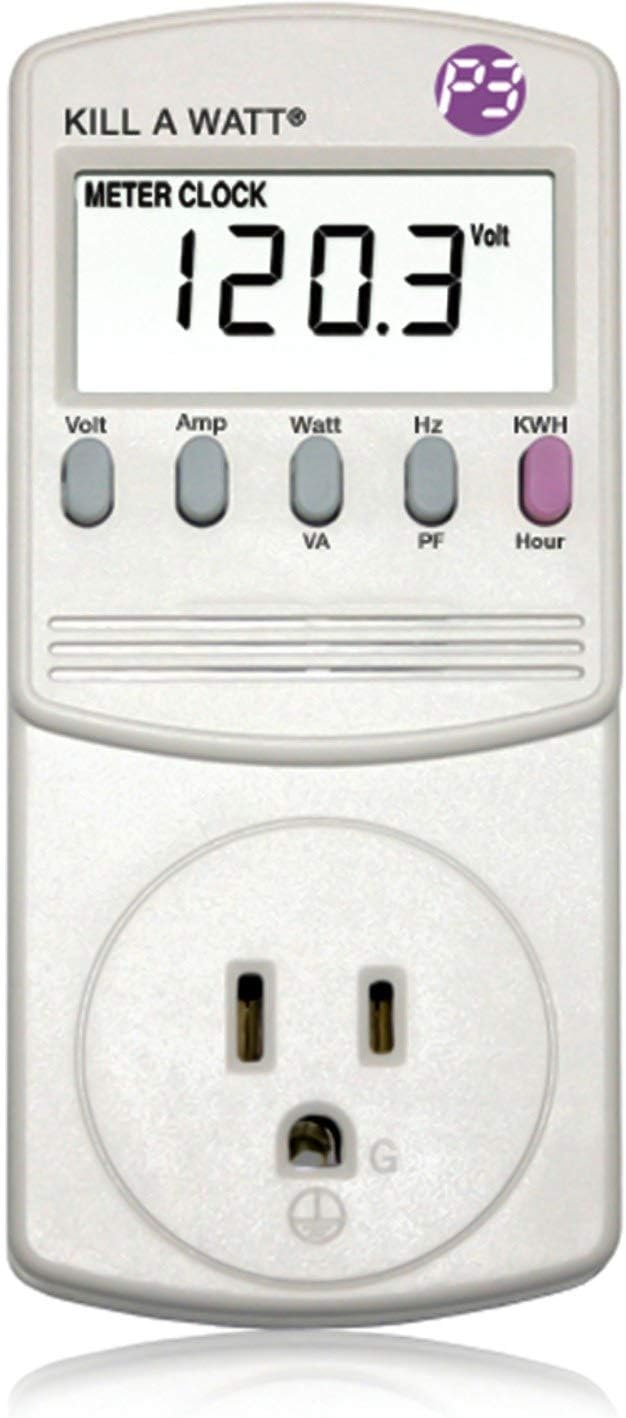
P3 P4400 Kill A Watt Energy Monitor
- An efficiency over 100 percent is a measurement fault, not a fan
- True watts is what separates the two on a 120 V unit
- Also makes the before and after of a repair arguable with numbers
As an Amazon Associate, TestTalkHQ earns from qualifying purchases. Prices and availability can change.
Faults 7 to 12
7. The power is far above what the fan laws predicted
You scaled the brake horsepower correctly and the real motor is drawing much more. Four candidates:
- Air density. Power scales directly with density. If the baseline was measured on hot air and the new reading on cold, the fan is genuinely absorbing more. The correction factor is the ratio of densities, and a 70°F reading against a 150°F one is a factor of about 0.87 between them.
- Spin against rotation at the inlet. NYB notes that air spinning opposite to the wheel raises both “the brake horsepower and noise of the fan” while the static pressure rises “far less than indicated by the increased power consumption.” That is a very specific signature: lots more watts, barely more pressure.
- A forward-curved wheel at the wrong end of its curve. Forward-curved fans are non-overloading only within a range; run one at low static and it can draw more than its rating.
- The baseline power figure was wrong. See fault 11.
8. Low airflow, low pressure, and the wheel is turning the wrong way
Worth its own entry because it is so easy to miss. A centrifugal wheel running backwards still throws air outward and still moves a plausible-looking quantity of it, typically somewhere around half to two thirds of rated, at reduced pressure. Nothing sounds obviously wrong. On three-phase equipment it follows any work that disturbed the supply — a new motor, a replaced contactor, a panel change, a utility repair. Check rotation against the arrow on the scroll, and swap any two of the three leads if it is wrong.
9. The drive is at 100 percent and the airflow is still short
The drive is not the problem, and this is the clearest possible evidence that the system is. At full speed the fan is on its published curve; if the design airflow is not there, the system curve is steeper than the design assumed. That is fault 1 with the speed question already eliminated. Measure the static pressure, find the restriction, and resist the temptation to over-speed the motor above base frequency — above base speed horsepower stays constant and torque falls, so the fan cannot take the power it would need anyway.
10. The noise jumped after a sheave change
Expected, and worth setting expectations about before the work rather than after. Fan sound rises steeply with speed, and there are three separate contributions: the wheel tip speed, the duct velocity, and the extra static pressure the square law just added. A 15 percent speed increase raises the pressure 32 percent, and much of that shows up as regeneration at registers and at every turn.
What this page will not do is put a sone figure on it. That needs the wheel diameter and the published sound power of the specific fan, and a number from a speed ratio alone would be invented. Treat any significant speed increase as a noise change that needs to be discussed in advance.
11. The numbers imply an efficiency over 100 percent
Not a fan fault. A measurement fault, and almost always the same one. Put the four readings into Twin City’s definition, SE = CFM × SP × 100 ÷ (6356 × BHP). If the answer exceeds 100 percent the fan is producing more air power than it consumes, which does not happen.
In practice it means the power is too low or the airflow or pressure too high. The classic cause of the first is using amps times volts for watts — though note that error runs the other way, making the computed power too high and the efficiency too low. An efficiency reading implausibly high usually means the static pressure was taken with the filter out, or the airflow came from a nameplate rather than a traverse. Either way, fix the reading before you act on anything derived from it.
12. Airflow is fine in winter and poor in summer, or the reverse
Density again, and the direction tells you which way to read it. Cold air is dense: a fan handling it develops more static pressure and absorbs more power at the same speed and the same CFM. Hot air is thin: less pressure, less power, and less mass of air delivered, which is what actually carries heat even though the volumetric reading has not changed.
That last point is the one that confuses people. A fan is a constant-volume machine. If your airflow measurement is volumetric and it reads the same in both seasons, the fan is behaving correctly — the capacity change is real and it is a mass-flow effect, not a fan fault. On rooftop and outdoor-air equipment, run the density correction before you blame anything mechanical.
Two failures that look like fan faults and are not
A constant-airflow ECM that is drawing far more power than it used to. This is the motor working exactly as designed and the duct telling you something. A premium ECM is programmed with constant-CFM curves of torque against speed, and its manufacturer describes the behaviour directly: as pressure rises the motor “will gradually increase torque in small increments, checking the speed after each change” until it is back on the airflow curve. It holds the CFM and pays the cube-law power bill to do it. The same manual is candid about the cost: “Constant airflow means the system capacity will be maintained, but the motor will be using more energy as well.” So on an ECM system, watts is the diagnostic, not airflow — a rising wattage at unchanged airflow is a restriction forming, and it will be invisible to anyone measuring CFM.
A PSC blower whose airflow fell without anything breaking. The mirror image. A PSC motor cannot add power to hold airflow; its maker puts it bluntly: “it simply moves less air when static pressure increases.” The published blower table for one such unit falls from 1,625 CFM on high at 0.2 in. w.c. to 990 CFM at 1.0 in. That is a 39 percent loss of airflow with the motor in perfect health, on a system that merely got more restrictive. The fault is in the duct and the motor is the messenger.
The five-minute data set
Before calling anyone or ordering anything, take these. Together they settle most of the list above, and they are exactly the inputs a fan law calculation needs anyway.
- Airflow, measured. Note how you measured it.
- Static pressure, supply and return separately, with the filter in place.
- Fan wheel speed, on the wheel. And motor speed too, if it is a belt drive — the difference between them is the belt-slip answer.
- True watts or amps at the motor, with the nameplate amps and service factor written down next to them.
- Air temperature at the fan, and the site elevation, if either is far from 70°F at sea level.
- Filter condition and type, because it is the single most common answer and it costs nothing to note.