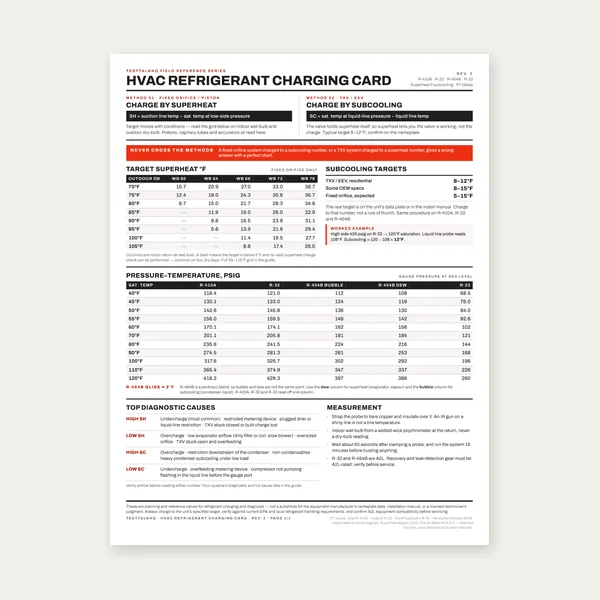
HVAC Refrigerant Charging Card
$3.99
BuyWhen the traverse does not match design — restriction vs leaks vs a bad plane
Measured CFM below design usually means the blower cannot push (or the path is blocked). Measured CFM above design is often a false high: centerline-only FPM, outside dimensions, or leaked air entering the plane. Fix the reading before you cut a bigger trunk.
Run the numbers: Duct CFM Calculator. How to traverse: measurement guide.
Confirm CFM before you blame the ductAverage FPM × inside area, then chase the gap.
Open Calculator →The run cannot carry the CFM at a legal velocity without huge friction. TESP is often high on that side. Size a replacement with the ductulator using the design CFM, not the starved measurement. Velocity maxima (residential branch ~600 FPM, main ~900) are already in the duct sizing guide — do not invent a second chart.
Flex crushed, a balancing damper left at 20%, an evaporator mat. Supply-side static high, CFM low. Straighten, open, clean, re-traverse.
Return CFM collapses with a loaded media cabinet. Replace, re-measure both CFM and return static. If CFM recovers, stop talking about a new furnace.
The blower is working against more external static than the nameplate. PSC airflow drops; ECM may scream and still miss. Measure TESP with the ESP calculator. High ESP plus low CFM is the same story told by two meters. Causes: high/low ESP troubleshooting.
Wrong tap, failed capacitor, wheel caked, ECM in a fault. TESP can look low or odd while CFM is dead. Amp draw and the OEM fan table beat guessing.
Real extra area drops velocity for the same CFM — or the fan dumps extra air into a lazy trunk. Confirm with a hood at the rooms; oversized metal plus leaks can still starve registers.
If your plane is downstream of a return leak (or you are in an unsealed supply plenum sucking attic air around the probe port), FPM is not “the system.” Seal the port, pick a better plane, or hood the grille. Duct CFM can read high while delivered CFM is low — that is the whole point of anemometer vs flow hood.
The most common “high CFM” on a phone photo. Re-traverse. The calculator will not save a bad average.
Re-run the traverse mathThen decide restriction vs leak vs bad plane.
Open Duct CFM Calculator →Only after you know TESP is not already over rating. More speed into a wall raises static and noise and still misses rooms.
If you were measuring at the register, delivered air rose. If you were in a leaky return, sealing can change the plane. Re-traverse after the seal, do not compare unlike planes.
$3.99
Buy
$12.99
Buy
$29.00
Buy
$39.00
BuyCheckout opens here — you stay on this page.
From the TestTalkHQ HVAC Tools / Duct Work & Air Flow catalog — in-duct and vane anemometers for the velocity reading this calculator uses, plus manometers for the static-pressure check when CFM is short. No capturing flow hood SKU was in the CSV at publish time, so none is invented here.
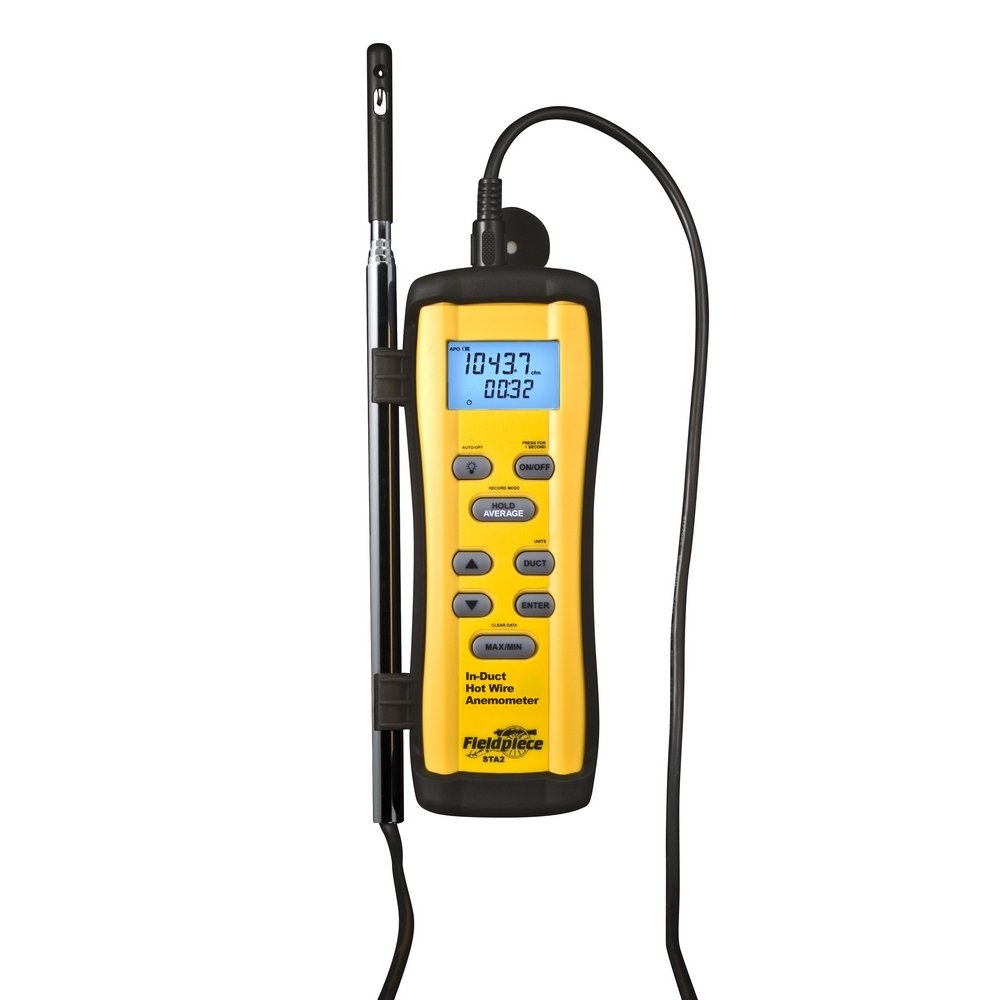
Hot-wire probe for a real duct traverse — the meter this CFM formula is built for. Average multiple points; do not trust a single centerline FPM.
View on Amazon →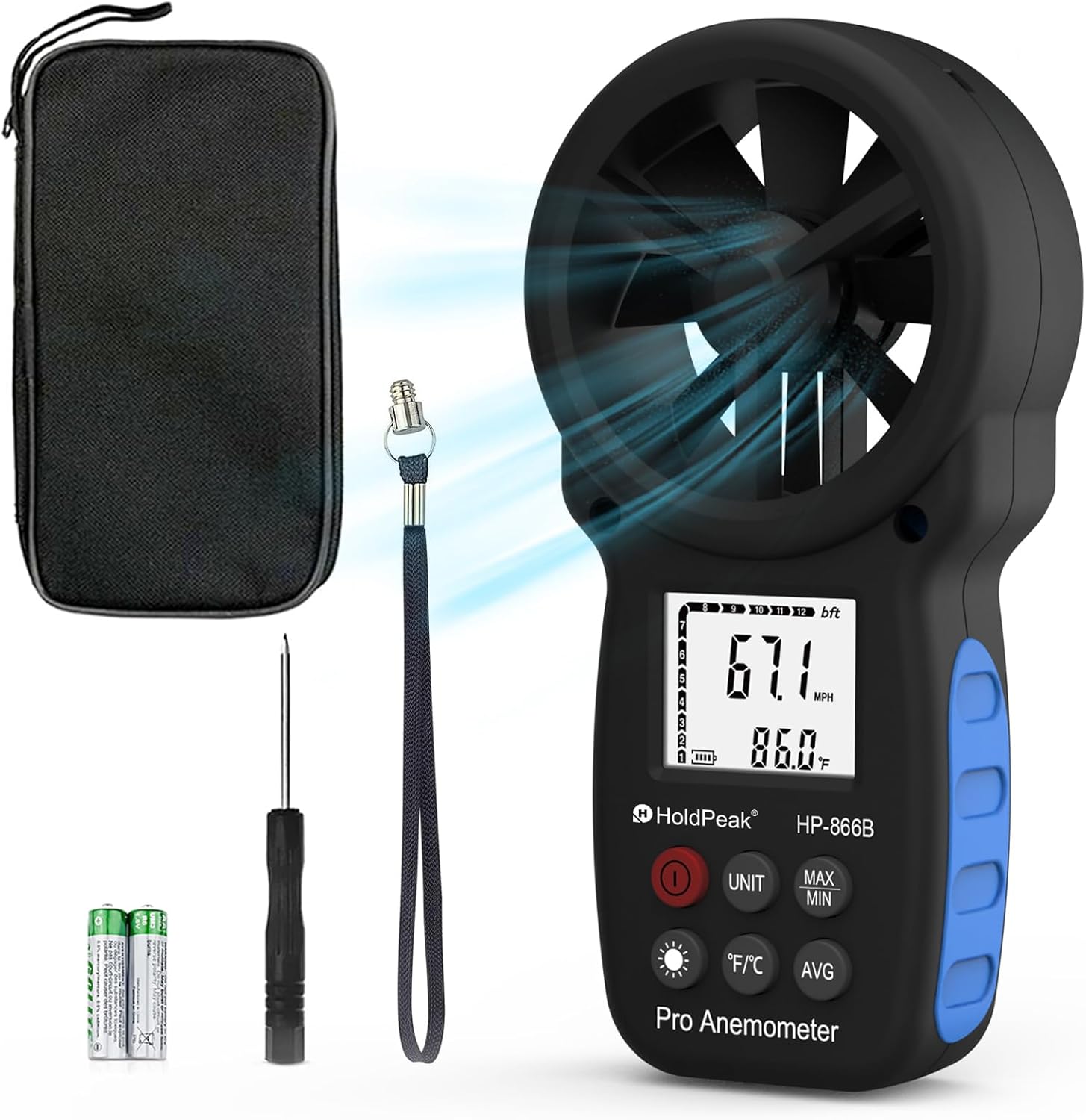
Handheld thermo-anemometer for register/grille face velocity. Convert FPM × free area carefully — face readings are not a duct traverse.
View on Amazon →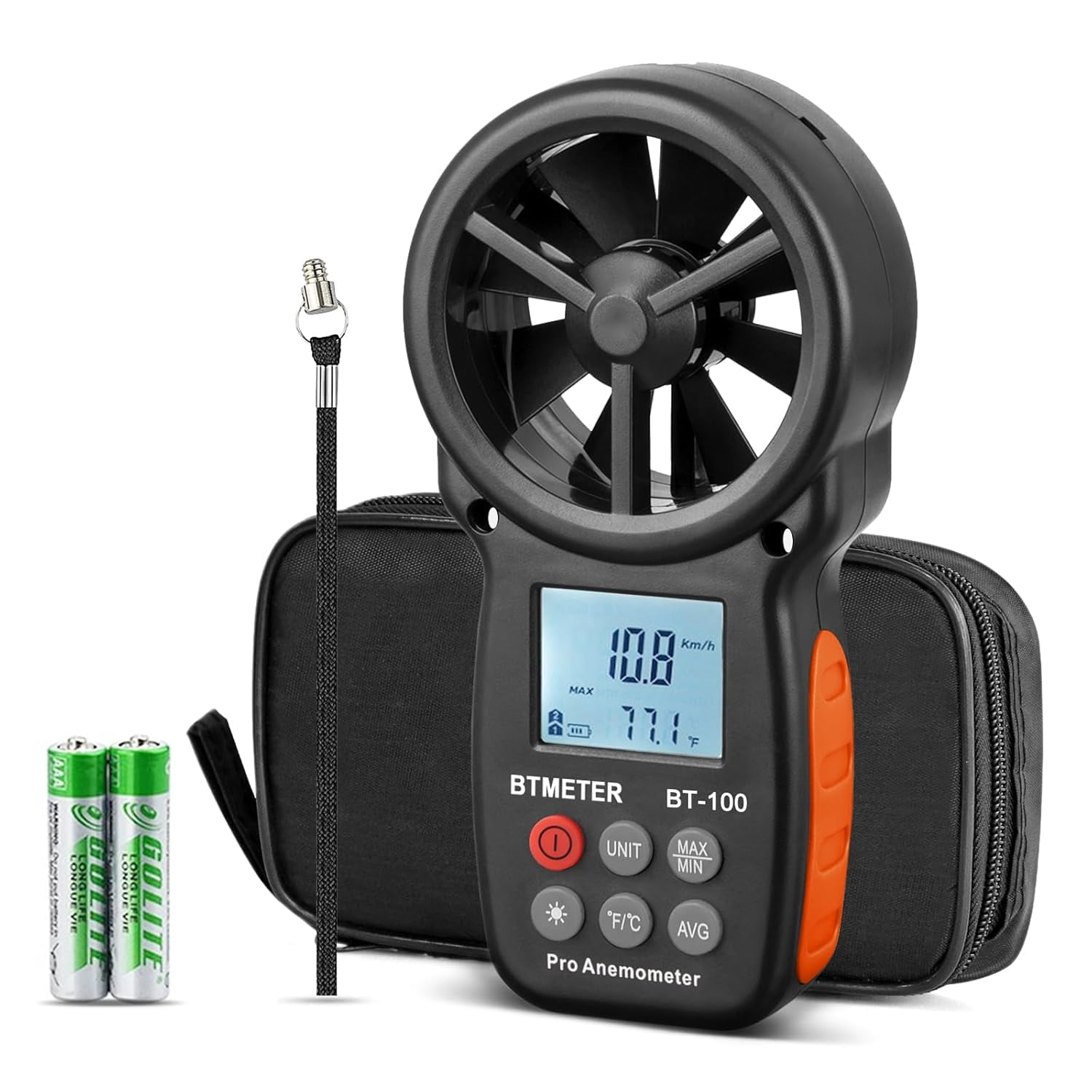
Vane anemometer for supply-register FPM when you need a delivered-air check. Average the face; do not convert grille FPM with raw duct area.
View on Amazon →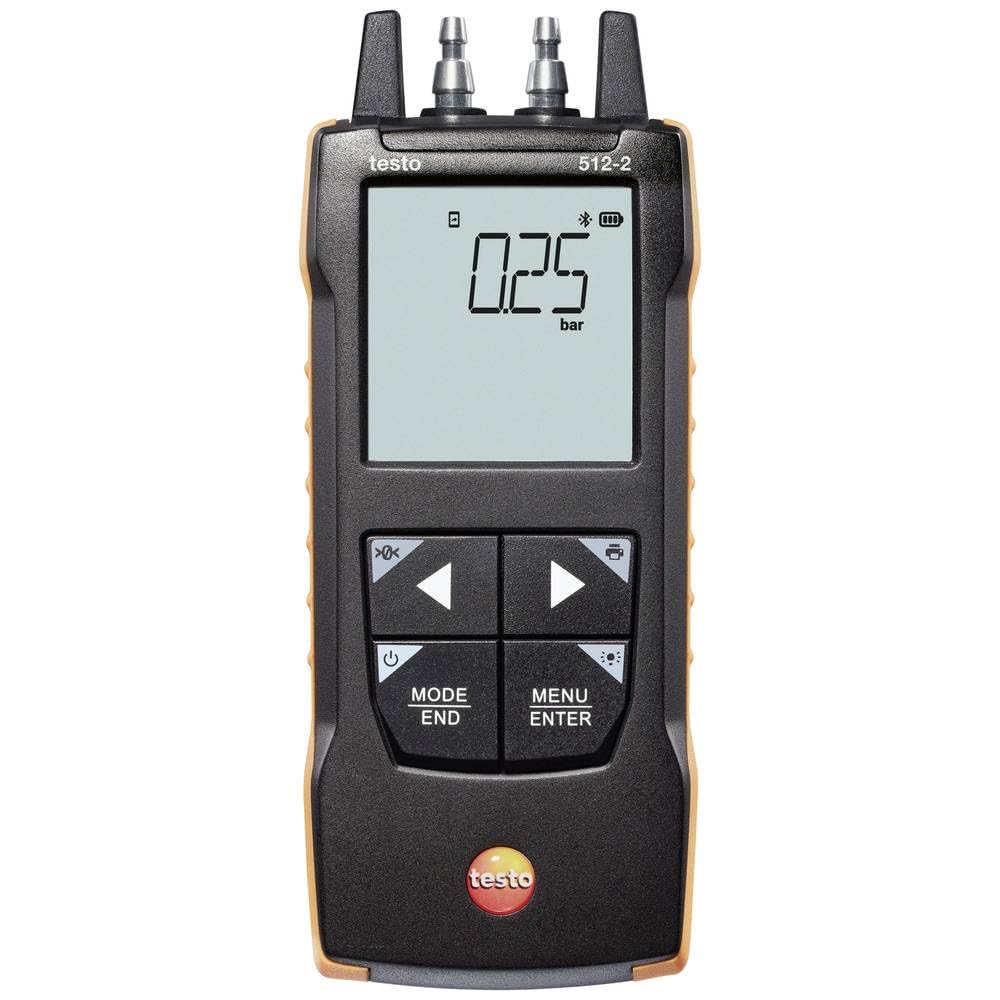
When measured CFM is short, check whether the blower is restricted. TESP vs nameplate is the next meter, not a second guess at velocity.
View on Amazon →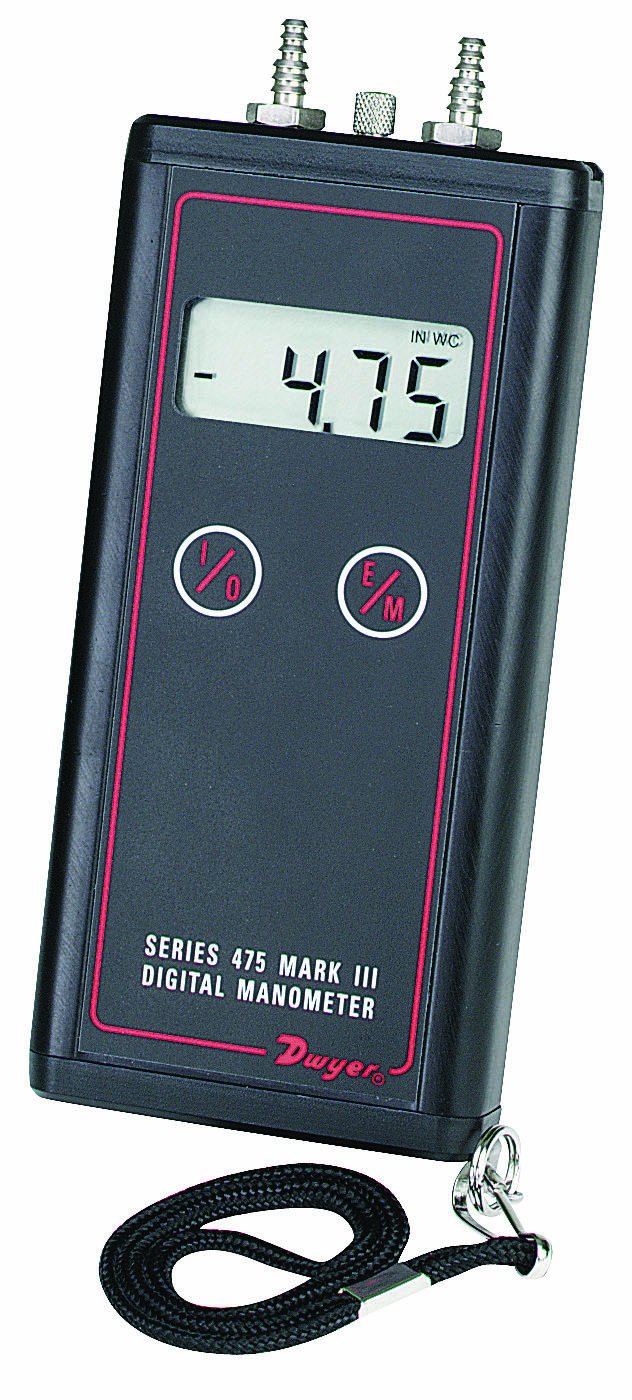
Handheld in. WC manometer for supply/return static after a low-CFM traverse. Pair with the ESP calculator — static is not airflow.
View on Amazon →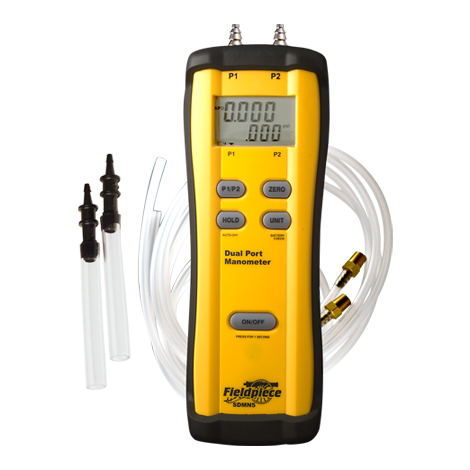
Dual-port HVAC manometer for filter/coil drop and TESP when the anemometer says the trunk is starving.
View on Amazon →As an Amazon Associate, TestTalkHQ earns from qualifying purchases.