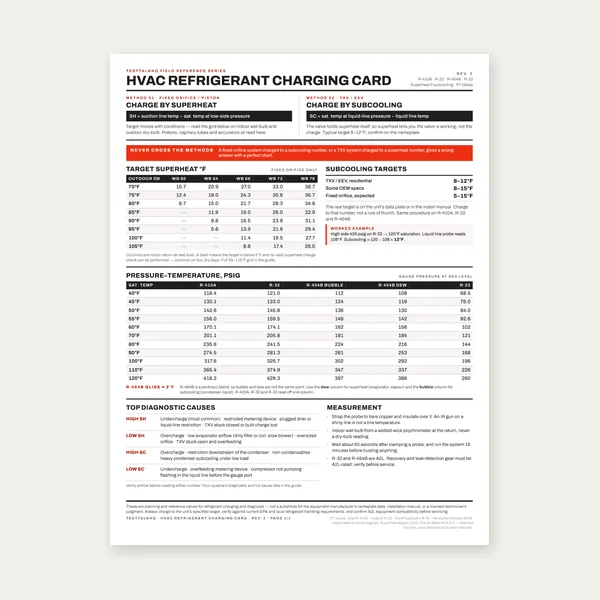
HVAC Refrigerant Charging Card
$3.99
BuyIn-duct traverse vs a capturing hood at the grille — different planes, different lies
This is not “should I measure static or CFM?” That decision is already in Static Pressure vs Airflow (CFM). This page is what happens after you have decided you need a cubic-feet-per-minute number: hot-wire in the duct, vane at the face, or a flow hood over the outlet.
In-duct FPM in hand?Convert the traverse average with inside area.
Open Duct CFM Calculator →In-duct CFM is velocity × duct area at a plane in the metal. It includes air that will later leak out of takeoffs, and it excludes air that already leaked in upstream of a return plane. A proper Log-Tchebycheff traverse with a calibrated hot-wire is the gold-standard duct measurement when you do it right.
Flow-hood CFM is what left (or entered) that grille into the room. The hood captures the jet, the meter integrates it, and you do not multiply by a guessed free area. It will not match duct CFM if the boot leaks, a damper is cracked, or you are hooding one of six supplies on a trunk.
Accuracy is “accurate to which question?” Trunk balance and blower delivery → duct traverse. Room comfort and TAB at the diffuser → hood.
It is less accurate when you center-stab, use outside dimensions, stand in an elbow, or convert grille FPM with duct area. Those are operator errors, not a reason to throw the probe away. How to do it: duct CFM guide.
Hoods lie when the skirt leaks, the grille is so jetty the hood backpressures and cuts real flow (some meters backpressure-compensate; cheap ones do not), or you hood a return that is pulling from a door undercut as much as from the duct. They are also bulky. There is no capturing-hood SKU in the TestTalkHQ affiliate CSV at publish time — so this article does not pretend to sell one. Borrow, rent, or buy off-catalog; do not substitute a vane and call it a hood.
HoldPeak / BTMETER-class vanes at a register are a third, weaker CFM. You must apply the manufacturer’s free-area factor. Using duct metal area with face FPM will overstate. Use them for a rough “is this register dead?” check, then hood or traverse for a number you will write on a report.
If CFM at the room is low, do not argue anemometer vs hood for an hour before you measure cabinet static. Restriction vs delivery is the other article: static vs airflow and the ESP calculator.
Duct-plane CFMTraverse average × inside area.
Open Duct CFM Calculator →Only on a tight run with one outlet and no takeoffs between plane and grille. Difference is a leak/damper clue, not a broken meter.
No. It is more accurate for room delivery. It is the wrong instrument for leaving-fan CFM in a plenum.
If the return is one grille and the hood seals, yes for that grille’s CFM. A central return with door undercuts will not equal blower CFM.
$3.99
Buy
$12.99
Buy
$29.00
Buy
$39.00
BuyCheckout opens here — you stay on this page.
From the TestTalkHQ HVAC Tools / Duct Work & Air Flow catalog — in-duct and vane anemometers for the velocity reading this calculator uses, plus manometers for the static-pressure check when CFM is short. No capturing flow hood SKU was in the CSV at publish time, so none is invented here.
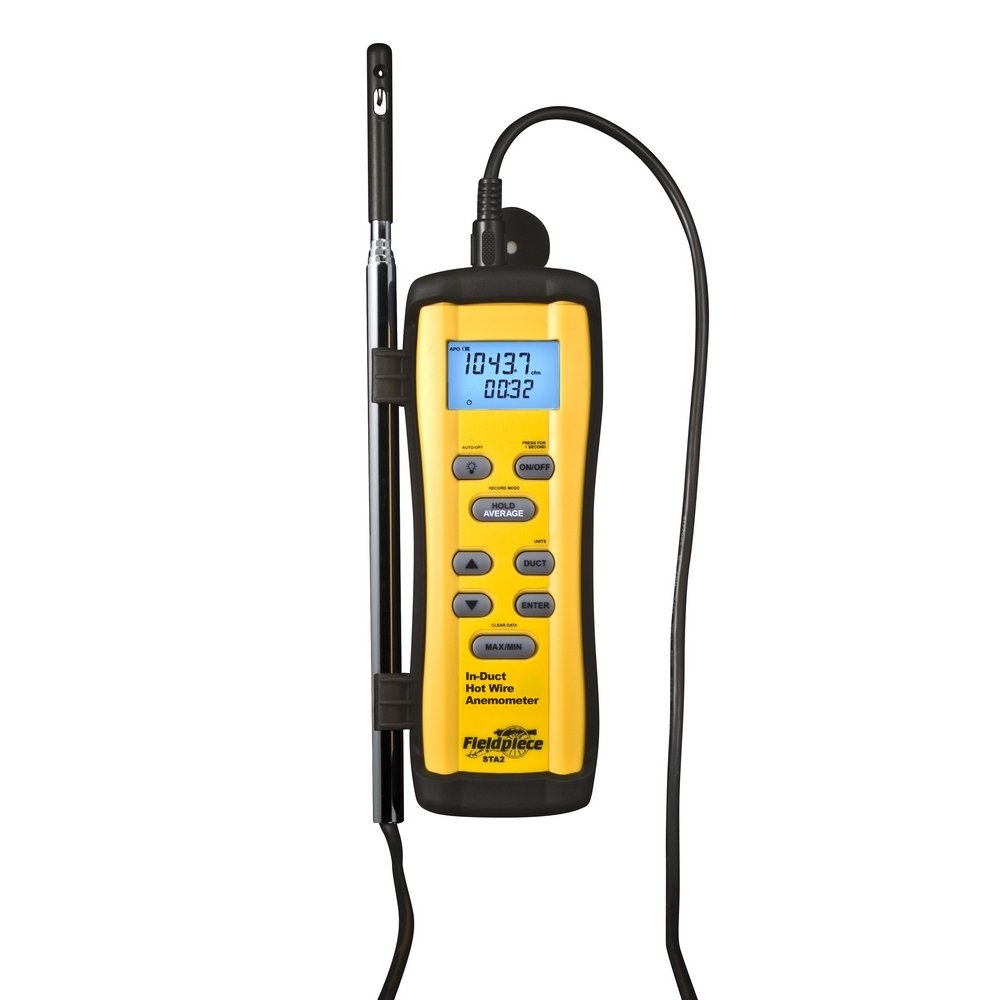
Hot-wire probe for a real duct traverse — the meter this CFM formula is built for. Average multiple points; do not trust a single centerline FPM.
View on Amazon →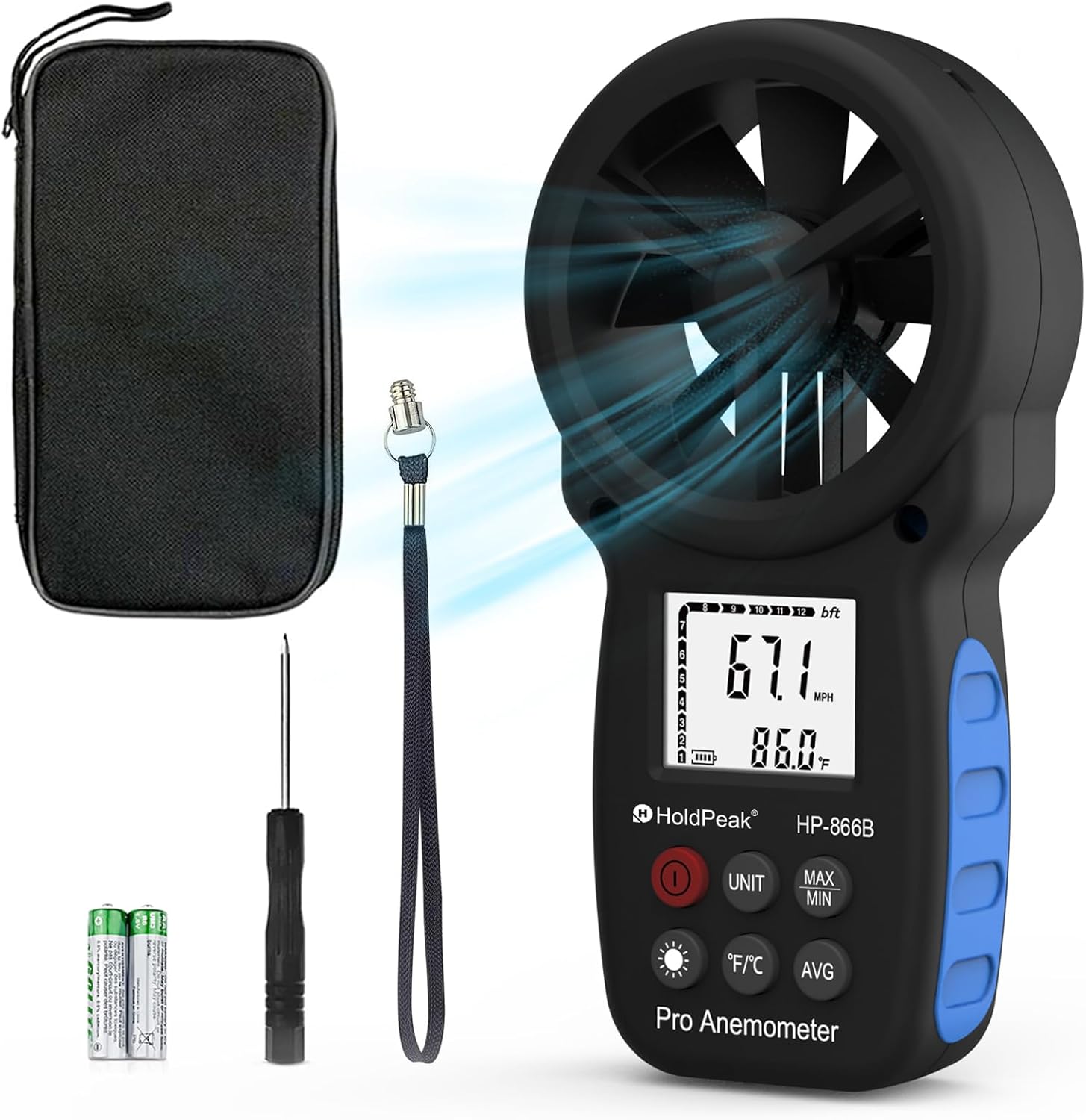
Handheld thermo-anemometer for register/grille face velocity. Convert FPM × free area carefully — face readings are not a duct traverse.
View on Amazon →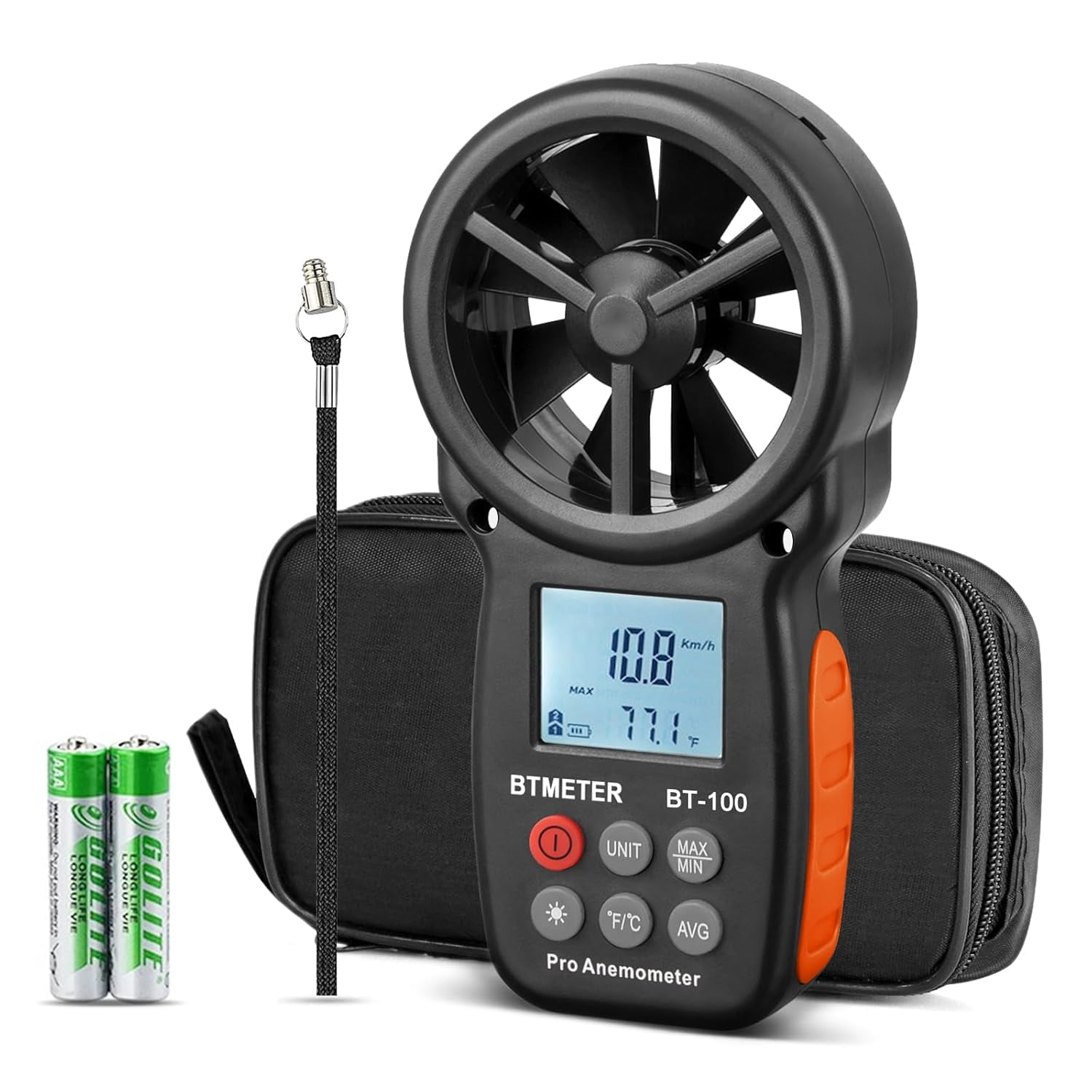
Vane anemometer for supply-register FPM when you need a delivered-air check. Average the face; do not convert grille FPM with raw duct area.
View on Amazon →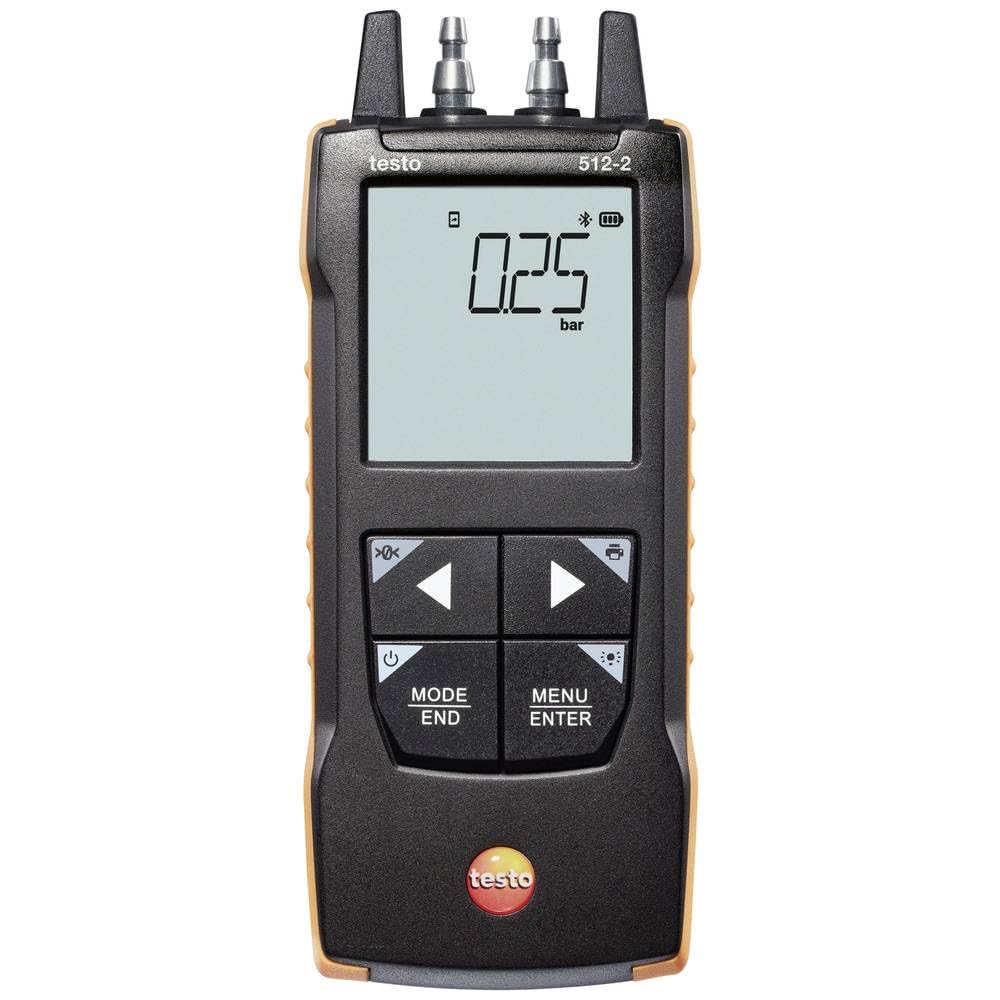
When measured CFM is short, check whether the blower is restricted. TESP vs nameplate is the next meter, not a second guess at velocity.
View on Amazon →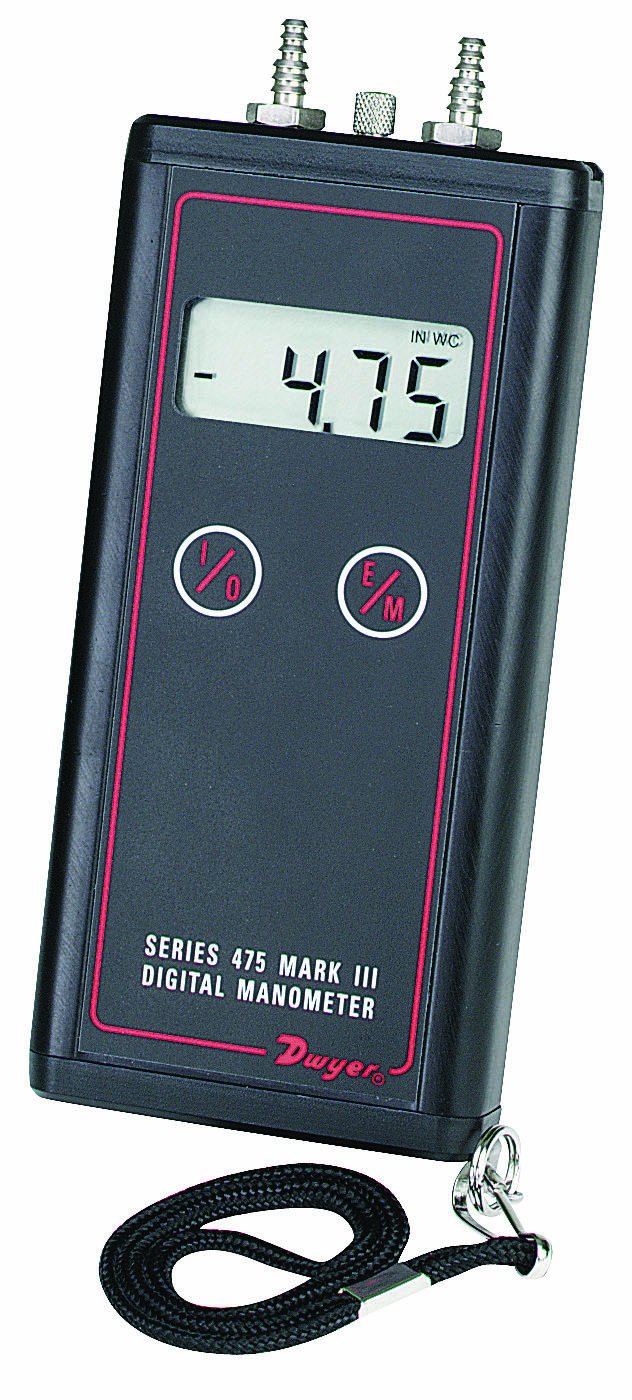
Handheld in. WC manometer for supply/return static after a low-CFM traverse. Pair with the ESP calculator — static is not airflow.
View on Amazon →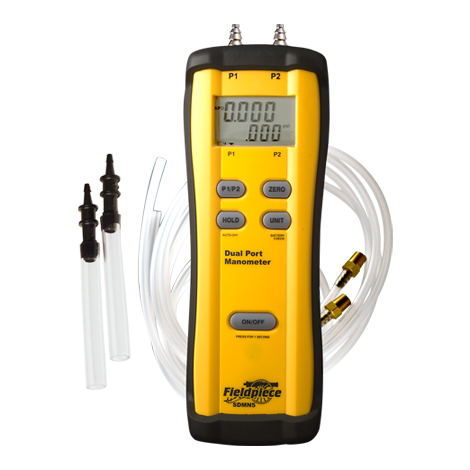
Dual-port HVAC manometer for filter/coil drop and TESP when the anemometer says the trunk is starving.
View on Amazon →As an Amazon Associate, TestTalkHQ earns from qualifying purchases.