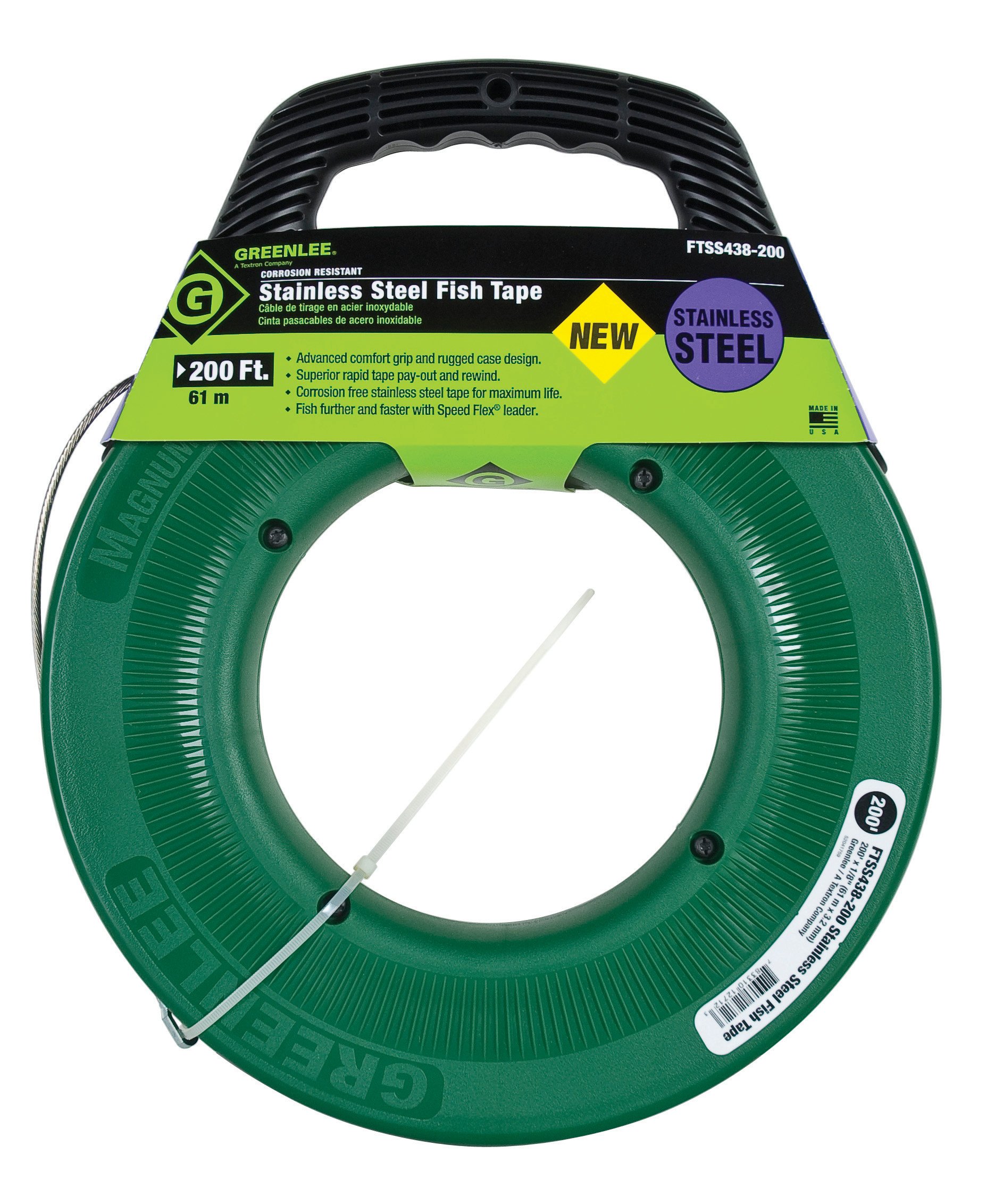
Greenlee FTSS438-200 Fish Tape
- 200 ft stainless steel tape
- Long conduit runs and feed starts
- Pairs with tension planning before the pull
- Shop-standard for EMT and PVC
Pulling Tension, Sidewall Pressure & Jam Ratio
Estimate total pulling tension, sidewall pressure at bends, and jam-ratio risk before the cable leaves the reel. Defaults use PVC dry friction (0.35) or lubricated (0.25), and copper max tension of 6 lb per 1,000 circular mils (editable). Read the Wire Pulling Tension Guide for formulas and field setup.

| Condition | Typical μ | Notes |
|---|---|---|
| PVC dry | 0.35 | Default for dry Sch 40 PVC |
| PVC lubricated | 0.25 | Proper wire-pulling lubricant |
| EMT dry | 0.40 | Metal raceway, no lube |
| EMT / rigid lubricated | 0.30 | Lube film on metal |
| Rigid dry | 0.45 | Rougher ID than EMT |
| Cu max tension | 6 lb/1000 cmil | Editable — some specs use 8 |
| Al max tension | 5 lb/1000 cmil | Typically lower than copper |
Jam risk for three equal cables when conduit ID ÷ conductor OD is about 2.8–3.2. See the lubricant comparison and troubleshooting guide.
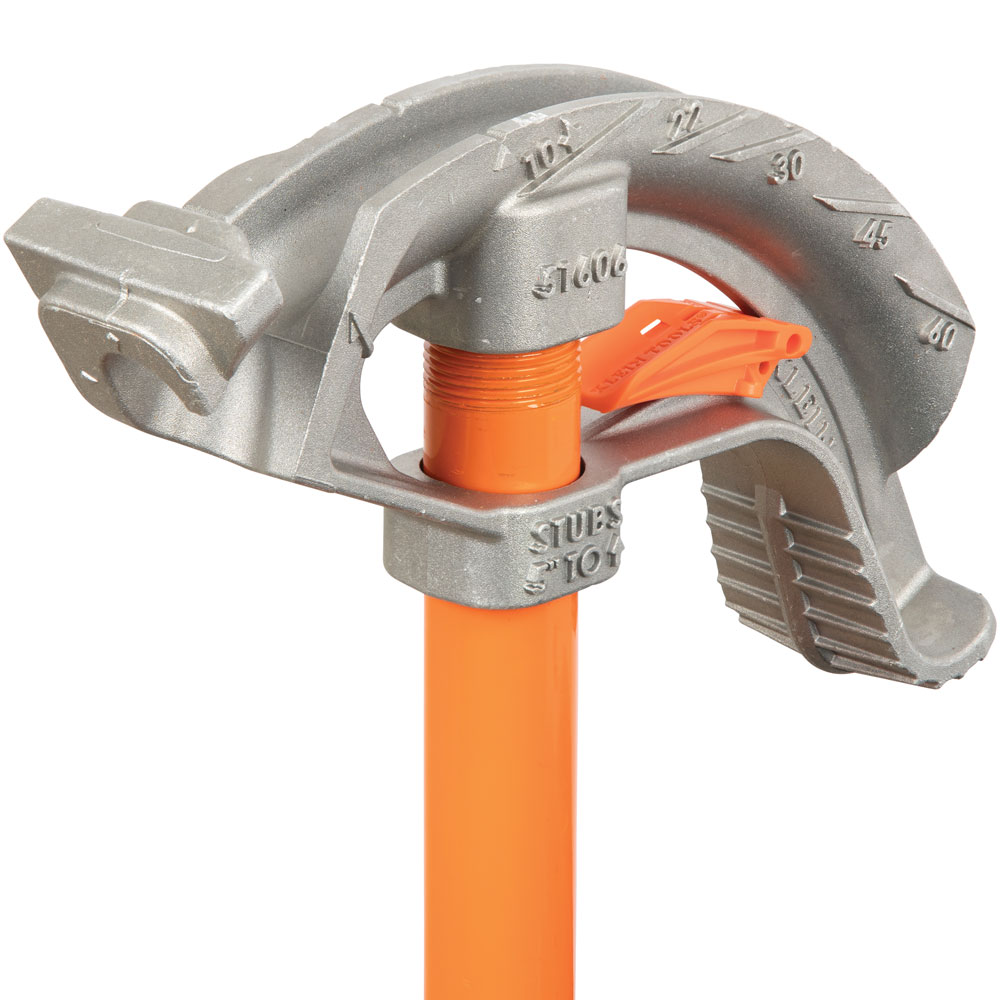
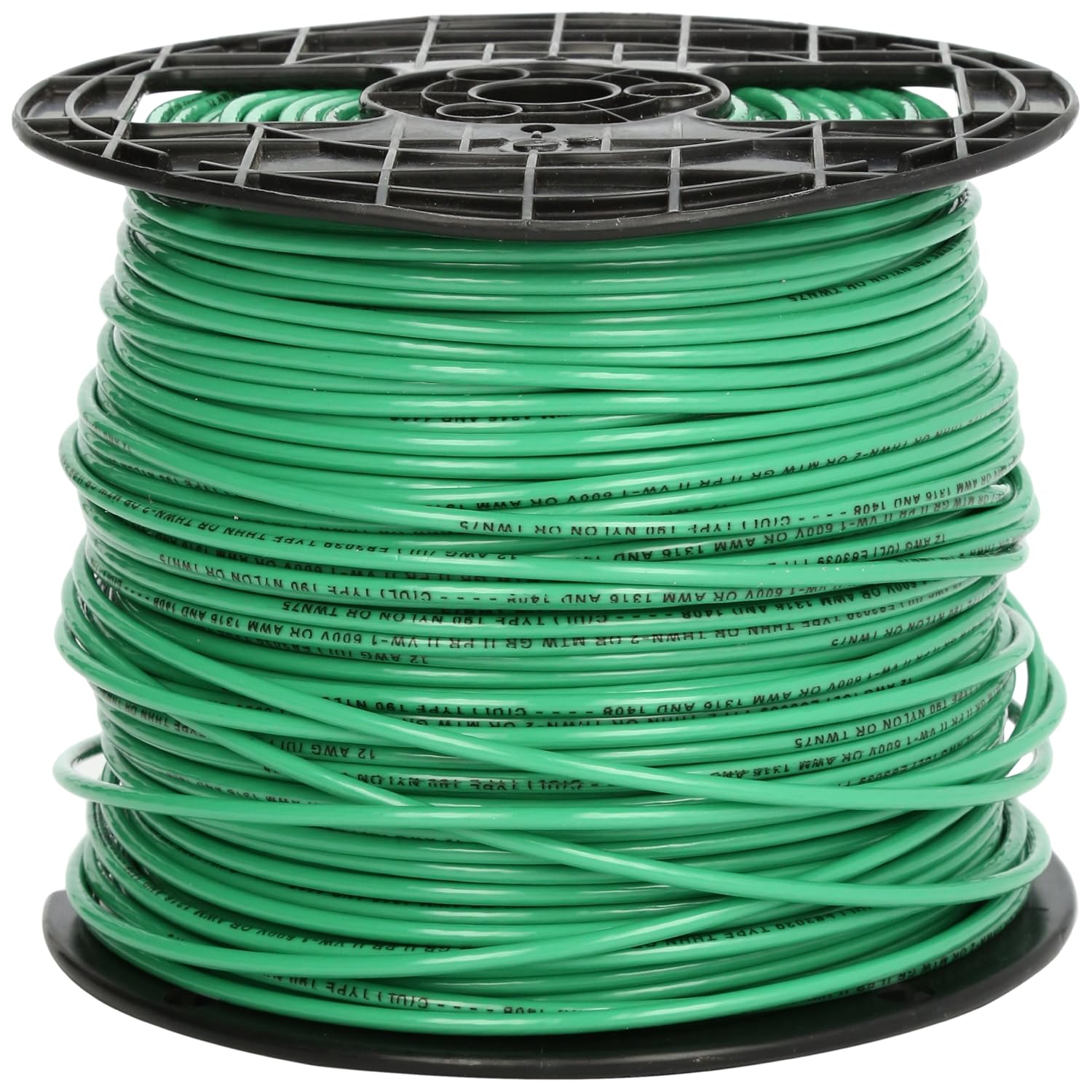
Fish tape, benders, and THHN for planning pulls — wire-pulling lubricant SKUs are not yet in the TestTalkHQ affiliate catalog (open gap).
As an Amazon Associate, TestTalkHQ earns from qualifying purchases. Prices and availability subject to change.
On a straight horizontal run, tension is roughly weight × length × friction. Each bend multiplies the incoming tension by e^(μθ), where θ is the bend angle in radians. Two 90° bends are not “twice a straight pull” — they compound. That is why a lubricated μ of 0.25 instead of a dry 0.35 can cut required force dramatically on a multi-bend path. Plan the pull path, count every bend that the cable must negotiate, and run the numbers before you cut the reel free. Use the tension guide for the full derivation and a worked #12 copper example.
Max tension protects the copper (or aluminum) from stretch and conductor damage. Sidewall pressure protects the insulation where the cable is pressed against the inside of a bend: SWP ≈ T ÷ R (with R in feet). A short-radius sweep at high tension can fail sidewall limits even when total tension is still under the cmil limit. If SWP is high, increase bend radius (sweeps), lower friction with lubricant, or break the pull into shorter sections. Diagnose jacket scuffs and ovaling in the troubleshooting article.
When three equal-diameter cables travel around a bend, they can wedge if the conduit ID is roughly 2.8–3.2 times one cable OD. That jam ratio is separate from NEC fill percent — a fill that “passes” Chapter 9 can still jam mechanically. Upsize the raceway, stagger cable sizes, or use a pull sock arrangement that keeps cables from triangulating into the jam zone. Check fill with the Conduit Fill Calculator and bend layout with the Conduit Bending Calculator.
Soap-based lubes are common for short PVC pulls; wax and polymer gels hold film longer on extended metal runs. This calculator’s 0.25 lubricated default assumes a continuous film — a dry spot at a bend reverts toward the dry μ and spikes tension. Compare soap vs wax vs gel in Wire Pulling Lubricant Types. After the pull, confirm ampacity if conductors share a raceway using the Wire Ampacity Derating Calculator.