Wire Pulling Tension Guide
Sidewall pressure, jam ratio, friction factors, and max tension — plan the pull before the cable leaves the reel.
Pulling tension is not “how hard the crew pulls.” It is the force the cable jacket and conductors see as friction and bends accumulate along the raceway. Exceed manufacturer max tension or sidewall pressure and you can scuff jackets, flatten insulation, or strand-break copper without noticing until megger day.
Use the Wire Pulling Tension Calculator for live checks, this guide for formulas and field method, Wire Pulling Troubleshooting when a pull already failed, and lubricant types when choosing soap vs wax vs gel.

What Pulling Tension Is — and Why It Matters More Than “Feel”
Every foot of cable in conduit adds weight against the raceway wall. Friction turns that weight into drag. Every bend multiplies the incoming tension by an exponential factor. The force at the pulling eye is the sum of those effects — not the effort on a rope handle.
Too much tension stretches or breaks conductors, crushes insulation against the conduit ID, and can tear jackets at fittings. Sidewall pressure (force concentrated on a bend’s inner radius) often damages cable before the absolute tension limit is reached. Jam ratio failures lock three equal cables in a triangular wedge inside the pipe — a mechanical lock no amount of lube will free gracefully.
Plan the path, count bends, check fill and jam, pick a friction factor, compute tension and sidewall pressure, then compare to manufacturer max tension. If any check fails on paper, change the run (upsized conduit, fewer bends, intermediate pull boxes, lubricant) before you commit a reel.
Straight-Run Tension: T = W × L × f
For a horizontal straight pull with no bends, tension is cable weight times length times the coefficient of friction:
T = W × L × f
- T — pulling tension (lb)
- W — cable weight per unit length (lb/ft) for the conductors being pulled together
- L — length of the straight segment (ft)
- f — coefficient of friction (dimensionless)
Vertical rises add weight differently (tension includes the hanging weight of the cable in the riser). Most commercial branch pulls are dominated by horizontal friction plus bend multipliers — start with the straight formula, then apply bend math segment by segment from the feed end toward the pull end.
Friction Factor Defaults
Friction depends on conduit material, jacket material, lubricant, temperature, and how clean the raceway is. Use manufacturer data when you have it. Sensible field defaults for planning:
| Raceway / condition | Typical f | Notes |
|---|---|---|
| PVC, dry | 0.35 | Common planning default for unlubricated PVC |
| PVC, lubricated | 0.25 | Proper wire-pull lube applied evenly |
| EMT / rigid, dry | ~0.40–0.50 | Slightly higher than PVC dry; rust, burrs, and fittings raise it further |
| EMT / rigid, lubricated | ~0.25–0.35 | Still verify against cable maker guidance |
Dirty, rusty, or poorly reamed metal conduit can exceed these defaults. A dry pull through long metal with multiple bends is how jackets get sanded. For lubricant chemistry and when soap vs wax vs gel fits the job, see Wire Pulling Lubricant Types.
Bend Tension: Tout = Tin × e(fθ)
At a bend, outgoing tension is incoming tension multiplied by an exponential of friction times bend angle:
Tout = Tin × e(fθ)
- Tin — tension entering the bend (lb)
- Tout — tension leaving the bend (lb)
- f — coefficient of friction
- θ — bend angle in radians (not degrees)
- e — base of natural logarithm (~2.718)
Convert degrees to radians: θrad = θdeg × π / 180. A 90° bend is π/2 ≈ 1.571 rad. A 45° bend is π/4 ≈ 0.785 rad.
Example multiplier at f = 0.35 and 90°: e(0.35 × 1.571) ≈ e0.55 ≈ 1.73. Each 90° bend roughly multiplies tension by 1.7–2.0 depending on friction. Two 90s in series can nearly triple the tension that entered the first bend — which is why “only two elbows” still matters on a long feed.
Sidewall Pressure: SWP = T / R
Sidewall pressure is the crushing force the cable exerts against the conduit wall at a bend:
SWP = T / R
- T — tension in the bend (lb)
- R — bend radius in feet (centerline radius of the conduit bend)
A high tension through a tight elbow concentrates force on a small arc of jacket. Manufacturer SWP limits (often in lb/ft of radius) exist for a reason — scuffed or flattened insulation at bends is a classic SWP exceedance, not “bad luck.” Larger radius sweeps and intermediate pull points reduce SWP even when total tension is similar.
Conduit bend radius is set by the bender shoe and trade size. If you are laying out sweeps and stubs, pair this guide with the Conduit Bending Calculator so geometry and pull stress stay on the same plan.
Jam Ratio: J = Conduit ID / Conductor OD
Jam ratio predicts whether three (or more) equal-diameter cables will wedge and lock in the conduit:
J = conduit inside diameter ÷ conductor outside diameter
For three equal cables, the critical jam zone is roughly J ≈ 2.8–3.2. In that band, cables can form a triangular jam that suddenly spikes tension and stops the pull. Below ~2.8 the cables tend to nest in a more triangular packing that still pulls; above ~3.2 they usually stay clear of classic three-cable jam — but fill percentage and other clearances still apply.
Always check jam on three equal conductors of the same OD before a long pull. Fill percent can “pass” while jam ratio sits in the danger band. Use the Conduit Fill Calculator for Chapter 9 / Annex C fill, then confirm jam separately for equal-size multi-cable pulls.
Maximum Allowable Tension
Manufacturer max pulling tension is the hard stop. A widely used copper planning default is:
~6 lb per 1,000 circular mils of copper conductor cross-section (editable when the cable maker publishes a different limit).
Example: #12 AWG copper is about 6,530 cmil → 6 × 6.53 ≈ 39 lb max for a single #12 (or scale for multiple conductors per maker rules). Aluminum and specialty cables often have lower limits. Never invent a higher number than the datasheet allows. When the calculator or hand math approaches max tension, change the path — do not “pull harder and hope.”
After the cable is landed, ampacity and derating are a separate check — tension planning does not replace the Wire Ampacity Derating Calculator.
Worked Example: 500 ft, Two 90° Bends, #12 Copper
Inputs:
- Length L = 500 ft (split conceptually into segments around two 90° bends)
- #12 Cu weight W ≈ 0.023 lb/ft (single conductor for illustration; scale if pulling a bundle)
- Friction f = 0.35 (PVC dry default)
- Two 90° bends → each θ = π/2 rad → multiplier e(fθ) ≈ 1.73
- Max tension ≈ 39 lb (6 lb / 1000 cmil rule)
After first 90°: T₂ = 2.0 × 1.73 ≈ 3.5 lb.
Add second 250 ft straight: T₃ ≈ 3.5 + 2.0 ≈ 5.5 lb.
After second 90°: T₄ ≈ 5.5 × 1.73 ≈ 9.5 lb.
Depending on where the bends sit and whether you treat the run as one lumped straight plus bend factors, calculated tension typically lands in the ~8–12 lb range for this light #12 example — well under the ~39 lb max. The pull passes on tension. You would still verify sidewall pressure at each elbow (SWP = T / R with R in feet), jam ratio if pulling three equals, fill, and lubricant choice before calling it ready.
Reproduce and vary the inputs in the Wire Pulling Tension Calculator.
How to Apply This Before a Real Pull
- Measure the path — total length, verticals, and every bend angle. Do not guess from the print alone.
- Count bends — elbows, kicks, offsets, and LB bodies that change direction all count toward tension multiplication.
- Check fill and jam — fill for Code clearance; jam ratio for three equal cables in the critical 2.8–3.2 band.
- Choose friction / lube — PVC dry 0.35 vs lubricated 0.25; metal dry higher. Match lubricant type to jacket and temperature.
- Compute tension segment by segment — straight T = W×L×f, then Tout = Tin×e(fθ) at each bend (θ in radians).
- Check max tension — compare to manufacturer limit (or ~6 lb/1000 cmil Cu default when that is the approved planning basis).
- Check sidewall pressure — SWP = T/R at each bend with R in feet; enlarge radius or add pull points if over limit.
- If any check fails — upsize conduit, reduce bends, add intermediate boxes, lubricate properly, or stage the pull. Do not start a doomed pull.
When something already went wrong — jacket scuffs, jammed bends, dry grabs — jump to Wire Pulling Troubleshooting instead of re-reading formulas.
FAQ
Do I use degrees or radians in the bend formula?
Radians. Convert degrees × π/180 before using θ in e(fθ).
Is lubricated friction always 0.25?
No — 0.25 is a common PVC lubricated planning default. Cable and lube makers publish better factors. Dirty or cold pulls can run higher even with product on the jacket.
Can sidewall pressure fail when tension is under max?
Yes. High tension through a short-radius elbow raises SWP = T/R even when total T is below the pulling-eye limit.
Does jam ratio replace conduit fill?
No. Fill and jam are different checks. Fill limits how much cross-section you put in the pipe; jam predicts triangular lock-up of equal ODs.
Pull, Bend & Feed Essentials
Fish the raceway, bend clean EMT when the path needs a sweep, and pull quality THHN — wire-pull lubricant SKUs are a catalog gap, so plan lube from your supplier while these tools cover the rest of the pull
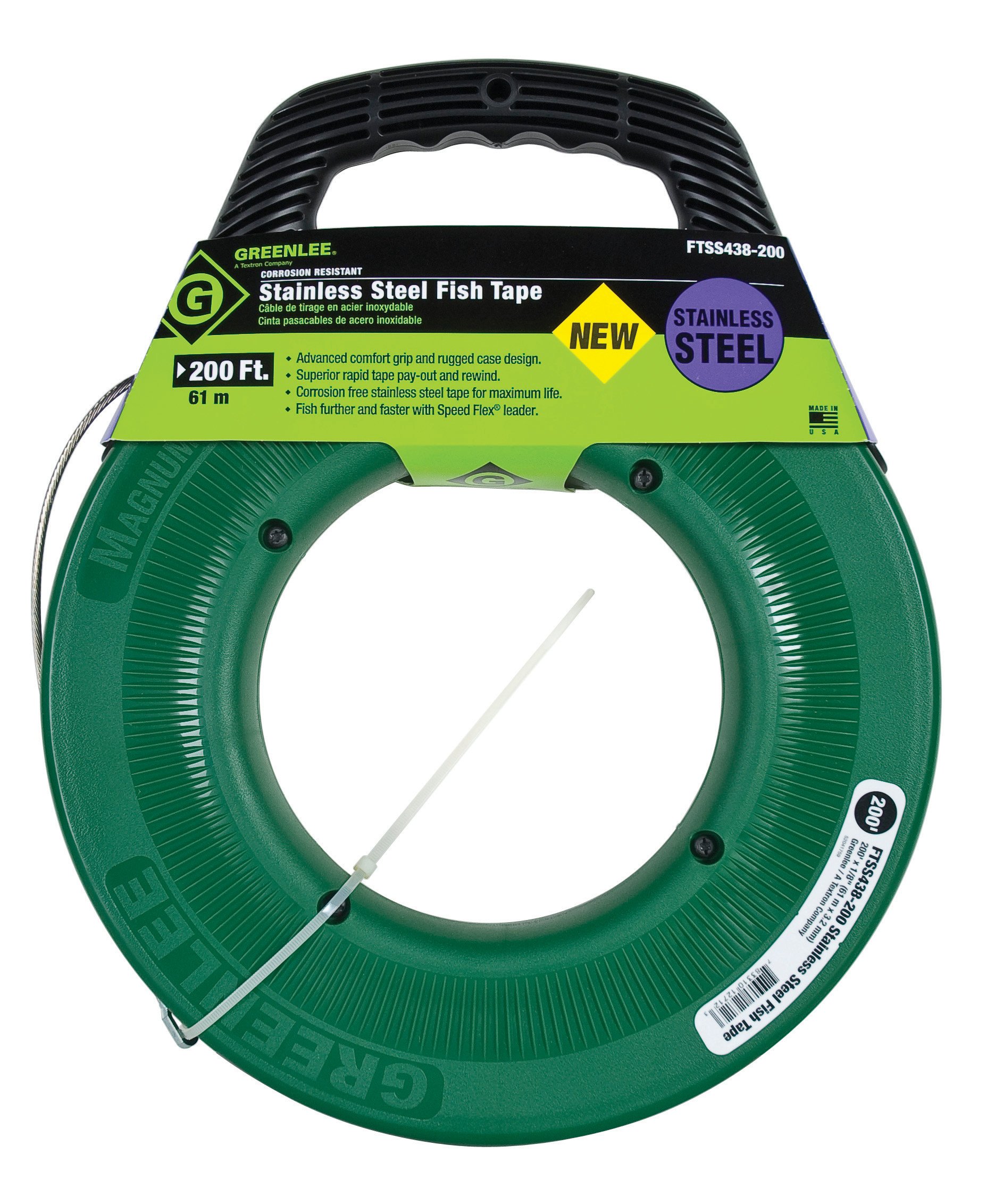
Greenlee FTSS438-200 Stainless Steel Fish Tape
Long stainless fish tape for commercial conduit runs. Get a lead line through before you commit conductors — measure the path, confirm clear fittings, then pull. Pairs with tension planning so you are not discovering a blocked elbow under load.
Check Price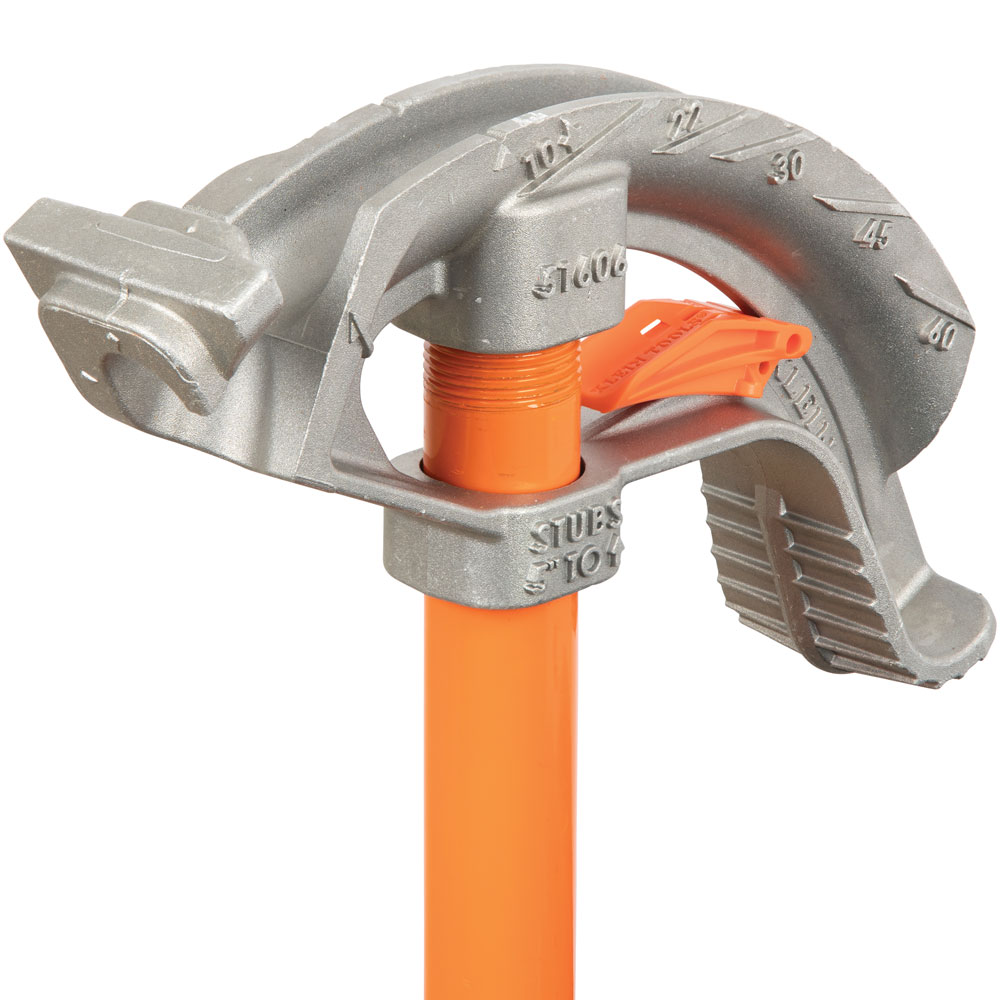
Klein Tools 51606 Aluminum Conduit Bender 1/2" EMT
Clean ½" EMT stubs and offsets keep bend radii predictable for sidewall-pressure checks. Kinked or wrong-shoe bends raise friction and SWP — get geometry right before the tension calc matters.
Check Price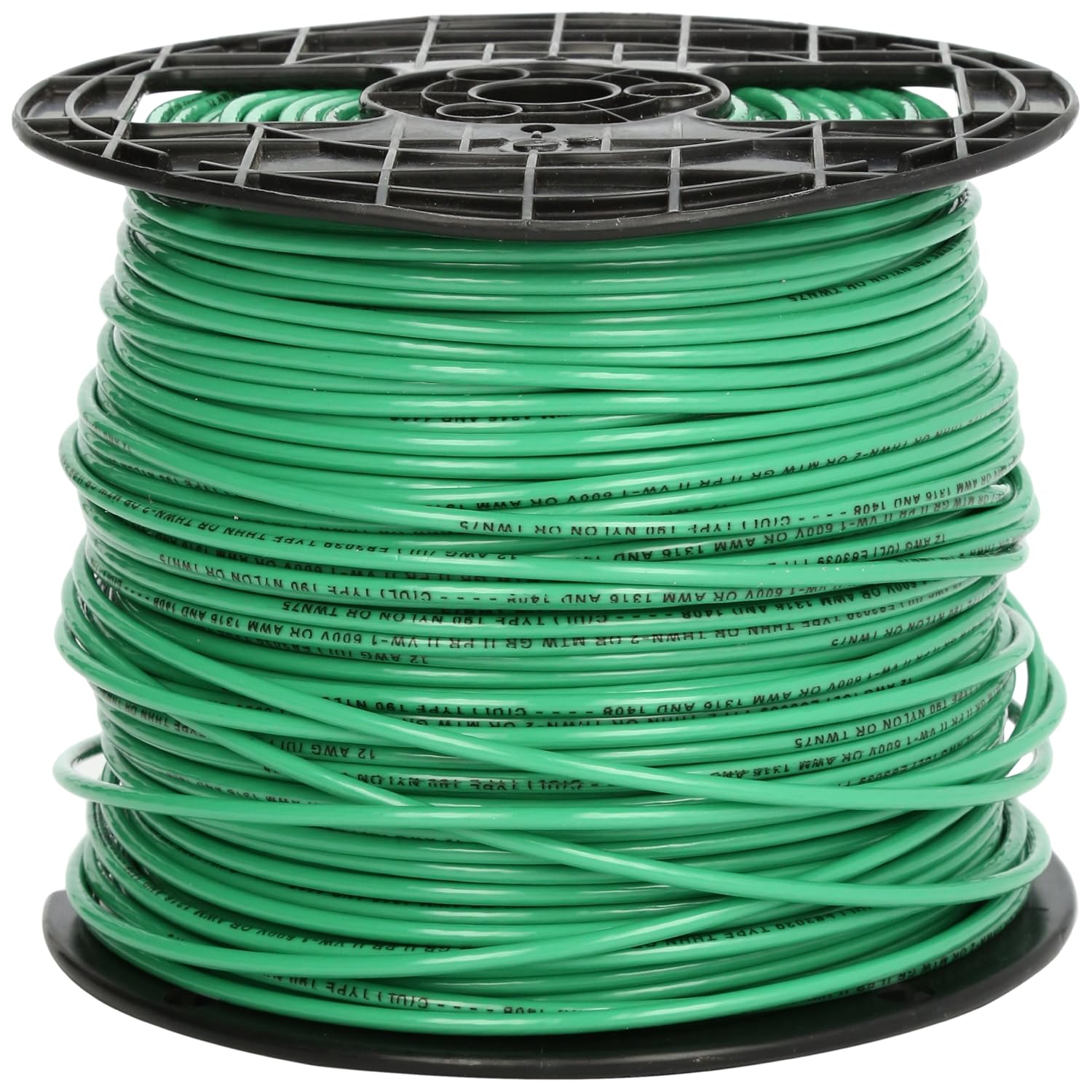
Southwire 22968201 Stranded THHN 12 Gauge 500ft
Known OD and weight matter for fill, jam, and W in T = W×L×f. Stranded THHN is everyday branch stock — use published dimensions in the calculator, not guesswork from the jacket.
Check PriceAs an Amazon Associate, TestTalkHQ earns from qualifying purchases. Catalog gap: no dedicated wire-pulling lubricant SKUs in the affiliate catalog — source soap/wax/gel from your electrical supplier; do not invent substitute products here.
Why Tension Planning Beats “Pull Until It Moves”
Feeling the rope is not a limit switch. Cumulative friction and bend multipliers can put the jacket over max tension while the crew still thinks the pull “feels light.” Paper checks catch feeder and long-run failures before you destroy expensive cable or bury a damaged pull behind finished walls.
Sidewall Pressure Is Often the Silent Failure
Many damaged pulls never exceeded the absolute tension number — they crushed the jacket at a tight elbow. Checking SWP = T/R at every bend, with radius in feet, is as important as comparing T to max lb. When SWP is high, enlarge the bend or break the pull at a box.
Jam Ratio Sits Next to Fill — Not Inside It
Passing conduit fill does not guarantee three equal cables will pull. If J lands near 2.8–3.2, plan for jam risk: different conduit size, staggered ODs, or pull configuration changes. Treat jam as its own go/no-go before lubricant and tension math.
Lubricant Changes the Friction Input — Not the Formula
Soap, wax, and polymer gels all aim to lower f. The equations stay the same; only the friction factor and field behavior change. Pick chemistry for jacket, conduit, temperature, and pull length, then re-run tension with the lubricated f — see the lubricant comparison.
Calculator, Failures & Lubricant Choice
Wire Pulling Tension Calculator for live numbers. Wire Pulling Troubleshooting for jacket damage, jams, and stuck pulls. Lubricant Types for soap vs wax vs gel.