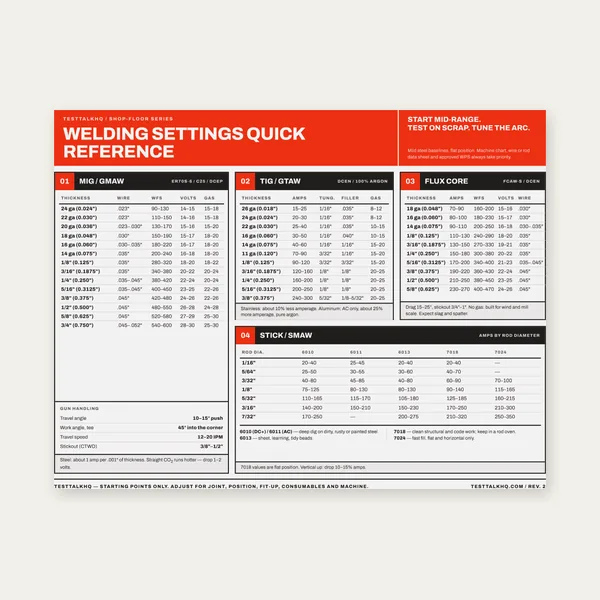
Welding Reference Card
One page. MIG, TIG, stick and flux core settings by thickness.
$3.99
BuyEstimate incident energy, arc flash boundary distance, and NFPA 70E PPE category
Enter system voltage, bolted fault current, protective device clearing time, working distance, and equipment configuration. This educational Lee-method tool (NFPA 70E Annex D) helps you understand arc flash hazards before opening energized equipment — always defer to labeled values and qualified studies for live work decisions.
Also try our Voltage Drop Calculator and Short Circuit Current Calculator.

One page. MIG, TIG, stick and flux core settings by thickness.
$3.99
Buy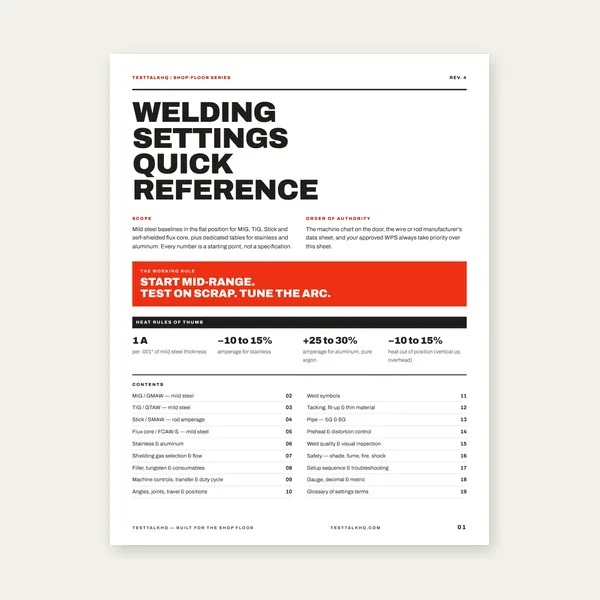
19 pages. Four processes, stainless and aluminum, symbols and inspection.
$12.99
Buy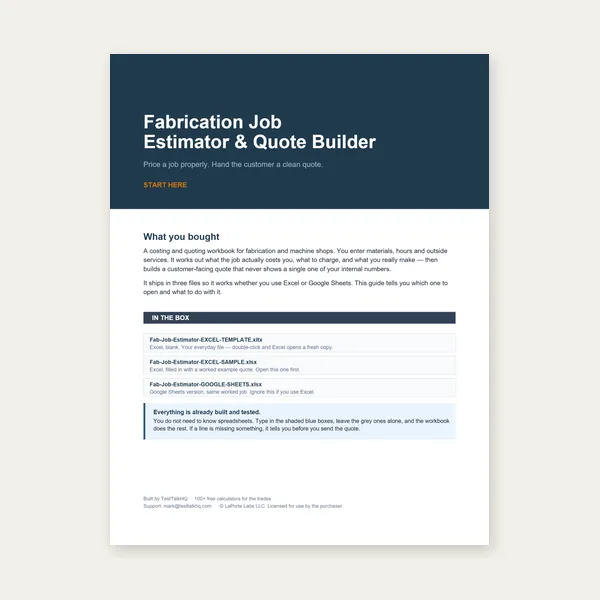
Price the job, then hand over a quote with no internal numbers.
Excel or Google Sheets. Best on a computer.
$29.00
Buy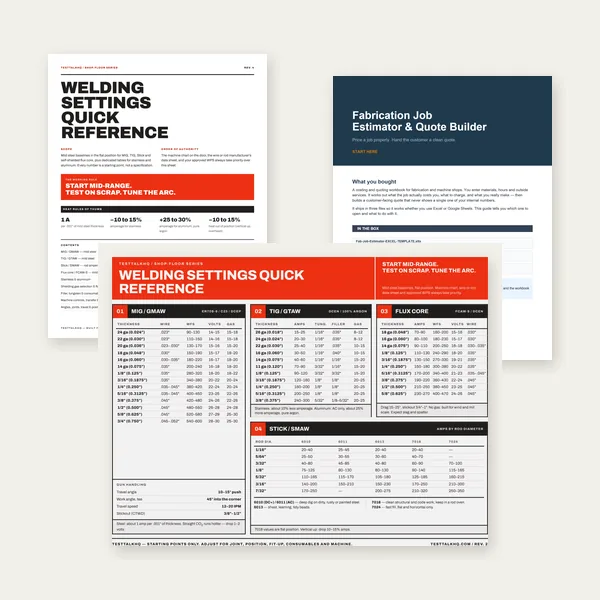
Card, 19-page guide and the estimator workbook. All six files.
Excel or Google Sheets. Best on a computer.
$34.99
$45.98 if bought separately — save $10.99
BuyCheckout opens in a new tab.
Measurement and PPE planning tools for energized work assessments


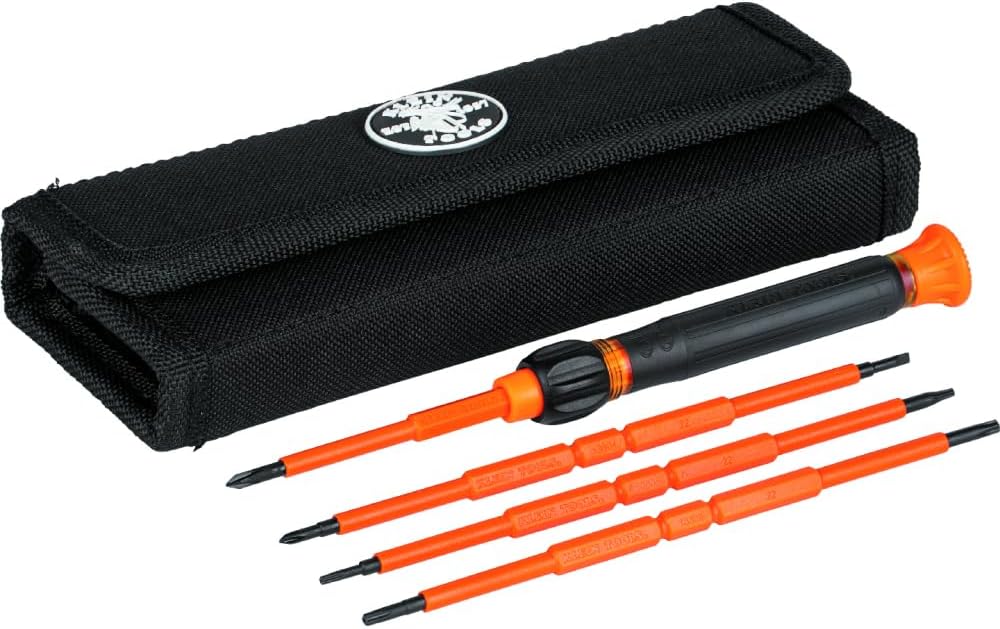
As an Amazon Associate, TestTalkHQ earns from qualifying purchases.
Incident energy is the thermal energy impressed on a surface at a specified working distance from an arc fault, expressed in cal/cm². It drives burn injury severity and determines minimum arc-rated PPE. NFPA 70E requires employers to assess arc flash hazards and document boundaries on equipment labels. This calculator uses the simplified Lee method from Annex D — useful for learning and order-of-magnitude checks, not a replacement for a full IEEE 1584 study on complex systems.
The arc flash boundary is the distance at which incident energy equals 1.2 cal/cm² — the threshold where a second-degree burn could occur if unprotected skin is exposed. It is separate from shock approach boundaries (limited, restricted, and prohibited) defined for voltage exposure. Workers outside the arc flash boundary still need appropriate PPE if they cross the limited approach boundary. Always consult your site-specific arc flash label for both shock and flash boundaries.
Incident energy is directly proportional to fault clearing time. A breaker that clears in 6 cycles (0.1 s) produces far less energy than one that lets a fault persist for several seconds. Upgrading to current-limiting breakers, adjusting relay settings, and reducing bolted fault current through system design all lower arc flash severity. When evaluating equipment, always use the actual overcurrent device clearing time — not a generic assumption.
NFPA 70E Table 130.7(C)(15)(a) maps incident energy ranges to PPE categories (Cat 1 through Cat 4) with minimum arc ratings in cal/cm². Category 0/1 covers the lowest energy tasks; Cat 4 covers up to 40 cal/cm². Above 40 cal/cm², no standard PPE category applies and work methods must change — remote operation, engineering redesign, or de-energizing. Match clothing, face shield, gloves, and hearing protection to the labeled category for the specific task.
If the calculator fights a label or study, use Arc Flash Boundary Troubleshooting. To choose NFPA 70E tables versus incident energy analysis, read Table Method vs Incident Energy Analysis.