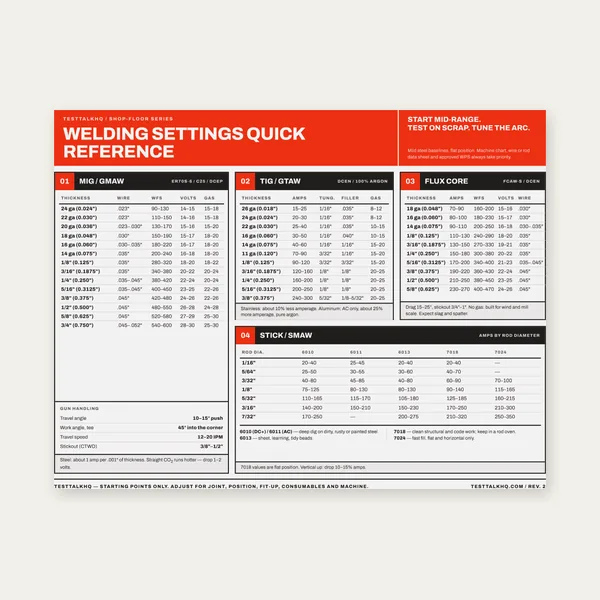
Welding Reference Card
One page. MIG, TIG, stick and flux core settings by thickness.
$3.99
BuyMIG, TIG, Stick & flux-core starting amps by material thickness
Look up recommended amperage ranges using the same published data as our Welding Amperage Chart — interactive instead of scrolling tables. Amperage is a starting point; fine-tune from joint design, position, and bead inspection.

One page. MIG, TIG, stick and flux core settings by thickness.
$3.99
Buy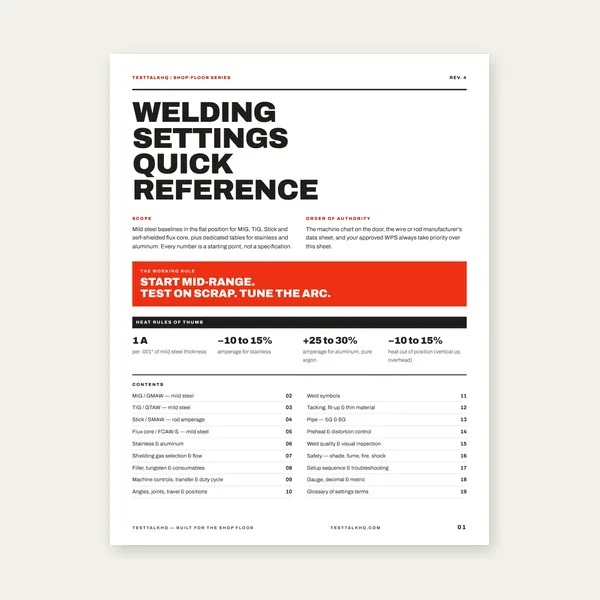
19 pages. Four processes, stainless and aluminum, symbols and inspection.
$12.99
Buy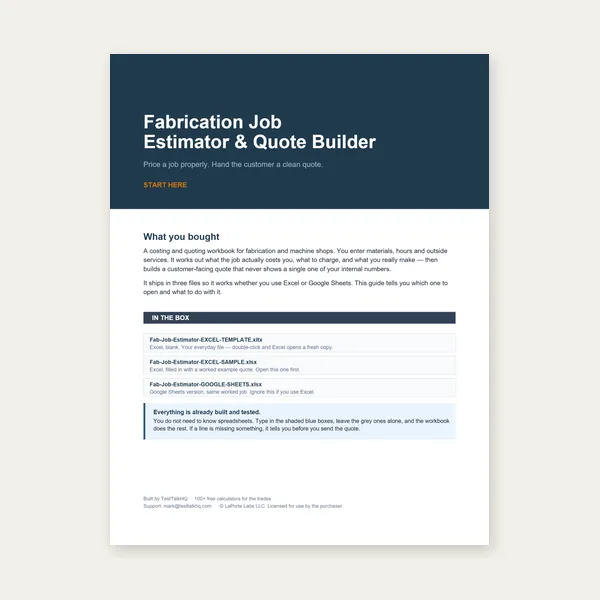
Price the job, then hand over a quote with no internal numbers.
Excel or Google Sheets. Best on a computer.
$29.00
Buy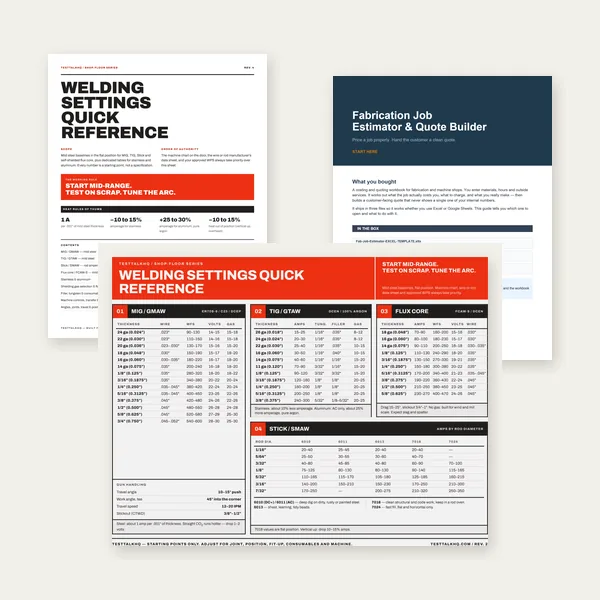
Card, 19-page guide and the estimator workbook. All six files.
Excel or Google Sheets. Best on a computer.
$34.99
$45.98 if bought separately — save $10.99
BuyCheckout opens in a new tab.
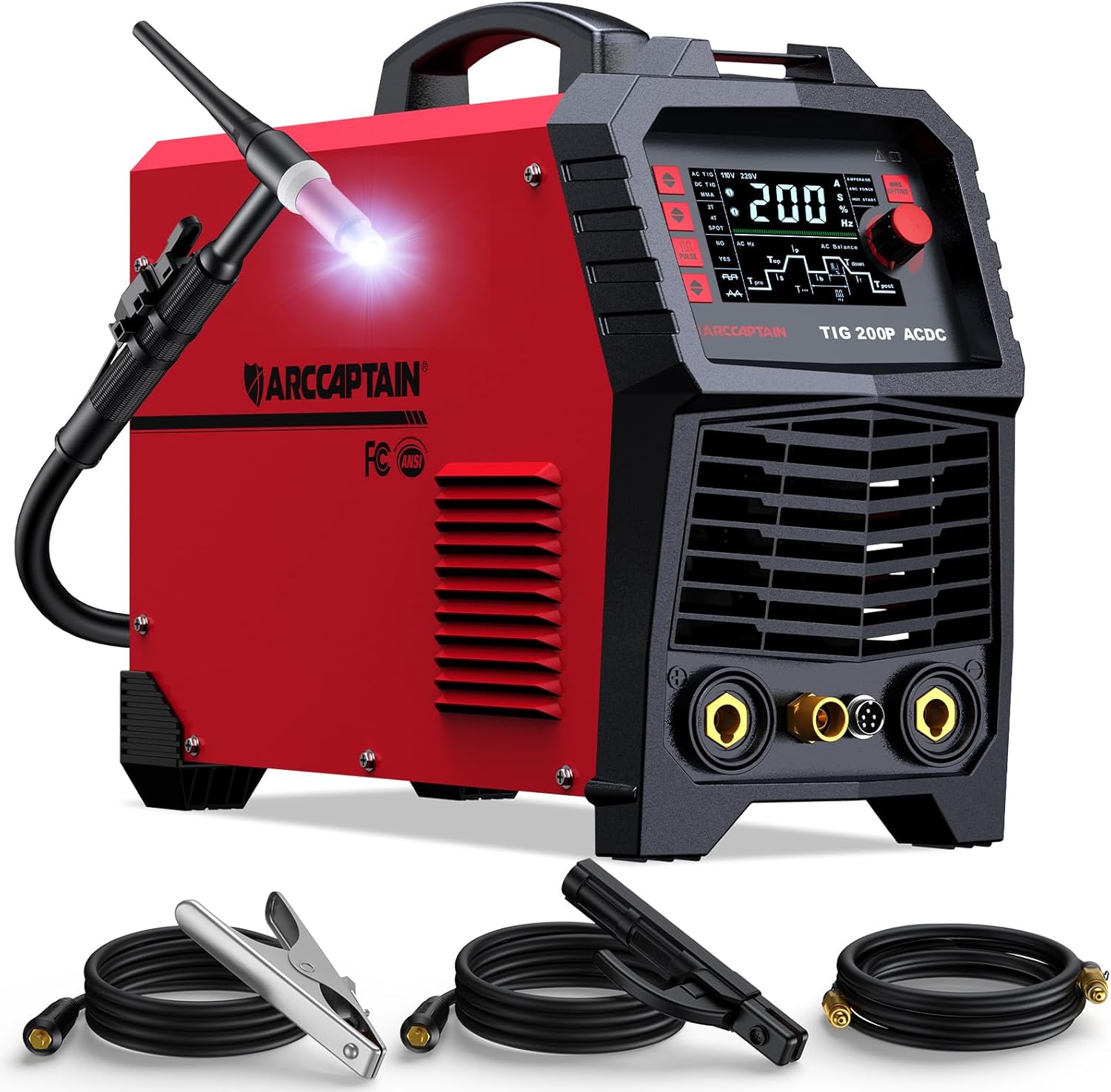
Machines with clear output ratings plus a clamp meter to verify actual arc current.
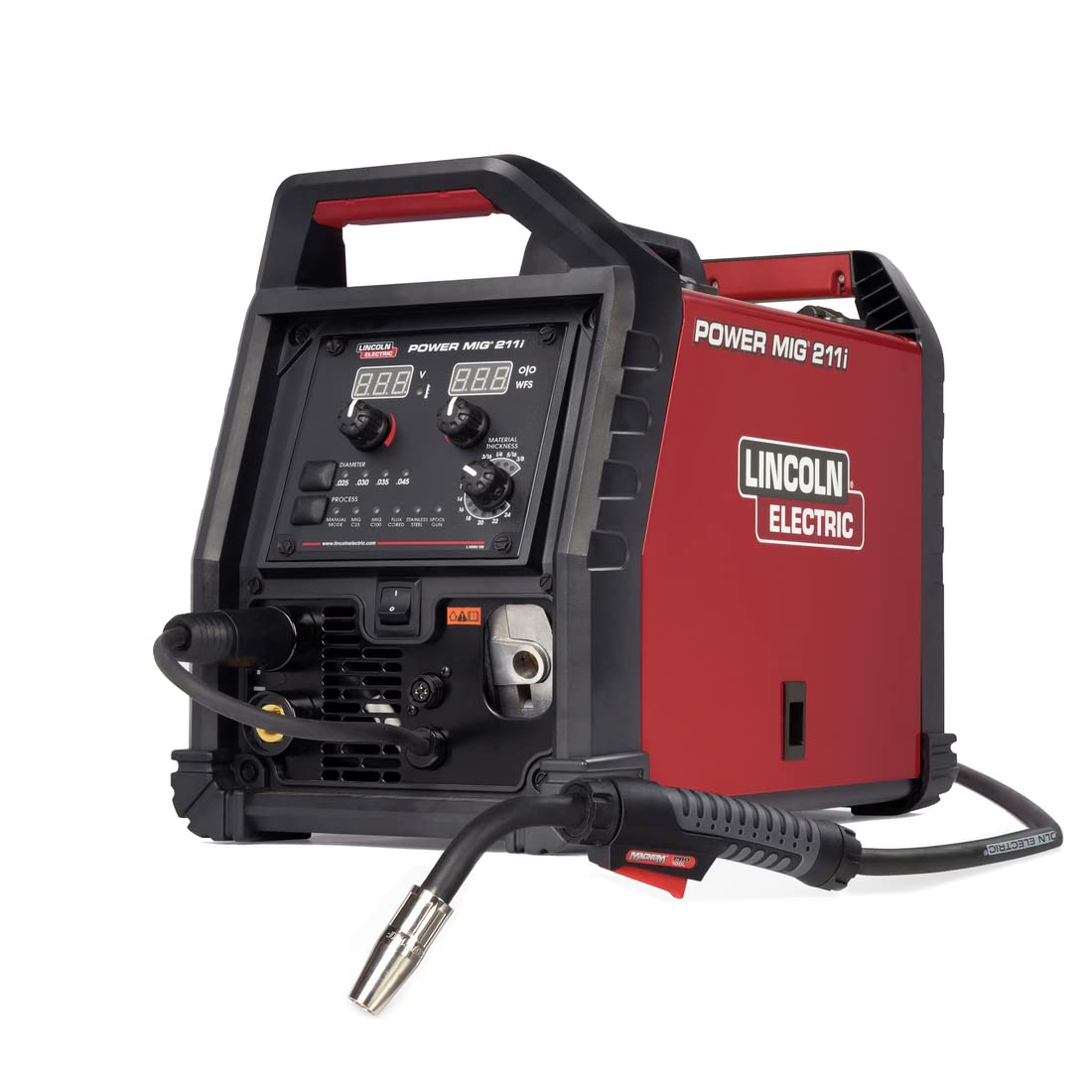
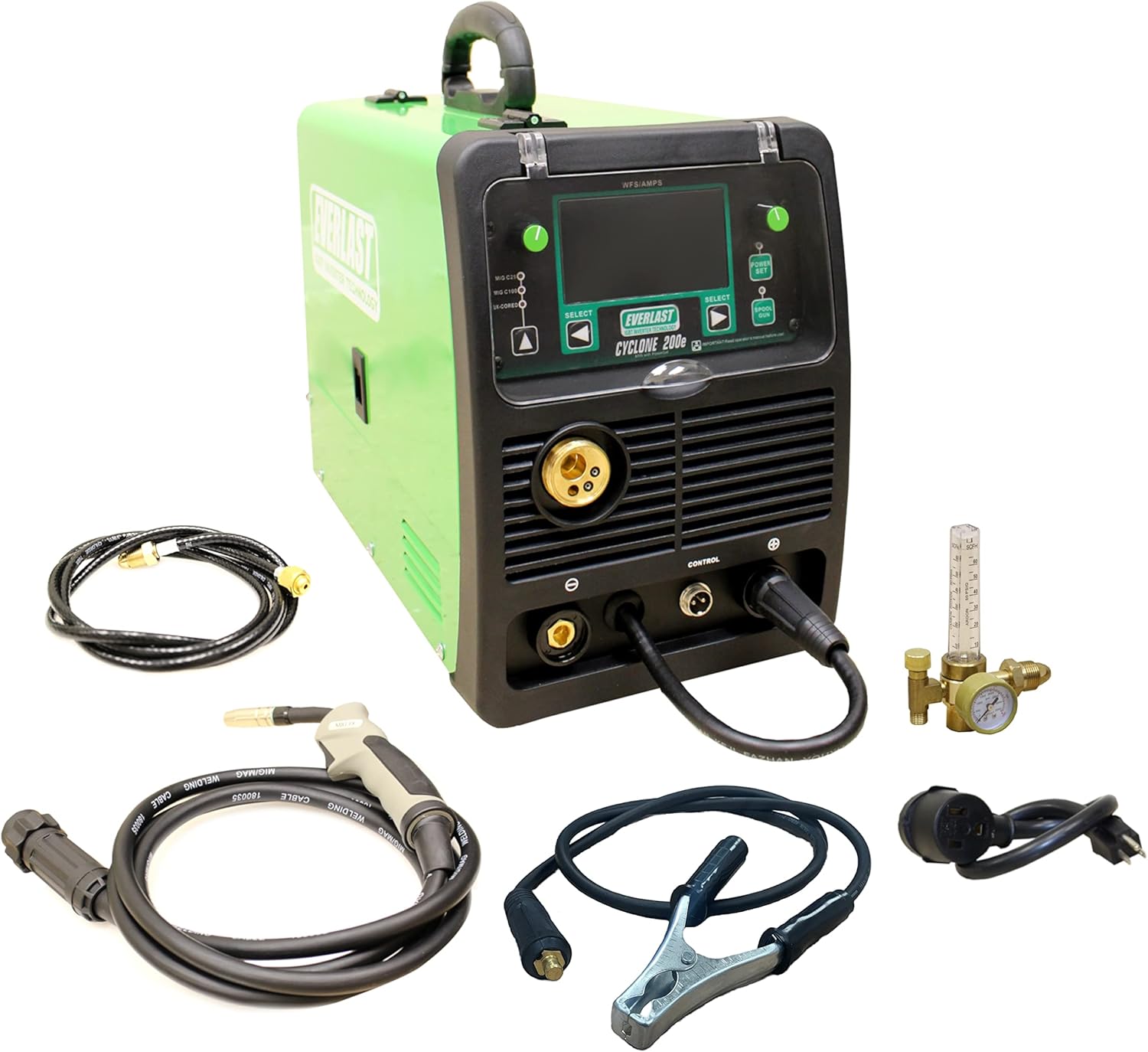
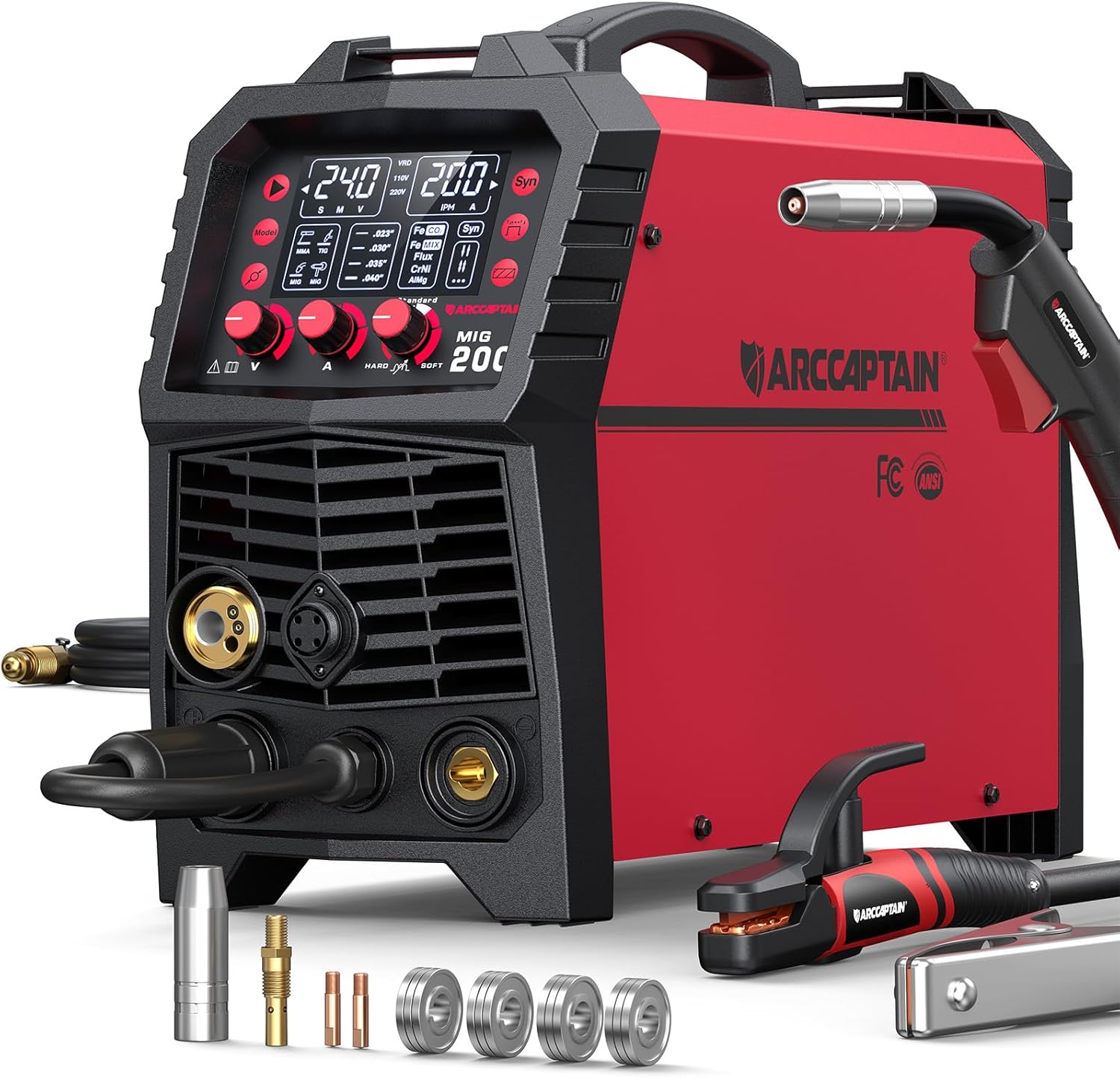
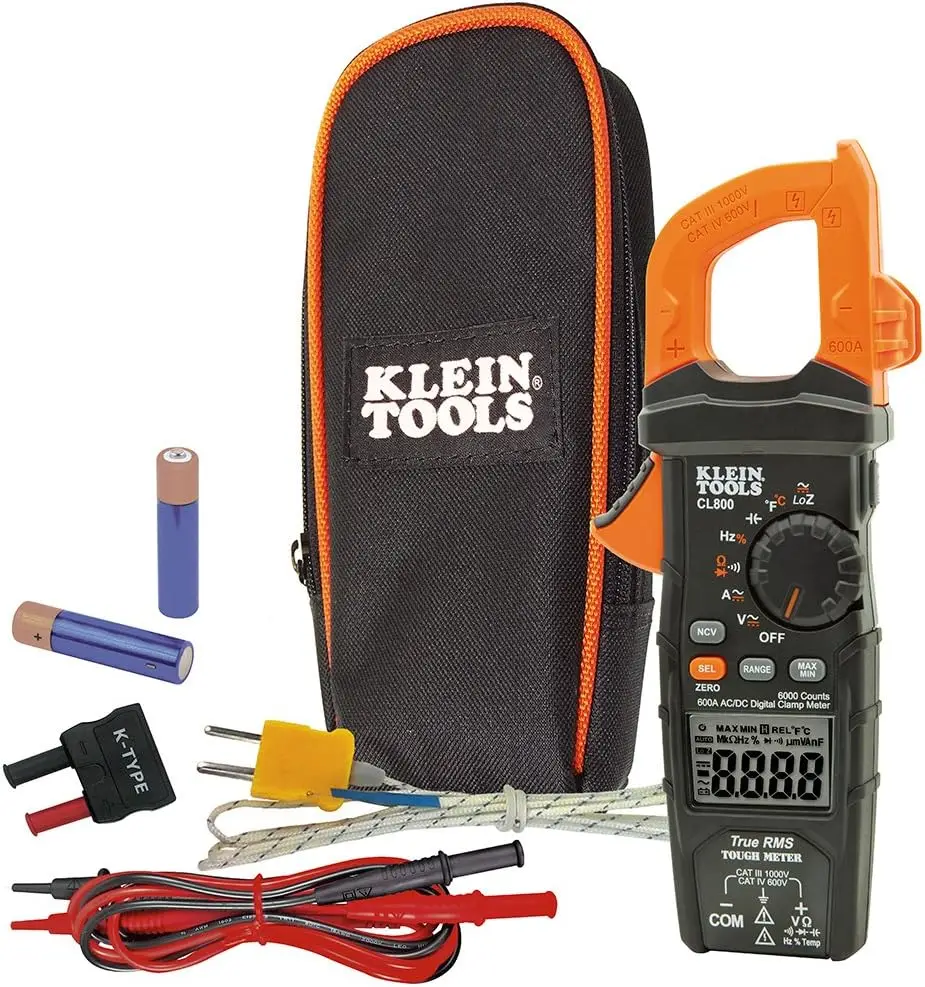
As an Amazon Associate, TestTalkHQ earns from qualifying purchases. Prices and availability subject to change.
This calculator uses the identical reference ranges published in our Welding Amperage Chart — mild steel table plus stainless and aluminum adjustments scaled from that guide's published 1/8" examples (10–15% less for stainless, 25–35% more for aluminum). Flux-core uses the MIG column because the chart groups FCAW with MIG heat input. Numbers are starting points only; fine-tune from joint type, position, and bead appearance.
MIG draws higher amps than TIG on the same thickness because wire feed adds cold filler to melt. TIG is more efficient — direct amperage control with a non-consumable tungsten. Stick amperage follows rod diameter; material thinner than 11 gauge is below practical stick range on the chart. Flux-core mirrors MIG amps on the chart — use the dedicated Flux Core Welding Calculator for wire speed and voltage.
Stainless steel needs about 10–15% less amperage than mild steel because it conducts heat poorly and heat builds in the weld zone. Aluminum needs about 25–35% more because it pulls heat away from the arc — TIG aluminum requires AC. These multipliers match the examples in the chart guide (e.g. 1/8" mild MIG 130–150 A → stainless 115–135 A, aluminum 165–190 A).
After you have a starting amperage range, dial in wire speed, voltage, tungsten, rod size, and gas with the process tools: